- April 12, 2026

-
-
Loading
Loading
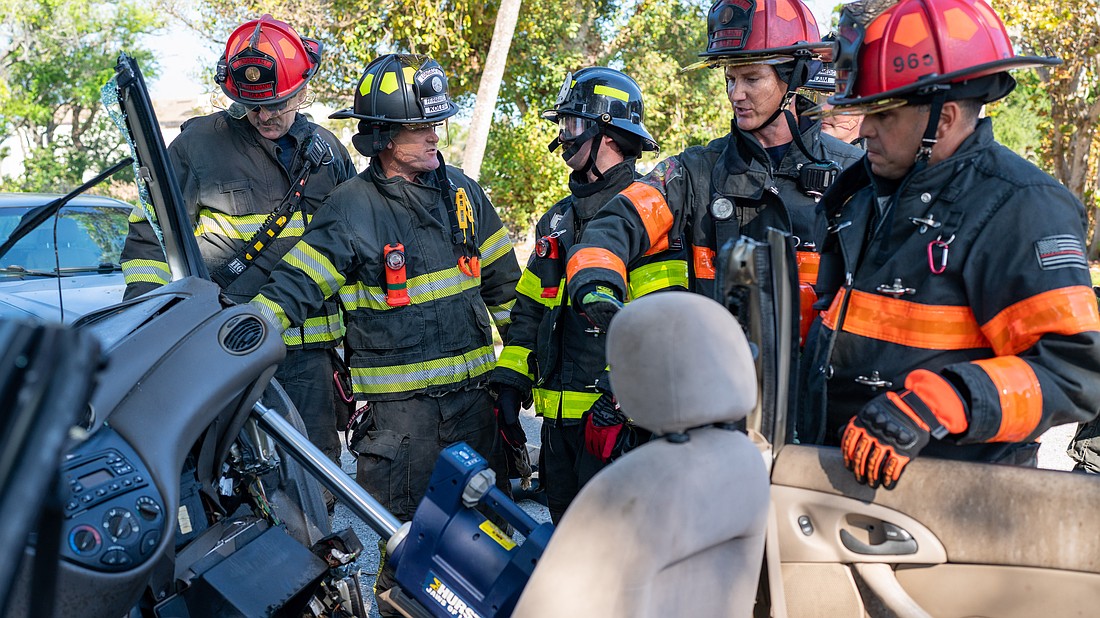
A metallic crunch bellowed and crescendoed with a loud pop followed by the clatter of broken glass.
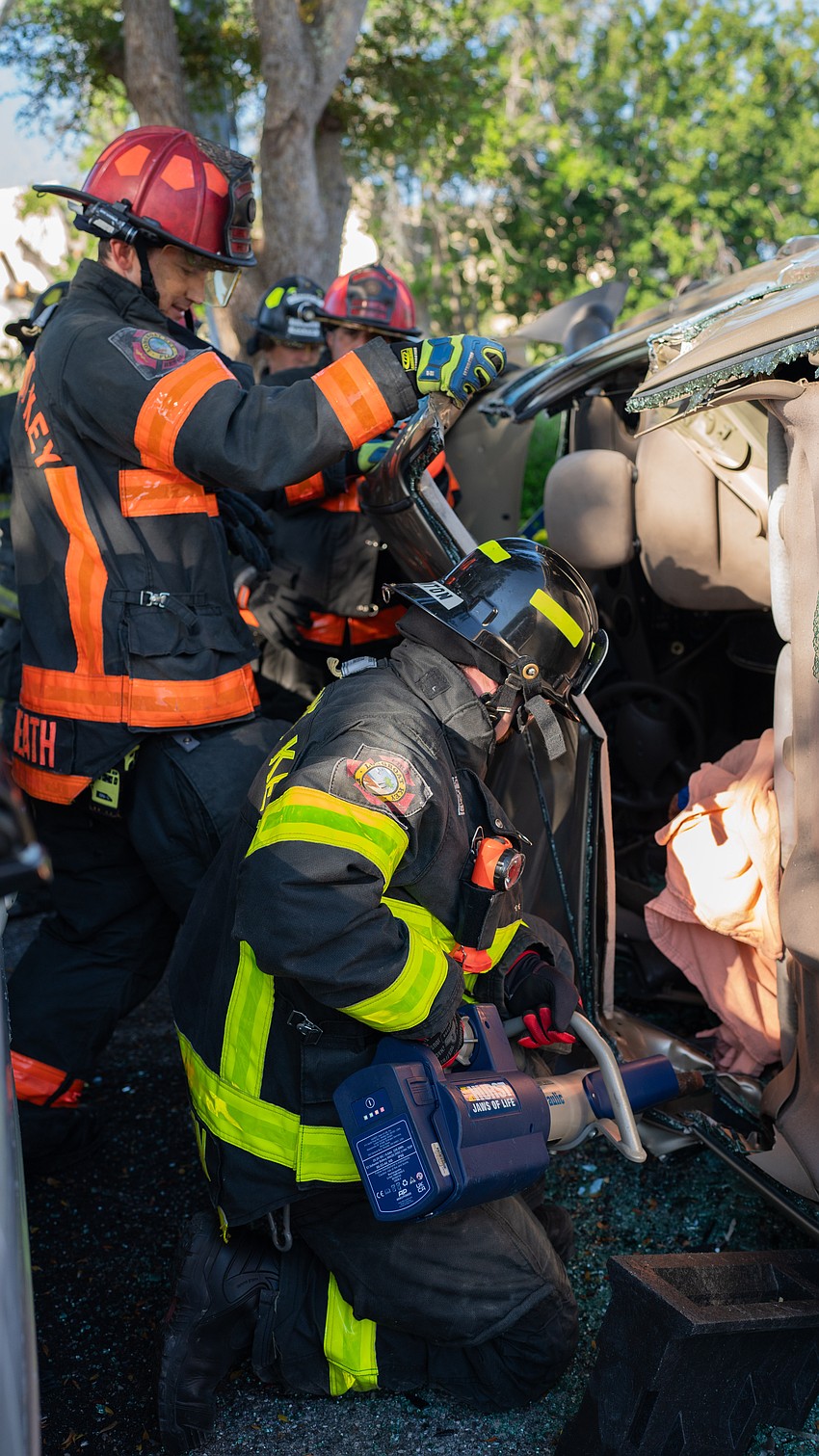
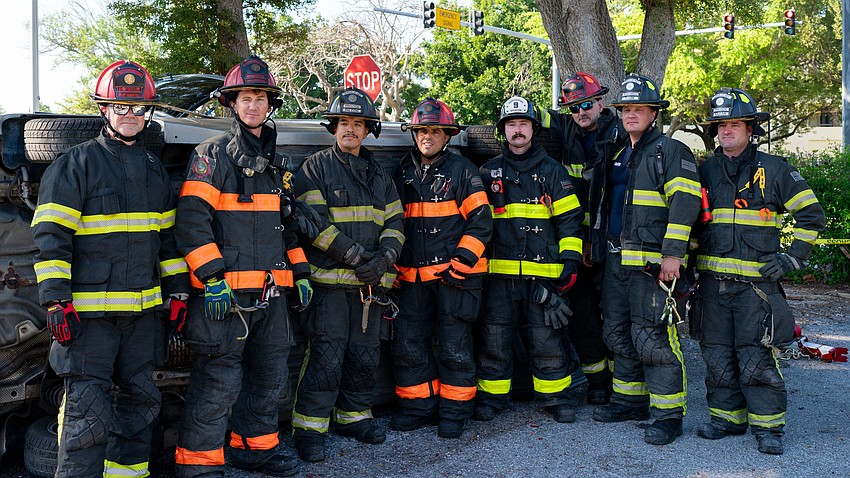
That symphony — the sound of a Ford Focus being ripped apart during an extrication training exercise — was performed by Longboat Key Fire Rescue during its annual extrication training.
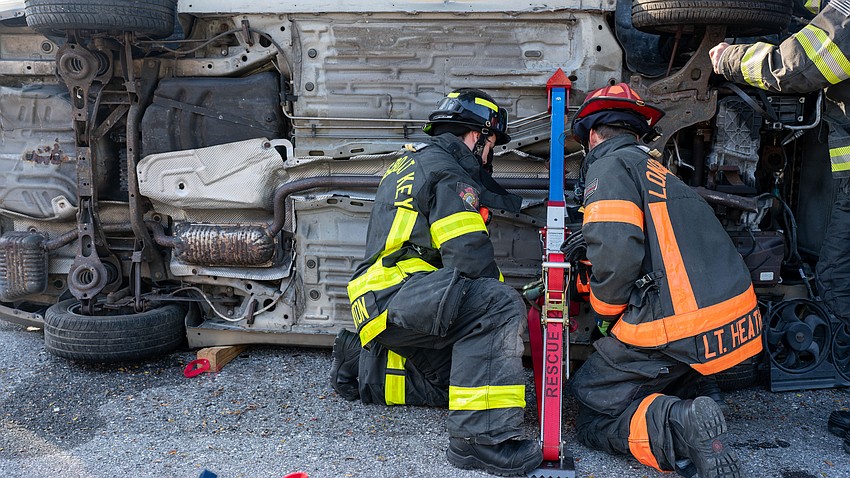
The instruments? Hydraulic rescue tools known colloquially as the Jaws of Life and pry bars. Struts kept the vehicle from tipping and cribbing kept it from rolling forward or backward. Firefighter Paramedic Tyler Brunton has been with Fire Rescue since September and said training exercises like these help him realize the capabilities, limitations and best ways to use the tools the department has at its disposal in case of emergencies.
“This goes a long way so when we actually have to utilize them in case someone is in a vehicle accident that’s going to require us to cut them out of their car, lift the dash, whatever it is we need to do to get them safely out,” Brunton said. “And on the patient side of things, at the end of the day it’s already been a traumatic experience. We don’t want to add any more to that. The goal is to get them out as quickly and safely as possible.”
Extrication is not needed too often on Longboat Key as most accidents are fender benders on the barrier island. But just weeks before the training exercise, an SUV had flipped on its side after the driver of the vehicle lost control and crashed into trees on the east side of Gulf of Mexico Drive.
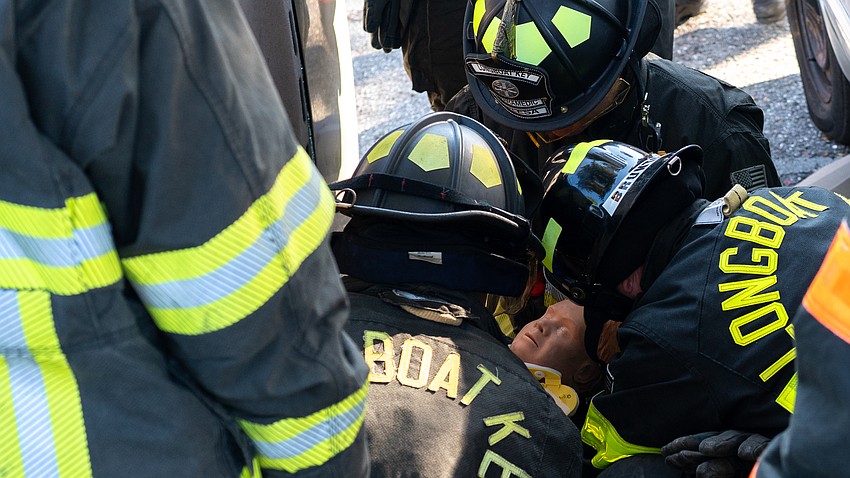
In the back of the Ford Focus lent to Fire Rescue by Glueck’s Auto Parts was a child-sized dummy seat-belted inside the vehicle. The sedan lay on its side in the Fire Station 91 parking lot and the race was on to get the patient out and on a stretcher.
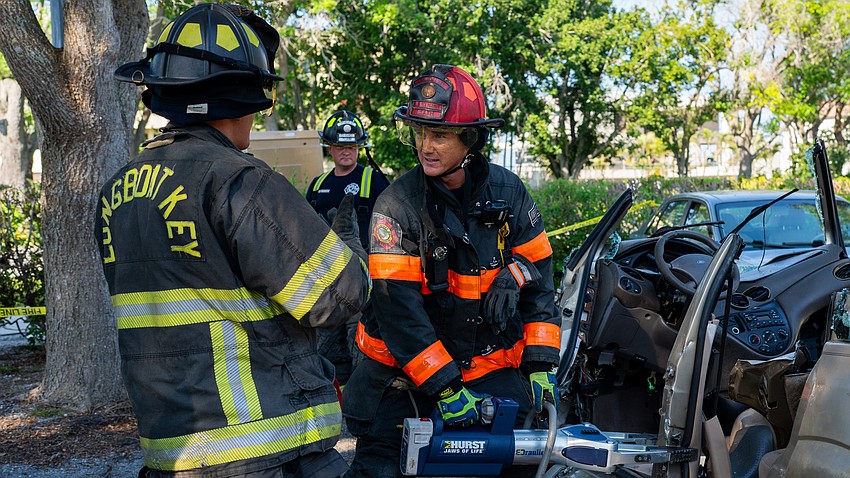
“They were a restrained passenger, so getting them out was the goal,” Training Capt. David Eggleston said. “A lot of times there are easier ways to get your passenger out. Sometimes the passenger can unbuckle themselves and walk out or climb out, but the goal here was they had to stabilize, take the roof off and then they could access the child.”
About 10 minutes into the exercise, two firefighters lifted the roof off of the sedan and plopped it on the asphalt a few feet away. Three minutes later, the child-sized dummy was lifted from the back seat, carefully placed and strapped onto a gurney and carried away.
“Thirteen minutes is pretty good. The first crew that we did we had the van rolled on the side. It took them 12 minutes to access the patient and get the patient out,” Eggleston said. “Overall we’re right in the ballpark. Two different crews, roughly the same amount of time doing the same task. That’s pretty good.”