- April 8, 2026

-
-
Loading
Loading

Calls to Florida's gambling helpline have surged 138% since legal sports betting launched in 2023, according to the Florida Council on Compulsive Gambling.
But before Florida legislators contemplate restrictions that would push bettors back into the arms of offshore sportsbooks, they should ask a basic question: Do rising helpline calls actually mean more Floridians are becoming addicted to gambling? The answer is no.
When Massachusetts legalized mobile sports betting in early 2023, calls to its gambling helpline shot up by 121%. But of those roughly 2,000 calls received in the months after launch, more than 1,000 were not from people struggling with addiction at all. They were bettors trying to figure out how to use their new apps.
“The spike was driven largely by sports wagering advertisements listing the helpline number, which confused customers into calling it for technical support,” said the Massachusetts Department of Public Health.
Florida has one legal mobile sportsbook. Hard Rock Bet is new and heavily advertised, and its advertisements prominently display the 888-ADMIT-IT helpline number. It would be extraordinary if calls did not increase sharply. Conflating a spike in helpline volume with a spike in gambling disorder is a category error.
The same problem afflicts a widely cited study published in JAMA Internal Medicine last year, claiming a 23% cumulative increase in internet searches for gambling addiction help since 2018. The National Council on Problem Gambling, the country's leading organization on this issue, explicitly warns that its own helpline traffic "should not be used as a proxy to estimate problem gambling prevalence." Searches tick up after legalization for the same reason calls do, in that there is more advertising and more public awareness of both betting and the services that help people with it. People who were already struggling are now more likely to know where to turn.
What does the data on problem gambling actually show? According to the National Council on Problem Gambling, the national rate of severe problem gambling among adults has held steady at around 1%, with another 2% to 3% experiencing mild to moderate problems—consistent with the historical average. Even the Florida Council on Compulsive Gambling cites a 2011 study showing that just 1.2% of Florida's population was engaged in problem and pathological gambling.
Panicked stories about gambling often ignore boring statistical truths in favor of dramatic figures. Those large percentage increases become much less concerning when you factor in the small baseline number of people affected. Florida has roughly 23 million residents. Before sports-betting launched, an estimated 588 people a year were calling the helpline about online gambling. After legalization, that figure rose to around 1,400. That means the share of Floridians contacting the helpline about online gambling went from around 0.003% to roughly 0.006%. A shift from three people in every hundred thousand to six is rather hard to characterize as an epidemic.
The empirical research tends to suggest that the legal status of gambling is not the key driver of problem gambling. A 2025 longitudinal study tracking American sports bettors across states that legalized during the study period versus those that kept prohibitions found no significant difference in problem gambling severity between the two groups — though the authors acknowledge the study was powered to detect only large increases, leaving open the possibility of more modest effects.
After many states legalized lotteries and casinos in the 1980s and early 1990s, there was a short-lived uptick in related bankruptcies. But that effect had largely disappeared by the mid-1990s. When online poker exploded in the 2000s, the same warnings were sounded. Howard Shaffer, one of the world's foremost experts on gambling addiction, concluded in 2011 that problem gambling rates had remained relatively stable across 35 years of dramatically expanding gambling access.
None of this is to say that sports betting cannot harm individuals. Some people, particularly young men, who are disproportionately represented among heavy bettors, can wind up in severe financial difficulty. But it should be noted that today's typical sports-bettor is disproportionately college-educated and earns above the median income. This does not match the portrait of a young or poorer population being freshly victimized.
Before legalization, an estimated third of Americans were already betting on sports, channeling roughly $150 billion annually to offshore books with no age verification and deep ties to organized crime.
Legislators concerned about rising helpline numbers should be aware that regulatory overreaction is unlikely to reduce the number of problem gamblers and will almost certainly drive more bettors to platforms with no consumer protections whatsoever.

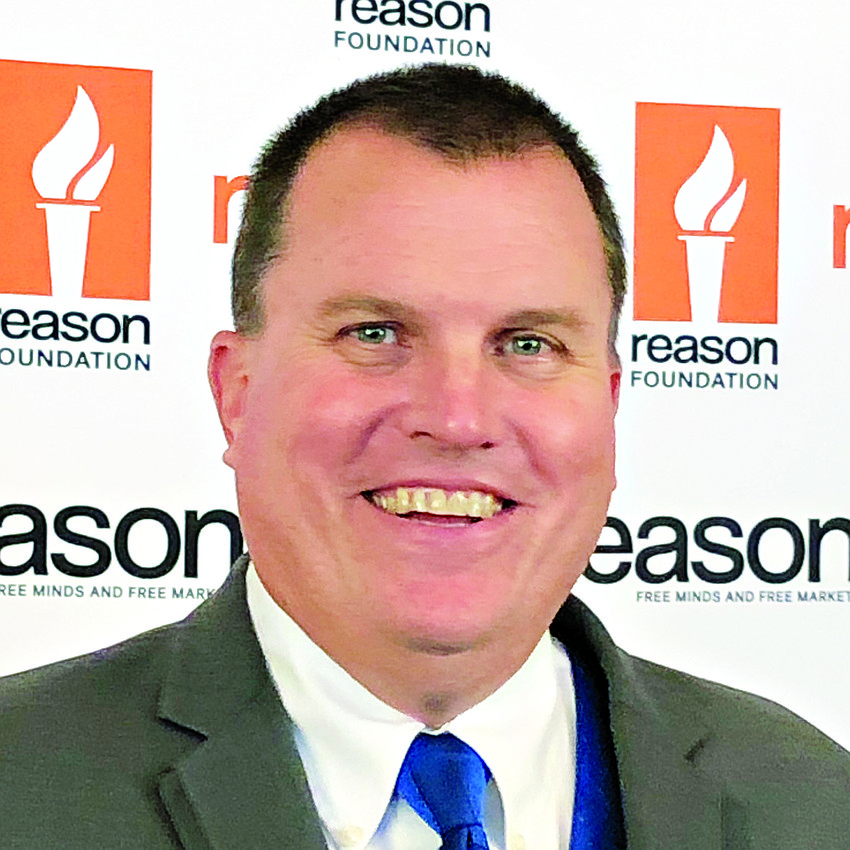
Guy Bentley is director of Consumer Freedom, and Adrian Moore is vice president at the Reason Foundation.