- April 7, 2026

-
-
Loading
Loading
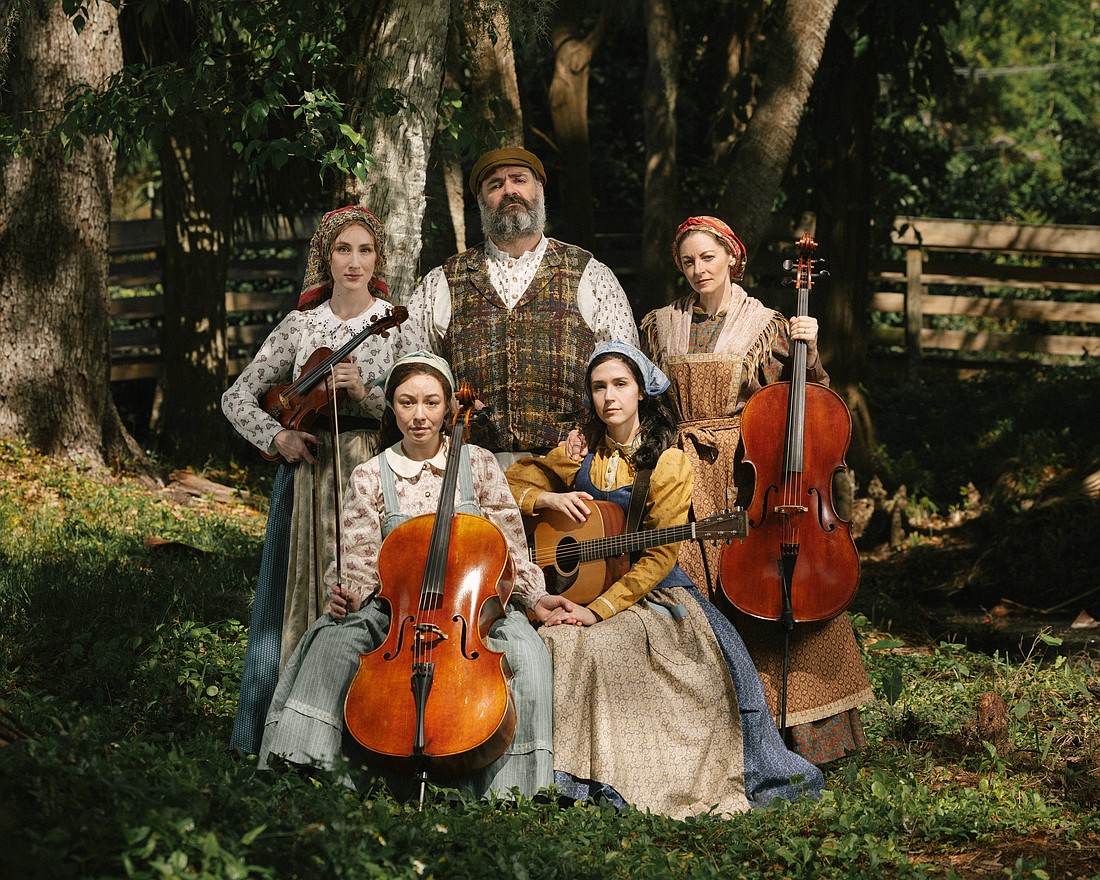
More than 60 years after its Broadway debut, “Fiddler on the Roof” is hitting the Asolo Repertory Theatre stage for the first time. This musical adaptation of Sholom Aleichem’s short stories boasts a script by Joseph Stein, music by Jerry Bock and lyrics by Sheldon Harnick. According to the musical's director, Asolo Rep Producing Artistic Director Peter Rothstein, the result is a delicate balancing act between tradition and change, simplicity and showmanship, and hilarity and heartbreak. In the following talk, Rothstein shares how he kept his creative balance — and found a fresh take on this timeless story.
The biggest difference is that we make all the music onstage. There’s no orchestra in the pit. 26 actor-musicians play everything live.
Yes. That, to me, sets it apart from any production I’ve seen. I’ve seen dozens of productions, but none where the characters both sing and play instruments. We’re still doing Jerome Robbins’ choreography — the bottle dance is there — but the characters are now playing trombone or string bass. That changes the energy entirely. The villagers are literally making their own music while living their lives.
Not exactly. The village of Anatevka was a self-sufficient community. The people made their own clothes, their own food and their own music. So, putting the orchestra onstage is actually more authentic than having an invisible symphony accompanying the cast. Our fiddler (Andrii Padkovskyi) is a young musician who fled Ukraine with his family. He’s from the same part of the world as the story — just 120 years later. His brother (Yurii Padkovskyi) is our clarinetist. They’re extraordinary musicians — and both refugees from that same piece of earth. That resonance isn’t lost on us.
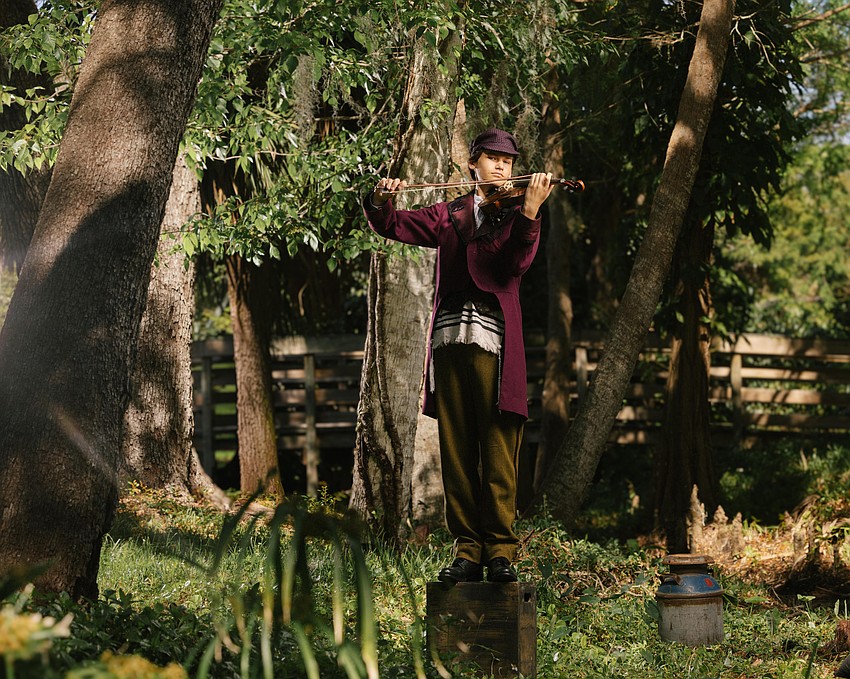
Our costumes are traditional, and the scenery is inspired by earlier designs. On a deeper level, there are several important images at work. One set comes from Roman Vishniac’s photographs of Russian shtetls in “The Vanished World.” They show how closely people lived to the earth — dirt floors, fragile walls, brutal weather. That sense of being rooted in the land is central to our design. Even indoors, grasses grow around furniture. Time is also palpable — sunrise, sunset, seasons turning. Act One is spring; Act Two moves into the depths of winter. The elements — earth, seasons — are front and center. Early on, I thought about having the fiddler fly at the end of “Tradition,” to honor Chagall. But a friend pointed out that if the fiddler could fly, he wouldn’t need to keep his balance.
Yes, exactly. You’re not worried he’s going to fall. That’s the meaning of the image — so we abandoned the flying. Our fiddler’s still precariously balanced. And this whole musical is really a balancing act on so many levels. There’s a constant tug of war between tradition and change, simplicity and showmanship, comedy and tragedy …
That’s the genius of the piece. Every day in rehearsal, we’re asking: If we go for the laugh here, what does that cost us later? Does it undercut the stakes? For me, each scene must be grounded in emotional truth. Humor is often a survival mechanism — a way of confronting adversity. But it must come from real people in real situations. Otherwise, it becomes gimmick. And that’s a trap. I’ve seen productions where the humor overwhelms the emotional gravity. That might be entertaining, but it loses the heart of the story.
We embrace both sides. “Fiddler” is culturally specific, but also a work of art — a kind of dream. The dream sequence gives us the most freedom. It’s explicitly theatrical — Tevye’s construction of a dream. To create it, we drew on early Yiddish theater traditions, using masks and heightened imagery. In that sequence, the characters have grasses growing up their legs, as if they’ve risen from the earth itself. They enter pulling roots behind them. That connects back to the image of being rooted in the land — and makes their eventual uprooting more painful. So, our approach is grounded in culture, but also metaphorical. That tension is part of the piece’s DNA.
That’s always a challenge when cultural identity is central. Where’s the line between stereotype and reality? From day one, we’ve had a dialogue about that. We brought in Dr. Liat Alon, a cultural historian and chief learning officer from the Jewish Federation, and Michael Shefrin, a rabbi from Temple Emanu-El. We also have Jewish artists in the cast and on the creative team. Non-Jewish actors are often afraid of falling into “the cadence” — the ethnic cliché of the musical “Jewish accent.” So, we try to create a room where actors can experiment without fear.
No. It’s impossible to create this show in a vacuum. Many of our actors grew up with the film — it’s part of their cultural DNA. Our Tevye, Jeremy Radin, has done multiple productions, so he brings that history with him. My goal isn’t to reject that or overturn expectations. It’s to honor it — and go deeper. The actor-musician approach helps us do that. It reflects a community that truly relied on itself. Our reimagining isn’t about novelty — it’s about rediscovering essential truths in the source material and its adaptations.
The piece itself complicates things. Ordinarily, the script is the Bible. But we have more than one “Bible,” so to speak. We’re informed by the historical shtetl, but also Sholem Aleichem’s fictionalized version. The musical’s creators were Jewish Americans — and they filtered his stories through an American art form. So instead of asking, “What’s the correct choice?” we ask, “What’s the richest choice?” That’s our North Star. Open communication. Multiple perspectives. And accepting that eliminating what one person might see as stereotype would make someone else feel like you’ve erased their culture.
Because it asks timeless questions. How do you embrace change while holding onto where you came from? How do you define your beliefs when they’re being challenged — internally and externally? What does it mean to love your children when their worldview is different from your own? We’re still asking those questions today. That’s why it endures.