- April 2, 2026

-
-
Loading
Loading
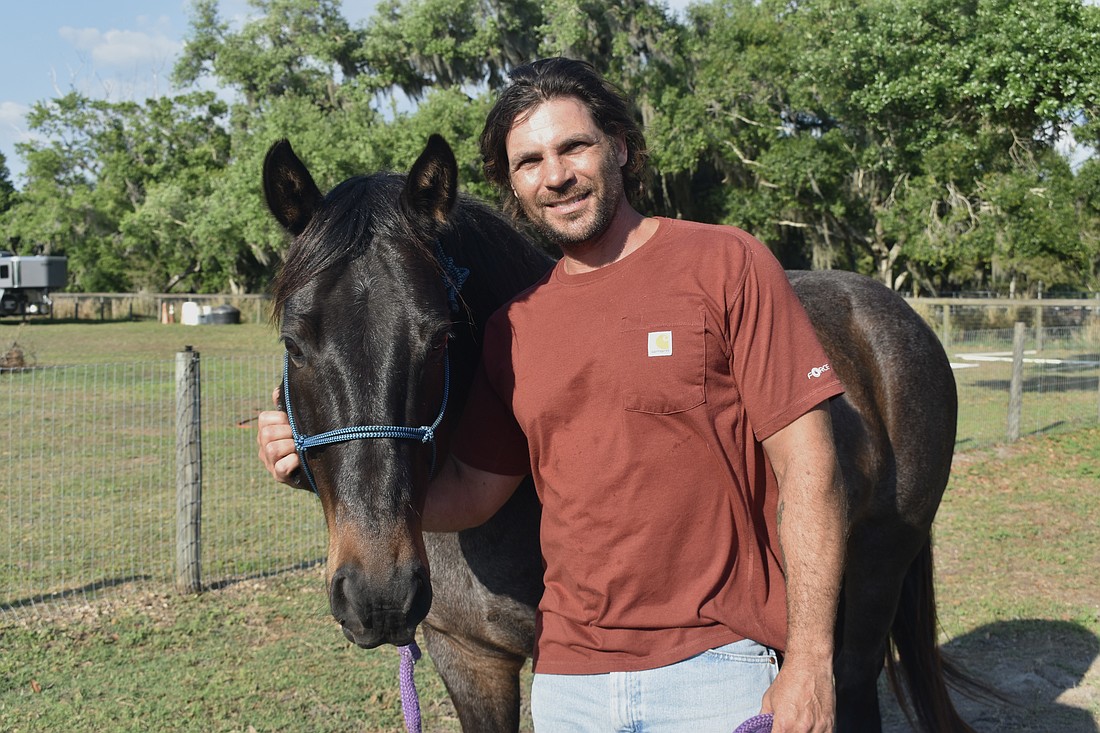
It wasn’t traveling around the world as a rock climber that showed Nate Gold the key to happiness.
It wasn’t an unexpected trip free soloing up the face of Matthes Crest in Yosemite National Park, nor was it having his own horse training business in Sarasota.
He found it after he broke his ankle three years ago, during a horse accident.
Somewhere along the path, he’d gotten lost. He wondered what had happened to the rock-climbing kid who flowed with life, the one who had later become a horse trainer who did the same.
The 43-year-old owner of Gold Horse Training says today, he's learned what it means to truly live in the moment.
Gold's fascination with rock climbing started when he turned 15, with the release of the 1993 film "Cliffhanger" starring Sylvester Stallone. Then, when a friend took him to an indoor climbing gym in his hometown of Stamford, Connecticut, he was hooked.
At the time, he was overweight, and the skill did not come naturally to him.
”I wasn't known for being the best rock climber," he said. "I was known as the guy who doesn't give up, and sometimes it might take somebody a few tries, and it might take me 50 tries, but I'm going to do it.”
Although he competed in sport climbing, Gold's forte was bouldering, which is performed on small rock formations without a harness. He enjoyed the camaraderie and the different ways each member of the group would climb the formations, known as bouldering problems, while spotting one another.
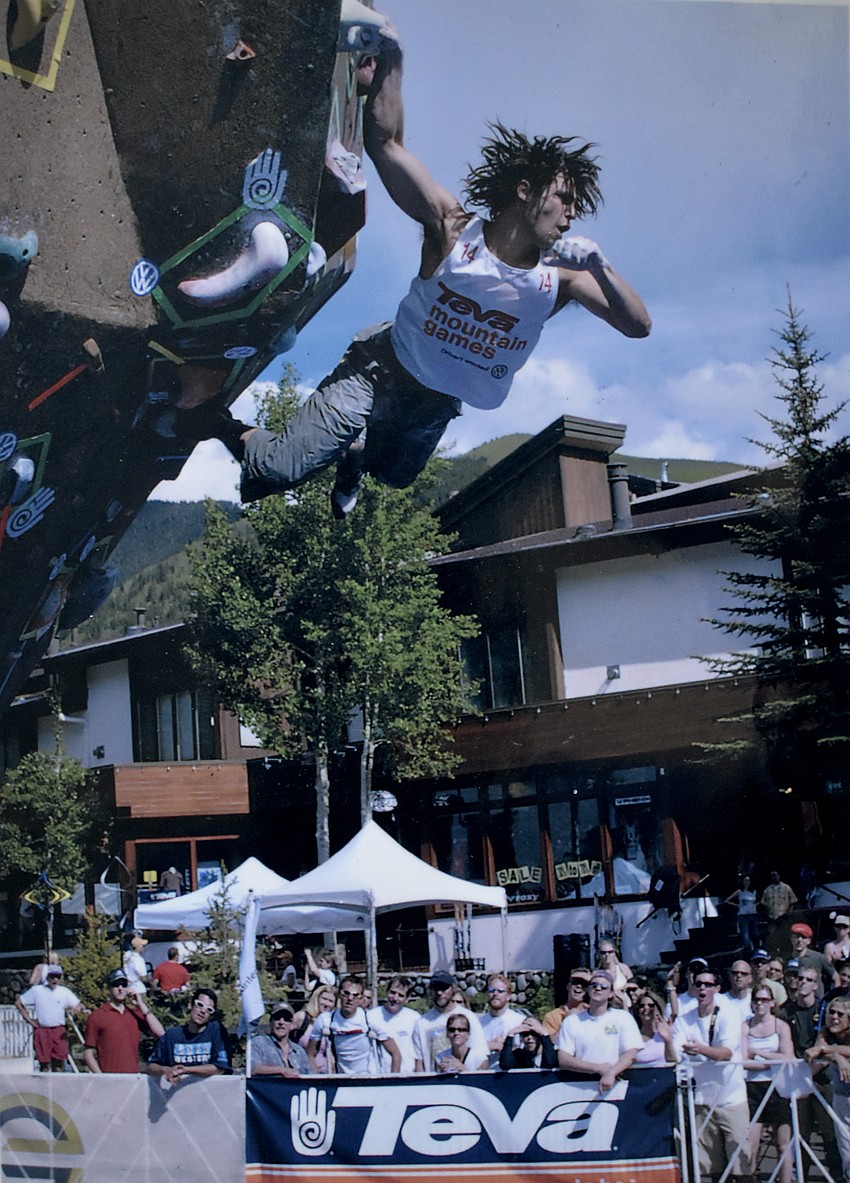
At 19, he was working at a local climbing gym and struggling to make ends meet when a fax that came through that caught his attention.
It was for a competition in Kennesaw, Georgia, with a cash prize of about $5,000 to be split between winners. Gold wrote an article asking for support and posted it in the gym, then with what he earned, headed to the event with his father to support him.
There, he was chosen from a small number of pre-qualifiers, before receiving sixth place.
"I was like, 'Whoa. Like, ‘OK, I didn't make money, but I beat those guys," he said. "Like, I just couldn't believe that I beat those guys. These are the guys that are in the magazines, that are sponsored.”
That led to being approached by two climbers who were looking to make a bouldering film, and were in search of a third climber. They were Chris Sharma and Katie Brown.
"They were on posters in my room when I was 15,” he said. “They were the best woman climber and the best man climber in the world at that time. And in my opinion, probably still pretty close. They're very, very good.”
Gold joined them for the 2003 documentary "Pilgrimage," about a bouldering pilgrimage to Hampi, India. He found the country different to navigate from the United States, with people crowding him on the streets, but he says people were, for the most part, kind and loving.
Something that impressed him was that he constantly saw prayer, yoga and meditation around him.
"Being thankful was a big lesson I think I learned, especially from people who have very little," he said.
He's visited numerous other countries, some of which include Japan, New Zealand, Thailand, Cambodia, Vietnam, Malaysia, Canada and Mexico.
”What was interesting for me traveling to all these places was that, for me, it really wasn't always about if the rock is good or not, or if the climbing is good," he said. "It was about, is the culture good? Are the people good, or is the company good, who I'm with?”
Another experience that made an impression, was one he didn't plan at all.
He went freesoloing — climbing without a rope — thousands of feet above ground at Matthes Crest in Yosemite National Park.
He'd thought his friends would be climbing just 50 feet to watch the sunrise from a ledge, but Sharma started climbing further, Gold says, and he ended up going with the flow.
"It was not a hard climb at all," he said. "It was a super easy climb, but just the fact that we were up there, that high, without ropes, so exposed to just the openness, was just a pretty wild and intense experience. So, some of the stuff I did wasn't always the smartest. I don't recommend people just go and jump into that."
He says while he doesn't dislike free soloing, he doesn't consider himself a freesoloer.
"I just have a lot more to live for than to do that," he said. "So, it didn't resonate with me, but I tried it."
However, with all his experiences around the globe, it wasn't until the last few years that he found the key to happiness.
Gold became interested in horses while filming "Dosage Volume III" and staying at an Arkansas ranch.
His experience as a climber played into his bond with horses and their owners. One aspect was the ability to mesh with others, as he did when staying at the homes of people in other cultures.
But he says the biggest thing was being in the moment.
"With rock climbing, it was becoming one with the rock. Don't fight the rock. Become one with the rock, and be the rock, and with the horse, it's the same thing… and when you can connect your energy, your aura, your heart rhythm, to theirs, you sync up in a way where you have a connection that can be very special and trusting and generous and willing, if it's done properly.”
Meanwhile, seven or eight years into his climbing career, he was finding his enjoyment of the sport fading. Although he'd started off chasing experiences, he began to feel he was always chasing the next magazine appearance.
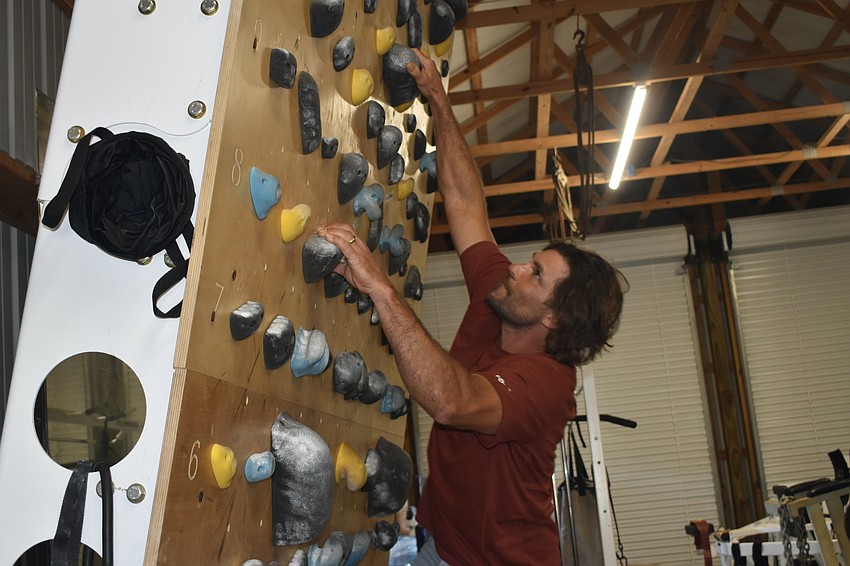
That's when he decided to drop everything and focus his energy on horses.
After reading the book "The Man Who Listens to Horses: The Story of a Real-Life Horse Whisperer" by Monty Roberts, he was inspired to attend Monty Roberts International Learning Center in California, where he took a course, then received a scholarship to finish his schooling there.
While completing school, he began working for Roberts, joining him on tour and visiting locations that included many European countries as well as others like Brazil, Israel, Egypt and Jordan, serving as a backup rider for demonstrations and handling horses.
“I'm not just working for him, I'm in the middle around thousands of people, so it was very similar to being in the video with Chris Sharma and Katie Brown,” he said.
About 18 years ago, he moved to Sarasota after meeting his wife, Roni Gold, with whom he now has two sons, Nash, 16, and Bodhi, 13.
Here, he has held a succession of jobs involving horses, living first in Gulf Gate, then near Riverview High School, before the family made a major move to Myakka Valley Ranches, where they have been for about 14 years.
At the time, he had established success as a horse trainer in North Port, which convinced him the investment, although costly, would be worthwhile.
But he still didn't want to let the family down. He began working six or seven days a week, with eight to 12 horses in training at all times.
Everything took a turn when he broke his ankle.
Gold says he had been taking on too many clients, who often had unrealistic expectations. Today, he is much more selective.
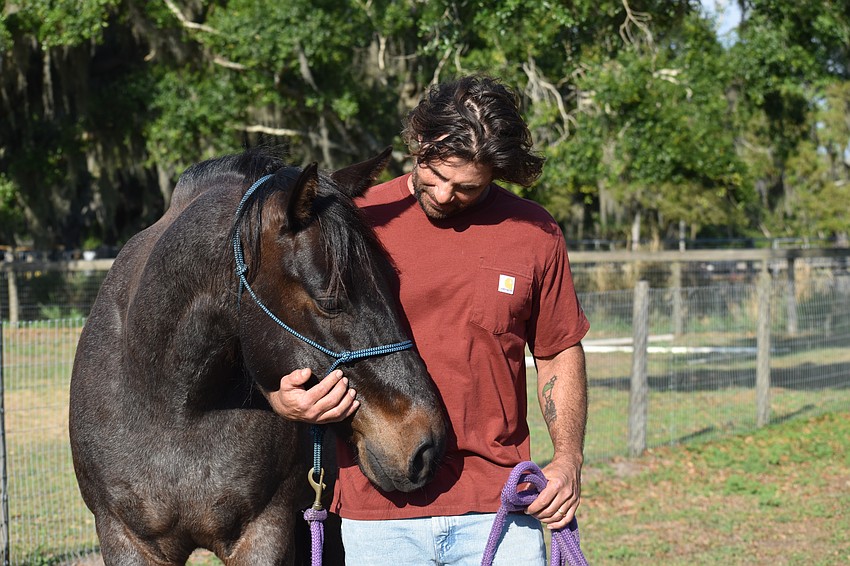
He says if clients tell him other trainers have promised certain results in 30 days, he might tell them six months, the timeline he really expects.
"By all means, please go to them. Please go to them," he said. "Because the moment they can't do it, the moment it doesn't work, they're all going to call me because I finally built this reputation here. I've finally grown up enough, or just grown into it enough, to where I've been doing it long enough and have the confidence to know what I'm talking on, and so that feels really, really good."
He says he's earning the same amount of money as before, but also has more opportunity to live life, enjoying the experience of bringing his kids home from school or helping them with their homework, or mentoring others in life, or in rock climbing.
Looking back at everything, he calls himself "just in awe of my life, and just so content and at peace with with things."
"I've just been very fortunate in that way, to see life through my lens and try not to get caught up in things that aren't really real," he said. "The things that I believe are real are love, relationships, memories, experiences, and that's basically it."