- March 19, 2026

-
-
Loading
Loading
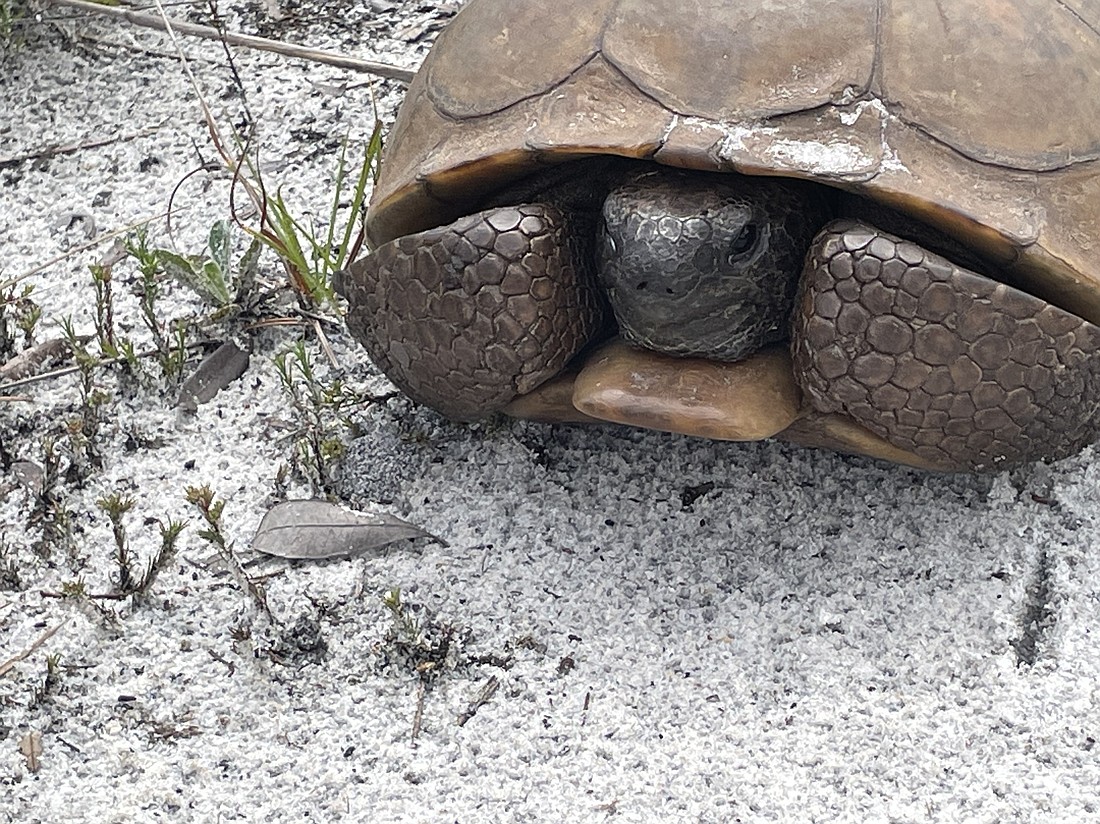
Every resident has to pay their fair share to live in Manatee County — tortoises, too.
The county will collect $725,040 over the next five years from the Florida Department of Transportation’s Florida Turnpike Enterprise to rehome 191 gopher tortoises in Duette Preserve, in the easternmost portion of Manatee County.
Fiorella Teodista, communications outreach coordinator for Florida’s Turnpike Enterprise, said the gopher tortoises should be arriving at the preserve in early 2026 when construction begins on the Suncoast Parkway from County Road 495 to U.S. 19 in Citrus County near Crystal River.
Duette Preserve was permitted by the Florida Fish and Wildlife Conservation Commission as a gopher tortoise long-term recipient site in December 2023. As of Sept. 1, the site has provided a home to 131 gopher tortoises that had to be moved due to development.
Charlie Hunsicker, director of Manatee County Natural Resources, called the bid process with FDOT “competitive.”
Teodista would only say that FDOT publicly advertises invitations to bid, but the FWC website states that “there is a high demand to relocate gopher tortoises to recipient sites due to the ongoing development across Florida.”
Manatee County is expanding its efforts. Hunsicker said the more than 21,000-acre Duette Preserve can accommodate up to 2,000 tortoises, but not all those spots are available right now.
The county plans to open three additional locations within the preserve. Currently, the program is operating out of one 500-acre site that can accommodate up to 826 tortoises.
Manatee County’s Natural Resources declined to comment on how much the program has profited to date, but said that the funds are invested back into Duette and other Manatee County preserves as a “continuous investment in the county’s environmental lands and wildlife.”
The Natural Resources Fee Schedule only states a charge of “market rate,” which is reassessed on a quarterly basis. Doing the math on 191 tortoises for $725,040 places a value of $3,796 on each tortoise. However, public entities receive a 10% discount.
Manatee County receives a 20% discount for its own projects that require gopher tortoise relocation. A developer pays market rate without a discount, and 50% of the spots are reserved for private entities. The remaining space is to be split 50-50 between Manatee County and other public entities.
The site at Duette was placed under a conservation easement to the FWC in perpetuity with the goal to sustain a long-term gopher tortoise population.
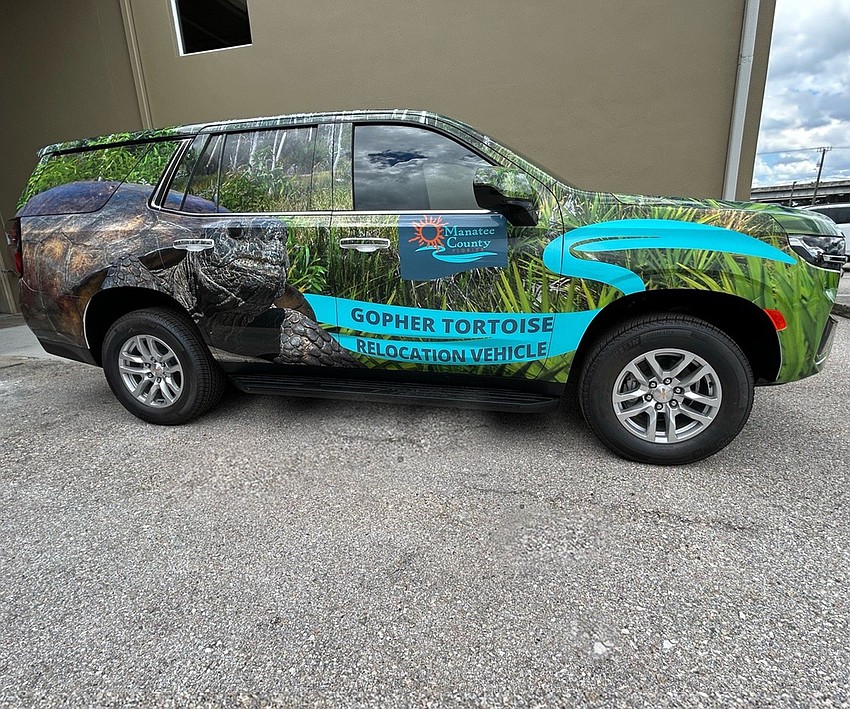
A 2024 study of a recipient site in the panhandle called Nokuse, which is a 55,000-acre private nature preserve in Walton County, identified 2,822 tortoises that were relocated between 2006 and 2022.
Relocated tortoises are assigned numbers, which are then marked on their shells. Researchers collected 503 carcasses that could be identified as tortoises that had been rehomed.
The results showed that “the survival rates are unlikely to result in self-sustaining populations.” The study’s matrix population models indicated a 5-7% population decrease of relocated tortoises per year.
The recipient site at Duette is new, so only two enclosures have been filled and have had their fences removed.
Silt fences are dug at least eight inches into the ground, so the tortoises are released into enclosures that range between 15 and 30 acres. Otherwise, the tortoises might wander off trying to find their old burrows.
The fences are removed between six months and a year after the first tortoise is received and site fidelity is established, which simply means that the tortoises are now regularly coming and going from new burrows.
The tortoise populations in each enclosure are surveyed one week before the fencing is removed.
Ecological Program Manager Kathleen Barrett said the survey results for the first two enclosures “closely matched the quantity of tortoises released” and that the observations of individual tortoises indicate a “healthy and active” population.
The only issues for the tortoises that Barrett noted stemmed from Hurricane Debby and Hurricane Milton in 2024. Enclosure fencing throughout the recipient site was damaged, but the fence was quickly repaired by staff members and the population was monitored for stress.
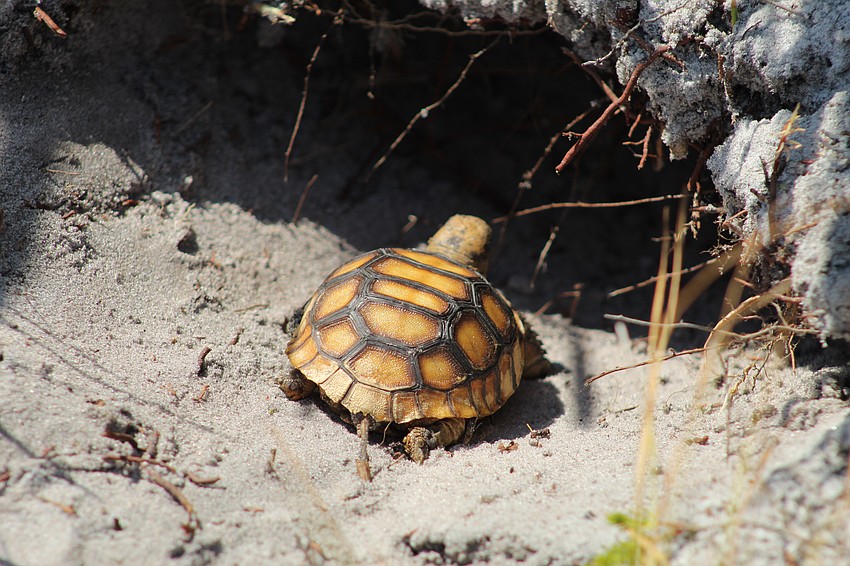
So far, Duette Preserve has taken in all ages of tortoises, including hatchlings, juveniles and adults, plus two batches of eggs.
Stocking rates are calculated based on the existing tortoise population on site and the vegetation composition of the site, but on average, one tortoise requires a half-acre.
Public and private landowners with at least 25 acres can apply to the FWC to have their land designated as a gopher tortoise recipient site, but the land must meet certain criteria.
The land needs to have at least 30% herbaceous species for foraging, less than 60% canopy and shrub cover to provide shade and well drained sandy soil so the tortoises can burrow.
Before a gopher tortoise arrives at Duette Preserve, the staff dig it a “starter burrow.” The starter burrows provide shade, shelter and familiarity. Soil from the tortoise's old burrow is collected and then scattered around the mouth of the starter burrow to offer a recognizable scent.
“Many tortoises continue to use the starter burrow,” Barrett said, “However, some choose to dig a new burrow within the enclosure.”