- March 19, 2026

-
-
Loading
Loading
Cary Knight, director of Property Management for Manatee County, said the county was never in the market for a 100,000-square-foot building.
He and his team were scoping out buildings so they could move the Development Services department out of the county administration building downtown. After passing on a nearby property, the realtor jokingly mentioned a building that just went up for sale across the street if the $6 million building they were standing in was too small.
Less than one year later, Manatee County is preparing to move Development Services and six additional departments to a second administration building in the heart of Lakewood Ranch.
The county closed on a two-story, 101,312-square-foot building at 9000 Town Center Parkway Sept. 2 for $23.5 million. The total cost, including renovations and decor, is anticipated to be $34,832,903.
The Development Services team consists of under 150 employees. The new administration building can accommodate 600 employees, 300 on each floor.
About 550 county staff members will be transferred to the new building from Development Services, Public Works, Human Resources, Property Management, Financial Management, Government Relations and County Administration.
County Administrator Charlie Bishop, the three deputy county administrators and all seven commissioners will have offices in the building, but also keep their current offices at the administration building in downtown Bradenton.
The commission chamber will also remain downtown.
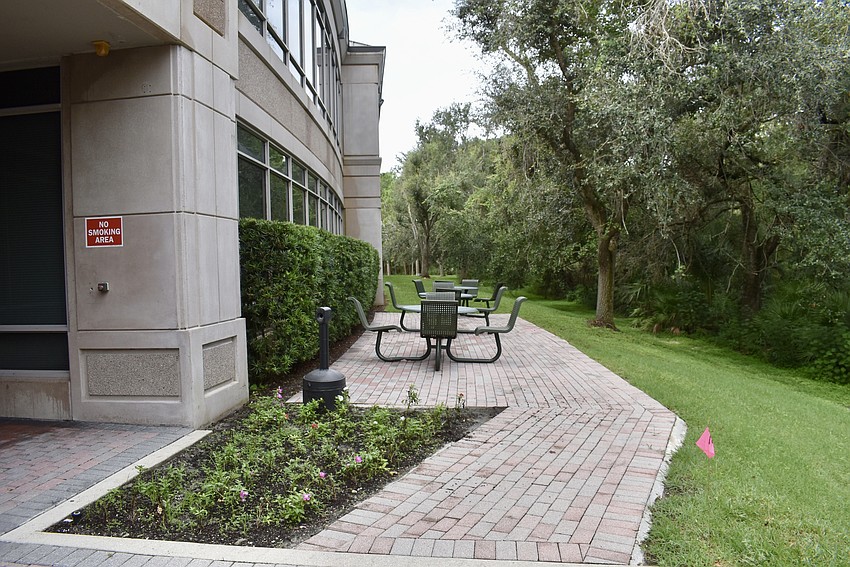
Deputy County Administrator Bryan Parnell highlighted the land, in addition to the building, as an asset that would be hard to find anywhere else. With over 11 acres, the property backs up to a preserve and provides 602 parking spaces.
The parking lot can accommodate employees and visitors.
Once up and running, residents will be able to apply for permits and pay utility bills at the administration building. Manatee 311 personnel will be stationed in the lobby, so residents can also report issues and make service requests in person.
Moving 550 employees takes quite a bit of coordination, but Knight is prepared with plans and a schedule. His enthusiasm for the project was evident when he asked, “Do you know Tom Gerstenberger?”
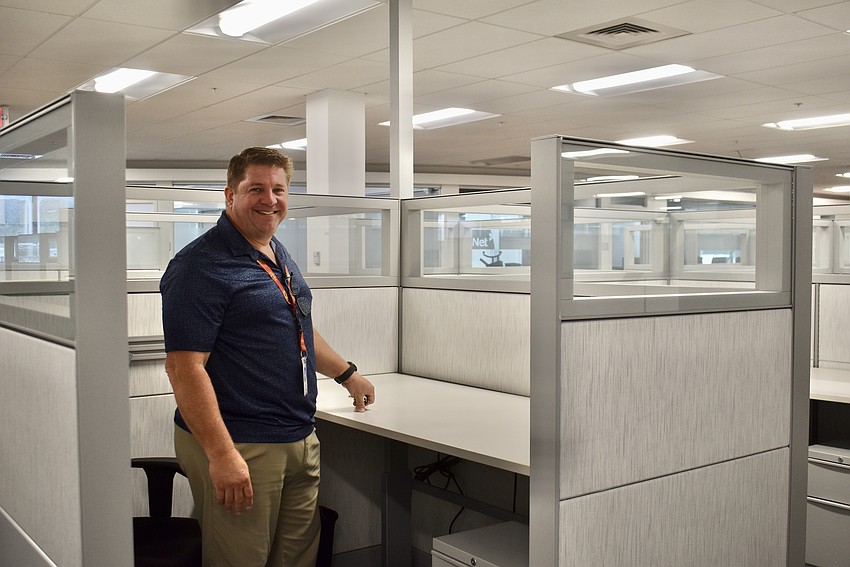
Knight was standing in front of two empty cubicles, but already imagining the collaborations that will inevitably take place once the building is occupied.
Gerstenberger is the Stormwater Engineering division manager. In the new configuration of cubicles, he will be working side-by-side with Hjalmar Pachas, the section manager for the Building and Facilities Technology department.
Knight waved his arms in front of a long wall opposite their work space to indicate where a row of TVs will be mounted.
Right now, Gerstenberger has people constantly stopping by his desk to look at different engineering models that after the move will be visible to everyone in his department and everyone in Pachas’ department, too.
“What this allows us to do is force those collaborations because they’re constantly next to each other,” Knight said. “When you think about hurricanes, people don’t talk about the good that comes from all the people going into that room (at the Emergency Operations Center) and sitting shoulder to shoulder and reacquainting."
Close quarters also provide operational efficiencies, such as shared printers. The county leases its printers. The IT department is already working on a way to know which departments are printing what for accounting purposes, so the amount of leases can be reduced.
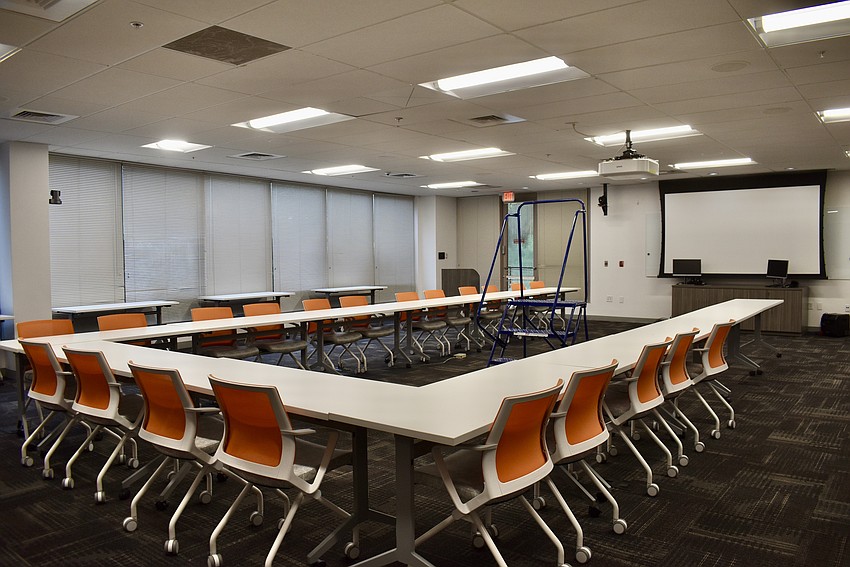
The large meeting spaces that can accommodate Town Hall meetings, community workshops and employee training will cut costs, too.
Knight said a new employee is a certified trainer for the Occupational Safety and Health Administration, so future training will be conducted in-house and save the county hundreds of thousands of dollars.
Employees will be moved over to the new building in waves, starting with the Property Management department as early as Oct. 31. Development Services and Public Works will follow because those departments will occupy the first floor, which is currently vacant.
TriNet, a human resources provider, was the prior tenant. However, Parnell said the company never returned to the building after employees began working at home through the COVID pandemic.
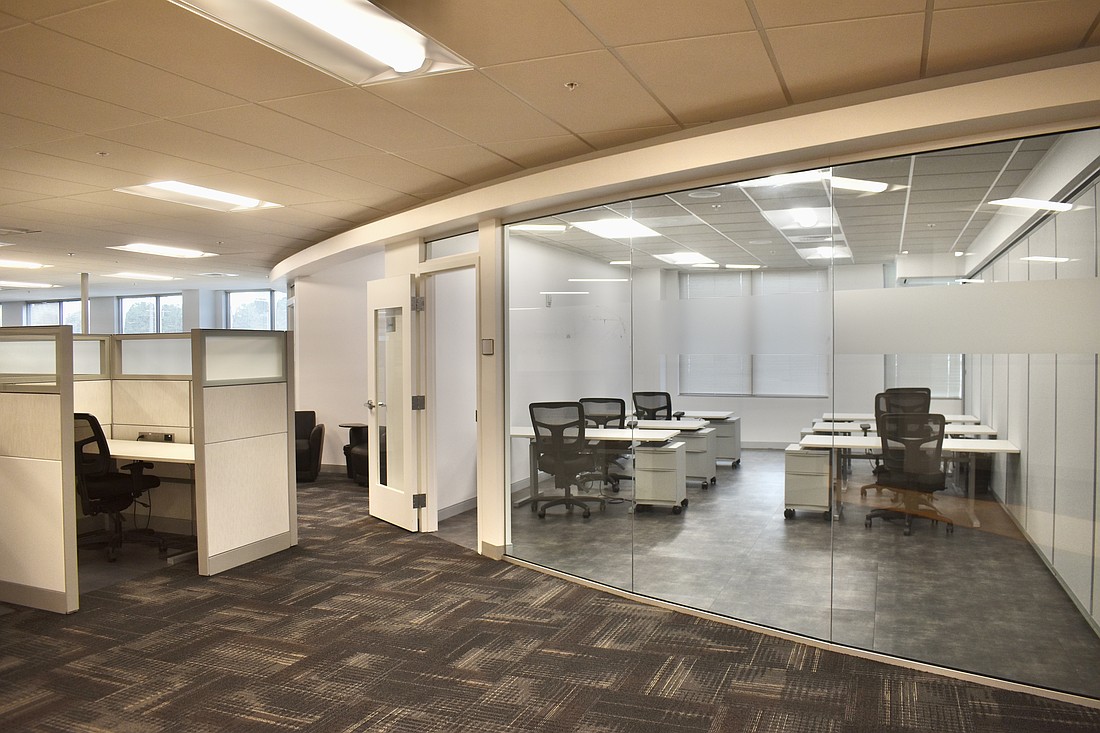
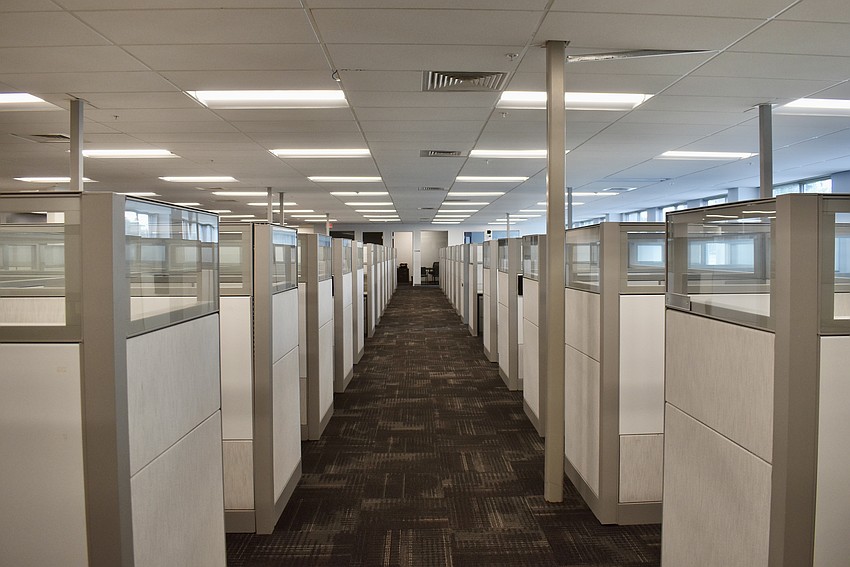
The space is centered with huge blocks of cubicles, but around the perimeters are break rooms, lounge areas, soundproof privacy pods, small meeting rooms, large conference rooms with partitions, coffee bars and a mini cafeteria with a cafe-style seating area.
“It’s nicer than the typical government employee office space,” Knight said.
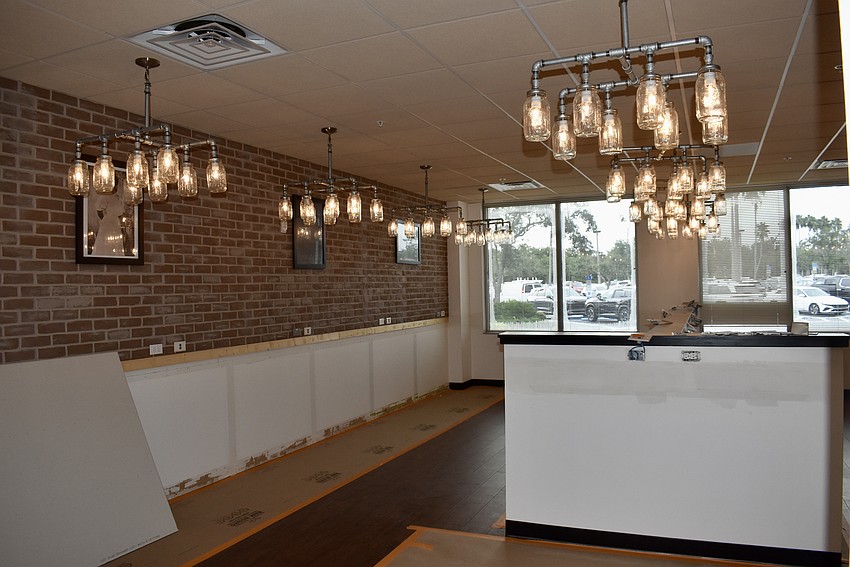
Tables, chairs, couches, computer monitors, screen projectors, microphones, light fixtures, shelving units, ping pong tables, foosball tables, a white noise generator and reclining chairs from the lactation rooms were all left behind by TriNet.
The IT department estimates that they inherited at least $100,000 worth of technology, and Knight estimates the cubicles alone would have cost the county about $4 million to purchase. They were customized with built-in power and adjustable desks.
There are also chairs and small file cabinets accompanying each cubicle. Knight said he found a few coffee stains that prove people used the space at some point, but outside of an examination, everything looks brand new. He estimates the furniture would have cost another $1.5 million.
The first floor only requires customization. For example, a window is being cut out of a wall where development services will be housed, so a cashier can take payments.
The second floor is currently occupied by the Federal Emergency Management Administration, which indicated it will be using its one-time option to extend its lease for three months.
That pushes the county’s move into the second floor out to Feb. 1, but Knight said the moment FEMA moves out, the crew will mobilize to the jobsite.
The most crucial task for Knight is ensuring that the staff can provide continuous service throughout the move, so he has to time things accordingly.
Human Resources can move at anytime, but Financial Management will be moved after next year’s budget season.
Employees in every department will pack up their current desks on a Friday afternoon. Between Saturday and Sunday, their boxes will be moved so everyone can be unpacked and back to work by the following Monday at noon.
Even after FEMA vacates, the second floor isn’t as move-in ready as the first floor. The east side of the second floor mimics the downstairs, including the cubicles, but the west side requires some reconfiguration and furnishings.
As to not disturb the first floor workers, windows will be popped out on the second floor so all the supplies and furnishings will be brought in and out on a lift.
County Administration and Government Relations will occupy the east side, and Human Resources and Financial Management will be the last departments to move in once construction is complete on the west side.
The goal is to have the building fully occupied by January 2027.