- March 16, 2026

-
-
Loading
Loading
The moment the news broke that the first plane had crashed into the World Trade Center on Sept. 11, 2001, the world changed.
The Sarasota Police Department, and the other forces protecting President George W. Bush during his visit to Sarasota that day, had to immediately adapt.
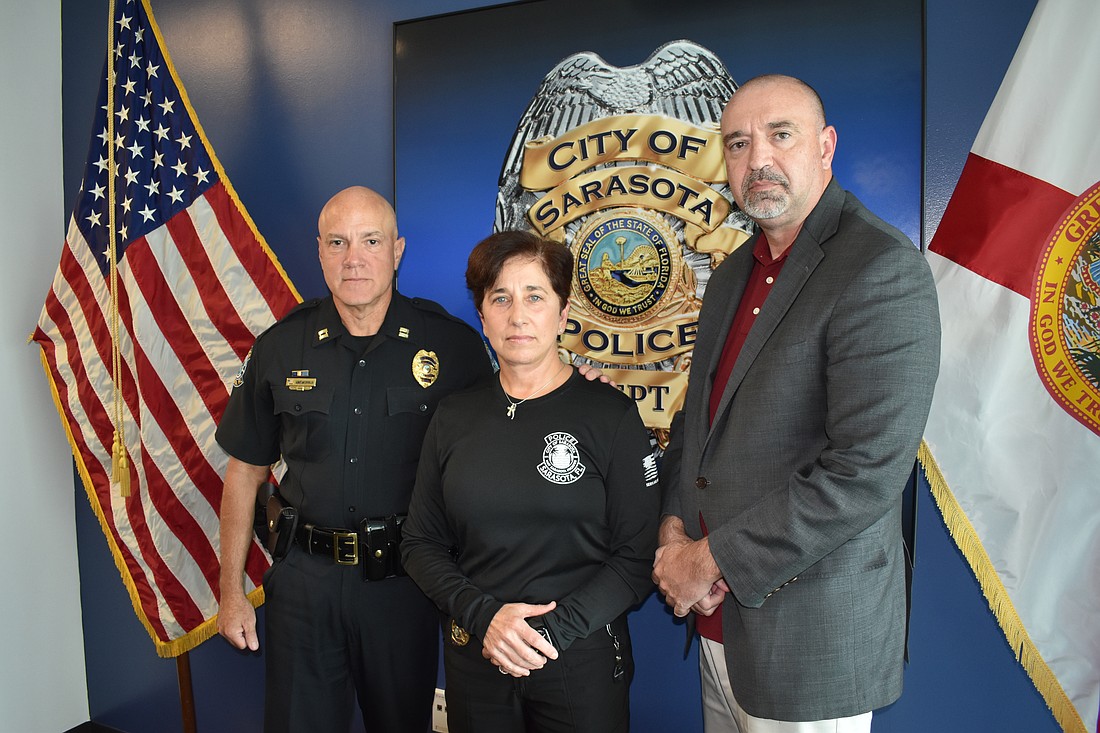
Capt. Demetri Konstantopoulos, Detective Maria Llovio and Capt. John Todd are among a handful of staff who were serving the department and who still remain there today.
They are some of the few law enforcement personnel who carry the memories of how a role in the presidential escort changed from merely a proud moment, to a role in one of the most tragic days in the country's history, in which almost 3,000 people lost their lives.
Last week was the first time the three officers sat down together and shared their stories of their duties on that day.
At the time, the three officers belonged to a speciality street crimes unit consisting of six individuals.
While they were relatively new to the department, Llovio says they weren't intimidated by protecting the president. They knew they had had the training and experience to prepare them for that moment.
“I think we were ready and willing and able to do what we had to do at the time,” she said.
At every single intersection was at least one police officer that day, from where President George W. Bush was staying in Longboat Key, to Emma E. Booker Elementary where he was headed, Todd recounts.
“We were just a small part of it, but certainly proud and excited to be a part of it,” he said.
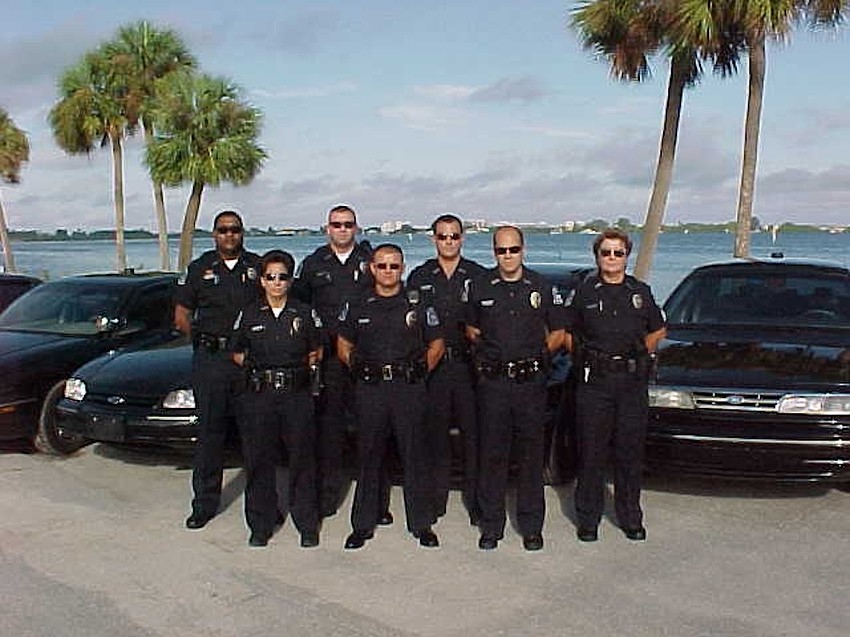
Konstantopoulos recalls that day began as a "gorgeous day."
Yet Llovio says when she thinks about what happened later, with groups of officers alternating across the streets to protect the president, it still brings her chills, and brings tears to her eyes.
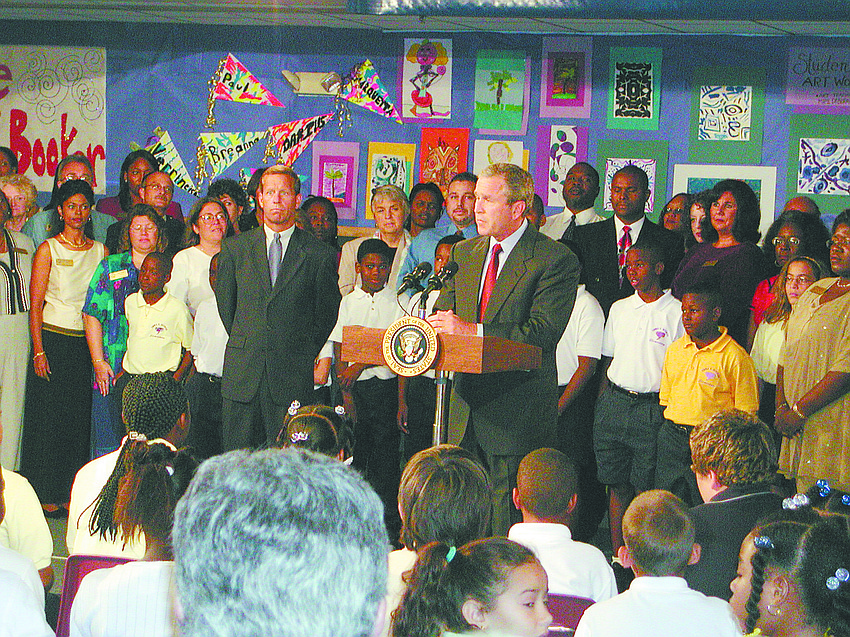
After arriving on Sept. 10, Bush was staying at Colony Beach & Tennis Resort on Longboat Key, now the St. Regis Longboat Key Resort, and was making the appearance at the school to raise support for an education bill.
From their position near Lido Key and Bird Key, the focus of the three officers was guarding the president as the motorcade passed out of Longboat Key and through St. Armands Circle.
The multi-jurisdictional undertaking also involved other local and federal partners, including the Sarasota County Sheriff's Office, the Florida Highway Patrol and the Secret Service.
Once Bush had arrived at the school, the unit was to stand by before escorting him to the airport. But just before his arrival, the first plane crashed into the North Tower of the World Trade Center.
At first, as the news played over the car radio, the officers believed the same as the rest of the public — that someone had crashed a small plane into the tower.
Minutes later, as Bush was reading to a group of elementary school students, Chief of Staff Andrew Card whispered into Bush's ear, "A second plane has hit the second tower. America is under attack."
The officers were suddenly redeployed, and it was now an exigent circumstance to return the president to the airport. Konstantopoulos recalls at that point, the police radio “exploded” with activity.
“I’m pretty sure we were all pretty stunned for a second; we didn’t know what was going on,” Llovio said.
“I know my adrenaline was through the roof," Konstantopoulos said.
Lights and sirens activated, they drove from Bird Key Park to the elementary school.
From there, the force was directed to leapfrog — to cycle amongst one another across different intersections — to expedite Bush's trip back to Air Force One.
Any open driveway or street, or any other potential danger, had to be guarded before the president moved on to the next section.
Llovio said amid the heightened responsibility and potential dangers, her mindset was unchanged.
“I think in the moment when you have to act, you just act," she said. "You do what you've got to do. Those feelings come later, I think, when you're in a safe place and you go back and you think about it.”
“You have to adapt, and I think that's what we all did, is we found our own, 'Where can I go to help?" Konstantopoulos said. "What intersection can I jump into to block? And I think it goes back to our training and experience, and we just fell into that response role until we got all the way up to the airport.”
Once there, they were redeployed in different surrounding areas.
They had to be on the lookout for weapons, whether that be a sniper or a surface-to-air missile launcher that might be targeting the plane, Todd said.
"Nobody knew how big this thing was going to get at the time," he said.
“I think that was the primary concern at the time,” Llovio said. “The target was New York and the towers, but in that moment, you had to think that he was going to be the target.”
Konstantopoulos calls the takeoff of Air Force One an image “forever" burned into his brain.
The near-vertical takeoff, performed by commander and pilot Col. Mark Tillman, was intended to avoid any potential threat at the end of the runway.
"Maybe it went, I don't know, 50 feet, and then the nose went up, and then it shot off like a rocket," Konstantopoulos said.
“The heat from the plane just hit you in the face,” Llovio said. “There's an adrenaline crash, and then you start shaking.”
From there, the officers headed to the Criminal Investigations Division conference room, where they joined a group in watching the terrorist attacks unfolding in New York City.
“I just remember the shock and really the emotion watching the first tower come down,’ Konstantopoulos said. “And by then, we all understood that America was being attacked.”
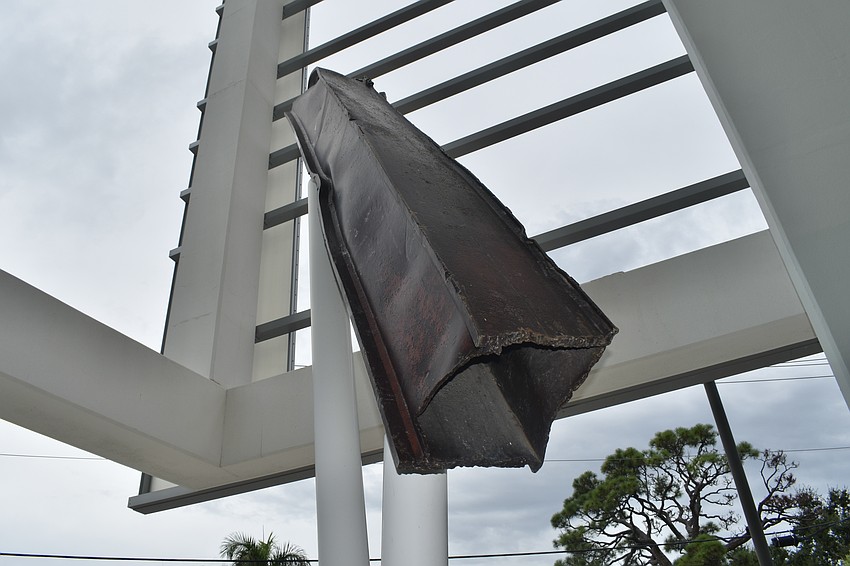
"You could hear a pin drop," Llovio said. "I remember it was eerie, and I think at that point, the command staff started talking about calling people in and getting ready for what was to come next.”
Concern still remained that Sarasota could become the next target because of the belief Bush was still in the area.
Personnel were posted to different areas to guard critical infrastructure, something that continued across the next few days. Areas of concern included the water supply, the bridges, fuel stations, and City Hall, where Llovio stayed that night.
Todd recalls guarding a water treatment facility and New Pass Bridge.
“You're wondering, why would they target this facility, but certainly not wanting to be the person that dropped the ball and allowed something like that to happen,” he said.
Llovio remembers an intense schedule that might involve a quick run to get a meal, before returning to the post to relieve another officer.
Yet amid the heightened demands, staff also had to contend with the same confusion that existed amongst the general public.
At that point, nobody knew where the president was.
“This was nationwide, I'm sure, but there were so many unknowns,” Todd said. “Where was the president?' 'What's going on?' 'Is our city going to be under attack as well?' that we didn't get answers for quite some time... We were no different.”
After remaining airborne for much of the day, Bush would address the public from Washington, D.C. that evening.
A few days later, the situation became more challenging for the department, as Hurricane Gabrielle struck near Venice on Sept. 14, causing lasting power outages in Sarasota and adding to the manpower required.
Nonetheless, Konstantopoulos says he found himself encouraged by the patriotism and unity he saw throughout that time. One example was when he was helping another officer, Dan Riley, direct traffic at Bahia Vista Street and U.S. 41 during the power outages.
“People were stopping and saluting us, not that we deserve that, because we were just doing our jobs, but it was clear and obvious that this tragedy brought out the best in Americans," he said.
Today, Konstantopoulos and Llovio have been with the department for 27 years, and Todd says he has been there for 26.
"Somehow, I was given a gift to be able to do this kind of work..." said Llovio, who now works under Todd in the Criminal Investigations Division. "I do violent crimes, crimes against children, homicides, and I see a lot of darkness and ugliness and sadness, but I was given a gift to be able to do that, and to bring some kind of closure or healing for families, and I wouldn't trade this job for anything.”
"I think we're all of us, driven by purpose," Konstantopoulos explains.
In telling the story, his purpose is to help a new generation to understand the experience of that day.
"We have new officers here that maybe they weren't even born on 9/11 and will never grasp the feelings of that day and understand that, we're the greatest country on earth, but we're not immune to something like this..." he said. "We have to be ready at all times, you just never know... and if we can pass that down to this next generation, then we've done our jobs."