- March 19, 2026

-
-
Loading
Loading
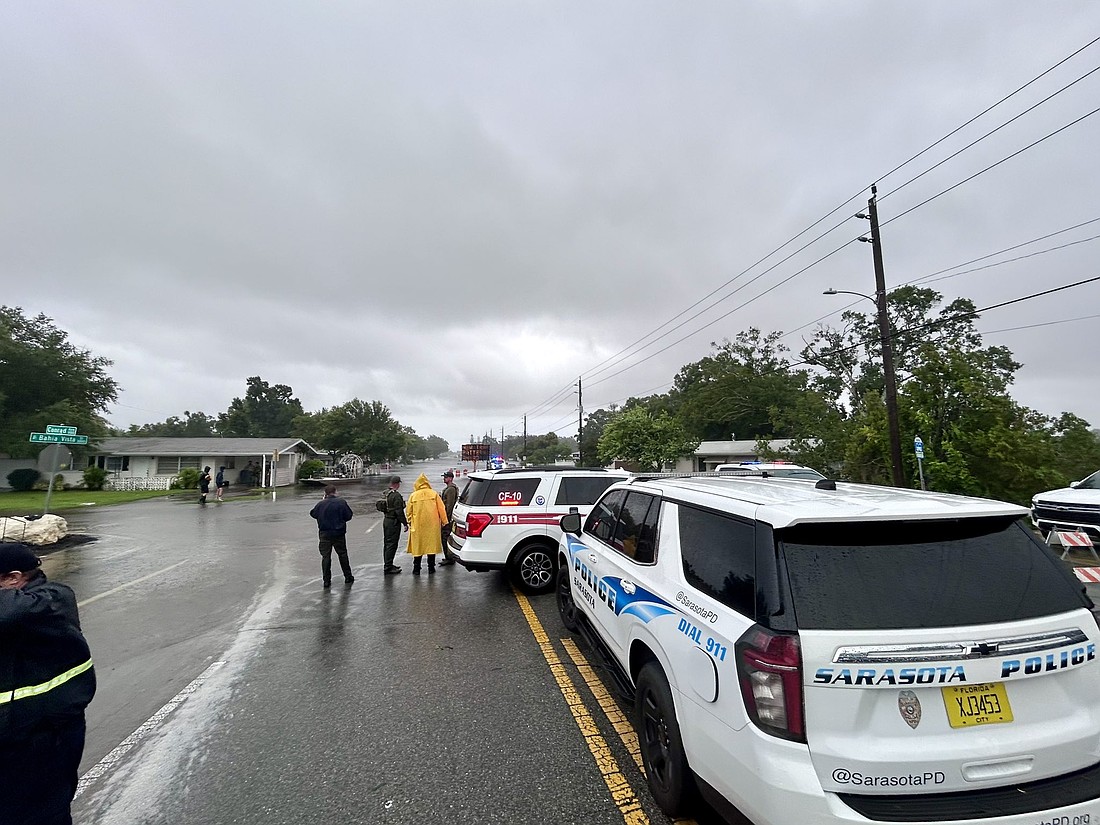
Steve Suau told Sarasota County commissioners last week that an increase in stormwater assessment fees probably wasn’t warranted.
The engineer and hydrologist hired to conduct an independent audit was not alone.
Speaker after speaker before the county’s fourth informational workshop on the broad topic of stormwater agreed even before Suau said his first word.
“This isn’t Monopoly money,’’ resident Connie Neeley said. “It comes from our wallets.’’
And by the end of Friday’s session, each of the five county commissioners agreed. County commissioners were given a pair of increase proposals to consider. The county staff had recommended the higher of the two as a way to catch up on myriad projects to smooth out rainwater flow through miles of ditches, creeks, tributaries and canals.
But with millions in storm aid rolling in and $18 million in reserves, questions were raised about the need.
Ultimately, it was only the county’s newest department head of the county’s newest department — Ben Quartermaine of the stormwater department — who was lobbying for an increase. Although votes were not permitted in the less-than-formal setting, the commissioners all signaled no desire to bump the annual fee $31 to $143 for the owner of an average home. They were last raised in 2022.
“Thanks for keeping a smile on your face, even though we kind of drug you through the keyhole backwards,’’ Commissioner Teresa Mast told Quartermaine.
That’s not to say status quo is the solution.
Suau’s recently completed audit of stormwater practices, finances and supporting laws also recommended a new way of approaching projects based on the stormwater department’s broad mission of sediment management and mitigation.
In other words, maintenance.
The solution to that goal, Suau said, is a sort of cost-benefit analysis that wasn’t always done before green-lighting projects. He said taking a new look at projects already in the planning stages could result in a reordered list, based on the biggest bang for the bucks. So could doing a lot of engineering work in house?
“We’ve known this maintenance was a priority,’’ he said. “The project prioritization has not caught up to that priority. The reevaluation has not caught up to that decision that I think the county made several months ago that we need to get on top of maintenance. That should happen, because you may very well find that if you do, you don’t need to increase the assessment.’’
Suau used as an example a pair of projects on a list to be paid for with the county’s surtax fund, not stormwater funding. Neither, he said, had the cost-benefit analysis performed, nor had they been meshed in with a hierarchy of other stormwater projects. He said there was about $50 million in surtax-funded projects under consideration that could be reordered.
“Everywhere I look, it seems like there are opportunities to find revenue,’’ Suau said.
In recommending the rate hike, Quartermaine said that in the early portion of a reevaluation process, there might not be enough savings to get by on existing rates. In addition, he said, with more projects on the docket, a 20% vacancy rate in his department would likely have to be addressed to accomplish the work. He added that rate reductions could easily take place in years beyond as additional savings of Suau’s recommendations take hold.
Commissioners said his department has an $18 million reserve and the potential for general fund money in the midst of fiscal year 2026 should the need arise.