- March 16, 2026

-
-
Loading
Loading
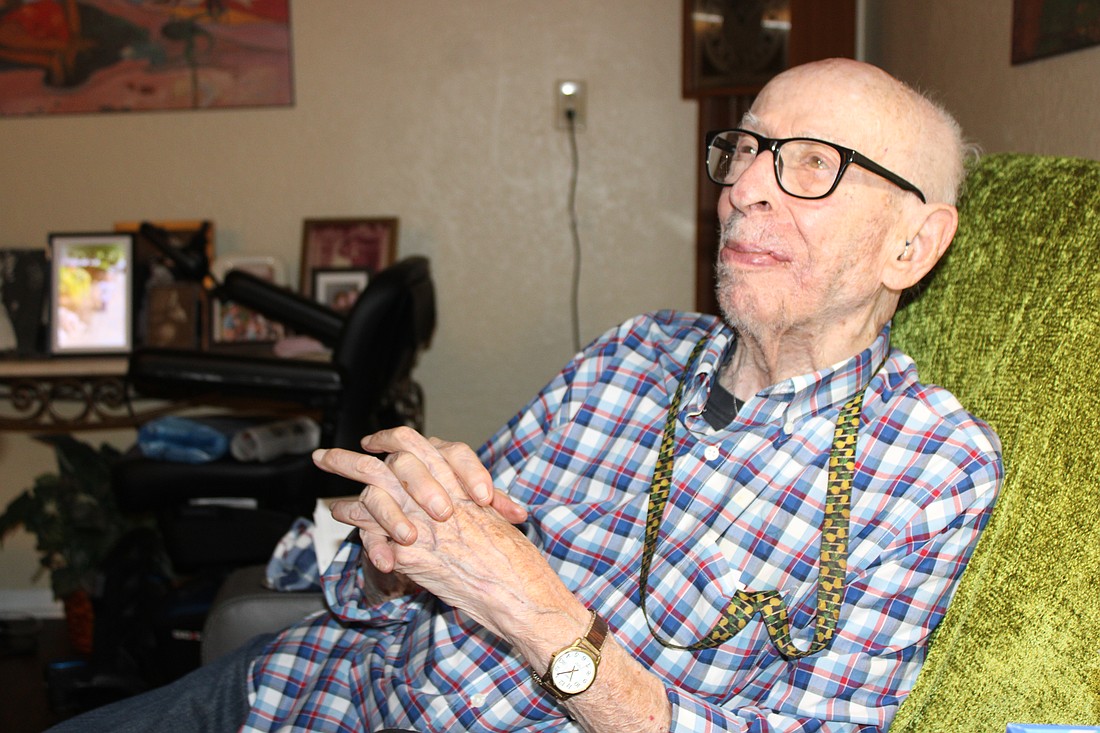
At 100 years old, Bernard Greenberg sat on a chair at his small Bradenton apartment with a reporter hanging on his every word.
"I guess I could lie, but I never saw actual combat," he said of his time as an Army staff sergeant in World War II's Pacific Theater. "You could find guys who did more than me. The last time I marched in a parade was in 1935 when I was a member of the Boy Scouts. They gave me a flag to hold. It was Memorial Day in the Bronx."
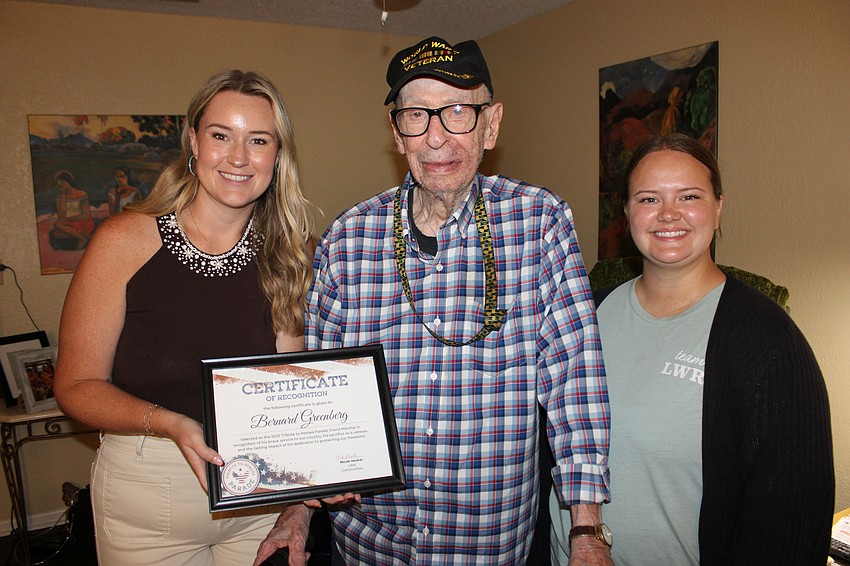
Greenberg was speaking of his selection as the grand marshal for the Tribute to Heroes Parade that will be held Nov. 9 at Main Street at Lakewood Ranch.
While technically, the combat part might have been true, Greenberg served a key role at a time when approximately 160,000 U.S. soldiers in the Pacific Theater died with 111,606 being killed in combat with the rest dying because of illness or poor living conditions.
Greenberg and the other members of the 126th Signal Radio Intelligence Company, received presidential citations for their valuable codebreaking that alerted the allied forces to Japanese troop movements, base locations, and other key information.
At his base in New Guinea, Greenberg's living conditions weren't ideal.
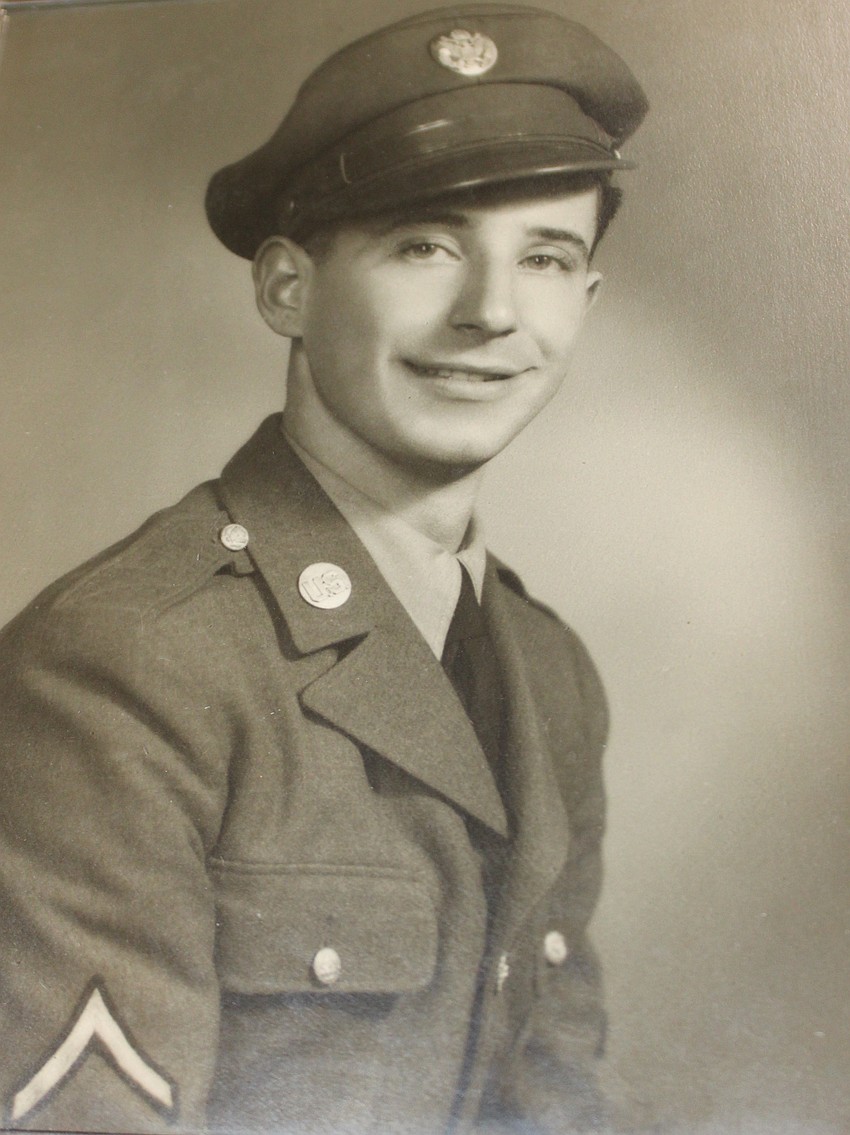
"I was sent to New Guinea, which is the world's second largest island (to Greenland)," Greenberg said. "We were in the jungle and we built a building and set up a radio station. There were 20 of us intercept operators. It was a 24-hour operation and we would send the information back to Brisbane (Australia)."
Although they had plenty of bananas and coconuts, most of their rations was canned food. The soldiers at the camp all would get sick and he remembered spending three days in the hospital with dengue fever. He was told he had to return to work even though the average recovery time among the soldiers was about two weeks.
"It rained there just about every day," he said. "When you were off your shift, you would just lie there on your cot. It was hot, but it was the humidity that got you. You would just lie there and you would see all these lizards crawling on your body.
"Once a month, we would get a PX (post exchange or retail store) call. You could buy candy. I used to love Baby Ruths, but where do you keep them? We would sleep under a net so I put the Baby Ruths on top of the net, just above my body. One night, I woke up to this damp, furry smell. This huge rat (he held his hands apart about 20 inches) was gnawing on the box of Baby Ruths. It was this far away from my face (holding up his fingers about 3 inches apart).
"I didn't have a Baby Ruth for the next 20 years."
Time passed slowly in New Guinea, and during that time, he received word that his brother Murray had been shot down near the Erfurt airfield in Germany. Murray spent the next 18 months as a prisoner of war, but survived.
In October of 1944, with the war against Japan raging, Greenberg and his fellow soldiers woke up one morning in New Guinea to find hundreds of U.S. ships in the bay.
"They were aircraft carriers, cruisers and destroyers," he said. "Then a couple of days later, we woke up, and they were all gone. They were going to invade the (Japanese-occupied) Philippines."
in August 1945, Greenberg's unit was issued "brand new carbines and submachine guns — we called them grease guns — to get ready for an invasion of Japan. His unit had been carrying "03s," which were the U.S. Model 1903 Springfield rifle that was the standard infantry rifle in World War I.
Greenberg knew things were getting serious as his unit loaded up equipment on a ship to head for Japan. It was during that loading that they learned the U.S. had dropped two atomic bombs on Japan.
They eventually received word the war was over.
Ironically, he said his scariest moment came after the war ended. Some Japanese submarines still didn't know the war was over, and the ship that was taking him to Japan before the ride home was under a submarine alert, which sent all the soldiers up on deck.
Upon arriving home, by way of Hawaii and California, he said the first thing his mother did was count his fingers.
Greenberg was 18 in 1943, when he was drafted and sent to Fort Monmouth, New Jersey to be a radio operator.
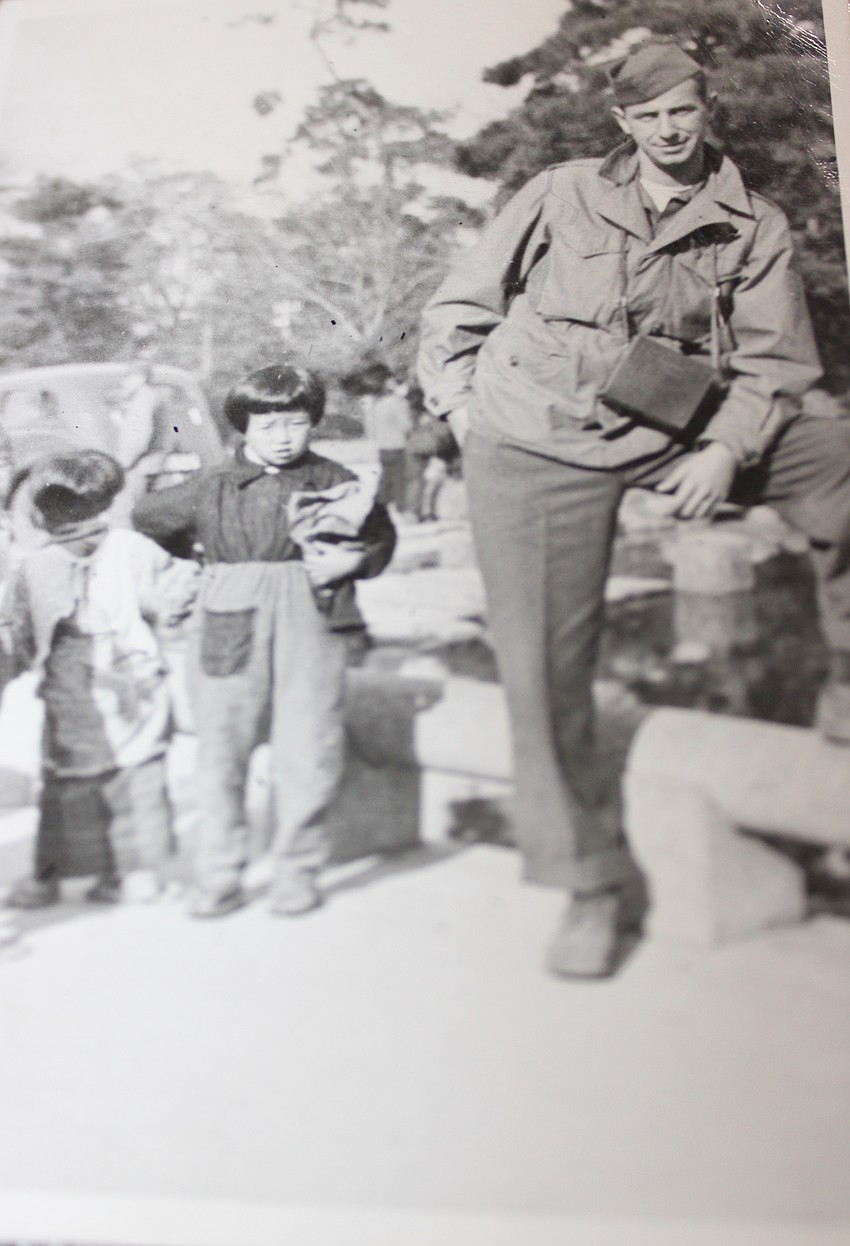
"I was good at code work, so this colonel asked if I would like to get into something special," he said. "I was sent to Fort Leonard Wood in Missouri, which was a Japanese Code School. They taught me Japanese radio codes in six weeks. I was good at it, and I picked it up, so I was told, 'You are going overseas.'"
He took a troop train to Pittsburg, California.
"I was a kid, so to me, this was exciting," he said.
To that point, the hardest Army task he had done was to "cut up 900 pounds of bacon." The scariest moment he had endured was when a brigadier general caught him sleeping during a code class.
The general simply warned him, "Don't fall asleep!"
There was little sleep to be had during his service.
He still remembers the stories.
"But all my contemporaries are gone," he said.
"In certain ways, after the war, my life was different," he said. "But I think I did my job, and I was proud."