
- March 19, 2026

-
-
Loading
Loading
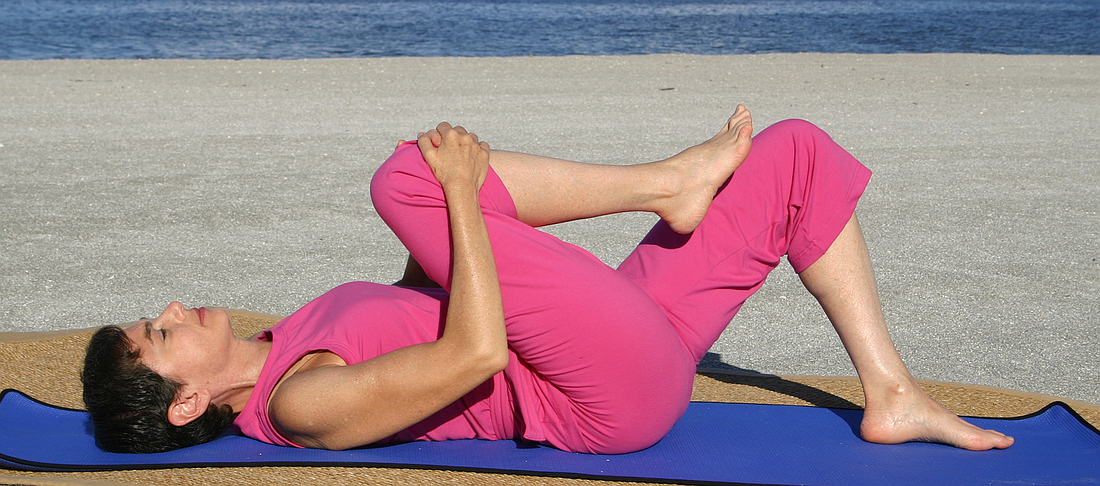
Have you tried to pick a coin up off the ground lately?
How about tying your shoes? Have you switched to slip-ons?
What about reaching over the coffee table to scoop some dip on the other side? Remember when you didn’t think twice about those maneuvers?
Sounds like decrepitude is setting in. Or maybe you’ve just lost some flexibility.
Flexibility is the range of motion around your joints.
There are two types. Static flexibility — how far you can stretch and hold a stretched body part, and dynamic flexibility — how much range of motion you have when you move.
Both are important. In fact, flexibility is one of the 3 main components of fitness, along with aerobic capacity and muscle strength.
I recommend a flexibility program that incorporates slow dynamic movements like tai chi, as well as static stretches like yoga. But in my experience, flexibility is the most ignored component of fitness. We do our cardio and our strength training but, unless we’re regular Yoga or tai chi, practitioners, flexibility is not on the menu.
Why not? I think there are a couple of reasons. First, I think we don’t get it. It doesn’t make our muscles stronger or our figures shapelier. We don’t realize how valuable flexibility is until we try to do something we used to take for granted, like reach around to the back seat to get our sunglasses. Even then we toss it off with, “Well, I guess I’m getting older." We somehow don’t connect with the thought, "If I’d been doing a little stretching all these years, it wouldn’t have felt like I was going to rip something just then." Secondly, there’s been plenty of press about conflicting studies on the effectiveness or ineffectiveness of stretching.
Some studies say stretching improves athletic performance. Others say they’ve proved the exact opposite. Some studies say stretching helps prevent injury. Others say it has no effect on injury prevention. There’s enough conflicting buzz to make you not want to bother. That’s too bad because all that buzz masks the fact we do know stretching DOES help you gain and maintain flexibility.
Does stretching help prevent injury or aid athletic performance? I don't care.
I want to stay flexible as I age. I want to be able to pick up coins, tie my shoes and grab my sunglasses. Give me my dose of flexibility training. Even if we were flexible as kids, as we get older, connective tissues, our tendons and ligaments, tend to lose water, shorten, and become stiffer. So we get less flexible. But it’s not too late. Even if you’re not interested in the fine practice of yoga or tai chi, barring some medical issue, there’s a simple way to help hang on to the flexibility you have, and work on getting some of that youthful flexibility back. A few easy stretching exercises may be the difference between living tight and living flexible. I stretch every day. Easy for me to say, I teach a stretch class. But just a few minutes, three times a week, can make a real difference. I’ve seen students of mine go from really stiff to pretty darn flexible in a few months, without trying hard.
Stretching, when done right, feels delicious while you’re doing it, and even better when you’re done. The kind of stretching I do is relaxing and meditative. I find it melts my stress and energizes me while keeping me flexible.
I’ve developed a stretch exercise technique I call Moving Free. It’s evolved over the 30 years I’ve been teaching it. I use a fusion of modified static stretches from dance, yoga and classic fitness as well as dynamic movements adapted from dance, tai chi and kinesiology.
I warm you up and lubricate the joints with a few slow, gentle, dynamic movements. Then, stretch that body part to where it’s stretched, but comfortable, and hold it around 10 to 20 seconds. About then, you’ll feel like you may be able to stretch a bit further. Try it gently, and you’ll see that you can.
There are mechanisms between the muscle and the tendon called the Golgi tendon organs (GTOs). They help prevent injury by preventing a muscle from contracting too quickly when it senses tension on it.
So, when you stretch your GTOs senses the stretch and lets your muscle relax a bit to be stretched a little further. Here's a short video about the mechanics of stretching and a link to some easy stretches to get you started.
There’s more to stretching than just flexibility. I think stretching, like yoga, is a form of meditation that creates a sense of well-being and promotes peace of mind. When I finish my stretching routine, I have a more positive outlook as well as the feeling that my body is more alive, more accessible to me. Try it and see.
Chances are that pretty soon you’ll be able to find your shoes simply by looking down.