- March 16, 2026

-
-
Loading
Loading
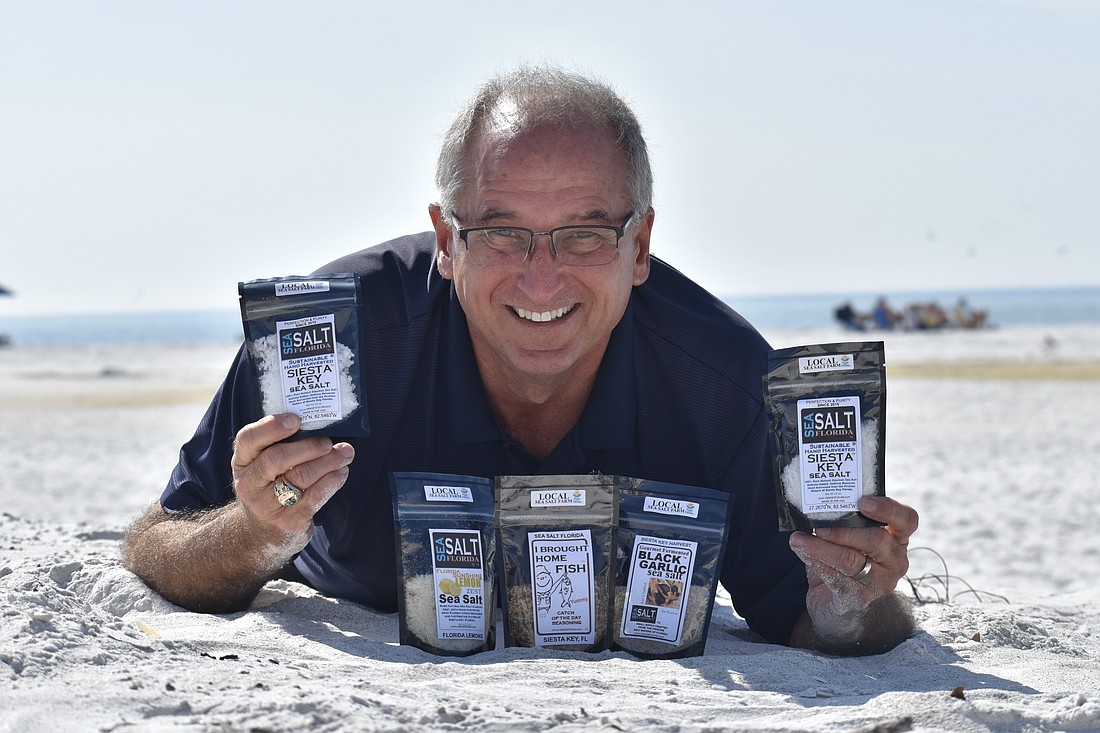
What’s a Thanksgiving meal — or a meal any time of the year — without the flavor that comes from a few pinches of salt?
Tim Norwood will tell you that he’s a salt-aholic — but also notes all salts are not equal.
He says he’s confident that he can put the salts of his business, Sea Salt Florida, which are created using all-natural methods and locally harvested water, up against any others.
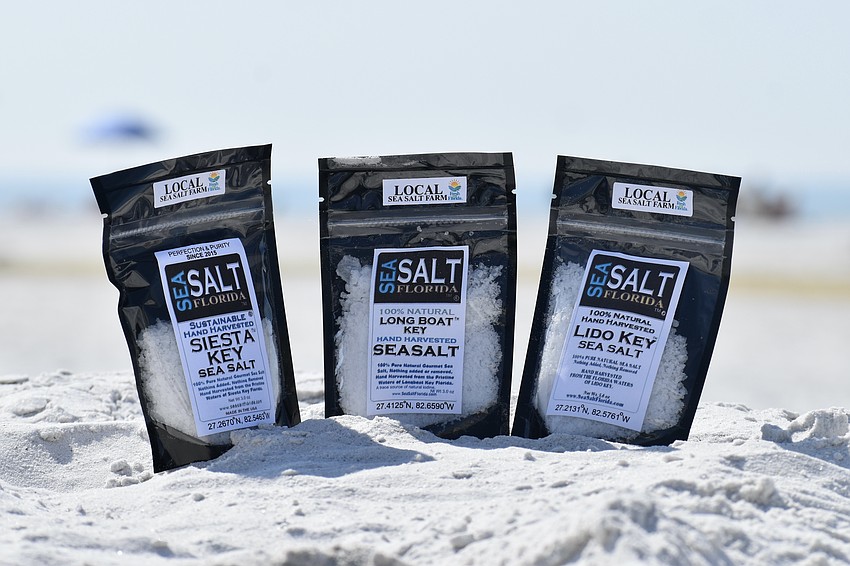
Unlike the salts typically found at dinner tables, they originate not in mines but from places beloved by local residents: the barrier islands of Siesta Key, Lido Key, Longboat Key, Anna Maria Island and Casey Key.
Perhaps it wasn’t surprising that Norwood would eventually find his way into salt farming.
“Everybody I ever knew growing up looked at me and said, ‘You didn't even taste it, and you're salting it. You’re going to die early one day.”
However, despite the reputation salt might have, it’s essential for human survival.
“Our body requires salt, but it requires the right kind, and I believe the right kind is what we can reach, rather than what we have to dig out of ancient ground,” he said.
Norwood’s original plan for his retirement years had been to establish a winery. However, the Bradenton resident, who has now lived in the area for 25 years, decided he and his wife, Janice Norwood, had too much invested in the community to leave it for the mountains.
"I created Sea Salt Florida to get that urge I had to have a top-quality product, which wine is," he said. "It has everything to do with doing it right, and so does what I do.”
As he and Janice Norwood were going home on a flight, flying over the ocean, he became inspired and started doing something that most people, outside of pursuing a college degree, would be loath to do: writing a thesis paper.
That’s one example of the way in which Norwood says he’s devoted himself to making his work the best it can be.
The thesis stated that he didn’t want to go ahead with his salt business if it couldn’t be the best, and that he wouldn’t compromise anything.
“I just won't compromise. There’s just no reason to compromise. There never is,” he says of his work.
Before moving into the venture, which would be a massive change to the couple's lives and involve foregoing a regular income, he talked with Janice Norwood, who told him that after everything he'd done during his career, she believed in him.
"That was the greatest thing she could have ever said, because it rings in my head when we have hurricanes that cause our sales to go down, or anything like that,” he said. “I know it's fine. I've just got to get up and keep working, keep going at it.”
Tim Norwood had had experience in new ventures before.
He’s been an engineer and design architect for boats, yachts and automotives; started a business that constructed tornado shelters in Texas, Arkansas and Oklahoma; and was a Manatee County Commission candidate for the District 4 seat, running as an Independent, in 2022.
“I don't know, I like people, but I see something, I try to do something about it,” he says.
Thus, he started in a completely new direction, but he didn’t just start selling salt. He spent two and a half years developing a process.
Along the way, there was very little in the way of mentorship, Norwood says, nor did he seek out any, although he says he has sought input from his friends in the technology industry where necessary.
He says he never measured his process against anyone else’s, until fully assembled.
Once he was confident in what he had established, it was time to leave engineering behind — although he says the skills from that field have proven essential.
Norwood’s methods are a mystery he carefully guards.
However, he does state the process is fully natural, and involves focusing the sun and the wind. He has a full license to create salt, and undergoes regular inspections.
It takes seven weeks to produce a batch of salt from water, Norwood says, and he also says that he’s at work "all hours of the day,” or sometimes up at odd hours with new ideas — something that, fortunately, Janice tolerates.
Every day, he visits one or more of the local barrier islands, and the water he gathers comes directly from the ocean, in buckets.
“If you mine it out of the ground, the mineral content is really small, and the sodium chloride is really high,” he says, stating that with his salt, that relationship is reversed.
He also says he ensures the water is free of microplastics.
“You taste way more than just a piece of salt,” he says of the finished product. “There's a whole flavor in your mouth, and that flavor is from that ocean out there, that Gulf, this water. It's texture, it's aroma, it's flavor.”
He says people familiar with those islands are eager to experience the salts from those places, not to mention other variations like blended versions, smoked versions, spiced versions, and wine-infused versions.
One example is a salt called “Drum Circle.”
“It's a real spicy fajita-style blend I do with only Siesta Key salt, because that's their drum circle,” he said.
He tries to source as many of the added ingredients as he can from local sources, while he’s also resorted to growing some simple supplies on his own, like rosemary and thyme.
On the issue of red tide, he proceeds with caution.
Norwood avoids any situations where water conditions produce abnormal measurements, and after they return to normal, won’t gather salt from that area for 14 days.
“If on the 13th, and one minute before the 14th, it changes, … I start over,” he said, noting that he will continue in that manner for as long as the 14-day window fails.
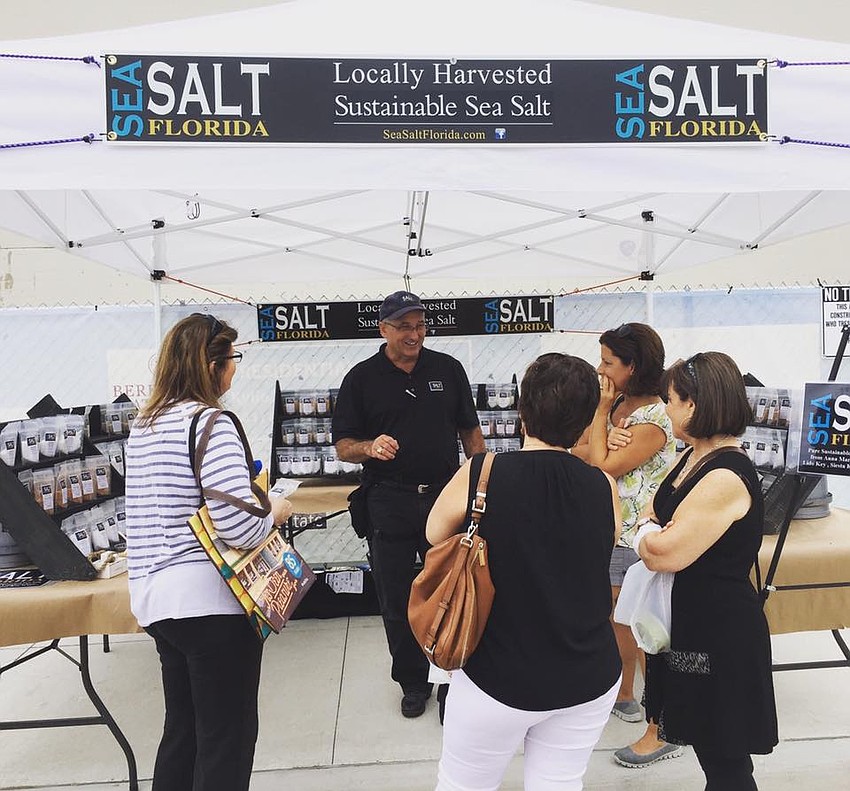
According to Norwood, the names of the islands on the packages indicate more than the history of the salt itself.
He says there are also unique flavors within each type, even if very few people — what he says is only five other people, to be precise — can typically tell the difference.
“Each island has the same mineral content, but each island has a different percentage of each mineral, and there's a reason for that,” he said. “Each island has its own reasons, and I know what those are.”
Although the attributes of the salts vary based on changing conditions between harvests, he says there’s one that has a more constant flavor.
That one is Siesta Key, which he believes is due to the high amount of quartz crystal in the island’s sand. He says even some consumers can identify that flavor.
“Some of them buy Siesta and Anna Maria, and they can taste the Siesta because they swim it,” he said.
Norwood describes himself as "very environmentally conscious," and says the lightweight pouches in which the salts are packaged can be recycled.
He says the success of the business has spread, as with one customer who sends the salt to the island of Malta in the Mediterranean, and a new location in Clayton, Georgia, White Birch Provisions, which is now stocking his products.
There are also local relationships, such as one with the Siesta Key Summer House steak and seafood restaurant, which has integrated his salt into menu items.
"It's the nerd in me and the artist in me at the same time, which is technically what an architect is, but it's more than that," he says.