- March 15, 2026

-
-
Loading
Loading
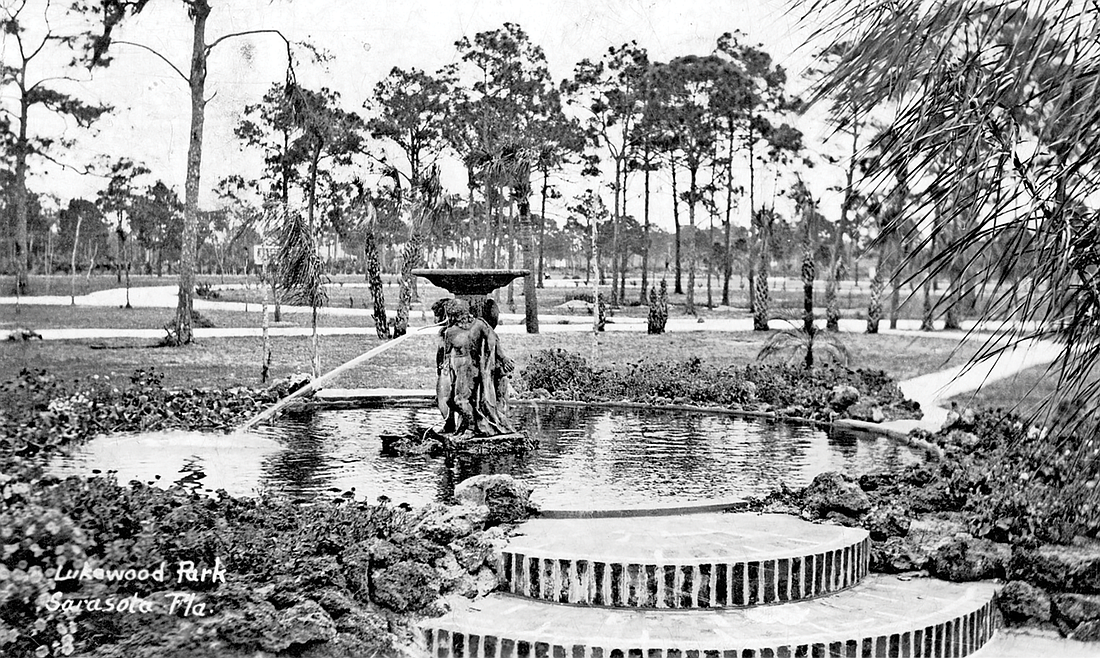
The Sarasota Alliance for Historic Preservation announced its 2025 “Six to Save'' at one of the properties on the list, Luke Wood Park in Sarasota.
Now in its sixth year, this initiative highlights the need to save historic resources from demolition in Sarasota County.
This year’s list includes five properties within the Sarasota city limit, two of them not houses or buildings at all: Luke Wood Park and its inoperable Mable Ringling Fountain near the intersection of U.S. Highway 41 and U.S. 301, and the Blackburn Point Swing Bridge in Osprey.
“The Six to Save properties reflect what is happening to our community — renowned for its charm and architectural interest — as it faces continued growth,” said Alliance President Dave Baber in a news release. “This year’s selections range from a mid-century modern showpiece home now on the market to a public park in need of attention, and privately held downtown buildings under development pressure.”
The Six to Save program began in 2020 as a partnership between the Sarasota Alliance for Historic Preservation and the History and Preservation Coalition of Sarasota County.
This year's Six to Save properties are:
The Blackburn Point bridge, built in 1925 over the Intercoastal Waterway to connect the mainland to Casey Key, and Luke Wood Park and Mable Ringling Fountain are publicly owned and reflect early civic planning and infrastructure. Two others, U.S. Garage and Lawyers Professional Building, were designed by or associated with the late Frank Folsom Smith, a key figure of the Sarasota School of Architecture.
Historic Alliance Executive Director Erin DeFazio told the Observer the purpose of the list is to initiate dialogue, particularly about structures in immediate peril.
“What we're hoping to achieve is a conversation,” DeFazio said. “A lot of times, demolition is the easiest answer, but it's not the only answer. And a lot of times there are other creative solutions that can be found when we look at what the objective that is that the property owner is trying to meet, and how we can achieve that objective while also keeping the historic values or structure.”
The most downtown Sarasota structure in most immediate peril, though, is the U.S. Garage building, which stands on the site of the proposed Adagio multi-use residential development on the southeast quadrant of the roundabout at South Palm Avenue and Ringling Boulevard.
Developer The Lutgert Cos. of Naples is planning to raze the structure to make way for a mixed-use residential development. The city received a demolition application for U.S. Garage on Nov. 6. Approval for demolition came in July 2023 by the late Senior Planner and Historic Preservationist Clifford Smith, who declared the building non-contributing and ineligible for historic designation.
“A lot of the buildings that are included on this list are there topics of frequent conversation, like the U.S. Garage building,” DeFazio said. “Many members of the community have been grateful that we included this and are continuing this conversation and really digging into some of the procedural things that are going on with that process.”
The most surprising of this year’s six, she said, is likely the Blackburn Point Swing Bridge.
“It's a diversion from our traditional buildings, but it is definitely a piece of cultural heritage,” DeFazio said. “The trick is getting dialog started, and that is what we are hoping we can do.”
The other deviation from a historic building on the 2025 list is the Mable Ringling Fountain and Luke Wood Park, located at the southern gateway into downtown along U.S. 41, which DeFazio said presents opportunities for visibility as a public-private venture.
“I think this will spark some really great conversations, and perhaps some involvement by other organizations that are kind of stakeholders in that park as well,” DeFazio said. “We're hoping that we can get some involvement that that will help the city make responsible choices for its ongoing management, but also maybe take some of the pressure off the city.”
Otherwise, the Six to Save initiative is in part intended to apply pressure to local government and any current or future ownership of the properties to consider alternatives to demolition and redevelopment.
“Our goal is to foster awareness and collaboration among property owners, developers and public officials,” said Jan Vertefeuille, chair of SAHP’s Historic Preservation Committee, in the news release. “In many cases, creative reuse or transfer of development rights can ensure these landmarks survive for future generations.”
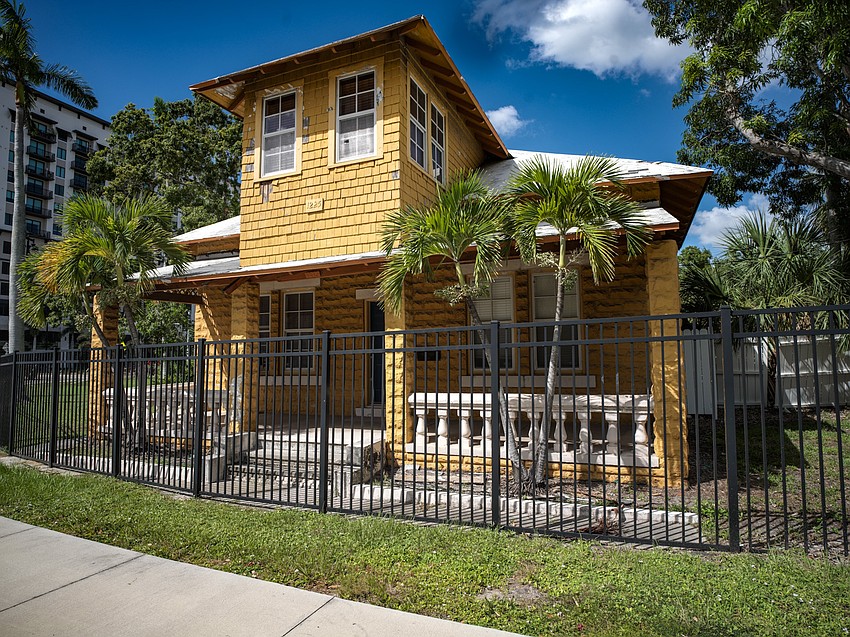
The house is one of the last remaining homes from Sarasota’s early development and one of the few surviving examples of rusticated block construction. Built in 1912 by local stone cutter and mason George Barker. James Turner purchased the house in 1913 and ran one of the city’s earliest businesses, the J. B. Turner Company, on Main Street for more than 15 years.
Why save it?
Adjacent to the roundabout at Fruitville Road and U.S. 41, the property is owned by a developer although no plans for development so far. The home is a significant remnant of Sarasota’s early growth, surrounded and isolated by modern high-rise development.
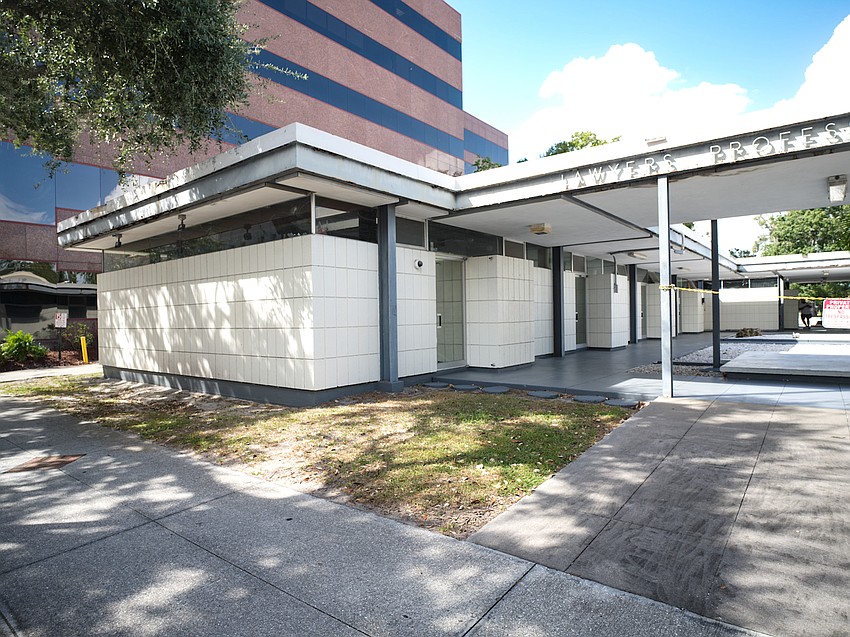
The one-story, mid-century modern building on the corner of Main Street and Wallace Avenue was the first-built project of Frank Folsom Smith after he opened his own architectural firm at the age of 35.
Why save it?
This building is under threat as redevelopment continues to make its way along upper Main Street. It is a one-story building located in a rapidly growing downtown Sarasota area that permits buildings of 10 stories. The property was acquired in January 2023 with plans to hold it with an eye toward future development.
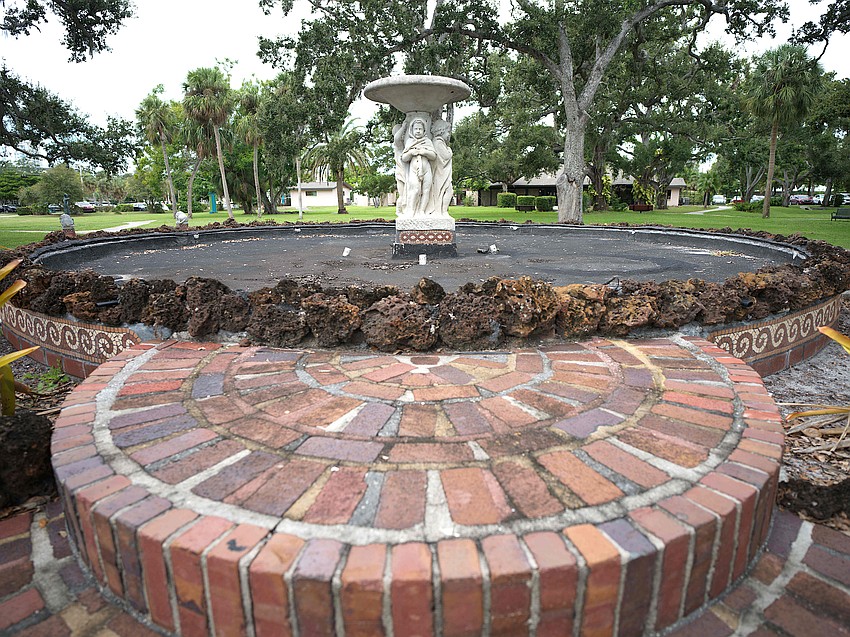
Longtime Sarasota residents Luke and Ann Wood donated 12 acres to the city in 1931. The parcel became a lush park with a lagoon and reflecting pool, bird sanctuary, and walking paths. The Founder’s Circle and Sarasota Garden Club constructed the Mable Ringling Memorial Fountain in 1936 to honor its first president, Mable Ringling, who died in 1929.
Why save it?
What once was an urban oasis at the southern gateway to the city is now little more than a memory, now at the busy intersection of U.S. highways 41 and 301. The Alliance reports the city has indicated it has no plans to maintain the fountain, but has expressed willingness to allow for the area to be revitalized with community support.
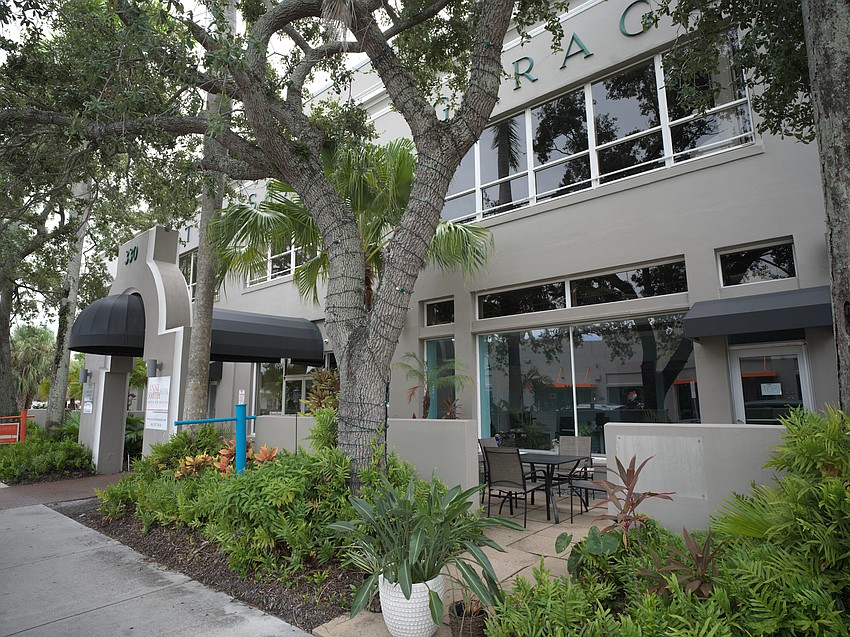
The first parking structure built for automobiles in Sarasota during the height of the Florida land boom, the building was a showcase of modern commercial architecture. In 1924, local architect J. Herbert Johnson designed an automobile showroom and service facility for the owners of the U.S. Garage Company. It features expansive storefront openings on both stories and a plain façade typical of early 20th century commercial design trends.
Why save it?
The U.S. Garage building represents early commercial construction in Sarasota and is an early example of successful adaptive reuse of historic buildings. Businesses occupy the building and stands in good condition, but is slated for demolition for redevelopment into Adagio, a mixed-use luxury condo and affordable housing complex.
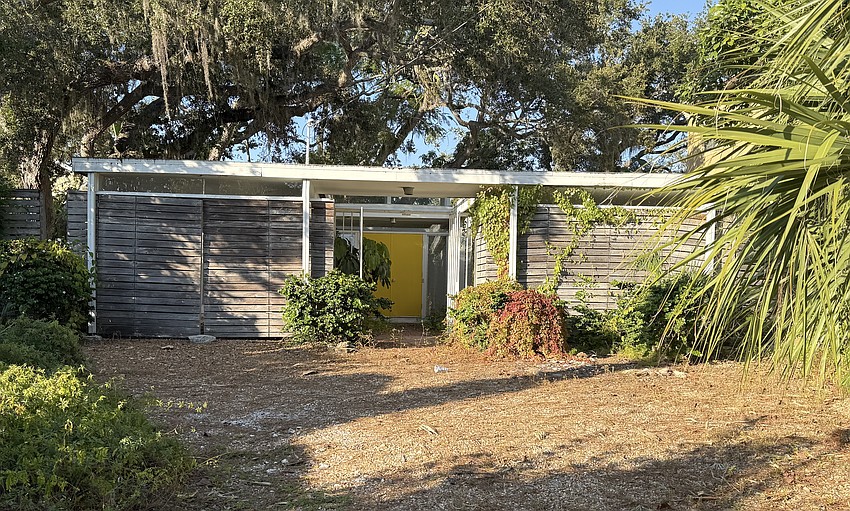
Architects Joan and Ken Warriner worked in the office of the famed Ralph Twitchell in the 1960s and designed this mid-century modern home for their family. It won an award as Record House of 1961 from Architectural Record magazine. Situated on a narrow lot, the 1,600-square-foot house surrounded by former tear-downs turns its back to the street to provide a private oasis behind its façade of rough-sawn, gray-stained cypress slats. The house is an exercise in successfully combining inside and outside, with every living space, including the bedrooms, having direct access to an outside space.
Why save it?
The structure is under threat because its long-time residents, who purchased the house from the Warriners, have passed away and their heirs have it on the market. The house is not locally designated, although because of its age, a demolition request would need to be approved by the city’s Historic Preservation Board.
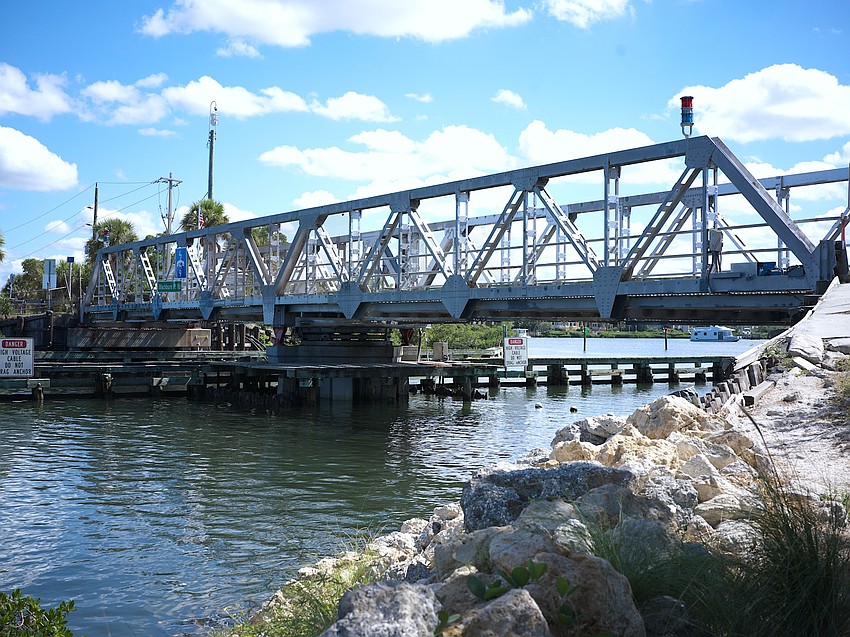
The one-lane swing bridge, linking the mainland to the north end of Casey Key, appears in both the National Register of Historic Places and the Sarasota County local register. Originally operated via hand crank, it is the last remaining bridge built as part of the first infrastructure blitz by the newly formed Sarasota County during the 1920s land boom. In 2001, a lengthy debate occurred over whether to replace or rebuild the bridge, which resulted in rehabilitation to extend its life by 25 years, at approximately one quarter the cost of replacing it.
Why save it?
Debate renews over whether to replace the bridge, with the county initiating a study to determine the way forward. However, the Blackburn Point bridge is one of the few remaining reminders of early Sarasota County.