- January 27, 2026

-
-
Loading
Loading
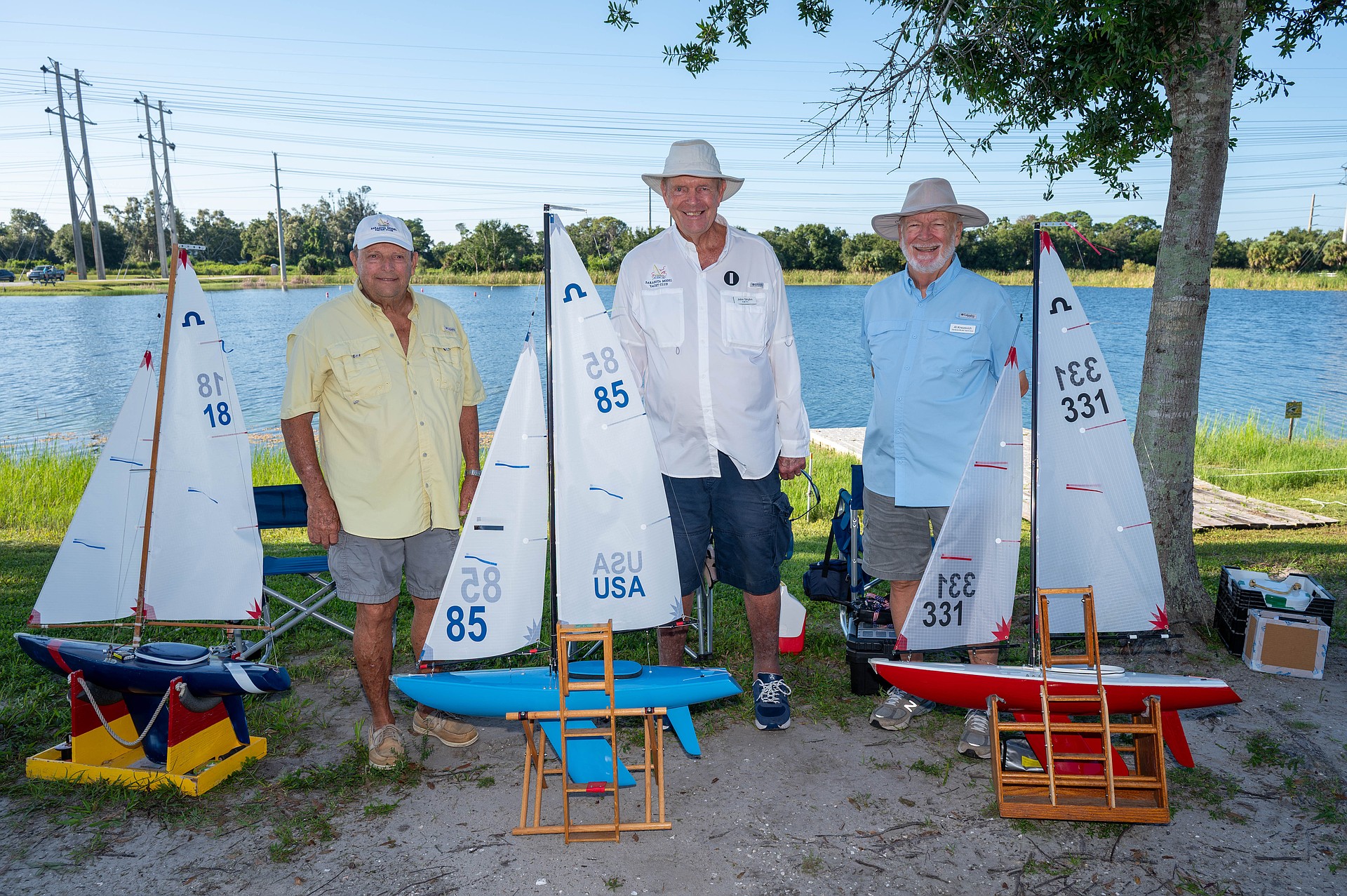
It’s mid-September, on one of those mornings that tease you into thinking summer may be on the wane, even as you know it can’t possibly be true. The fellas in the Sarasota Model Yacht Club are taking advantage of the temperate weather. About two dozen of them — seniors all — stand by the bank of Green Parrot Lake in Nathan Benderson Park, controllers in their hands. Clad in fishing shirts, baggy shorts and broad-brimmed hats, they look on as sails flap in the ample breeze, another reason it’s an ideal day for racing their “toy boats.”
That’s what Bill Schmeising, the club’s commodore for the last three years, calls the vessels, with hulls a meter long and sails about five feet high. The Long Island native is a master in the art of self-deprecation — of himself, his club, his hobby.
“It keeps a bunch of degenerate old men off the streets,” he says.
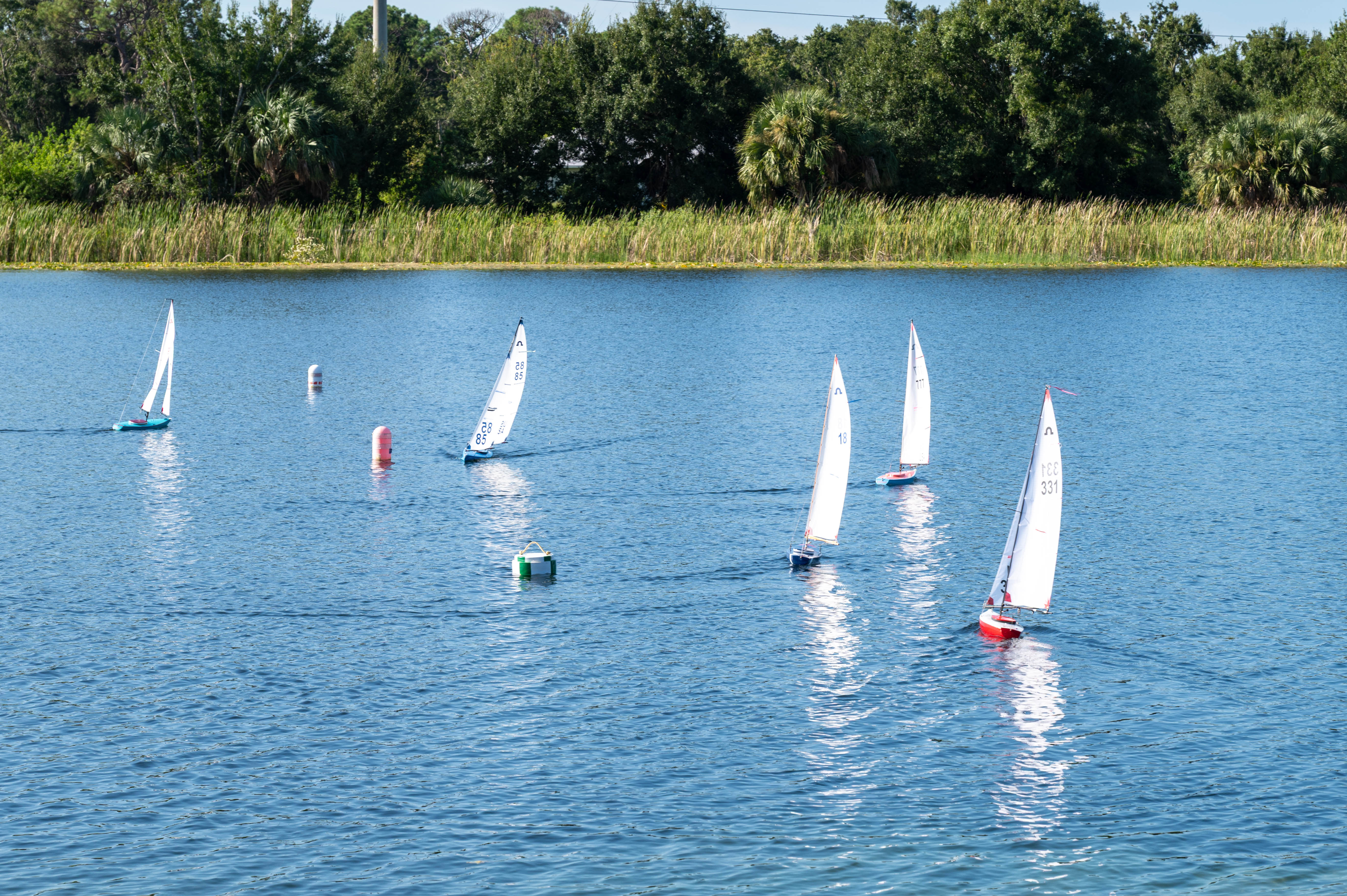
A dozen of them are out sailing Soling 1-Meter boats — modeled after the full-sized Olympic Soling keelboat — one of five fleets that race in the SMYC. It’s a bucolic scene. Bonhomie abounds. Old dudes having a good time, bantering back and forth. But what appears at first to be an exercise in carefree fun has a seriousness beneath. These geezers are competitive — some more than others — and must follow a set of rules laid out by the American Model Yachting Association, essentially international sailing standards adapted for radio-controlled boats. The rules dictate right-of-way, contact between boats, penalties, starts, courses, scoring and more.
“We profess to follow the Corinthian spirit,” Commodore Bill, 77, says with a smile and mock hauteur, “which means you sail as a gentleman. All of that can go out the window when the bell goes off.”
Sometimes the sailors argue — mostly when boats bump into or impede each other — and it occasionally gets heated, although there is no record of one member throwing another in the lake. If a racing dispute remains unsettled at the end of a session, it goes to a protest meeting. “I sometimes have to remind the guys it’s a toy boat you’re sailing for a 50-cent ribbon,” Commodore Bill says.
The Soling sailors gather two to three mornings a week — depending on the season and weather permitting — to race for about three hours. They steer their boats twice around a course of two or more buoys that, depending on conditions, are stationed 200 to 300 feet apart. An appointed race director logs the finishes — standings, no times — and within a couple minutes it’s on to the next run. The guys take a break in the middle.
Unlike the relative orderliness of real-size sailing races, these contests can look like a flock of ducks dosed with edibles — as in, all over the place. When riding with the wind, they’re sleek and speedy. But making turns and heading into the wind can be random. A strong gust might push a boat out wide, requiring a drastic course correction, allowing several others to pass. When front runners cross the finish line, an inexperienced sailor might still be struggling to complete the first lap.
“Think about it,” Commodore Bill says. “With normal sailing, you’re on the boat. You can feel the boat, you have a beautiful view of what’s going on on the boat. Here, you’re not on the boat. You’re watching the boat go by from a distance, so you have to concentrate on that and translate that into your thumbs.”
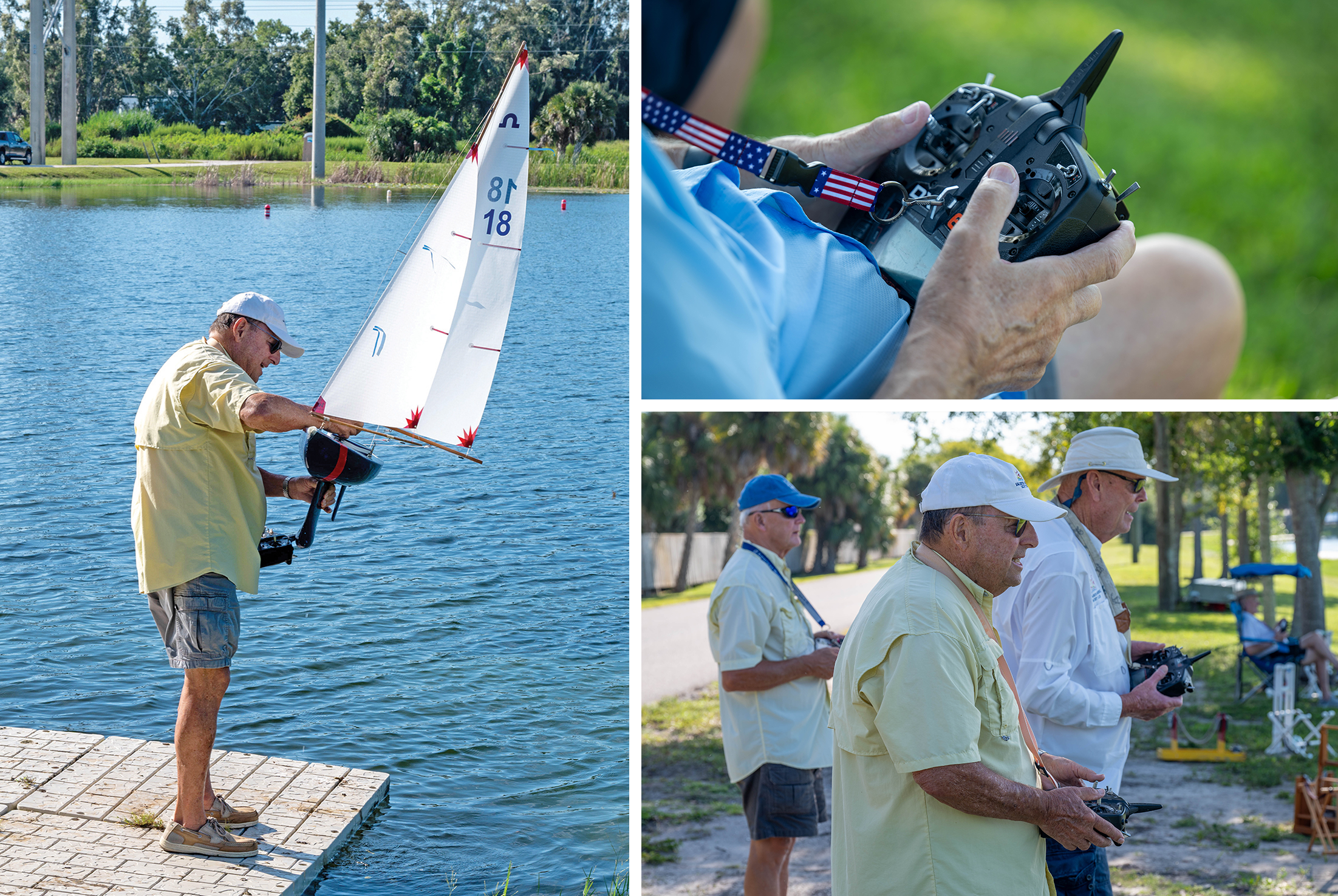
The handsets have only two controls — for the sail and the rudder. Further, all the Soling boats are identical except for their color schemes. They must be the same size, have the same sails and weigh at least 10 pounds. That levels the playing field, making it all about skill.
But how much skill? How much time does it take to become a competent radio-controlled yacht racer? Well, we’re not talking 10,000 hours. More like 10, according to Commodore Bill. About 75% of SMYC members have previous experience sailing full-size boats. That helps because it enables them to read the water and anticipate the wind. Commodore Bill says that these folks can become proficient in just two or three hours. Candidly, that sounds generous, and it may be a sales pitch to get more people to come out.
But it’s plain to see that even if you’re bad, it’s still fun. And newbies — who might get in the other sailors’ way or otherwise create havoc — don’t take heat from the veterans. In fact, the vets go out of their way to help out the rookies. “We’ve all been novices,” Commodore Bill says. The club welcomes newcomers with open arms. Here’s a familiar scenario: A curiosity seeker will saunter up to the group. One of the members will hand them a controller and say, “’This is the rudder, these are the sails, knock yourself out,’” Commodore Bill explains.
It’s all part of the egalitarian nature of the sport. So is the cost to set sail. SMYC charges $75 in yearly dues. A newcomer can buy a boat and the necessary equipment for $500 to $800. Further, race attendance is up to the member. Sailors can show up three times a week year-round, or a couple times a year.
This Saturday morning’s two frontrunners are Commodore Bill and “Boatyard John” Stryhn, 77, an 11-year member who stands about 6-foot-5 and lives in Central Park in Lakewood Ranch. He’s the go-to guy for repairs, paint jobs and new boats. (He gets paid, but not a lot.)
Al Knezevich, the club treasurer, is another top sailor. He has been appointed race director for this session, so he has put his controller aside. Knezevich, 83, and I sit next to each other in folding chairs, with him dividing his attention between director duties and giving me race play-by-play. The Indiana native and his wife lived around the U.S. and in Europe, then on a 42-foot trawler for several years before returning to land and eventually buying a home in the Indigo neighborhood.
Knezevich had read blurbs in the local newspaper about this model sailing club. One day about 10 years ago he popped down to the lake and ran into a couple of acquaintances. He signed up straight away. “It’s healthy psychologically, emotionally,” Knezevich says. “It’s a support mechanism for guys our age.”
The SMYC consists of 80 dues-paying members, which makes it one of the largest model sailing clubs in the country. Its ranks are overwhelmingly male — one woman actively participates — and white. Hardly anyone is under 60. One Soling racer is 91. Commodore Bill estimates that during the summer about 25 sailors turn out. When the weather cools, and the snowbirds return, that number swells to as many as 60. It’s during these times that the races draw a few spectators who come to relax and take in the idyllic tableau.
The SMYC launched in 1996 when Milt Thrasher and Dick Sherman built their own Soling models and raced them in the lake behind Thrasher’s house in Sarasota. (Both are now deceased.) The club’s ranks grew rapidly. The races hopped from lake to lake until settling in Benderson Park in 2015.
The SMYC would love to grow its numbers — in part because the age of its members guarantees regular attrition. The group has scored newspaper stories and featurettes on local TV, which has boosted membership a little. A couple of residents at Plymouth Harbor, a high-end, high-rise retirement community in Sarasota, contacted the club about starting a splinter squadron after the summer is over. And there’s always the dream of attracting younger folks. “We’d like to,” the commodore says. “But it’s difficult for people who work during the week. Basically, it’s a retiree sport.”
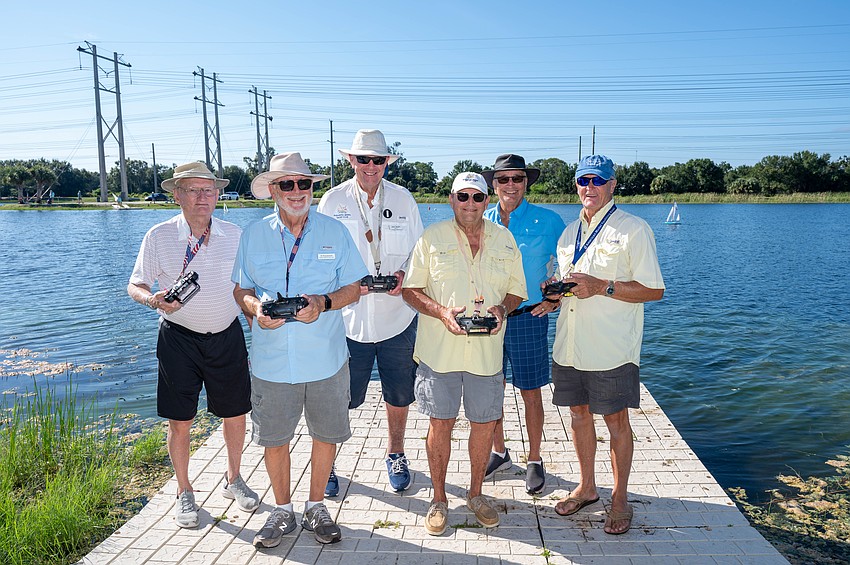
All told, the SMYC is, at its core, an object lesson in male fellowship, which becomes harder and harder as men age. The sport offers friendly competition, mental and physical engagement, and the challenge of conquering a new skill. Sailing gets them off the couch and outdoors and provides members a vast social circle with a shared interest.
In Commodore Bill’s memory, the club has only dealt with one real jerk. “The commodore at the time gave him his money back and said, ‘Do us a favor and don’t come back,’” he recalls.
On Saturdays, some of the sailors convene to a post-race lunch, currently held at Glory Days Grill in University Town Center. For their annual club dinner at the Peridia Golf & Country Club, the members bring their spouses. “At the dinner the wives joke, ‘God, we hate when they have to cancel,’” Bill says with a wry smile. Libations flow, ribbing ensues, awards get handed out, some with a touch of irony — like “Most Creative Sailor.” One year, Knezevich earned the honor for plunking his boat into the dock just as he was about to win a race. (His model yacht emerged unscathed.)
The SMYC members share an understanding that, while sailing toy boats is important, it’s not that important.
“It’s a hobby, y’know,” Commodore Bill says. “It’s not a way of life.”