- March 19, 2026

-
-
Loading
Loading
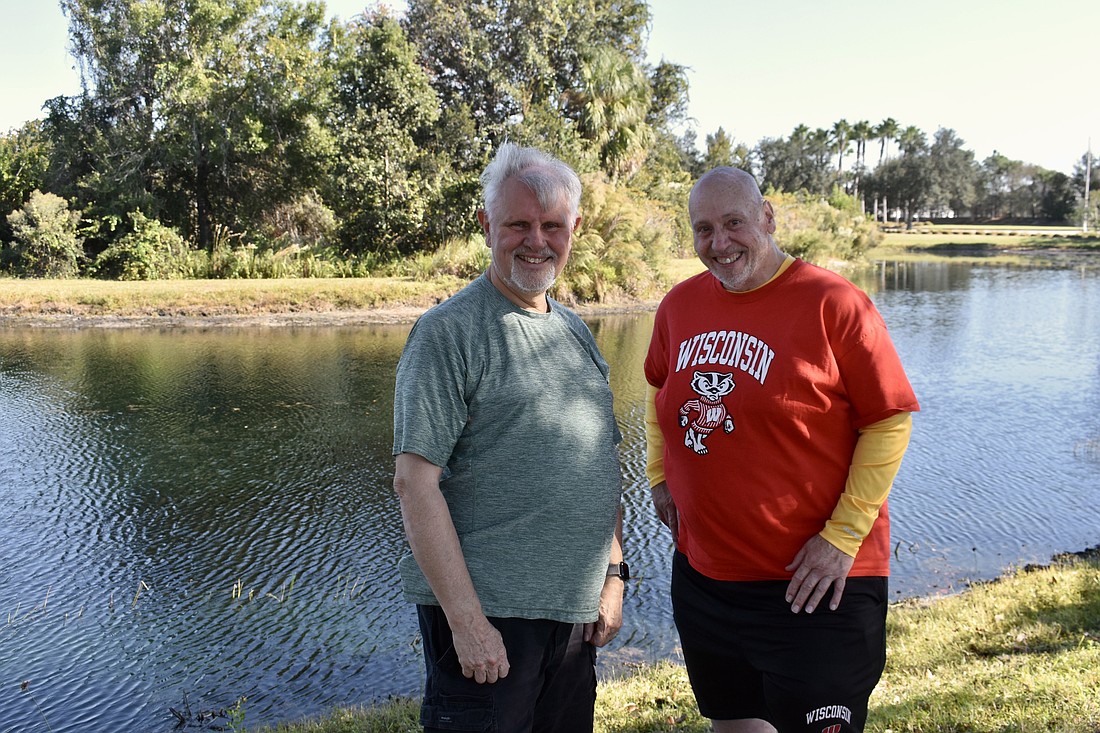
When Tom Walrath moved to Lakewood Ranch’s Central Park from Wisconsin, he loved the look of the ponds, how the perfectly manicured grass met the edge of the water.
“If they missed a week (of mowing), I’d send an email,” he said. “I wasn’t educated, but now I understand.”
Walrath understands that even though it doesn’t look as pristine, a “No Mow Zone,” or a buffer, is instrumental in maintaining a healthy pond. It’s also a fiscally sound decision for the Central Park Neighborhood Association, of which Walrath is the president.
Keeping heavy lawn mowers at least 3 feet away from a pond protects its banks from caving in and prevents the grass clippings from blowing into the water and raising the nitrogen levels, which promotes algae growth.
Creating a "No Mow Zone" is one of four best practices recommended by the local nonprofit, Solutions To Avoid Red Tide, to maintain a healthy pond. START oversees the Healthy Pond Collaborative, which doles out $5,000 grants to communities in Sarasota and Manatee counties that want to better care for their ponds.
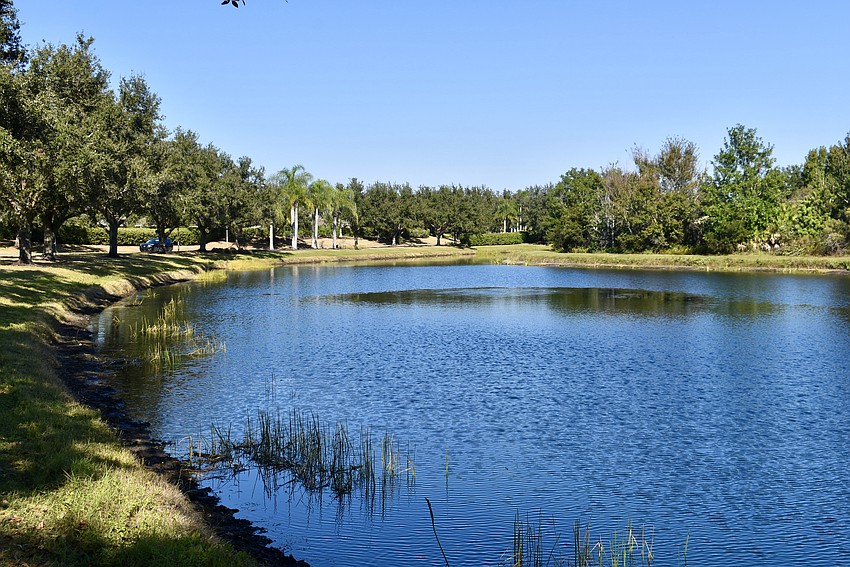
The community has to match the grant, but they don’t have to use the full $5,000. Eagle Trace, which has nine ponds, used $3,500.
Central Park has 29 ponds. The first $3,000 was used to plant around the first two ponds that can be seen upon entering the gates. The remaining $2,000 will be used for three additional ponds that are the closest to vacant lots outside the gates that are marked for development.
START covers the cost of the plants, but the community has to plant them. Chairman Sandy Gilbert said it costs $1.50 to fill one foot of shoreline with plants.
Steve Postle, chair of the neighborhood association’s Facilities, Ponds and Landscaping Committee, said labor costs the community between $1 and $1.25 per plant.
The plants are placed in the littoral zone, which is the shallow area around a pond, to help stabilize its banks and act as a filter for runoff.
Gilbert noted that it costs between $80 and $100 to repair 1 foot of damaged or eroded shoreline.
Postle is a chemist by trade, and Walrath is a retired engineer. The pair have spearheaded the policy changes for maintaining Central Park’s ponds.
The ponds are all interconnected, not just with each other, but to wetlands that then flow into the Braden River, which meets the Manatee River and ends up in the Gulf of Mexico.
“As we speak with people, they begin to get it,” Gilbert said. “That’s why I love this program. The government’s not doing it. This is private property, but we have citizens working on water quality that ends up affecting the Manatee River, and they’re doing it themselves.”
Since switching to organic practices two years ago, Postle said the community’s ponds, which capture and filter stormwater, now deliver a “better product” to the gulf.
Central Park stopped using copper sulfate to treat algae. When algae blooms appear, staff members from the contracted maintenance company, Beautiful Ponds, physically muck the algae out now.
Postle described copper sulfate as essentially a fix-all for many maintenance crews because it turns the water blue again.
“Eventually, you end up with a very toxic pond,” he said. “The copper will kill the fish.”
Postle describes biologic treatments as “not cheap,” but a recent treatment cleared a pond that experienced a fish kill about a month ago and had been “a problem pond” for 15 years.
Using plants as a maintenance solution supplies the water with oxygen to foster a healthy ecosystem and creates a stronger shoreline to prevent erosion.
Erosion was the main driver to determine that the two ponds by Central Park’s main entrance should be dealt with first.
It’s been a year since duck potato, water pickerel and jointed spikerush were planted in the ponds' littoral zones.
Postle said both ponds are "looking good," but he noted that typically 75% of the plants take, and one of the ponds came in under the expectation.
When planting in shallow water, some of the plants will inevitably float away, but they can also be retrieved and replanted.
Once established, the duck potato produces white flowers, and the water pickerel produces purple flowers.
Flowers are the showy bonus to the more practical benefits of using plants to maintain ponds. Walrath said black-eyed Susans are starting to pop up in another pond’s buffers.
While the buffers are not mowed, they're still regulated and maintained.
The neighborhood association voted to keep the buffer width at 3 feet wide. The buffers on the front ponds are imperceptible from afar, but can be noticed closeup.
Central Park homeowners own their properties to the water’s edge, but the neighborhood association holds easements on every pond.
Walrath noted that about 20 homeowners still mow right up to the edge of the water. But when the mowing stopped initially, it drew “huge resentment.”
“It’s been a mindset change,” he said.