- March 19, 2026

-
-
Loading
Loading
By voting to stick with the town’s tax rate for the third year in a row, Town Commissioners on Friday morning decided to move ahead with a spending plan that could deliver marginally higher property tax bills for many residents.
Some residents, though, could see lower levies, largely based on the level of damage they might have experienced during the 2024 hurricane season.
By a vote of 6-1, with Town Commissioner Gary Coffin dissenting, the seven-member commission voted to move ahead with a maximum millage rate of 1.960 — the same as it’s been since the 2024 fiscal year, which started in October, 2023. The rate can be further reduced but difficult to increase and is rarely done.
This comes in an unusual year where more than a half-billion dollars of new construction takes place to the Sarasota County side of the town and a net drop in certified property values — owing to hurricane damage — on the Manatee County side.
Manatee and Sarasota county property appraisers have delivered final, certified property values with which the town can base its budget, and in both cases, they were higher than the estimates provided in June.
In Manatee County’s case, the values for Longboat Key fell by 9.96%, higher than the June estimate of 11.15%.
In Sarasota County’s case, the values rose 13.53%, up from an initial estimate of 13.25%.
Combined, it’s an islandwide increase of 5.96% in overall property values to $9.7 billion.
That means the town would have about $1 million more revenue as compared to the previous year at the same millage rate, said Budget Manager Sandi Henley.
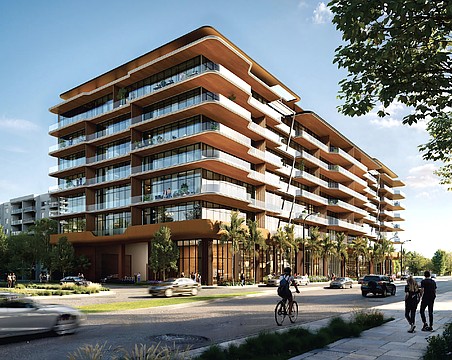
Henley said the Sarasota-side increase — indeed, the overall increase, too — is connected directly to the increase in new construction. In turn, that is connected directly to the St. Regis Resort and residences, which is hitting the tax rolls for the first time in this cycle.
Commissioner BJ Bishop raised a concern about potential changes to home values following both counties’ appeals processes through their respective Value Adjustment Boards. At a previous workshop, she said she was concerned about damaged homes but assessed at undamaged levels, which would be grounds for an appeal.
“It’s really a crap shoot to try to figure out where those numbers are,’’ she said. “Are we going to come back in September and go ‘oh, wow, we’re missing a million or 2.’’
Henley said big changes were unlikely and Town Manager Howard Tipton supports him, saying the budget formulation had been specifically conservative to keep this in mind.
“We have a little bit of wiggle room based on what Value Adjustment Boards may do,’’ he said. “I think we’ll be OK, though it is kind of uncharted territory because we haven’t gone through this before, but we will monitor it closely.’’
Coffin suggested considering raising the millage rage to 1.99 per $1,000 of taxable assessed value simply as a means to cover potential unknowns through the heart of hurricane season. He reminded his colleagues a reduction in the millage rate can take place for final approval in September, before the budget takes effect Oct. 1.
“We’ve got storm season coming up, we’ve got FEMA that’s not sure of their destination next year starting in December, Tallahassee has all these various situations that are questionable at this point,’’ he said. “What is the downside?”
“The upside would be that it would give you some flexibility to consider some unknowns,’’ Tipton said. “The downside I’m sure would be the feedback you’d get from residents.’’
Mayor Ken Schneier said except for homes damaged, property values continue rising. Even with the same millage rates, taxes on those properties will still rise.
That tax increase can be held in check with Florida rules that cap assessment increases to no more than 2.9% a year for homesteaded properties and 10% for non-homesteaded properties.
According to town figures, homesteaded properties would likely see a town tax bill increase of around 2 to 5% and about 7 to 9% for non-homesteaded properties. Those caps, though, reset when property changes hands.
Longboat residents also pay earmarked taxes to pay off debt for updates to the town’s two fire stations and beach maintenance. Both sets of rates address fixed costs and both are heading down into the new budget based on higher overall property values. The beach bond debt repayment, which is broken out by Gulfside and Bayside districts, will be complete at the end of the 2026 fiscal year.
Proposed Longboat Key millage ratesTown commissioners can reduce rates but are locked in at no-higher-than figues. | |||||
| Operating Millage | Debt service Millage | Beach Bond Millage | Total Town Millage | Percent Change | |
| Gulfside | 1.960 | .038 | .5563 | 2.5543 | -2.03% |
| Bayside | 1.960 | .038 | .1351 | 2.1370 | 0.69% |