
- March 19, 2026

-
-
Loading
Loading
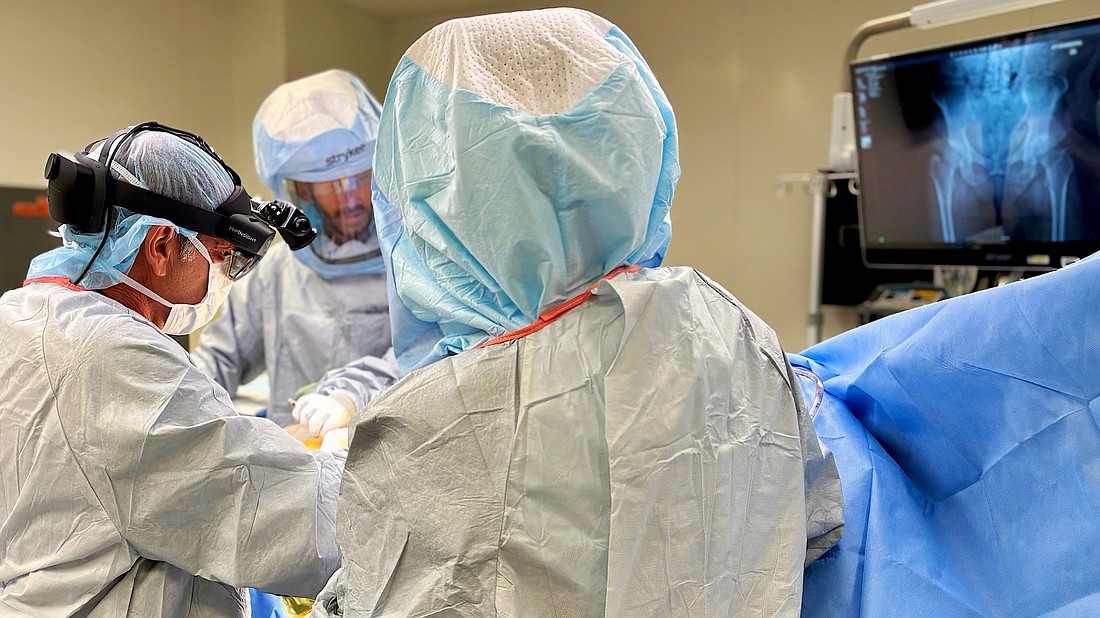
Sarasota Memorial Hospital is now employing the first FDA-cleared mixed reality navigation system for optimization of total hip replacement.
Led by orthopedic surgeon Dr. Edward Stolarski, the hospital is using HipInsight 2.0, the latest intra-operative guidance system developed to help orthopedic surgeons customize hip implant placement, verify accuracy during surgery and anticipate and safeguard against potential complications.
Stolarksi has used the system in more than 100 hip replacements with promising results, according to a news release. The advanced technology promotes more precise positioning, especially in complex cases that involve arthritis, hip dysplasia and other complicating conditions.
“HipInsight is the first system to incorporate spinal alignment and pelvic positioning into implant planning,” Stolarski said in the release. “It displays a 3D hologram over the surgical area in the physician’s direct line of sight during surgery, basically giving surgeons X-ray vision to see detailed, sequential, three-dimensional information in and around the hip joint.”

Stolarski said the technology allows surgical teams to predict and identify risk factors prior to procedures and to map out a treatment plan that supports long-term results.
Using HipInsight’s mixed reality platform, Stolarski uses head-mounted Microsoft HoloLens 2 mixed-reality glasses to overlay 3D holograms of a patient's pelvis onto the hip during surgery. The enhanced visualization enables him to precisely plan custom implants to fit each patient’s unique anatomy.
By contrast, traditional surgery planning and guidance systems display information on flat screens outside the surgeon’s view.
Surgeons use the system with CT scans before surgery to develop a 3D surgical plan. This plan includes information on planned component size, pelvic tilt, leg length, and offset change to ensure accurate and efficient implant positioning.
Surgeons perform hip replacement surgery under spinal anesthesia with a regional block. Stolarski typically performs the surgery using a minimally invasive approach through the front of the leg, resulting in less trauma to the muscle tissue. While some patients will stay in the stay in the hospital for a day or two before discharge, most are able to go home the same day.