- March 19, 2026

-
-
Loading
Loading
Is affordable housing really affordable to those who need it?
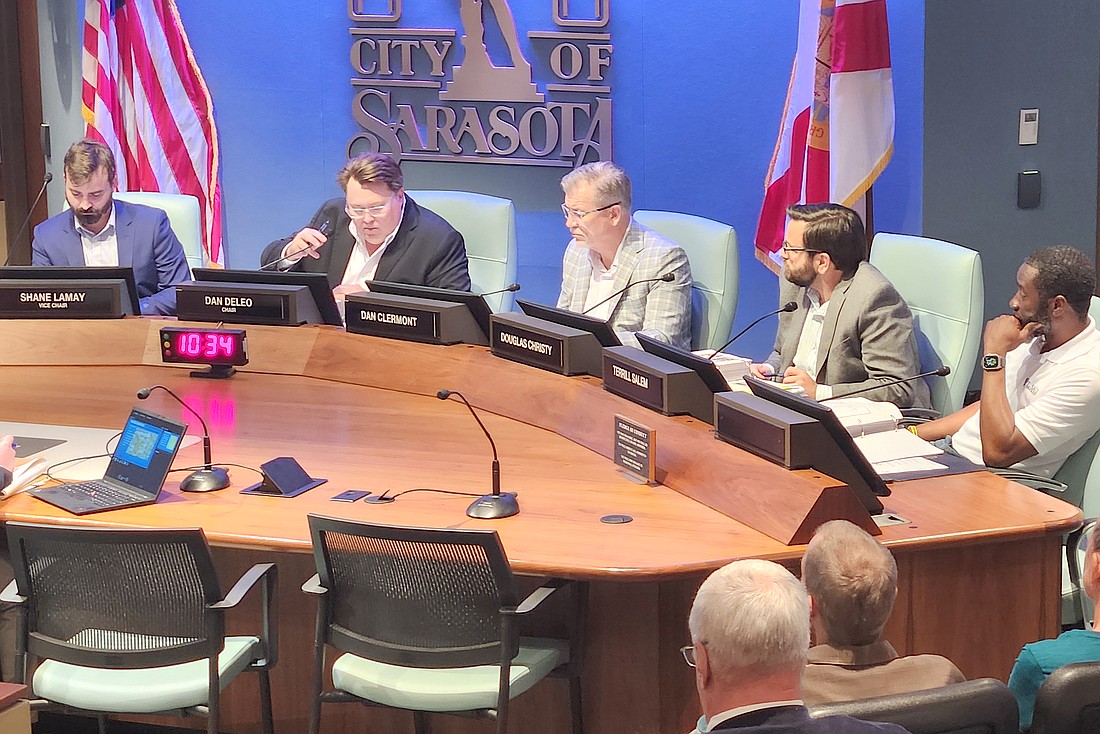
During its deliberations over a proposed apartment complex on a portion of the property owned by Temple Beth Sholom, members of the Sarasota Planning Board deviated into a debate over the true cost of renting the planned affordable and attainable units to be included in the project.
The board unanimously voted to recommend denial of the project to the City Commission, in part because even though the plan provided three times the number of required affordable units per city code, they said it wasn’t enough for the density benefit Gilbane Development would gain as a tradeoff for a Comprehensive Plan amendment and rezoning.
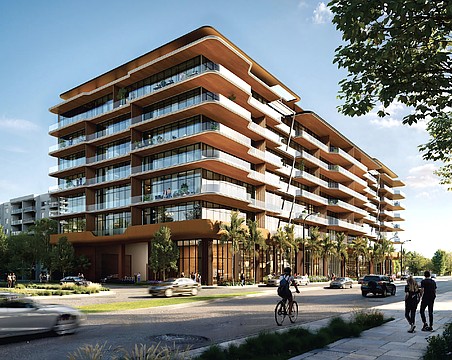
Gilbane proposes a four-story, 275-unit apartment building with 20 affordable and attainable units, although the city’s affordable housing density bonus program requires only seven.
Per code, affordable and attainable housing units to be included in a project must equally divide among three rent levels considered attainable for households and individuals earning 80% or less, 81-100% and 101-120% of the area median income. The area median income is determined by the average wages across all income levels within Sarasota County.
Since the City Commission approved the bonus density program for downtown zone districts in 2022 and for commercial corridors and centers 2 years later, developers started taking advantage with several projects already in the planning stages or under construction. To gain the bonus density, which varies per each zone district’s base density, developers must offer at least 15% of the bonus units as affordable and attainable.
Affordability is based on 30% of household income dedicated for rent and utilities.
During the discussion, board member Terrill Salem asked what the monthly rent was for the affordable units priced at 80% AMI. The answer: $1,300 for one bedroom, $1,500 for two bedrooms and $1,700 for three-bedroom units, utilities included.
For one bedroom, the qualifying income for up to 80% AMI is $52,000 per year, for two bedrooms $60,000 per year and for three bedrooms $68,000 per year.
“You’ve talked to commissioners, right? They don't even make enough money to live here,” Salem said. “I'm growing increasingly disgusted when people come in and talk attainable and affordable when it's truly not. When you say that these are attainable, this is not attainable. I'm only saying this because you're asking us to give you a lot. What I'm doing is I'm fighting for the citizens of Sarasota.”
Salem’s fight could be considered misplaced as the definitions of affordability are based on city policy. Developers — as the staff and City Commission designed — are taking advantage of the policy to bring more units defined as attainable and affordable to market. And when they do, they must remain priced at that level for no fewer than 30 years; a restriction follows the deed to successive ownership.
A relatively wealthy countywide population tends to skew the average median income, which in Sarasota County was $80,633 per household in 2023.
Compounding that is a recent list by U.S. News & World Report of the most overvalued rental markets in the country, which ranked the North Port-Sarasota-Bradenton metropolitan statistical area as the 13th highest.
“A number of factors, including a shortage of rental apartments, may be the cause for this overvalued rental housing market," Manager of Long Range Planning David Smith told the Planning Board. “Basically, there's more demand than supply."
That wasn’t sufficient for Salem, who questioned Smith on why the city would continue to pursue more market rate housing when the focus should be on the lack of affordable residences.
Providing more housing, Smith replied — be it market rate or attainable to lower incomes — growing the housing stock to meet, if not exceed, demand provides downward pressure on rents.
Gilbane Senior Development Manager Daniela Rodriguez said it’s a numbers game.
“It’s very expensive to build nowadays, especially with the incoming tariffs,” she said. “We have made every effort possible, and unfortunately, the 20 affordable housing units that we're offering is the maximum that the project could handle without it being unfeasible.”
The equation, then, becomes simply this: build only market rate apartments at densities permitted by code, or get at least a handful of affordable and attainable units per project by utilizing the bonus densities. The third possibility is no new housing with or without the bonus densities.
There is some confusion in the marketplace in part caused by the definition of affordable and attainable. They are not one and the same.
For One Stop Housing Managing Partner Mark Vengroff, whose company specializes in true affordable housing — much of it priced at 60% or below AMI — said affordability stops at 80%. Vengroff considers anything higher workforce housing.
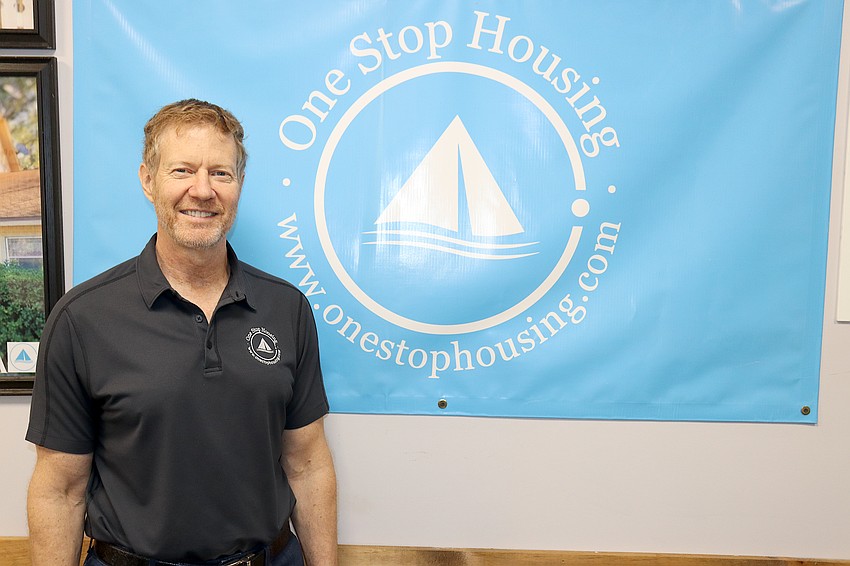
"Anywhere between 60% and 80% AMI is the top of the affordable range for families, but it’s still well below market rate,” Vengroff said. “Attainable, which is kind of a new term that someone came up with that to make it sound better, still is not attainable to me. That would be more of a nice luxury apartment that's anywhere from 80% to 120% of AMI, with market rate being 120%-plus.”
Vengroff disagrees with Salem the rents remain too high under the city’s affordable and attainable housing program because those rents must also include all essential utilities.
“If you're going to charge $1,900 and claim 80% AMI that they use as the guideline, the net effect is really $1,600,” Vengroff said. “It doesn't seem as scary when you when you look at it that way.”
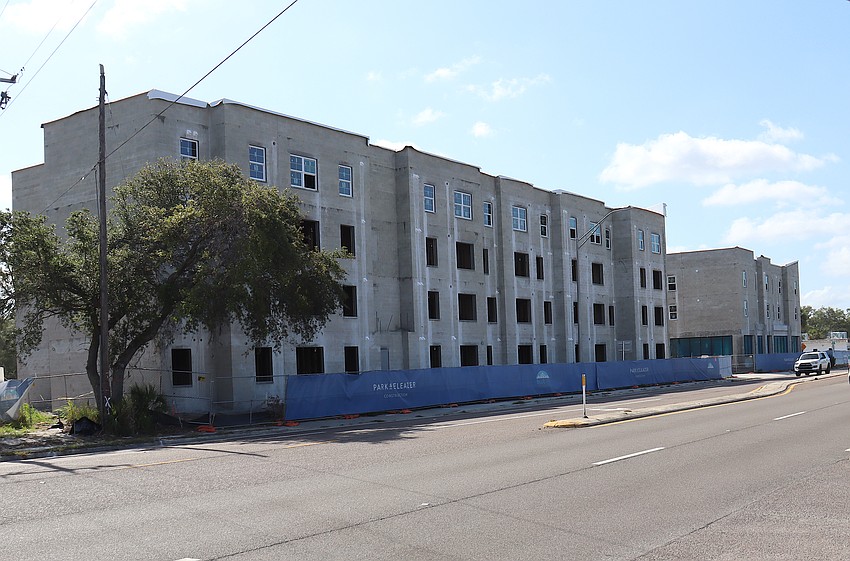
The city’s program picks up where the Sarasota Housing Authority, One Stop Housing, Tampa’s Blue Sky Communities, which is building New Trail Plaza at 4644 N. Tamiami Trail, and others leave off. Those organizations, according to Vengroff, capture the truest essence of affordable housing — asset limited, income constrained, employed — or ALICE. Such developers fall squarely in the range of serving the region’s AMI at 80%, and even 60%, and below.
Besides operating thousands of affordable units in Sarasota and Manatee counties — many of them converted older motels — One Stop Housing expects to break ground this fall on Sarasota Station. That project will have 202 units, all priced at below 80% and below AMI, half of those at 60% and below.
“The 80% AMI units are not income restricted. That's just for anybody who works and needs a place they can afford,” Vengroff said. “For the 60% AMI, you have to show your income to qualify based on the HUD dollars.”
The latter factor — dealing with federal government housing vouchers — is one reason for-profit developers stop at 80% AMI when planning the affordable housing components of their projects.
The incentive programs are beginning to show results for housing stock across all price levels in Sarasota. Among more than 900 affordable and attainable units currently under planning or development, more than 260 are included in market rate developments.