- March 19, 2026

-
-
Loading
Loading
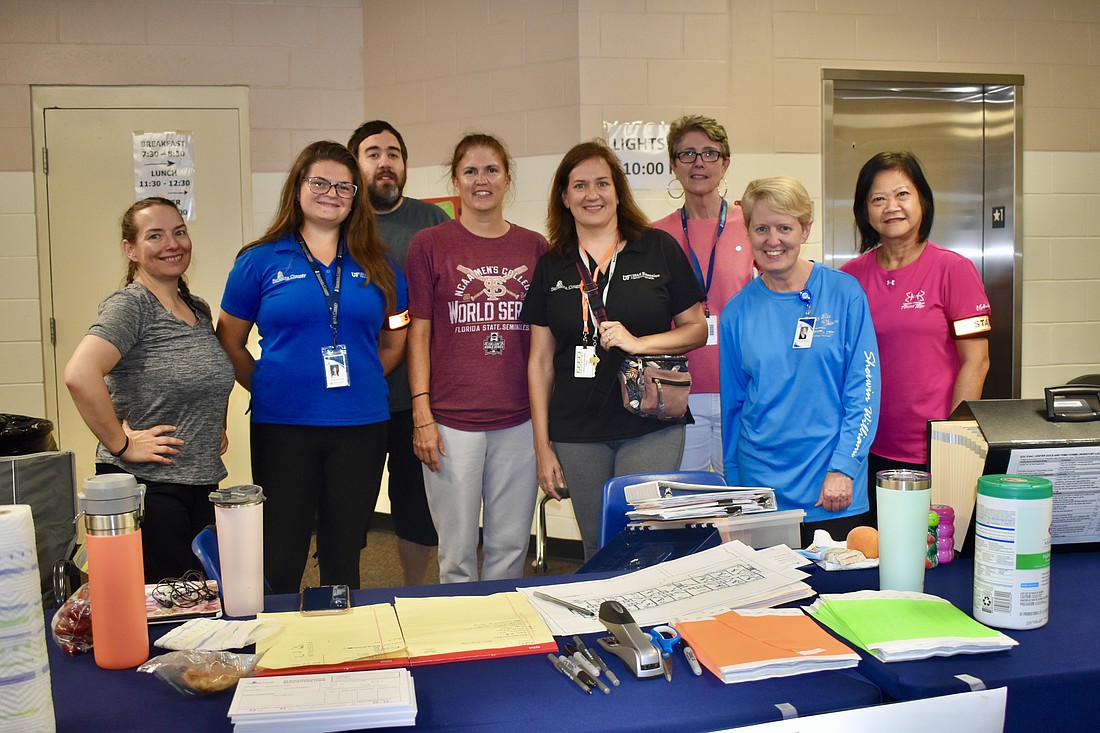
Allison Foster was principal of Philippi Shores Elementary School at the time Hurricane Irma impacted Sarasota in 2017.
“I will say that first storm, I was a little bit surprised,” she said, referring to the time she learned she would be involved in opening the school as a hurricane shelter.
She said her husband asked what she knew about opening a shelter, stating that surely there was already a team in place.
“I said, ‘I think I’m it, I think I’m the leader of it,” she said.
Each year, Sarasota County Schools combines its efforts with teams from Sarasota County to open hurricane shelters in the schools across the district each year.
Foster, who is now principal of Southside Elementary, said it's a large team effort that makes it possible for the district to convert the schools into shelters — and back again, so that students can resume their education.
According to Jody Dumas, the district’s executive director of facilities, this year's preparations finished over springtime. This included their team checking and rechecking buildings, testing and fueling generators, and implementing checklists.
He also says the district is constantly trying to improve its speed of recovery.
“It depends on the storm and the amount of damage, on how long that cleanup takes, but I know our superintendent is always very, very anxious to get school back open, number one, so we don't have to affect the schedule, and then number two, we know that especially after a major storm, getting people back into normal routines is important,” Dumas said.
Last year, in which the district faced the impacts of three successive hurricanes, Debby, Helene and Milton, opening shelters for the latter two storms, it altered the year's schedule.
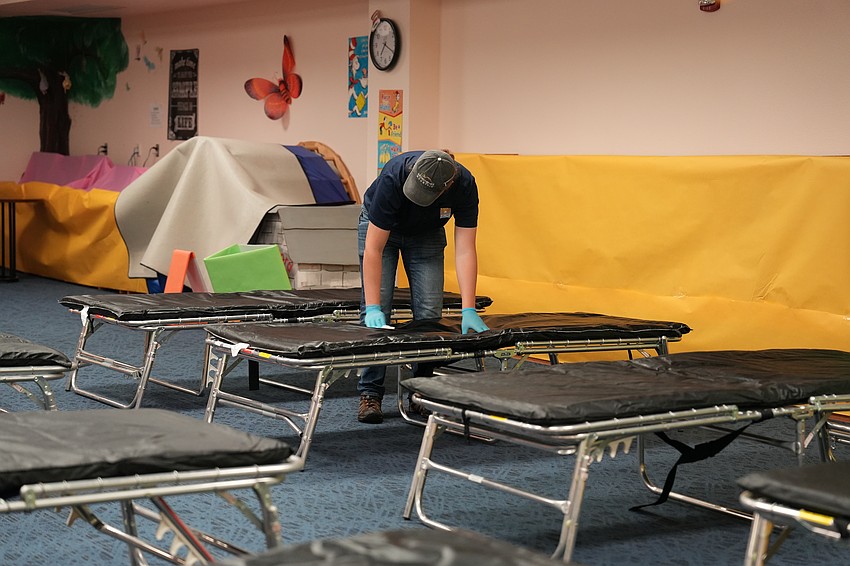
The district moved the end of its first semester from December 20, 2025, to January 16, 2025, while including three makeup days, lengthening high school course times, and lengthening days.
Dumas says everything went as planned in terms of shelters.
“Last year was a busy year certainly, as we responded to the hurricanes,” he said. “I think our sheltering activities went very, very well for all the community. No big problems. Everything kind of went as planned in terms of the way we thought the shelter should go.”
Foster said today, she’s been involved in the shelter process so many times that now, it’s a responsibility she's used to handling.
“It kind of comes with the territory, I guess,” she said.
In early June, she said there weren't plans at that point to reopen Southside Elementary as a shelter this year.
She said the teamwork involved is important to the success, noting the "great" team from Sarasota County that first came to Southside Elementary over the summer, to become acquainted with the campus.
"It was a great collaborative effort,” she said. “We opened two times last year, and I think both times it went very smoothly.”
All administrative staff, including principals, are part of the shelter management program, while essential school district workers in areas like construction and maintenance also contribute.
Foster said at Southside Elementary, the work involved collaborating with teachers to make sure the building was ready, pushing desks and other furniture pushed to the backs of rooms, preparing radios and working with the district's food and nutrition services staff.
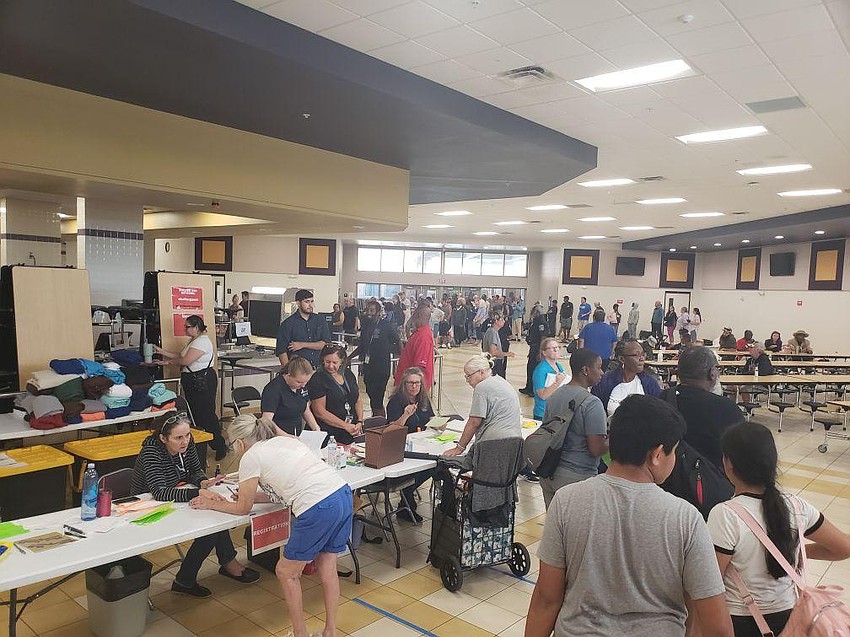
The county staff worked on activities like registering residents, ensuring residents had transportation, and engaging with residents throughout their stay.
She said the shelter did lose power, after which her team helped address the situation, bringing flashlights to rooms.
Dumas said only a few school sites have full power generators, and some have no generators, but only hookups for generators.
He said while a generator can allow some cleaning to take place earlier, most consequential for school reopening is the restoration of full power.
“Until we have that full power, it's not reliable for a school space. … I would say for us, the most critical thing in recovery is having reliable power back from (Florida Power & Light),” he said.
Foster said the shelters serve an important purpose for the community, but being able to reopen schools is also important.
“I think it's great to open them, have a safe shelter, and then on the flip side, when the hard part has passed, that we can then relocate and get the schools back in operation," she said. "I think that's important for the community."
Dumas said after the storm passes, the goal becomes working with the county to reopen schools as quickly as possible, breaking down shelters, ensuring people have homes they can return to, and transporting people to alternative facilities that are available.
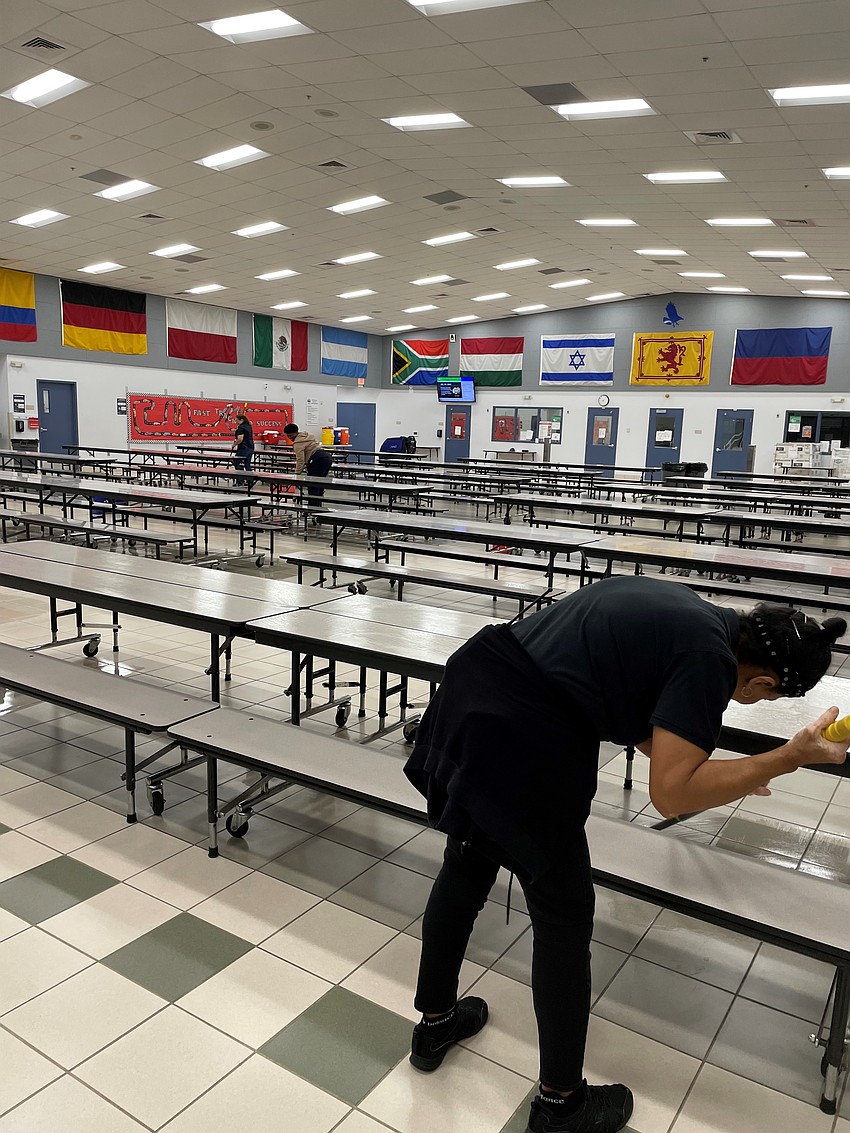
As soon as the storm ends, district condition assessment teams head out to make rapid assessments of all the school sites, while in the storm's aftermath, the school district works closely with the county's communication staff, mirroring their public announcements.
Foster said the speed of the reopening depends on how many residents occupy the shelter, noting during Hurricane Irma, Philippi Shores Elementary hosted more than 2,000 people.
“That took a lot, and people were stuck inside for a long time because of the duration of the storm, so we had to clean all the carpets and we had a lot that had to happen to get the school back in operation,” she said.
Playing a role in reopening times is a factor unrelated to the shelters, and that's potential storm damage.
In late June, Dumas said although no individual campuses were significantly impacted by storms, the district was still working to fix some minor storm damage in certain areas.
He said the district is always looking to improve the recovery process, with a focus on efficiency this year.
“As a community, last year's kind of still right in our minds,” he said. “We’re still recovering from some of that in some areas, and so I think we're all kind of worried about it, but having said that, it's been because we had three hurricanes last year. And because we had some substantial winds and substantial flooding in a few of those hurricanes, we've gone back, reviewed all of our plans, and we're constantly trying to get better at what we do.”