- March 19, 2026

-
-
Loading
Loading
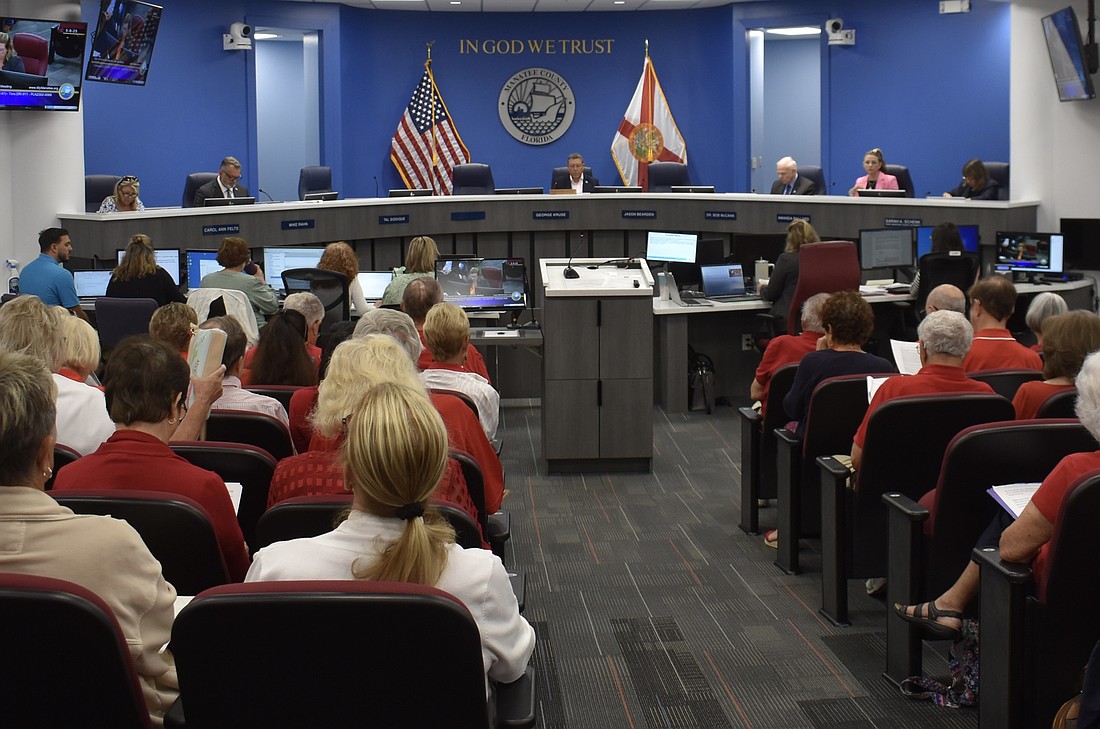
Manatee County commissioners have been warned they face a lawsuit if they follow through with their plans to impose higher impact fees, which are scheduled to go into effect Sept. 9.
Impact fees are charged on new residential and commercial developments to offset the county’s costs for the infrastructure that the ensuing growth will require, such as roads, parks and libraries.
S. William Moore of Moore Bowman & Reese, P.A. sent a Notice of Violation, dated June 30, to commissioners, which reads:
“The cause of said violation is that the changes to county impact fees amount to significant increased charges to home builders within specific hurricane impacted areas, including Manatee County and are ‘more restrictive and burdensome’ than the previous impact fee charges assessed.”
The letter cites Senate Bill 180 as strictly forbidding “such burdensome regulations” through October 2027.
SB 180 prohibits a local government from adding more restrictive or burdensome amendments to its comprehensive plan or land development code.
Moore sent the notice on behalf of Freedom Housing Alliance Inc. The Florida Division of Corporations lists Jon Mast, CEO of the Suncoast Builders Association, as the nonprofit’s registered agent.
Mast wouldn’t comment on the letter because of possible litigation, but he did agree to sit down with the East County Observer to discuss impact fees and SB 180 in general.
Mast contends the increase will cripple the local economy and won’t remedy the county’s current problems, such as roads that are over capacity, because impact fees only cover new improvements.
Impact fees can’t pay to refurbish a library. They can only be used to build a new library.
Commissioners had to claim extraordinary circumstances to raise the impact fees to 100% of the current collection rate.
Without claiming extraordinary circumstances, state statute limits increases to 50% over four years. Once raised, the fees can’t be raised again for another four years.
Up until Jan. 1, Manatee County had been collecting 90% of 2015 collection rates. An updated study with 2023 collection rates was adopted in August 2024, and a 12.5% increase went into effect Jan. 1, which falls in line with the state’s guidelines.
The notice asserts that by claiming extraordinary circumstances to raise the fees beyond the state guidelines violates the “more burdensome” language in SB 180.
Mast argued that, not only is the move against the law, the upcoming increase is so significant that it will devastate small builders and anyone looking to develop commercial properties. He singled out the impact fees on daycare centers as particularly burdensome.
When the new fee schedule is adopted in September, a daycare center will incur an impact fee of $26,191 per 1,000 square feet, which is higher than any other business or service except for large commercial shopping centers and gas stations that include convenience stores.
Mast referenced a study conducted by the National Association of Homebuilders to emphasize the fees will also have an effect on the affordability of housing in the area.
The 2025 report shows that for every $1,000 increase on a median-priced new home, 115,593 American families are priced out of the market.
Mast said developers will pass that expense onto buyers because they still have to pay for the same amount of supplies and subcontractors and set enough funds aside to guarantee the home for seven years, per Florida statute.
He also noted that home prices are already on the rise with President Donald Trump's 50% copper tariff going into effect Aug. 1 because most copper supplies come from Chile.
“There are 52 subcontractors that work on a home, plus closing agents, attorneys, bankers and suppliers,” Mast said. “It’s all the trades. It’s an ecosystem. Commercial follows rooftops — businesses, warehouses, restaurants, physicians, dentists and grocery stores.”
SB 180 is legislation that aids hurricane recovery efforts, yet impact fees are only paid once. Replacing a home that was destroyed by a hurricane wouldn’t require another fee because the original home already established its impact on the area.
However, Mast said the ecosystem, created by development, is the overarching reason SB 180 prohibits commissioners from raising impact fees on new homes.
Mast said every governor for the past 20 years has passed legislation following a hurricane to ensure the economy continues to grow. New development provides new property taxes to replace those that were damaged.
He said impact fees are meant to support growth, not to bail out the local government for poor planning.
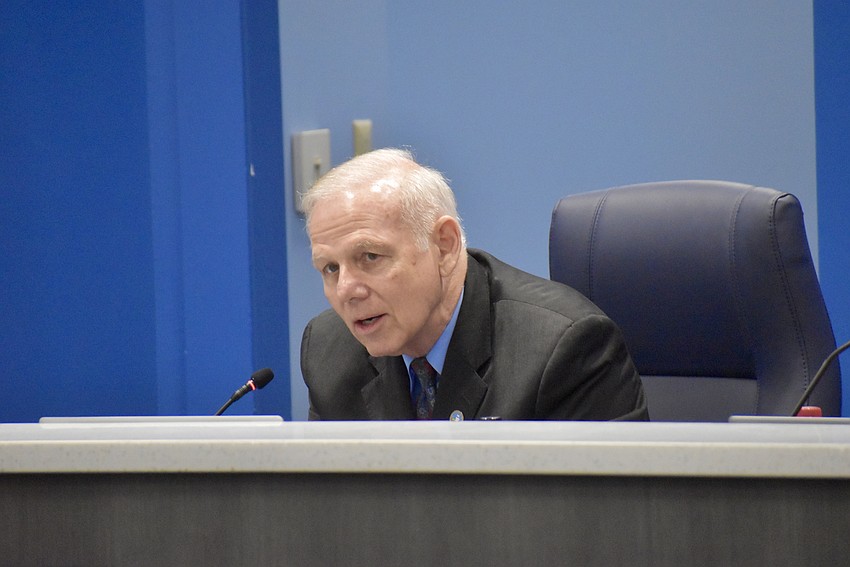
“We’re not trying to go back and fix what’s already broken with impact fees,” District 5 Commissioner Bob McCann said. “We’re trying to mitigate it from continuing to break over and over again. We need time to catch up.”
In January, McCann discussed a possible building moratorium on new housing developments, but the idea didn’t develop into an action. While higher impact fees can’t stop new development, they could slow it down if builders decide to take their business to counties that charge less.
Sarasota County separates its fees into three categories — impact fees, educational systems fees and mobility fees — but still charges less than Manatee County. When adding the fees together, a developer pays between $10,117 and $13,197 to build a 2,000-square-foot home in Sarasota depending on where the home is located.
Right now, building the same home in Manatee County costs between $13,442 and $16,328 in impact fees, including educational impact fees. When the new fee schedule takes effect, the impact fee will be $33,875.
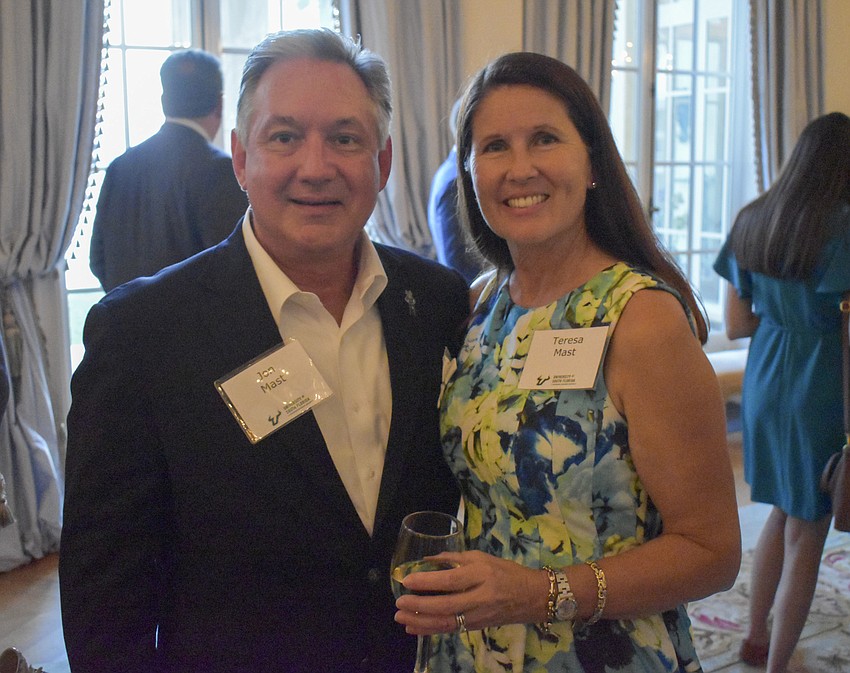
The Suncoast Builders Association represents builders in both counties. Mast’s wife, Teresa Mast, is a commissioner in Sarasota County.
Mast used Hillsborough County as an example of what happens when growth is stymied. In 2019, officials enacted a growth moratorium in rural areas to prevent urban sprawl.
He said builders brought their projects to other counties, Sarasota and Manatee included, and now Hillsborough is left without enough tax dollars to fund its roads.
But when discussing the lower impact fees in Sarasota County, McCann argued that Sarasota is running out of money charging those rates.
“(Developers) did the same thing there that they tried to do here,” he said. “They said Senate Bill 250 and 180 and all these things prevent you from doing anything with land use.”
McCann, who is also an attorney, argued that impact fees are not directly related to land use because the fees only pay for the privilege of building on that land. It can’t be more restrictive or burdensome to pay the fair share of what was already required.
He also stated that impact fees have nothing to do with emergency management statutes, such as SB 180.
The Notice of Violation sent by Moore asks that actions be taken to withdraw the impact fee increase immediately, but the majority of commissioners have made it clear since the 2024 elections that they would rather be sued than accept less than the fee schedule going into effect Sept. 9.
Commission Chair George Kruse tried to convince the last board to take this action, and Commissioner Tal Siddique called impact fees “a fight worth having.”
Commissioners Mike Rahn and Amanda Ballard expressed concerns that the higher impact fees could drive businesses away and negatively affect the county’s future economic development.