- March 19, 2026

-
-
Loading
Loading
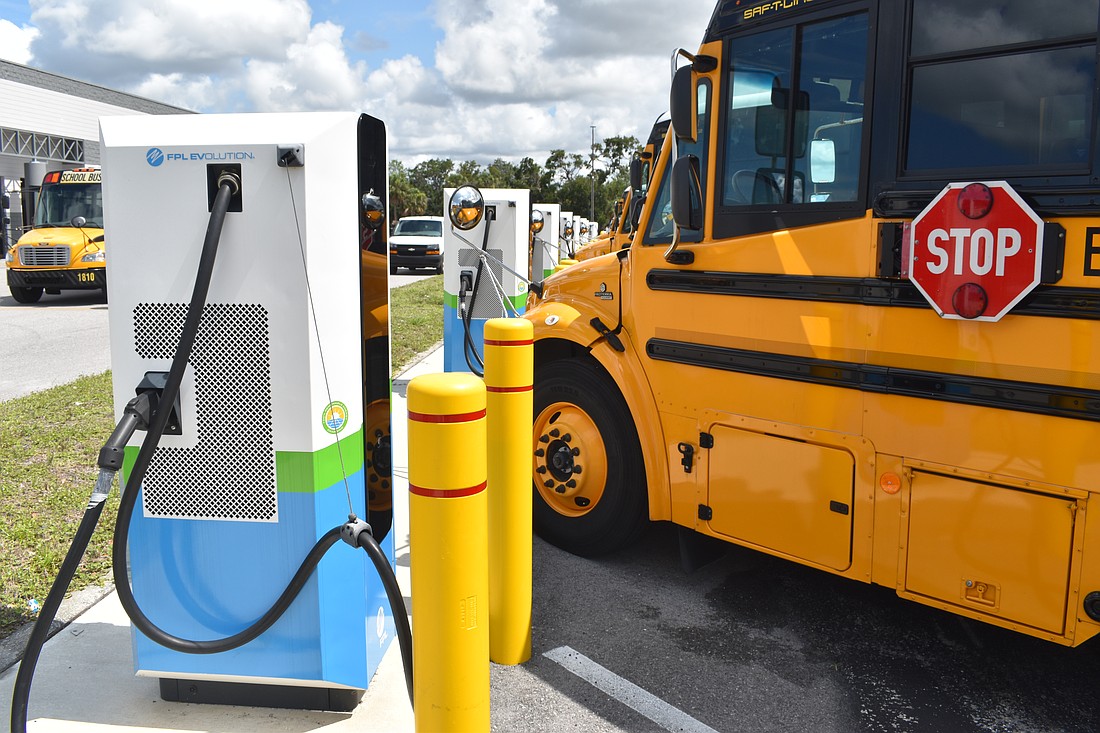 Photo by Ian Swaby
School districts across the U.S. are increasingly moving towards electric school buses, and Sarasota is no different.
Across the country, the shift has been driven by a combination of factors, including environmental concerns, the potential for cost savings, and government funding opportunities, although noted the quieter nature of electric buses.
After receiving a grant from the Department of Environmental Protection grant in 2022, Sarasota's school district has purchased six of 10 possible electric buses.
What's the future of this mode of transportation for the district?
Director of Transportation Keith Little says at this point, it remains to be determined what the cost impacts will ultimately be.
“For us, it's, it's going to be exciting in the next year or two,” he said. “As we as we get a few years of data underneath our belt, the true test is going to be when they get out of warranty. How many problems do we have? How much does it cost when we actually have to pay for the repairs, versus right now, everything's covered under warranty?”
Little said in November 2024, a standard school bus cost the district $159,010, and an electric bus cost us $414,481 at the time of purchase.
However, due to the grant program, the district receives payments offsetting the cost differences between the two buses. The grant requires the district's oldest diesel buses to be scrapped as the electric ones arrive.
The installation of chargers at the district's transportation depot in Osprey is in conjunction with Florida Power & Light.
Little says currently, the district is still continuing a multi-year evaluation and he is not yet able to form any conclusions about the benefits of electric buses versus those of diesel buses.
“I don't know that we're necessarily expanding it this second. I think we're going to hold on,” he said.
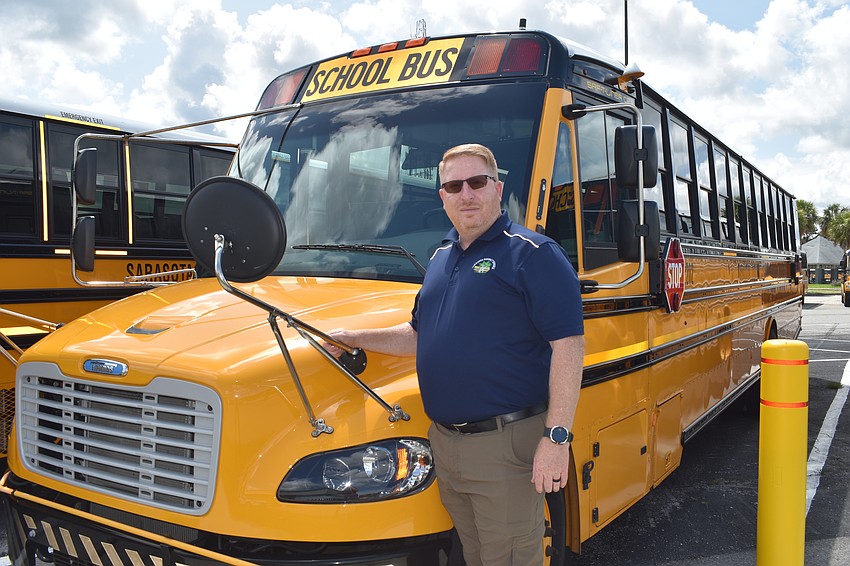
However, thus far, he said there are no issues.
“The two that have been running consistently, we haven't had really had any problems with it,” he said. “The drivers haven't said anything. The students haven't said anything, the mechanics. It's been pretty easy going from those two so far.”
He says currently, electric buses run in all directions from the Osprey depot, but do not service the whole county.
A total of three electric buses previously were in operation, but during the school year, one of them had to be returned to the manufacturer for repairs, due to issues with a battery pack which was covered under warranty.
Although the original grant covered 12 buses, an increase in costs resulted in the grant being revised for 10.
The grant's original expiration date was the end of June this year, but because the district hadn't yet purchased all 10 buses, officials offered a two-year extension allowing for the purchase of the buses.
“We did extend the grant for two more years to give us time to look into, basically, what's the cost truly going to be to us, before we get down the down the road and say, ‘Okay, yeah, we're just going to blindly buy four more,” Little said.
Although he emphasizes the overall costs are not yet clear, the electric buses bring some undeniable benefits. Little noted drivers have observed the quietness of the buses compared to diesel buses, and said he thinks students tend to be quieter as well, because of less of a need to talk over the noise.
“The pros, obviously, is that they're quiet,” said lead mechanic Gary Donahue. “In theory, there's a lot less maintenance costs associated with the buses. The cons are that, unlike a conventional bus, if they run out of fuel on the road, we’ve got to tow them in.”
Donahue said the district has to be cognizant of mileage between charges, while the theory is the buses are also better for the environment.
He said the base maintenance on the buses, including components like tires and brakes, as well as the body, is the same as with diesel buses, while the difference lies in the actual power components, for which the mechanical work requires a specific certification.
Little says there will be more considerations as the district moves into the future.
He said they had to delay the most recent order of regular buses, due while waiting for the impact that the tariffs of the Trump administration might have on the overall bid prices.
Little said costs are hard to predict, and as an example, cites the last few years, during which costs like electricity have rapidly risen.
“Obviously the cost of fuel and diesel has been higher than it normally has as well...” he said. “I think it'll be interesting to see how the tariffs, depending on where the parts are manufactured and that sort of thing, what impact it has on it.”