- March 16, 2026

-
-
Loading
Loading
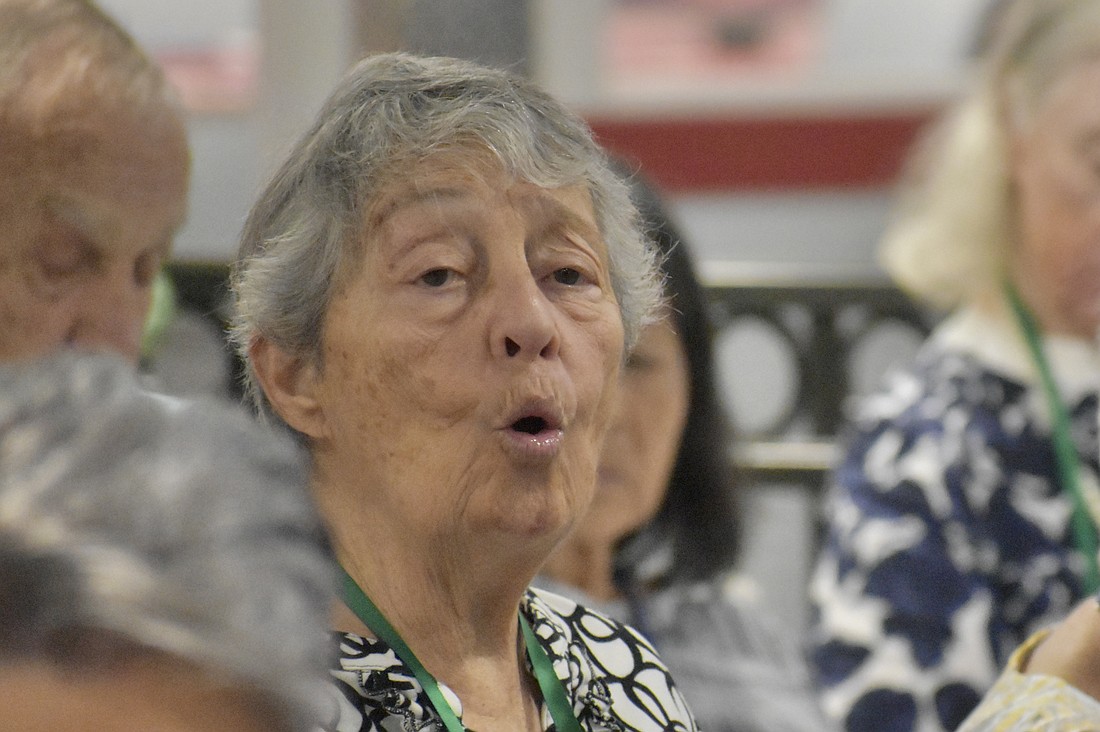
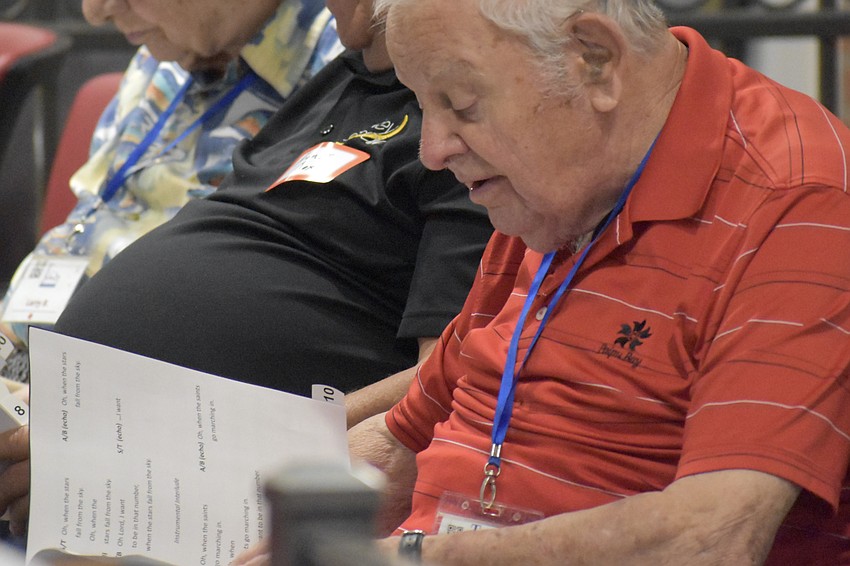
Leonard Pagano, 94, describes himself as someone who was never musically inclined.
Nonetheless, in recent years he has been performing karaoke when he visits the American Legion on Friday nights, singing "My Way" by Frank Sinatra.
For Pagano, who has Parkinson's disease, the foray into singing started with the Local Come Together Choir for senior enrichment at Town Square Sarasota, hosted by Key Chorale.
The choir, which is in progress and continues until Oct. 9, is one of the programs for seniors with varying needs that the organization, which describes itself as the Suncoast's premier symphonic chorus, administers each season.
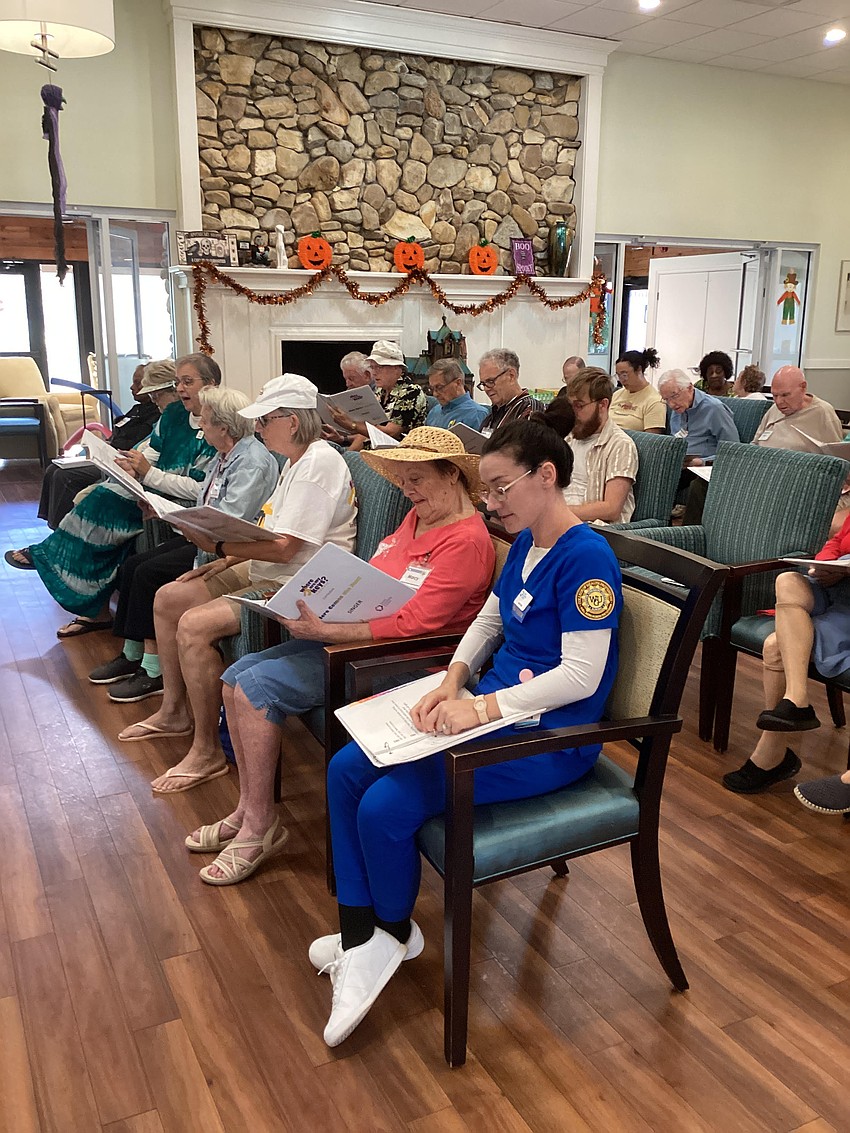
Pagano also enjoys following the choir to another session it is holding at Senior Friendship Centers: the Where Are My Keys? Chorale for those living with memory loss.
From Oct. 16 to Dec. 11, the organization will also be offering the Off-Key Chorale, in partnership with Neuro Challenge Foundation for Parkinson’s, and another series of Where Are My Keys? Chorale at Aravilla Sarasota Memory Care.
The organization has been providing these programs for seniors since 2012, said Joseph Caulkins, artistic director of Key Chorale.
Each season, the organization delivers 64 sessions, with four eight-week programs, culminating with a celebratory performance.
The programs started with the intention of helping individuals with Parkinson's and their care partners, but in 2018, Caulkins wanted to branch out to help those with Alzheimer's and dementia, or who were in memory care, so a new curriculum was created for them.
Caulkins says when it comes to Parkinson's, movement is an important form of therapy.
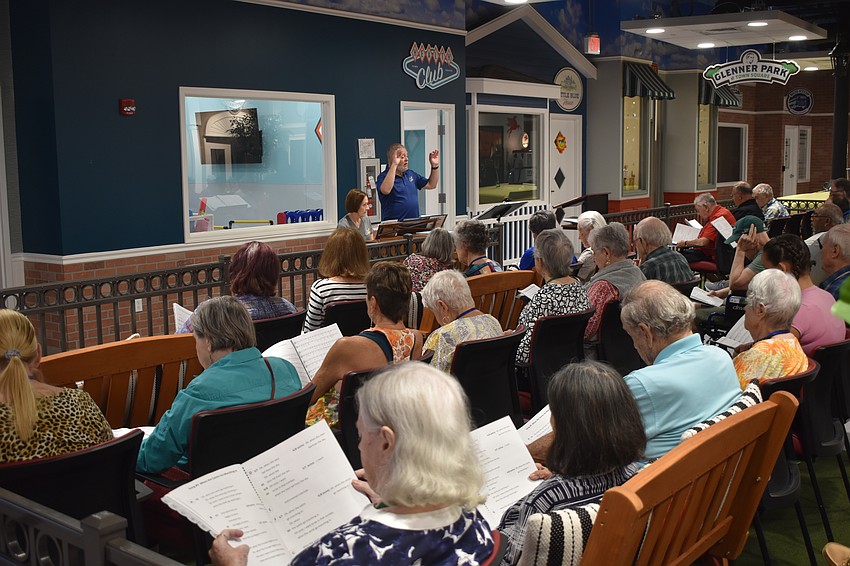
The first 10 minutes of each session will focus on voice building, including physical exercise with breathing, and singing exercises, before moving into songs that range from sing-alongs to four-part harmonies.
Caulkins said the exercises help to strengthen voices, help with swallowing, and help with facial masking, which is the limited ability to make facial expressions.
“Really, what they're getting is really good vocal technique, but also therapy,” he said. “The exercises are generally kind of fun and sort of dumb, and things that just sort of you can kind of laugh at, and so it gets everybody relaxed, that it's a safe space where you can make a terrible sound, a great sound. Nobody cares.”
He says the goal of the sessions is to "just keep them singing," and says his approach to teaching participants is the same as with a regular choir, with his usual use of humor, but with a focus on participation rather than performance.
"If they sing terribly, it's fine, if they sing great, even better," he said. "It's just a matter of giving them a space to know that they can participate.”
Yet despite the intention of the choir to be inclusive, it still manages to produce a confident sound. One way it achieves this is through the several volunteers who will be spread throughout the group, who help participants with needs like turning pages and keeping place.
“They kind of tell us what page to do if we're off, or if we fall asleep, they wake us up, tell us where we’re at," Pagano said.
Declan Sheehy, chief advancement officer at Senior Friendship Centers, which is hosting a choir for those with memory loss, calls the sound "amazing."
“People hear it, and they don't even realize that these are... our regular attendees, who are attending Adult Day here at the centers," he said.
“These are people with really serious health challenges, and they sound better than a lot of choirs," Caulkins said.
He says that many people are even able to overcome their health issues due to the music.
“There might be a person that might be almost catatonic for maybe two sessions, and all sudden, there's a song that connects with them, and they become more present and start engaging in singing," he said. "You have people who haven't spoken for 10, 20 years, and all of a sudden start singing in rehearsal. So it's magical what music can do.”
He also says for those not in memory care, but just facing the general challenges of being older, the sessions are also important for cognitive development and learning something in a different way.
Pagano says when suffering from health issues, activities like these are also important for a sense of purpose.
“Sometimes you wonder if you if life is worth living, and if you have activities like this it helps you from becoming depressed and from not giving in, so to speak, to things like depression and your fall into Alzheimer's, or whatever you're suffering,” he said.
He recently moved into assisted living, but has had the continuity of activities at Town Square, which he attends using his VA benefits as a Korean War veteran.
“He loves it, because the leader, he's very passionate and funny, and so he makes it fun as well,” said his daughter Bonnie Ryan, of Caulkins' direction.
She says Pagano loves singing the songs from his era, which the choral sessions heavily feature, stating, "it brings back all those nice memories of a time when they were healthy, and a good time in their life."
She also calls the location "like a family" where he feels safe.
She said although Pagano has mild cognitive impairment, that hasn't stopped him from being able to sing lyrics.
“To see him singing all the words of all the songs... it was kind of surprising at first. I'm like, 'Wow. I can't believe he knows all that,'” she said.
Pagano says his progress is the result of constantly pushing himself.
"You’ve got to push yourself in the musical realm just the way you push yourself in the physical realm when you go to the gym..." he said. "The more you exercise it, the more you develop an ability to continue loud singing, and the emphasis is always to speak out and be loud, and exercise those lung muscles, because there’s a tendency … not to want to use them because we’re getting older. Like walking and like any any other muscle, the muscles in your throat, are the ones that need exercise just like everything else."
Caulkins says it isn't only those with Parkinson's who can make progress, however, but also those who are in memory care or have Alzheimer's and other memory issues.
“When we first started that with memory care, we thought it would be the same rehearsal every week, and we found that they really do as a group, they build on from week to week," he said.
He says the use of songs familiar to participants is one key to the program's success.
Sheehy says when people begin to experience memory or cognitive issues, they may not remember what they had for breakfast, but will remember a song from another era, or that they heard in their childhood, which is why these sessions are important for the center to offer.
He said they built the organization's mission of bringing joy to seniors of all ages.
"Music just accentuates that joy, and it's togetherness, because you can't really have a good choir of one, but a choir of many," he said.
He also says clinical studies and trials have measured the results and show the benefits of music, as well as ballroom dancing — another activity offered at Senior Friendship Centers — in keeping the brain engaged.
“The other wonderful thing about the joy of music, of course, is that when they stop singing, the joy doesn't go away, the joy stays, and the sense of purpose stays," he said. "They might forget some of the detail, but they know that we're happy, so it's a really great way to have people feel very much part of something, but to be part of the greater community also.”