- March 19, 2026

-
-
Loading
Loading
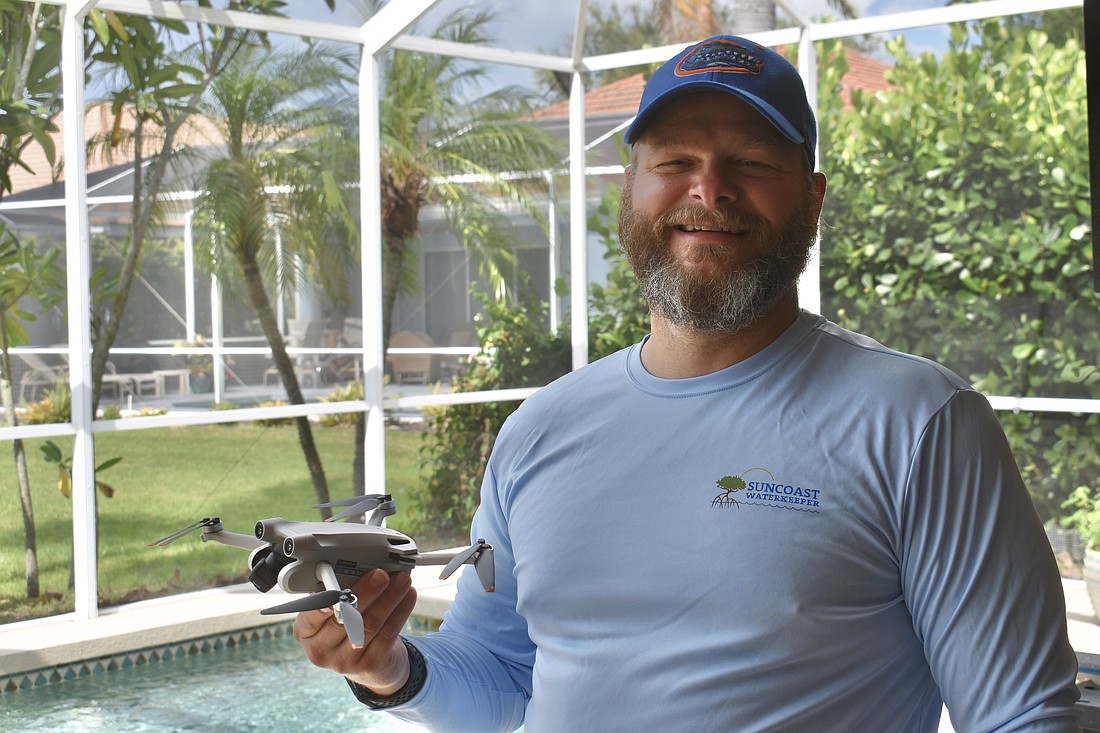
Mote Ranch's Keith Paynter is putting his drone pilot’s license to good use as a volunteer mangrove ranger for Suncoast Waterkeeper.
The ranger program was initiated in 2024 to monitor the health of mangrove forests located in Sarasota Bay and Palma Sola Bay.
Paynter became licensed to pilot a drone through the Federal Aviation Administration in 2023 because he wanted to start a drone program for his students at Sugg Middle School in Bradenton. He started teaching sixth and seventh grade science at Braden River Middle School this year.
“I wanted (the students) to learn about drones and what they could do with them,” Paynter said, “They can get (a license) at 16, so in high school, they could have a job making money with drones already.”
Other than that, Paynter wasn’t doing much with his license. So when his step-father, Jim Daniel, sent a message about the opportunity to volunteer, Paynter was immediately on board. He said he would happily take a “boat trip” once a year for as long as his services are needed.
While Paynter described the work as fun, social and engaging, the boat trips serve an important purpose.
Abbey Tyrna, executive director of Suncoast Waterkeeper, said the monitoring program was started in response to several reports of mangrove violations.
Mangroves are protected under the 1996 Mangrove Trimming & Preservation Act, which regulates trimming and prohibits herbicide use because mangroves are both ecologically and economically valuable.
Mangrove forests filter the water, provide a habitat to marine species, stabilize the shore and offer flood protection. They also provide nursery support to commercial fisheries.
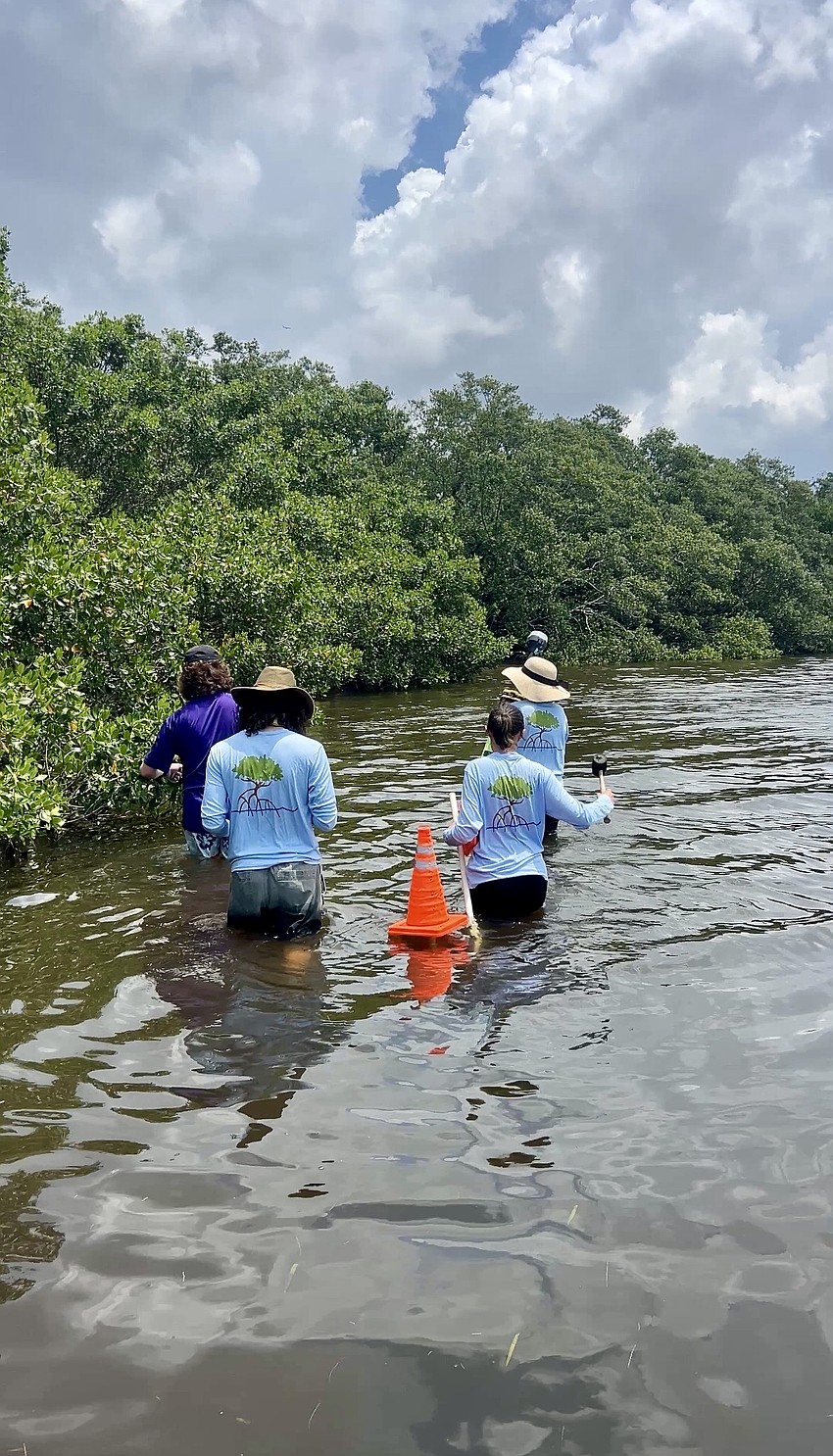
Given their importance, Suncoast Waterkeeper wanted to take a proactive approach to understanding how mangroves respond to different vulnerabilities, such as hurricanes and development.
The rangers help monitor mangrove forests in the local area by collecting drone images from eight specific locations — four in Palma Sola Bay and four in Sarasota Bay.
Those images are then loaded into a software program that stitches them together to form a 3D image.
Waterkeeper staff members can highlight a site on the image, and the software can calculate the forest’s canopy depth and average Normalized Vegetation Difference Index, which assesses how well the mangroves are photosynthesizing.
From there, the site is assigned a health score.
The data has shown mangroves to be highly vulnerable to both the forces of Mother Nature and man, but also resilient.
The healthiest mangrove forest documented in 2024 — a preserved site in Sarasota Bay — lost 46% of its canopy due to storm damage. Its health score dropped from 90 to 59.
Tyrna said it’s probably not possible to achieve 100, so 90 indicates an extremely high-performing mangrove forest.
Another site in Sarasota Bay was among the least healthy mangroves to be documented in 2024 because a sewer pipe broke near the site in 2022. However, those mangroves showed an 8% increase in canopy volume over the past year, and the site received a health score of 63, which is higher than the preserved site this year.
The sites are chosen for different reasons. Some sites are located within preserves. Other sites are located near development, and in some cases, future development.
Mangrove rangers work in teams of four. There needs to be a boat owner, drone pilot, data manager and spotter.
The spotter keeps eyes on the drone during its entire flight to watch for potential hazards, which Tyrna said are mostly curious birds.
The data manager makes sure the drone information is being received accurately and also records basic information, such as visibility and wind conditions.
Tyrna said they assembled five teams this year, but each year, the program has been limited by the number of drone pilots. Suncoast Waterkeeper provides the drones, but the pilots need to have a license through the Federal Aviation Administration.
Paynter said most of the training to get a license is just learning the flight rules. It took him about a month to get through the course and about two hours to get through the exam.
Suncoast Waterkeeper staff members also visit the sites to conduct surveys. They identify the trees and take measurements, such as height and diameter, to ensure that the collected data matches the actual site.
The data has shown that trimming, which is regulated but allowable under the law, does significant damage to the health of mangroves. Tyrna said the trimmed mangroves scored in the 30s.
She said new information has come from the staff surveys, as well. For instance, black mangroves that lost all their limbs from hurricane damage stayed viable by growing leaves around their trunks.
“You learn in textbooks that there’s this stratification where red mangroves are going to be on the water side, black mangroves are going to be in the middle and white mangroves are going to be landward,” Tyrna said. “We found that the red, white and black are all intermingled. People are learning about this neat system, and it’s very messy.”