
- March 14, 2026

-
-
Loading
Loading
My iPhone’s GPS couldn’t find the Heritage Ranch Gopher Tortoise Preserve. It claimed I’d already arrived, although I clearly had not. Turns out, the preserve is located farther east than the digital map could register. Fortunately, Todd Ness knew that would happen. He was ready for my call and waiting for me in his UTV at the preserve’s actual entrance.
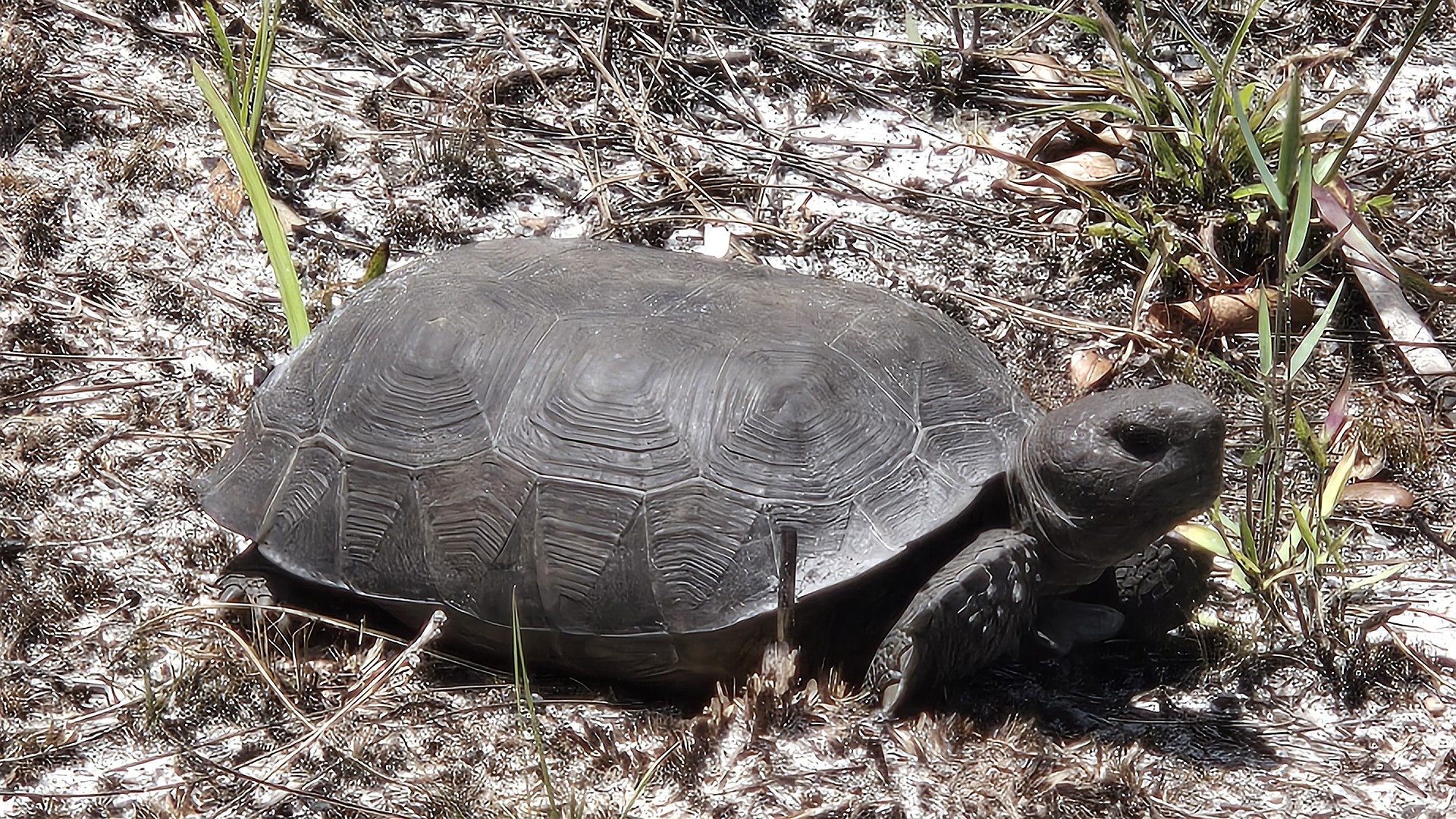
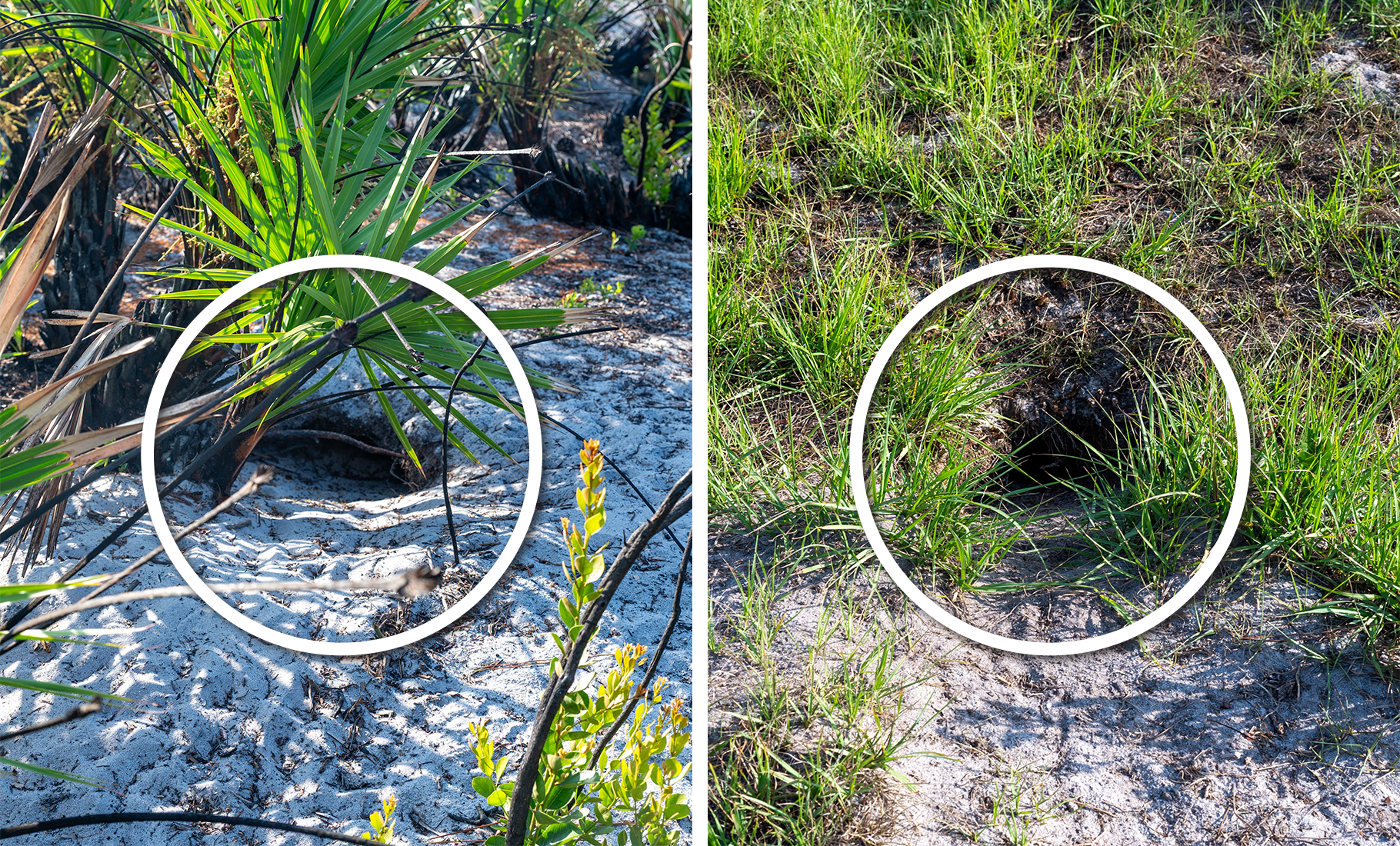
As equipment ranch manager for Schroeder-Manatee Ranch (SMR), Ness oversees all 2,100 acres of SMR’s conserved land, including the 640-acre Heritage Ranch Gopher Tortoise Preserve. Driving me through miles of rugged trails lined with scrub grasses, vegetation and mostly native trees, Ness, a Manatee County native and former construction worker turned conservationist, explains that gopher tortoises are all around us. As we walk, he points out sandy mounds — entrances to the burrows where these ancient creatures stay hidden until dusk.
This refuge for one of Florida’s most iconic and ecologically vital species was permitted in 2012 by the Florida Fish and Wildlife Conservation Commission (FWC). It currently shelters 346 gopher tortoises, with enough room to house nearly 300 more. The preserve offers a long-term solution to a recurring challenge in Florida’s fast-developing regions: what to do with wildlife displaced by growth.
But it isn’t just a safety net for tortoises. It’s a cornerstone in Lakewood Ranch’s broader environmental planning and a case study in how business, development and conservation can work together.
The gopher tortoise (Gopherus polyphemus) is more than just a slow-moving reptile that burrows in Florida’s sandy soils. It’s a keystone species, meaning its survival supports the survival of many others. More than 350 animal species, from snakes and burrowing owls to insects and frogs, use abandoned tortoise burrows for shelter and nesting.
“They’re like little ecosystem engineers,” says Craig Wolfe, a lifelong Manatee County resident and environmental scientist with Ardurra who oversees preserve assessments. “If we lose the tortoises, we risk a domino effect on Florida’s native wildlife.”
The species is classified as “threatened” in Florida, and any relocation or disruption of their burrows requires state permitting. That’s where long-term recipient sites like Heritage Ranch come in.
The vision for the gopher tortoise preserve began in the 1990s when SMR — the parent company of Lakewood Ranch — started transitioning its 35,000-acre agricultural property into a master-planned community.
“Even before development really took off, SMR recognized that they had a significant gopher tortoise population already on the land,” says Alec Hoffner, a senior project manager at Kimley-Horn who, along with Wolfe, co-founded the now shuttered EcoConsultants, the firm that handled the preserve’s permitting. “Rather than moving the tortoises offsite, they wanted a way to keep them on the Ranch.”
The solution was a preserve under permanent conservation easement, which means the land can never be developed. It would serve as a destination for gopher tortoises displaced during new construction in Lakewood Ranch. “We helped create a sustainable system,” Hoffner adds. “One that balances environmental responsibility with the realities of growth.”
Although the preserve had a baseline gopher tortoise population, the land wasn’t immediately ideal for expansion. In the decades prior, it had been used for timber production, and native southern slash pine grew too densely, limiting the low vegetation gopher tortoises rely on for food.
Wolfe explains: “They eat wiregrass and other native ground cover. But they’re short; they can only reach about two inches off the ground. If the canopy is too thick, sunlight can’t reach those plants.”
Several strategies were used to restore, and are now used to maintain, the habitat, including prescribed burns and mechanical rollers to reduce overgrowth and allow grasses to regrow.
“The prescribed burns are critical,” Ness says. “We burn in a checkerboard pattern so there’s always food available in one section while the other regenerates.”
The preserve is also home to a wide array of other wildlife, including deer, turkeys, bobcats, eagles and snakes. “We’re preserving more than just tortoise habitat,” Ness says. “We’re keeping a piece of Old Florida alive. That really means something.”
When construction breaks ground elsewhere in Lakewood Ranch, gopher tortoises living onsite must be safely relocated. That process starts with an environmental consultant, who performs a wildlife survey. If tortoise burrows are found, a permit is filed with FWC.
Once the permit is granted, SMR’s land management team builds a temporary pen — about a half-acre per tortoise — at the preserve.
“They live in those pens for six months,” Ness explains. “It gives them time to dig new burrows and acclimate to their surroundings.”
Relocated tortoises range from tiny hatchlings to 15-inch adults. Temperature is carefully monitored during transport, and the new pens provide shade, food and security. “We’re giving them a fresh start,” says Ness. “And once they settle in, they’re free to roam.”
That freedom is key to their wellbeing, Wolfe notes. Gopher tortoises once roamed widely across what is now Lakewood Ranch. “At one point, the land was native and uncultivated, so they ran free,” he says. But over time, farming, development and natural barriers like rivers and creeks fractured their habitat. Small, isolated groups, what Wolfe calls “fringe populations,” were left behind, often with just five to 10 tortoises per area.
The preserve is helping to change that. “The majority of the gopher tortoises in the preserve are from isolated areas of Lakewood Ranch,” says Wolfe. “To keep them on the property, SMR moved them into a suitable habitat.” Now, these once-separated tortoises are reconnected and thriving in a shared, protected environment. “Any other option, like areas farther away in different parts of Florida, is not advantageous,” Wolfe adds. “It’s best to keep the population as close to their original area as possible.”
Today, the preserve is maintained through regular assessments submitted to FWC every three years. Wolfe conducts these assessments, checking for habitat quality, wildlife presence and compliance with management plans.
Maintaining the preserve is also a savvy financial decision, notes Hoffner. Relocating gopher tortoises off-site can cost up to $5,000 per tortoise. By keeping them local, SMR reduces costs while meeting environmental standards, demonstrating its commitment to responsible land stewardship.
“Conservation and economics don’t have to be at odds,” Hoffner says. “In this case, they reinforce each other.”
Laura Cole, senior vice president of Lakewood Ranch, emphasizes the deep responsibility involved in conservation. “Setting aside land for nature isn’t just a short-term decision — it’s a commitment that lasts for generations. With gopher tortoises living 50 years or more, every time we relocate a young tortoise, we make a promise to care for the land and habitat for decades to come. This is an example of how SMR has always made decisions — with the long view in mind.”
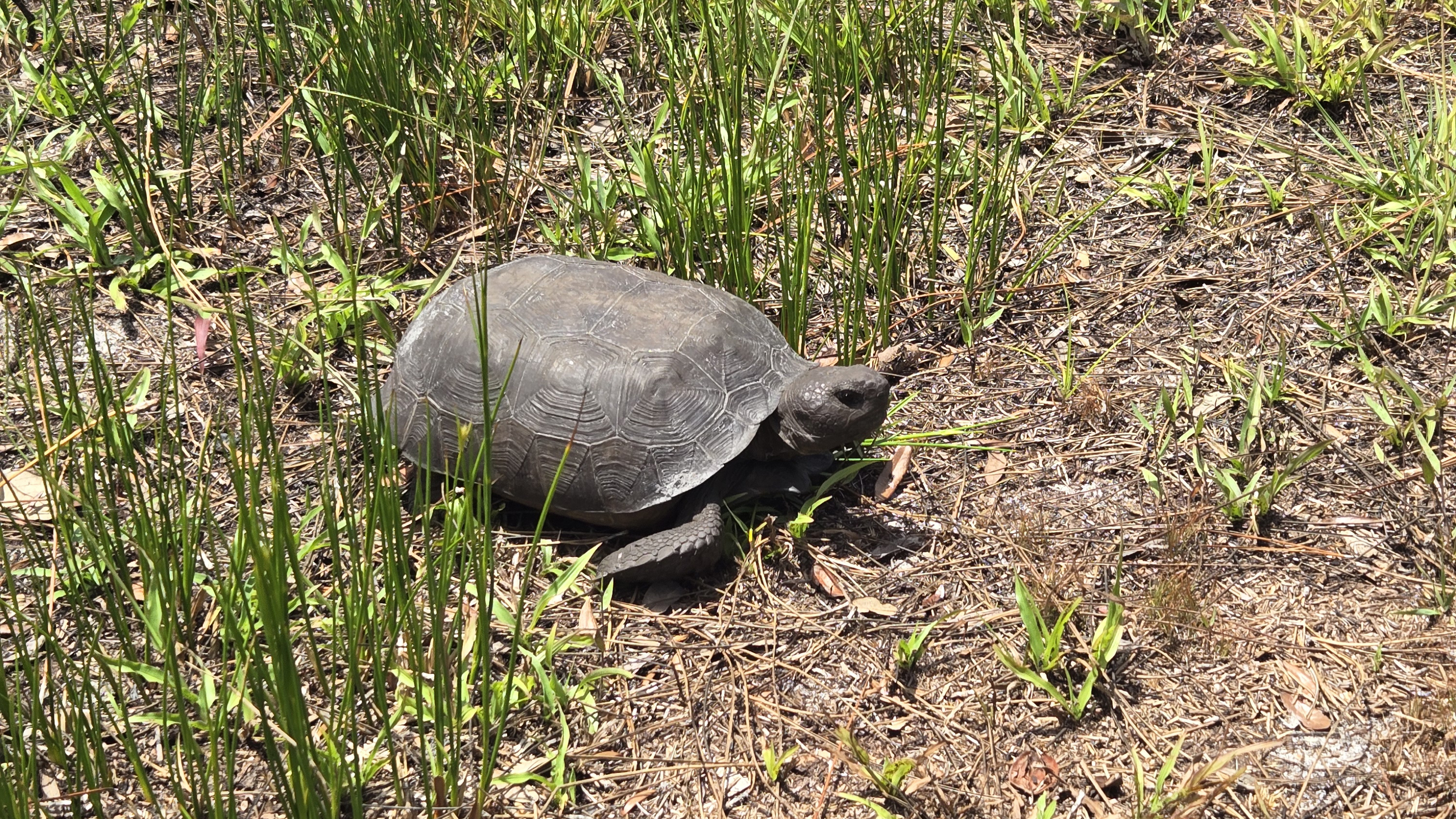
The preserve benefits more than gopher tortoises. Its habitats support species like the Eastern indigo snake, Florida mouse and even the rare, crested caracara.
“People might not see it day to day,” Ness says, “but when I’m riding through in the evening, I see it all — the eagles, the deer, the wildlife just living. That’s the best part of the job.”
And the need for this refuge is only growing. With most of Lakewood Ranch’s developable land already built or planned, the remaining tortoise relocations are expected to taper off over the next decade. But the preserve will remain, a permanent safe haven.
“Once all the relocations are done, there’s potential to accept tortoises from outside Lakewood Ranch,” Wolfe says. “But only if there’s room.”
The Heritage Ranch Gopher Tortoise Preserve serves as a quiet example of long-term planning in action. As the community continues to grow, the preserve is a reminder that development and conservation don’t have to be at odds. Overall, 46% of Lakewood Ranch’s land is set aside for open space, including conservation, recreation and wetland areas.
“It’s not just about building homes. It’s about keeping wild Florida wild,” says Ness. The goal, he adds, is to give these species a place where they can thrive long after the construction dust has settled.