- March 19, 2026

-
-
Loading
Loading
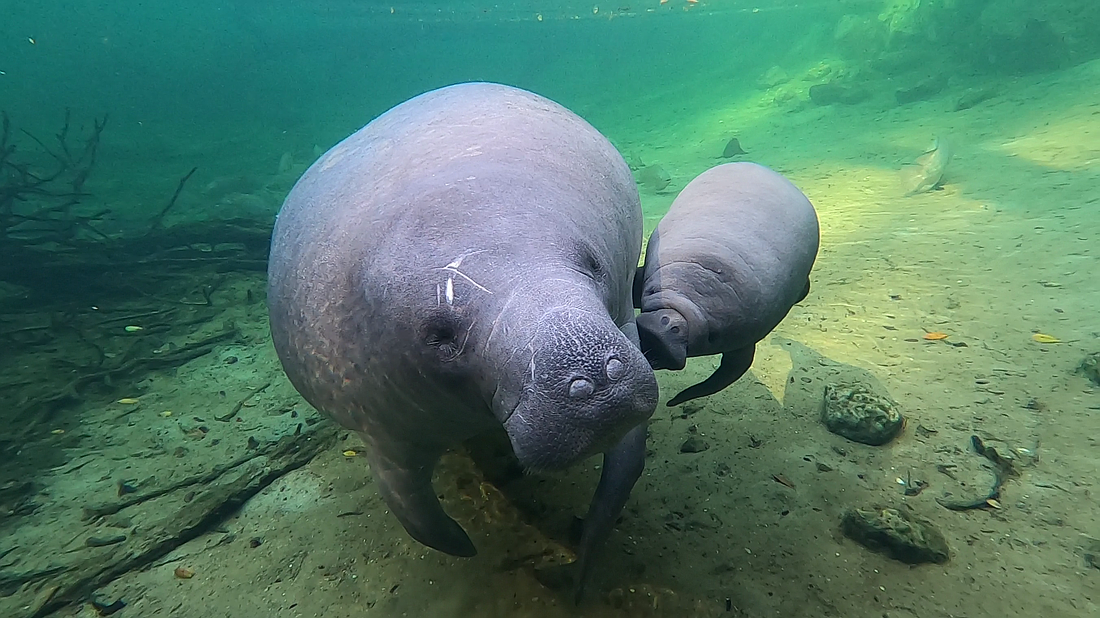
Parrish resident Ray Spezzacatena goes out on the Manatee River using his 22-foot bowrider every other week and leaves from the Fort Hamer Park boat ramp, located on the Manatee River.
Spezzacatena has never hit a manatee with his bowrider, but he has had an estimated 8-foot manatee act as speed bump when he was kayaking, which is sometimes called a "manatee rodeo."
Spezzacatena said the murky water makes it impossible to see manatees, which can weigh over 1,000 pounds, when he is driving his boat or kayaking. He said the only wildlife he can pick out in the water when driving would be turtles and dolphins. He can pick out the signature swirl of manatees when his boat is not moving.
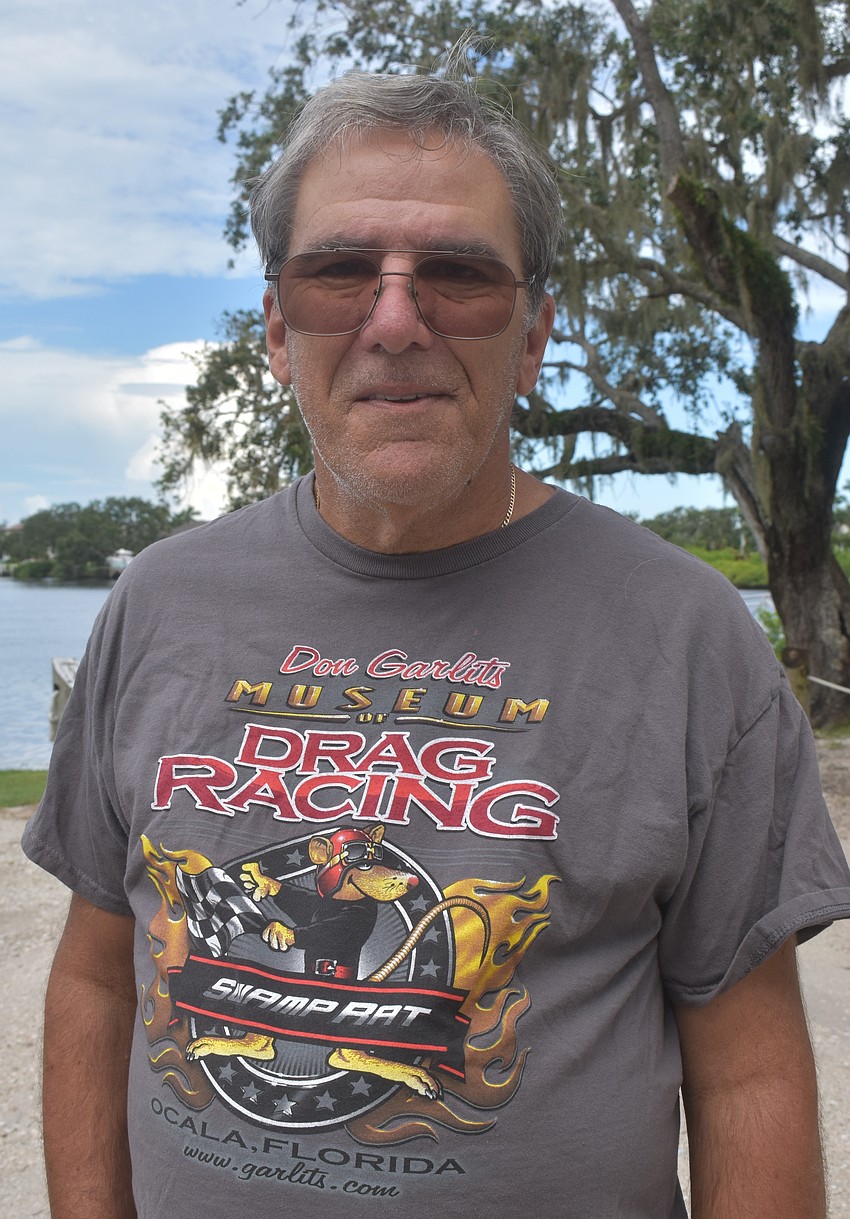
“When you're cruising down the river, the manatees are not up above the water,” Spezzacatena said. “The nose will come up for a brief time and then that's it. You might see a swirl in the water, but the only reason why you're going to see a swirl is if something spooked them. Otherwise you don't see any kind of a ripple on the water.”
A whole array of factors contribute to the deaths of manatees, both natural environmental factors as well as human-related ones. These include cold stress, boat collisions, fishing gear entanglement and habitat loss.
From Jan. 1 to July 25, 69 of 484 reported manatee deaths in Florida were watercraft-related according to a Florida Fish and Wildlife Conservation Commission report. In Manatee County, 19 Manatee deaths have been confirmed by Florida Fish and Wildlife, which released an alert this month to bring awareness to the problem of boaters hitting Manatees. An average of 99 manatees a year over the past five years are killed by watercraft in Florida.
Manatees became listed as “threatened” in the Endangered Species Act in 2017. Prior to that they were endangered.
“Endangered means in danger of going extinct, meaning the species could blink out and be gone from this planet forever,” said Katherine Sayler, a representative for Defenders of Wildlife. “Threatened means in threat of becoming endangered.”
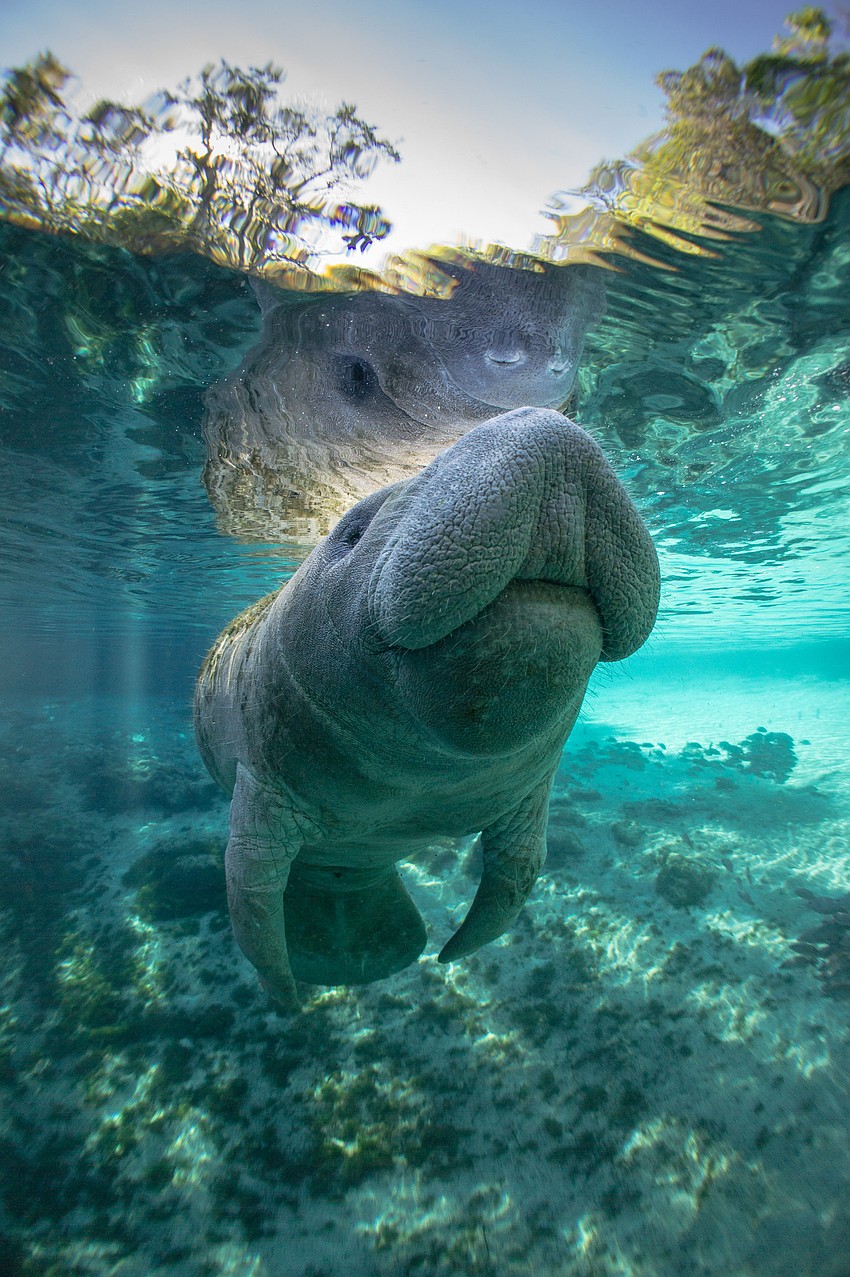
There are an estimated 8,000-10,000 manatees in Florida according to Sayler. She described manatees as “beautiful and elegant marine mammals that rely on Florida for their survival.” Sometimes referred to as a “sea cow,” manatees evolved over 60 million years ago.
When it comes to cold stress, Sayler said the preferred thermal tolerance for manatees is 68 to 72 degrees Fahrenheit. Any temperature below 68 degrees poses a threat to manatees for prolonged periods of time. She said there is a false assumption that manatees have blubber like seals or walruses that keep them warm, but that is not the case. Manatees are subtropical species, which means they have adapted to warm and humid conditions.
Sayler said power plants are commonly built on coasts and have become an artificial warm spot for Manatees in the winter.
“(The plants) use the water in a process called once-through cooling. It cools down the turbines that are running,” Sayler said. “That water that's being used to cool everything down within the power plant is going to get released back into the environment. It's just water, but it's a lot warmer water than what went in.”
If and when these power plants shut down, this could pose a great risk for the future of manatees. Sayler said manatees are herbivores who eat plants including sea grasses, weeds and algae. She said manatees will sometimes go days without food in order to stay in warmer waters.
“When it's cold outside and they have to stay warm, they'll spend more time resting and keeping their respiratory grade slow to conserve energy,” Sayler said.
Like other species that live in the gulf, the bays and local waterways, Manatees are affected by red tide.
But a large percentage of Manatee deaths are because of humans.
Boat collisions, especially during busy holiday weekends and summertime, add to the manatee mortality rate. Sayler recommended boat drivers wear polarized sunglasses to enhance visibility on the water’s surface and below.
“Be vigilant as to where you're going,” Spezzacatena said. “That's the only thing you can do, if you hit it, you hit it.”
Spezzacatena said it takes a bit more reaction time for a boat to move compared to a car, so he wished his fellow boat drivers good luck in avoiding the manatees.
“A boat gets pushed from the back, so it takes a little bit more to get the front to move,” Spezzacatena said.
Professionals perform necropsies, the animal version of an autopsy, on manatees to determine their causes of death. Propeller scars make it clear when there is watercraft-related trauma inflicted on a manatee.
“There is wildlife in the water, so where there are speed zones or posted signage in place, we really ask people to be cognizant of that,” Sayler said. “Follow those posted signs so that everyone can enjoy the water and so the wildlife can survive and have a place to live.”
Along with being cautious and courteous of where boats are driven, human waste, particularly from fishing, also poses a threat.
Sayler said it is important to dispose of trash and fishing line so that animals, including manatees, do not ingest or get tangled in it.
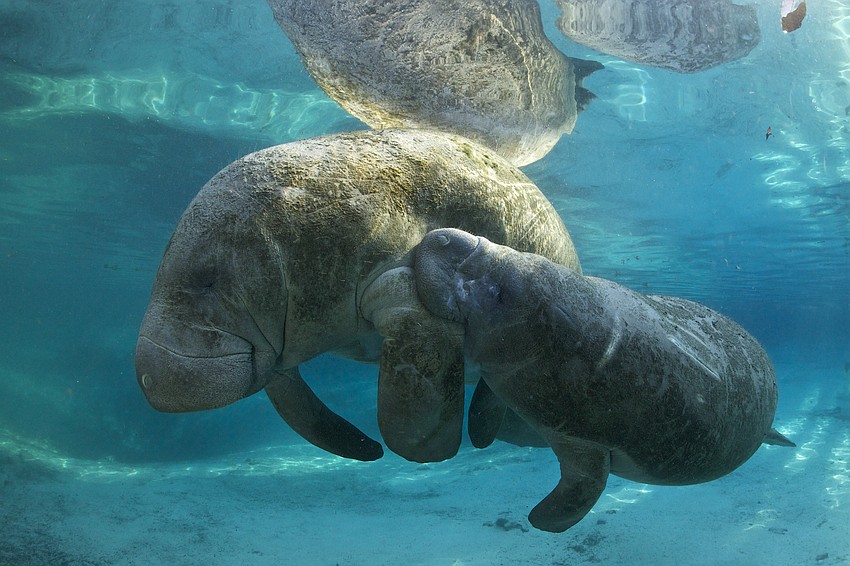
The warmest and shallowest waters, such as canals, are where manatees are most likely to be spotted. They often are either alone or are in pairs. Manatees can be found in the Manatee River, with the aforementioned swirl in the water as a visible indicator that a manatee is nearby. Sayler said each manatee has its own personality and some are quite interested in people, while others might not be.
She said it is important to “mind your manatee manners” by observing them from a distance, even if they do show interest, and driving slowly and with caution if on a boat.
“Even though it may seem kind of innocuous, when you reach out and touch them or chase them or provide them food and water, it changes the way in which they behave,” Sayler said. “It rewires a portion of their brain.”
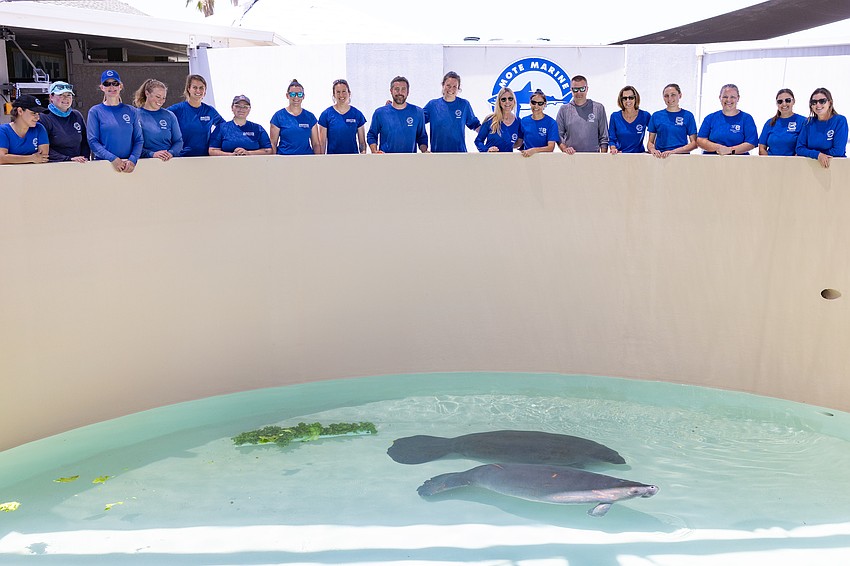
Beth Brady is the director of science and conservation at Save the Manatee Club.
“You can help by avoiding littering near waterways, skipping fertilizer use during the summer months, following slow-speed zones when boating, and keeping a safe distance when observing manatees,” Brady said. “Even small changes can make a difference in protecting habitat for manatees and many other species.”
“When you're using the waterways in Florida, consider all of the wildlife that might be present in their natural habitat and be good stewards of that water so that it's present for future generations to enjoy,” Sayler said.
Correction: This article has been updated to correct the spelling of Katherine Sayler.