- March 17, 2026

-
-
Loading
Loading
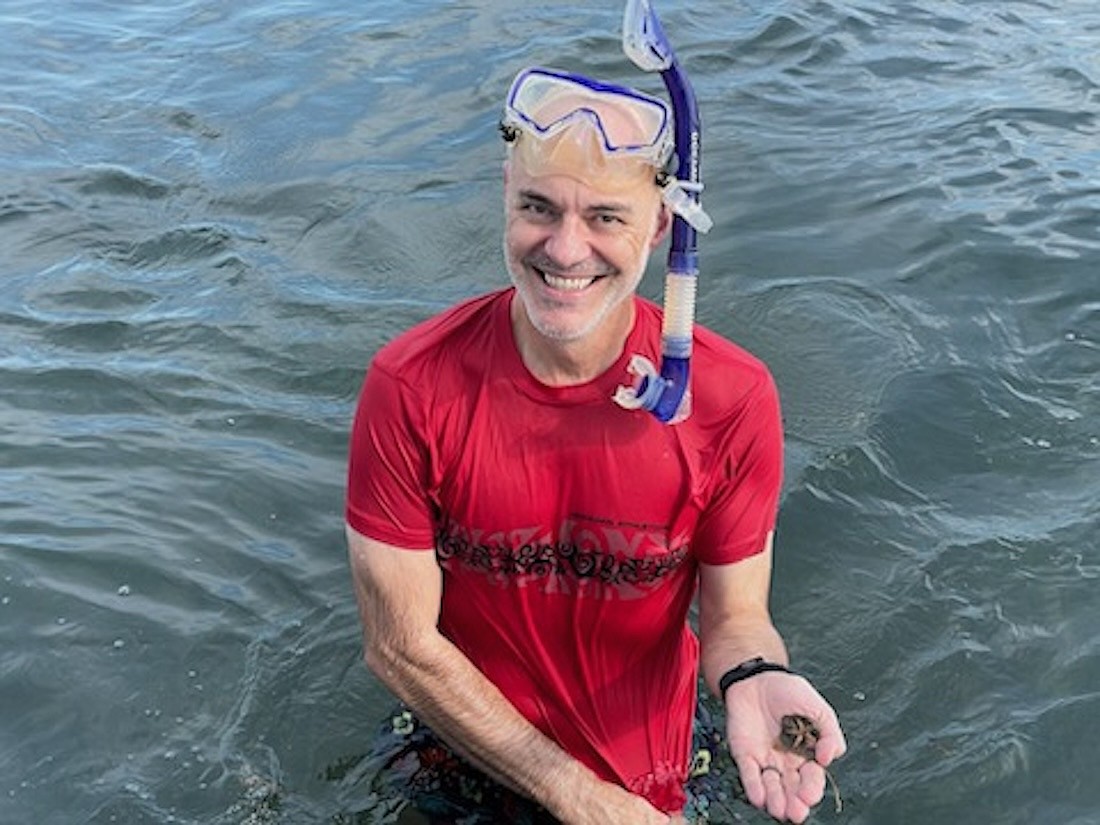
Have you ever wanted to spend a day out connecting with nature in Sarasota Bay while contributing vital scientific data to help the marine ecosystem thrive? Longboaters have a chance to do just that with Sarasota Bay Watch's latest great scallop search.
The group invites community members to join in the citizen science-led effort on Aug. 23.
Ronda Ryan, executive director of Sarasota Bay Watch, said people should get a special opportunity to see wildlife in the area while they search for scallops off the shores of Longboat Key.
"It's a family fun event," she said. "Bring a boat, bring your kids, and let them snorkel. You can have a lot of people with you on the boat and switch off with who is the snorkeler."
She continued, "People have a great time at this event, and it's helpful to have them in the water, really looking. When they pay attention, it increases their appreciation and ownership of our waters, because they know what's in them."
This survey is especially important to environmental management because scallops, as filter feeders, are sensitive to harmful changes in water conditions. If their populations are struggling, it could be an indicator of pollution threats to other local marine life.
"Other organisms may be able to withstand variations in the water, but the scallops really don't," Ryan added.
Numbers can vary, but Ryan said there was one year when Longboat volunteers counted several hundred scallops, even beating Tampa.
This year, Tampa Bay Watch hosted its 30th annual survey on Aug. 2, documenting 45 scallops.
Teams will meet at 8:30 a.m. either at the Sarasota Sailing Squadron headquarters at 1717 Ken Thompson Parkway or North Coquina Boat Ramp at 1507 Gulf Drive South.
"We're trying to make it convenient for people to pick up their equipment and head out on their boats right away," Ryan said.
Working in pairs, volunteers will work on either side of a transect, a weighted line with buckets that measures specific survey areas.
Ryan said coordinators are especially hoping to enlist the help of boat drivers, even if they would prefer to take swimmers out to the survey points without hopping in the water themselves. But SBW also welcomes any snorkelers or kayakers capable of navigating the waters, especially those families that look forward to participating every year.
Volunteers should take note of any scallops they see, but also any other relevant items in the environment, like seagrass patches, clusters of clams and noteworthy animal sightings.
"We track seagrass because there is one phase of their life that they spend on the seagrass," Ryan explained about habitat concerns. "If you have depleted seagrass numbers, you're going to have a depletion of your scallop numbers."
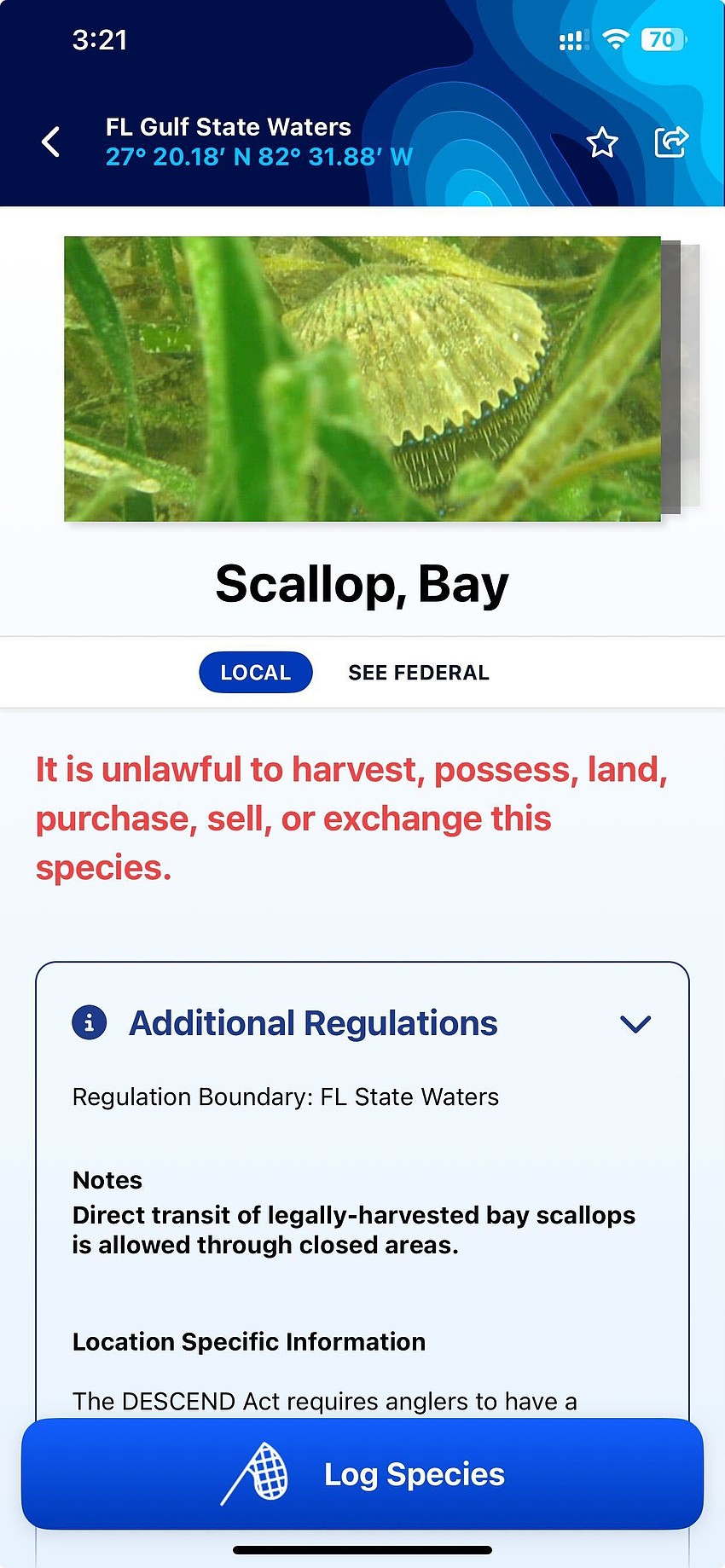
She noted no one should be harvesting any of the scallops during this event. It is illegal to harvest bay scallops in the area, per regulations from the Florida Fish and Wildlife Conservation Commission.
"These counts are shared with the FWCC ... and it is super important that there is no season to harvest scallops in this area," she said, noting the low population numbers locally.
Ryan said volunteers will need to bring their own snorkels and masks, sun protection and reusable water bottles. Otherwise, organizers will provide necessary clipboards, ropes, buckets and survey equipment. Everyone is invited to join a thank-you lunch afterward at the Squadron building.
"We're hoping to get some good information from people, but we also want them just to have a good time on and in the water," she said.
Swimmers do not need to bring flippers, which could stir up sediment and make it difficult to spot the scallops. But organizers do recommend wearing heavy, closed-toed shoes that can get wet.
This survey is always especially meaningful to Sarasota Bay Watch because it was one of the first events it coordinated as a nonprofit, in 2008.
"This is a fine example of citizen science, and what people can do to contribute meaningfully to science," she said.
Environmental groups on the west coast of Florida typically do their surveys in August because bay scallops' life cycle is about a year, and late summer is when they are at their largest, therefore easiest to spot.
It depends upon how many people register, but Ryan said she hopes the northern group will be able to cover the shallow areas of Longboat Pass from end to end. But they hope to get a sense of the population throughout the area.
"It's a cooperative effort to see what's out there," she said.