- March 19, 2026

-
-
Loading
Loading
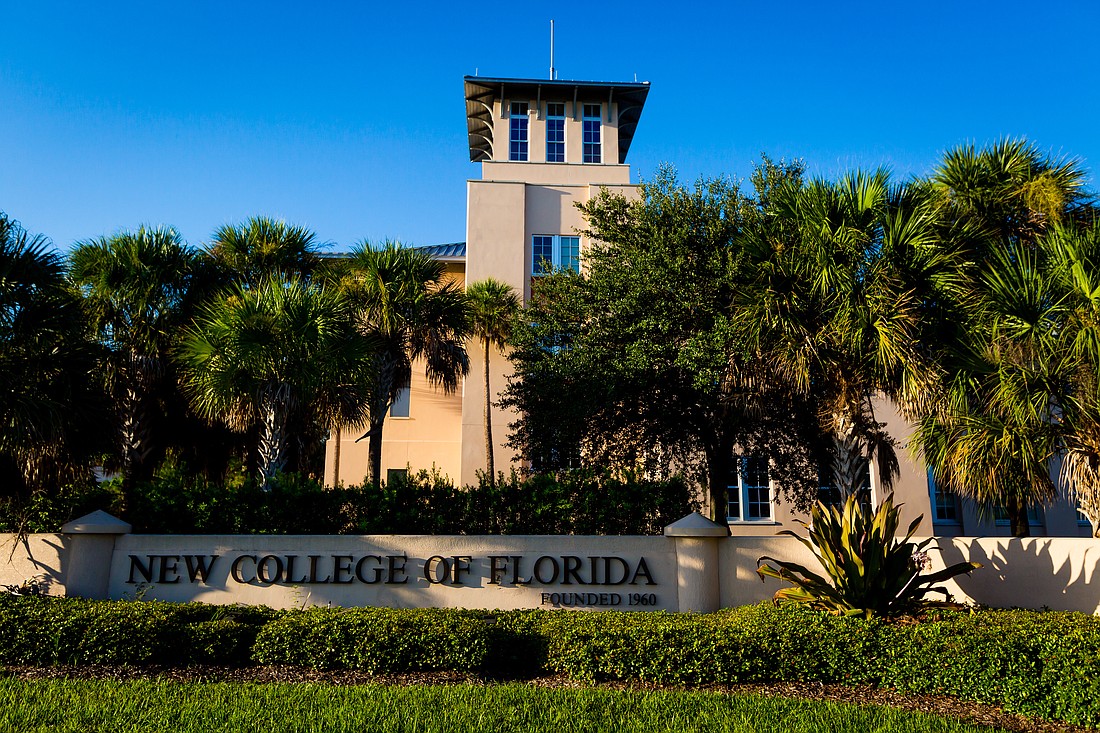
Richard Corcoran has had much success in his short time as president of New College of Florida. Much of this success is a result of attention to low-hanging fruit (e.g. building repairs).
This does not diminish Corcoran’s achievements. When a college president receives an outsize salary and disproportionate infusions of taxpayer dollars to make changes, a politically savvy administrator knows that results are not just possible but required—and quickly.
Many important questions related to changes at NCF, however, have not yet been answered clearly. Basically, how would a merger align with the stated mission for NCF to become “the best liberal arts college in America”?
Is merger talk a sign of mission creep?
If so, is mission creep in the best interests of stakeholders of all three campuses and Florida taxpayers?
Curricular change is the core of education at all levels and the most difficult to achieve. Whatever one thinks about recent changes at the college or their motives, at this point the cost/benefit ratio for NCF is still shaky. NCF remains a damaged brand due to the disruptions of recent years.
Other, more concrete questions deserve answers before distracting from stated NCF goals. Attracting more students is only the first step in growing enrollments. It will take more time to determine if NCF can retain and support to graduation the students it attracts.
What will be the 4- and 6-year graduation rates in the new NCF?
Is NCF financially sustainable without a merger?
Are key leaders already concerned that the answer to this last question means NCF is likely to be plagued by low enrollments in the future as it has been for the past decade?
Further, at what level should taxpayer funding for NCF be sustained over time?
State support of all three Sarasota Bay campuses has been uneven historically, and not necessarily because of a lack of local leadership.
Presidential and legislative priorities are notoriously mercurial, even with an on-site president. The most effective leaders at any level may not be able to maintain/repair all building systems at all times, especially while managing funds to deal with emergencies like major hurricane damage.
The Ringling Museum suffered decades of neglect after it became state property in 1946. With community support, dedicated on-site staff made much progress for Ringling even before the complex was placed under the stewardship of Florida State University in 2000. For the next several years, significant infusions of taxpayer funds, plus private donations, made possible major, much-needed renovations and additions.
A key reason for the increased achievement and recognition of the Ringling/FSU Asolo Center in the past 25 years is due to its affiliation with expert partners at FSU, a member of the Association of American Universities (AAU), the platinum standard for major comprehensive research universities.
Ringling staff, with their FSU collaborators, leveraged state support with significant private funding to give Sarasota and Florida a museum and regional theater recognized today as national leaders—even when Ringling ebbed as a priority on the never-ending list of programs/projects/issues that are always in line for taxpayer dollars.
Similarly, USF had an uneasy relationship with NCF in the late 20th century. University of South Florida Sarasota-Manatee seemed to be an unwelcome USF stepchild.
But USFSM thrived under the leadership of its recently retired regional chancellor and regional vice chancellor (now USFSM’s interim regional chancellor).
Their vision, hard work and dedication resulted in important campus achievements, including plant improvements and, more importantly, curricular changes targeted to current and anticipated societal and labor-force needs.
The retired regional chancellor’s ability and experience likely worked hand-in-hand with USF’s president to achieve USF’s admission to the AAU in 2023, giving Florida taxpayers three public-university members of this important organization (UF is the third). The brand value of the scope and depth of expertise tied to the AAU identities is a significant asset for the state of Florida and Sarasota/Manatee.
The AAU affiliations do not transfer to NCF. Would it be smart to give up the brand advantages of two campuses in order to make the current weakest link (NCF) the lead player in a merger discussion or merged institution?
Other preliminary questions deserve consideration, including those regarding Florida demographics and potential student pools, changes in instructional technology that affect/may affect teaching and learning, and foreseeable Florida labor-force needs for which college/university students must/can be better prepared in the next 20 years.
Corcoran and others recognize that the campuses’ physical proximity is an important asset.
Location and other strengths should be leveraged to achieve the highest and best use of public and private resources.
But geographic proximity should not be the primary consideration in planning the futures of institutions with such very different missions and goals. A complex of institutions that includes a strong liberal arts college and two AAU member-branches has advantages for regional businesses as well as families who appreciate the quality of life such institutions help create.
Corcoran clearly has demonstrated he is results-oriented and can achieve goals in a short term. But the most important goals for NCF are not ones that can be solved in a couple of years.
At best, talk of consolidation of the three Sarasota Bay campuses reflects a misunderstanding of their fundamental missions.
At worst, it is a sign that NCF and other Florida leaders do not really think they can achieve the goal of making NCF a public, financially sustainable, high-quality liberal arts college.
—Terry Hynes, Sarasota