- March 16, 2026

-
-
Loading
Loading
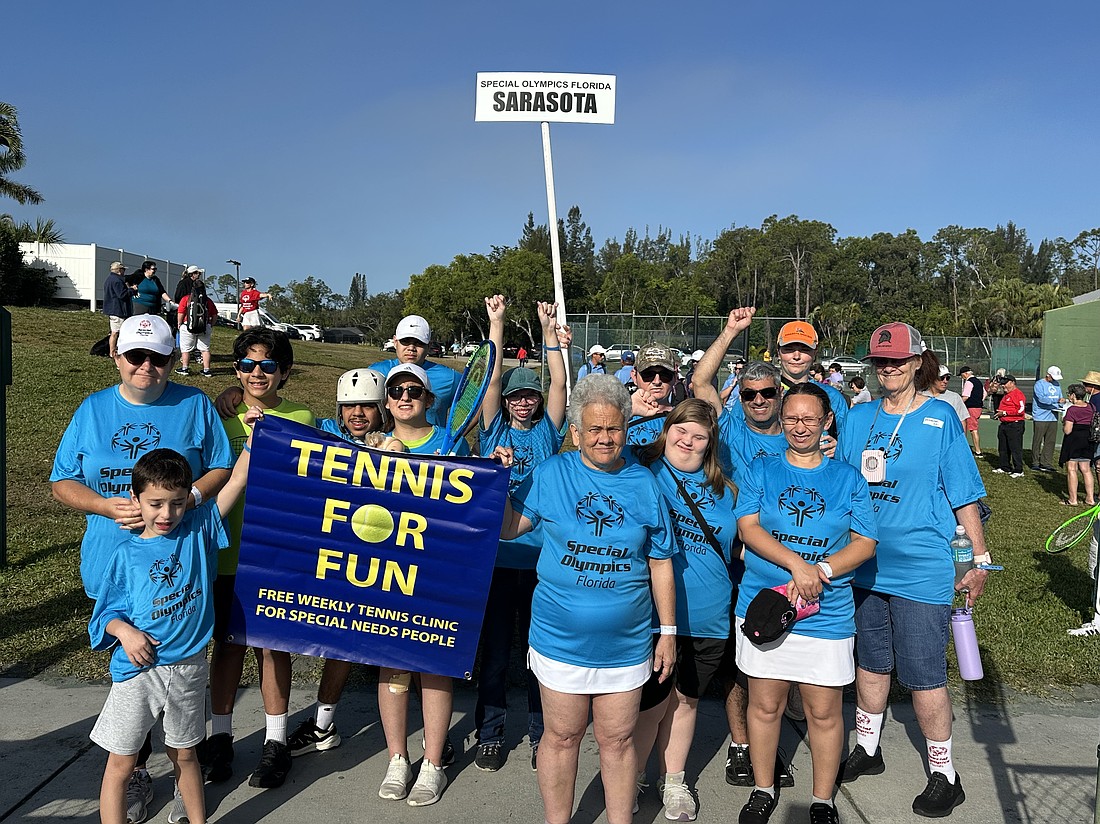
Brenda Shields began volunteering with Tennis For Fun in Brandon in 2015, where she worked with Judy Moore, the retired educator who manages the program.
After moving to Longboat Key, she decided her next step would be to organize a local branch of the organization, which provides free tennis clinics to people with intellectual disabilities from ages 8 to 65, in partnership with Special Olympics.
In May, the program wrapped up a third season at Arlington Park & Aquatic Complex in Sarasota, a location that Brenda's husband Ron Shields says has made the program more accessible to the community.
That month, the Tennis for Fun organization sent 76 athletes statewide to the State Summer Games of the Special Olympics in Orlando, out of the 197 athletes this year.
Six of those athletes came from Sarasota's program.
Ron, who manages the program alongside Brenda, says when it began in Longboat Key in 2021, there was one athlete, Nico Moschini, who took enthusiastically to the sport and returned for two subsequent years.
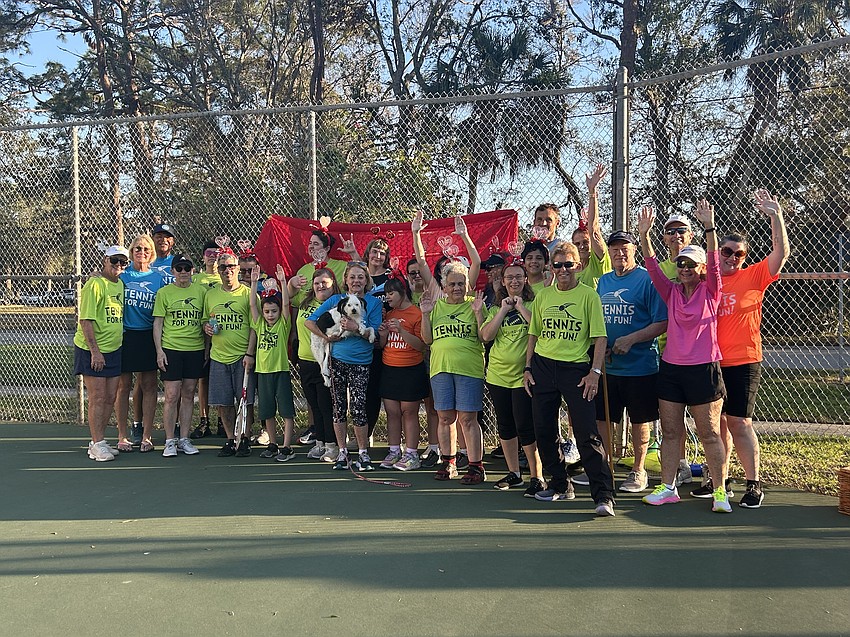
Ron said after moving to Arlington Park, the program drew about 12 athletes, and the next year 15 or 16, then finally 20 in 2024.
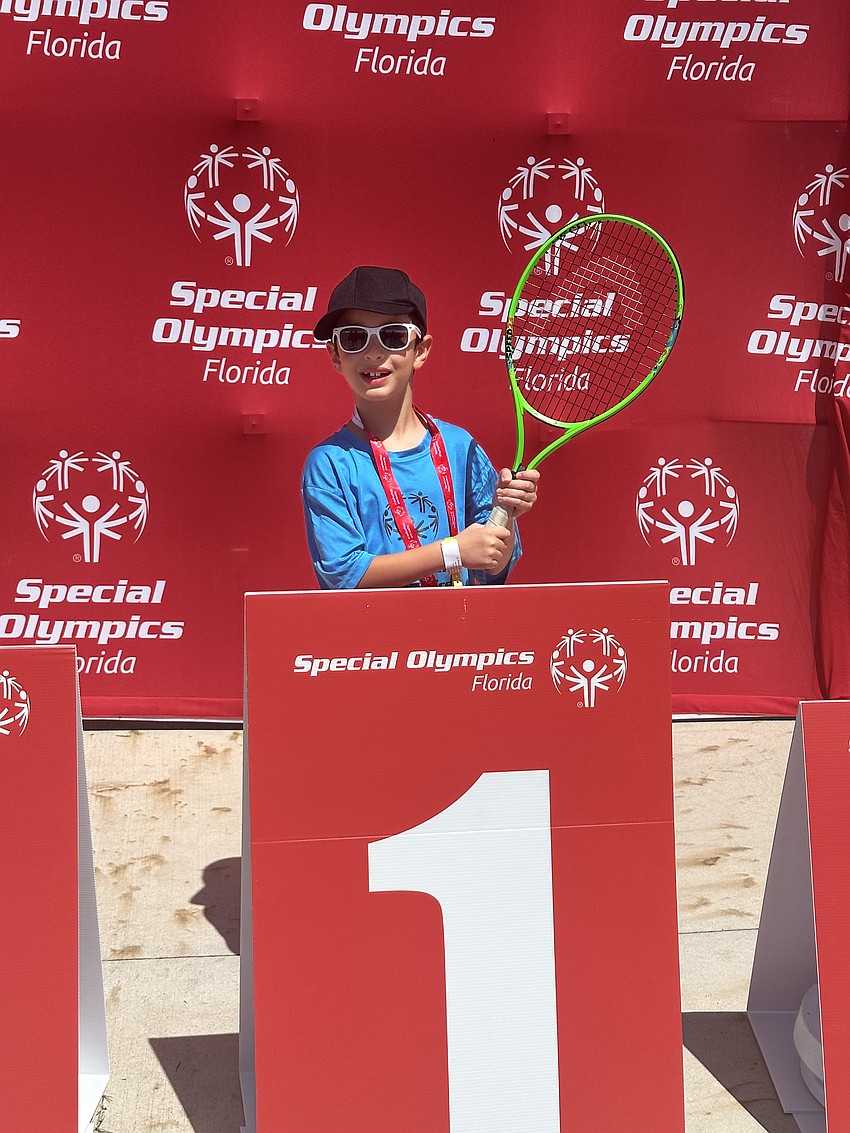
He says the organization will resume its clinics at Arlington Park beginning Nov. 10, on Tuesdays.
This year's Special Olympics medal recipients, who competed in the categories of Red Ball and Red Ball 1, were Lucca Bocci (gold), Tessa Rager (gold), Virginia Barakos (bronze), Keith Torres-Viteri (bronze), Wendy Mikula (gold), and Marcus Truss (Silver).
Ron says about 90% of athletes are retained, while some decide to play other sports.
Athletes may include people with intellectual disabilities, such as mild autism to severe autism, or Down syndrome.
The program is tiered based on age and ability, and all athletes have the opportunity to advance to the district, regional and state competitions.
However, Ron says coaches adapt to the needs of participants, to focus on athletes "just being a part of a group and giving it their best shot, so it's not so much about how good they are and maybe how well they're progressing, it's all about them having fun and making connections with other people."
Brianna Chapman, 17, decided to try Tennis for Fun during last year's season. Chapman has Williams syndrome, which she says affects the body and means she needs help with learning, including math.
Chapman began in the Red Ball Skills category, learning abilities like how to hold a racket, bounce the ball and serve.
Last year, she won gold medals in regional, district and state championships, and this year, after advancing to Red Ball 1, won silver at the district level and bronze in regionals.
"It's nice," Brianna said. "You do exercising before you play, you get to play with your friends, you have coaches... that support you through it and help you, and guide you."
“I don’t see her stopping this,” said her father Jay Chapman. “She really, really, really loves it and looks forward to it. It wasn’t one of those things that she started and said, ‘Well, I tried this, and I don’t want to do that anymore.”
When the summer games were held in Orlando, even though Brianna was not among the participating athletes, she decided to attend as a volunteer to help the other athletes.
Jay said one factor in their commitment to the program has been the temperament of the coaches.
“They don’t get upset or frustrated, but you can tell they really love it, because they really love tennis also, and sharing that, you can see that it’s something they want to do, like they really, really want to do it."
Amy Truss was seeking different social activities for her 13-year-old son Marcus Truss, who is homeschooled and has high-functioning autism, when she came across Tennis for Fun.
Amy said while Marcus has moved on to many neurotypical sports, Tennis for Fun is a program in which he is continuing.
When he first began two seasons ago, it became apparent he had a natural ability in tennis, but she said what clicked about the program was “the positivity, the other volunteers, just the love surrounding the athletes, the other athletes."
Through the first season in Red Ball Skills, Marcus earned gold medals in both sectionals and regionals, as well as at the state competitions, and after advancing in his second season, earned gold in sectionals and silver at the regionals and state levels, in Red Ball 1.
“I think of all of the sports that we have done, this program really immediately really helped with his confidence and just kind of got him excited,” she said. “It helped him socially. He made a lot of friends, and Brenda and Ron have just been amazing. They’re amazing people. They’ve just been so good with Marcus and all of our athletes. It’s just a really great program. It’s kind of like a little family now.”
Ron said there is plenty of work involved in operating Tennis for Fun beyond the instruction itself; some of that, he says, can include getting the word out, entering athletes into the Special Olympics, and finding facility.
He said he is glad for the support the program has received locally, including the use of Arlington Park and donations from the men's league of Suncoast Tennis League.
However, he hopes its offerings can expand in scope, and notes that while the program has involved one-hour sessions each week, a Brandon program serves more than 100 athletes a day, with multiple sessions.
"It's been very welcome, it's been very successful," he said. "We've had a lot of support, and we're very thankful to have that support."