- March 12, 2026

-
-
Loading
Loading
Against the backdrop of a fiery Gulf side sunset, members of the public got a rare glimpse into the research informing future healthy sea turtle nesting seasons.
This season has been particularly exciting as Mote Marine confirmed this week that the nest count on Longboat Key has exceeded the record number set in 2019, and there is still part of the season to go.
As of Aug. 3, experts recorded 1,460 nests on the Key — 1,435 loggerhead and 25 green sea turtle.
Melissa Macksey, a senior biologist and data manager with the Sea Turtle Conservation and Research Program at Mote, noted that nesting is starting to slow down but still occurring.
The final record number is yet to be seen, but she said this milestone follows the overarching trend of both species increasing nesting activity in the area over the past 15 years.
Longboat Key residents got a look behind the curtain of the most successful season to date with an evening excavation of a nest.
After experts gave the all clear sign that no hatchlings were still making their way out of their sandy nest and up to the surface, the crowd quickly pressed in for a closer look. Faces of all ages lit up with wonderment as they examined the contents of the nest and touched the leathery casing of the empty turtle shells.
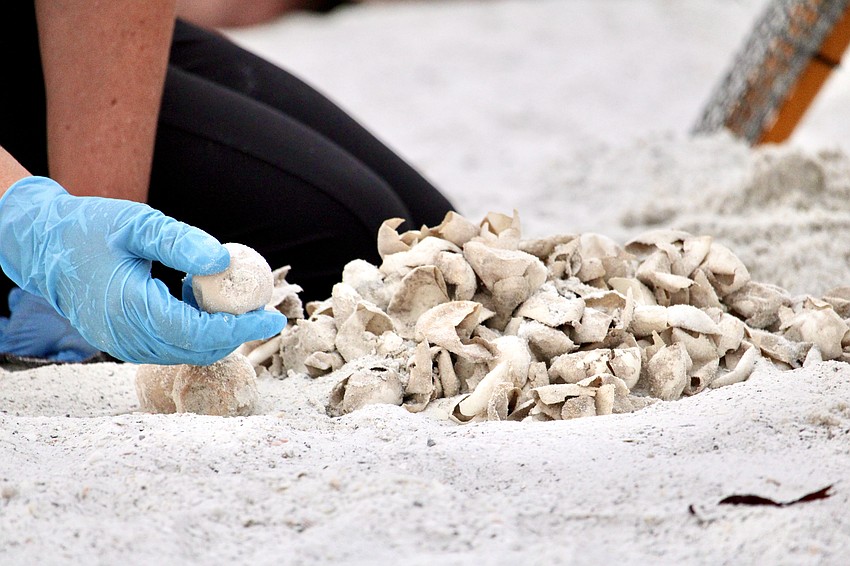
Certified volunteers from Mote Marine conducted an evening excavation of an already-hatched loggerhead turtle nest, which provides researchers with valuable information about the health of the population.
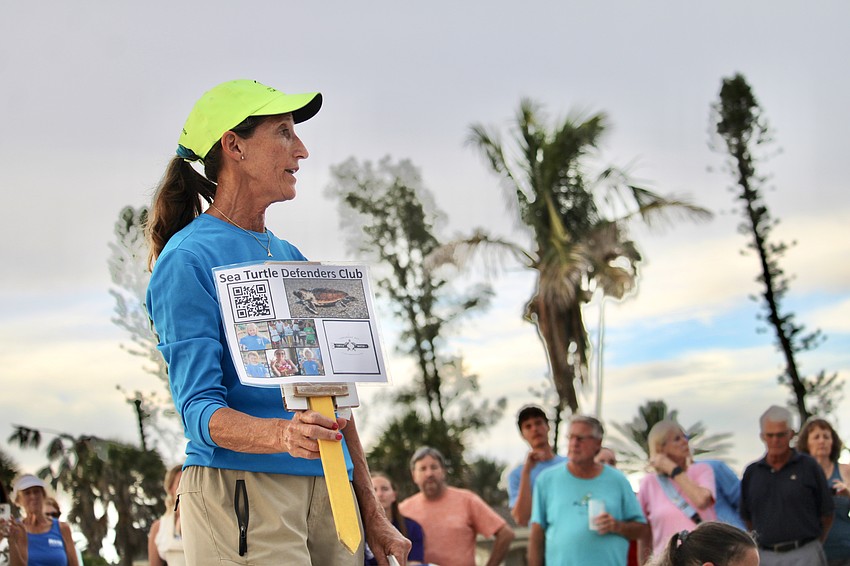
"We're really excited to share this with you," Cyndi Seamon, vice president of Longboat Key Turtle Watch, told the about 100 attendees on July 21.
She noted the record for the highest nest count was in 2019, topping out at about 1,300. That year, the first nests arrived even before the official nesting season started.
The season continues through October, but at this midway point, experts are optimistic that 2025 could break records. As of July 26, it appears to have done just that.
Excavating an already-hatched nest gives experts insights into the success of nests laid early in the season. After noting evidence of a hatch, typically through miniature flipper tracks in the sand, surveyors wait an appropriate amount of time for any stragglers hopefully to emerge. Then, they dig out the nest to count how many empty, hatched shells remain, and how many unhatched eggs there may be.
The July 21 dig offered an opportunity to educate the community about helping turtles thrive during the season while giving them a unique opportunity to connect with nature.
Seamon said the group has tried to host evening excavations in recent years but consistently got rained out by the frequent nighttime summer storms. But participants lucked out this time.
Brenda and Caleb Jameson, a mother-son duo of certified volunteers, carefully dug out the nest, surprising many viewers with just how deep sea turtles make their nests.
But that depth was important, Seamon noted, because this particular nest was laid only 40 feet from the water's edge and ran the risk of getting washed out if the swell was particularly high.
Seamon painted the image of a 200-pound loggerhead emerging from the surf to lay her eggs.
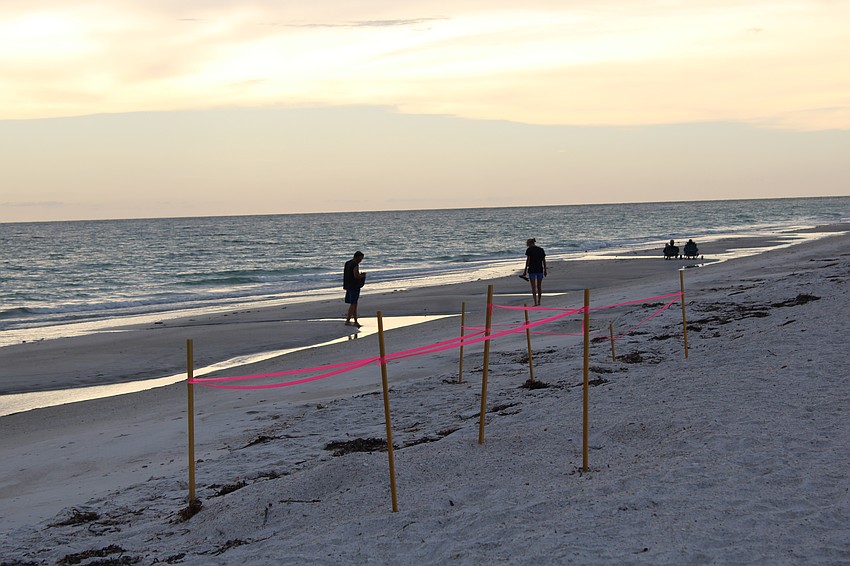
"She uses her back flippers to make a big indentation in the sand, and she drops about 100 eggs in this nest cavity," she said, explaining how volunteers then place brightly colored stakes to denote the nests.
Each stake is coded so experts know what type of turtle nested there and when the nest was laid.
"We check them every single day. Last Friday, somebody came along and saw a bunch of tracks here. We were hoping they would all go that way," she said, gesturing toward the sea. "But what this stake tells me is that they hatched and DISOed, which means they didn't all go the right direction."
"DISO" is when a turtle becomes disoriented and struggles to return to the water, typically because of light interference.
As the sky darkened, Seamon pointed out the importance of keeping light pollution to a minimum, especially on beaches like that near 6400 Gulf of Mexico Drive, where there are no dunes to break up the line of sight to residences.
Otherwise, hatchlings and mothers that rely on lunar light to find their way may become disoriented.
For information on turtle-friendly lighting, visit LBKTurtleWatch.com/Flip_A_Switch.
"Changing out lights is just one of the little things we can do to help the turtles," Seamon said.
Like the turtles that hatched from that nest, loggerheads are by far the most common type of sea turtle in the region.
For the week of July 20 to 26, Mote recorded 175 loggerhead nests and 48 green sea turtle nests throughout Longboat Key, Lido Key, Siesta Key, Casey Key and Venice.
Specifically on Longboat Key, they recorded 1,441 nests for the year, along with 2,166 "false crawls," when a turtle comes to a beach but retreats before laying eggs. That compares to 1,342 loggerhead and green nests on Longboat Key, counting both Sarasota and Manatee counties.
Each one of those nests can typically carry between 80 and 120 eggs. However, it is a numbers game when it comes to these little aquatic animals' survival to adulthood as they navigate predation and other hazards.
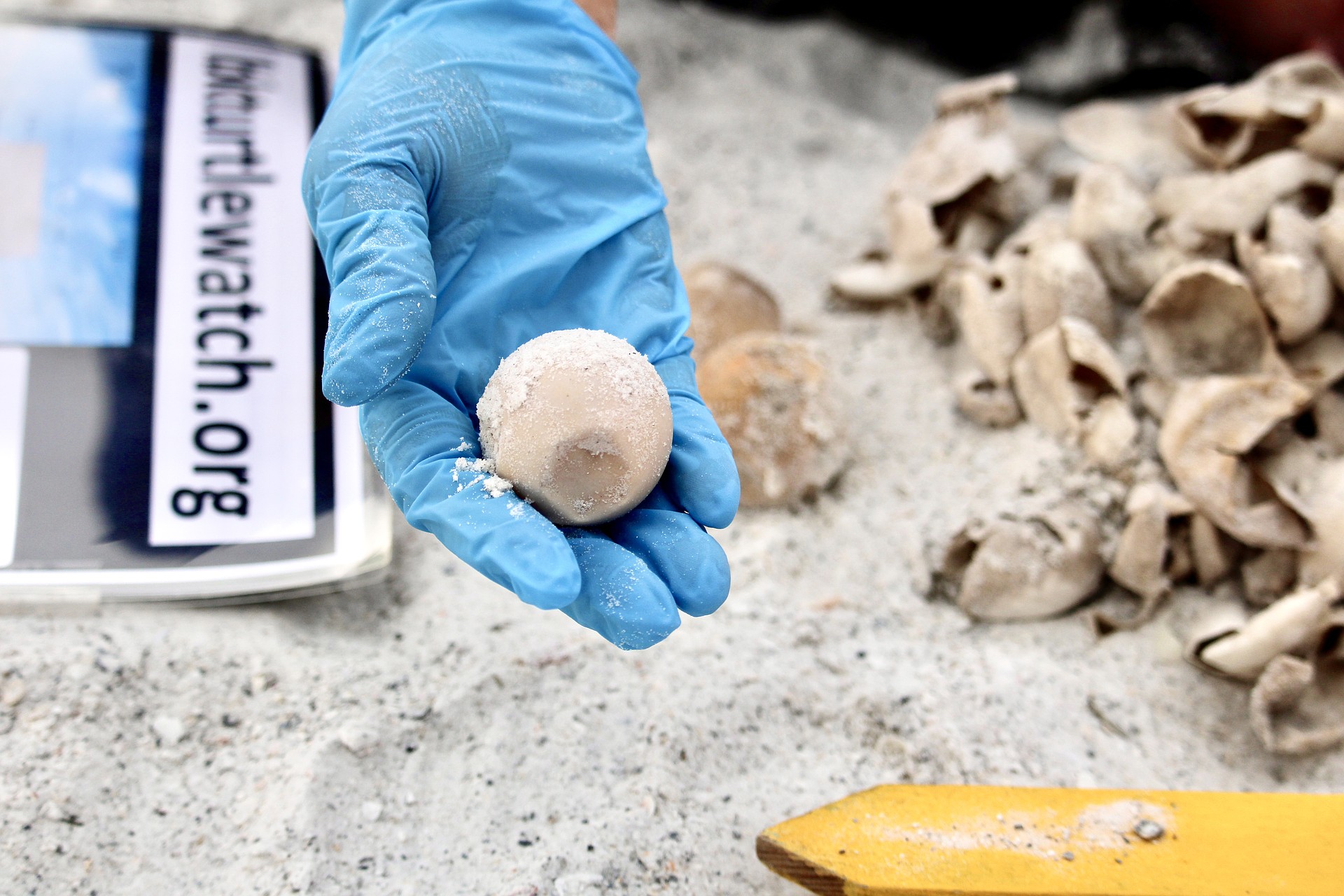
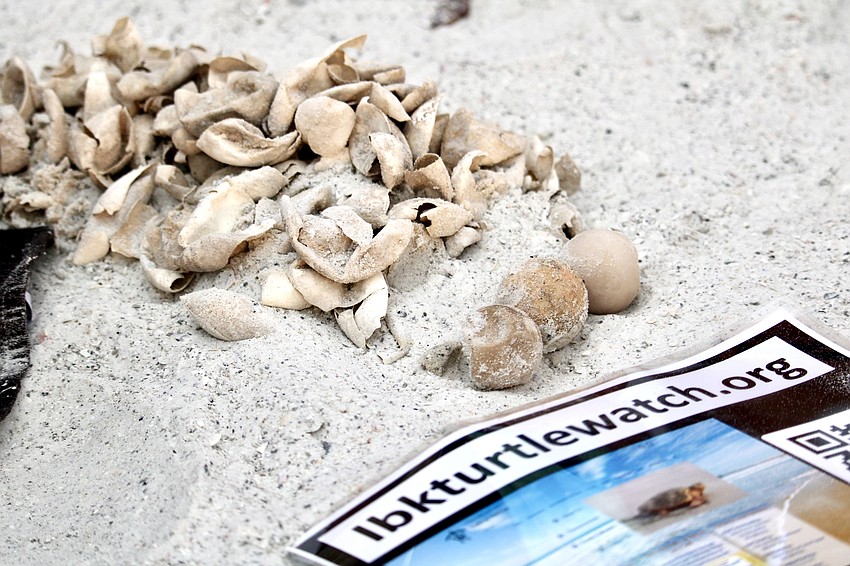
Using a framed net to sift the eggs from the sand, the Jamesons extracted 87 shells of successfully hatched turtles from this nest. Only three hadn't hatched, and though they most likely would have emerged at the same time as their siblings, the volunteers reburied them in case they defy the odds.
Not all groups certified by the state to monitor turtle nests get the opportunity to host public nest excavations. But the Longboat volunteers were extensively trained to make sure hatchlings are protected while giving the public a valuable learning experience.
Caleb, who is heading into his third year at the New College of Florida, still warmly remembers how joining the LKTW-hosted educational turtle walks with his family motivated him to become a lifelong advocate.
He said many people are familiar with seeing the stakes and hearing about turtle protection. But seeing the inside of a nest, under controlled circumstances, gives them a deeper level of connection with these spectacular marine creatures.
"It's really important to teach visitors to keep the beaches clear so the sea turtles can come in, and we can keep experiencing them here for many years to come," he added.
The Monday evening event drew viewers of all ages, including youngsters holding their plush turtles.
Brenda said she appreciated how many youngsters shared their interest in making sure every single egg was counted.
Seamon said this is particularly encouraging considering how Hurricane Debby devastated nests throughout Sarasota Bay last year.
Mote experts estimated the August storm wiped out nearly half of the known sea turtle nests on area beaches.
But sea turtles have the capacity to rebound. Seamon noted each turtle can make about five nests, amounting to 500 eggs per season.
She took the opportunity during the nest extraction to remind the public how imperative it is for everyone to contribute to maintaining good nesting conditions.
Particularly, she encouraged visitors and residents to make sure they remove any beach furniture from the shoreline every day, and fill in any holes they dig.
"Some people ask if the turtles can make it down the steep ramp of sand leading down to the water," she said. "They can make it down, but what they can't do is make it out of holes."
She continued, "We want people to enjoy the beach and have fun, but be sure it is nice and clean when you leave, with no trash, no chairs and no other obstacles."
Turtle watch members also noted it is not too late to sponsor a nest. Sponsors who sign up before Aug. 15 can get a nest named after them this season.