- April 3, 2026

-
-
Loading
Loading
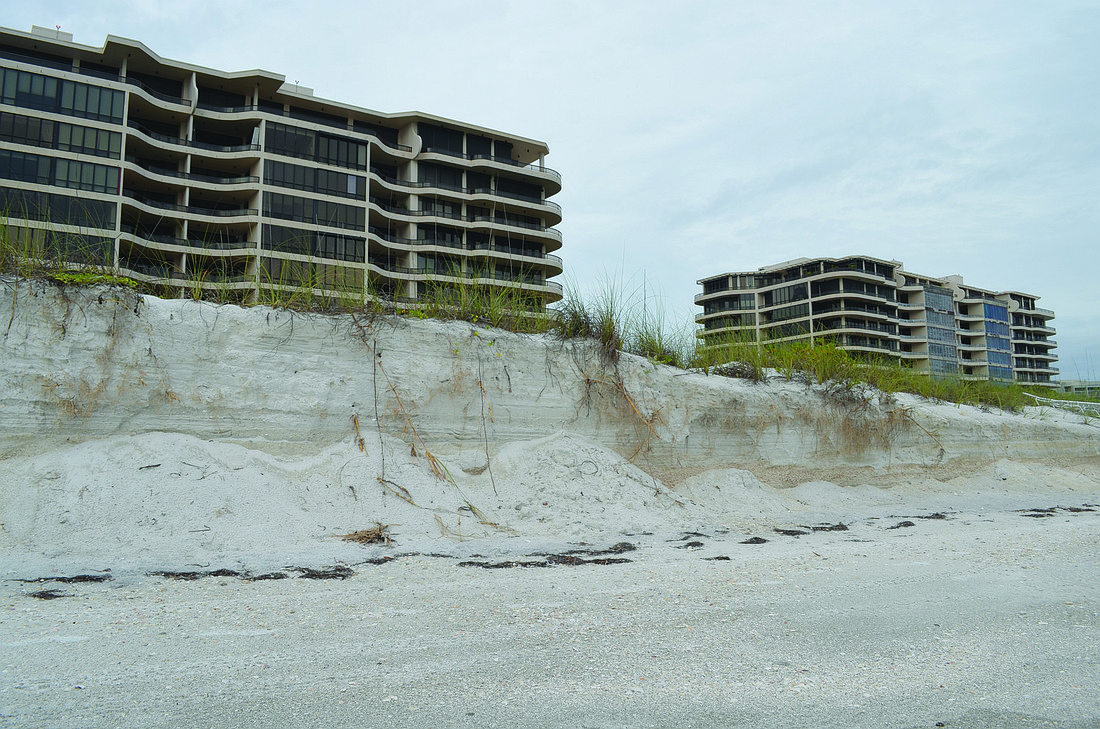
Gulfside Longboaters who live on the south end can still savor beautiful sunsets. But they’ll have to wait until after the sun sets on 2015 for those views to be framed by sand once again.
The town won’t spend additional cash to place emergency sand in high-erosion areas behind condominiums including the Pierre, Longboat Towers and L’Ambiance.
In November, the Longboat Key Town Commission decided it won’t spend $1.4 million on an emergency sand project that would have involved 90 dump trucks driving onto and off of the Key every day, carrying 1,500 truckloads of sand to the south end just after Easter.
Commissioners had concerns about the cost of the project and also the traffic headache it could bring to the island. The project also involved closing the beach and obtaining permission from several property owners to use their private properties for trucks to enter and exit the beach in various locations.
Commissioners also took issue with spending $1.4 million for 25,000 cubic yards of sand that would only act as a stop gap until the town dredges New Pass in 2016 and places much more sand from that project on the south end.
That project calls for dredging 200,000 cubic yards of sand from the Longboat Key Club to Longboat Key Towers and other areas where sand is needed at a cost of $3.5 million to $4.5 million.
Longboat Key Public Works Director Florensa said permits to dredge New Pass could come as early as late summer, with sand being placed on the south end as early as March 2016 or summer 2016 at the latest.
“It all depends on when we get the permits,” Florensa said.
Although south-end residents are frustrated, Florensa said they can take solace that the sand in place that exists behind their properties includes a vegetative sand dune system that will protect their buildings until more sand arrives in 2016.
“There’s enough protection in place,” Florensa said. “And there are other areas of beach nearby where you can place a blanket and still enjoy the beach.”
Florensa estimates the south-end sand will last eight years.
“It’s not an area of the island that’s eligible for groins or sand- saving structures,” Florensa said. “Putting groins in this area would do more harm than good.”
Commissioners and Town Manager Dave Bullock know the decision to wait for sand is frustrating.
“My heart goes out to those who are there, they are caught without a recreational beach,” Bullock said at a Nov. 12 commission workshop. “I struggle with the expenditure of funds, yet these are some of the highest property values on the Key and they set the image for the Key and they really do have one of the worst recreational beaches on the Key.”
The commission has asked town staff to educate south-end residents about the importance of holding out for a New Pass dredging project while using healthier areas of the beach to the south and north of their properties.
The town is also preparing for a mid-Key sand project at the end of 2015 that involves trucking sand to beach areas near Gulfside Road that are low on sand.
“It’s cheaper than getting a dredge and sucking sand from the bottom of the Gulf,” Florensa said.
FACTS FOR ’15
The issue: Portions of the south end’s shoreline have eroded so much that there’s nowhere for beachgoers to lay towels down on what used to be a recreational beach.
Why you should care: The town is in the process of obtaining permits to dredge New Pass to put more than 200,000 cubic yards of sand down on the south end at a cost of approximately $3.5 million to $4.5 million.
Timeline: A south-end sand project is currently scheduled for summer 2016.
North-end beach resurrection
After years of erosion, north- end residents in 2015 will see more sand and two groins currently under construction to hold sand in the highly erosive shoreline just south of the North Shore Road beach access.
The groins, plus 300,000 cubic yards of sand, are being placed on the north end this year.
Public Works Director Juan Florensa said one portion of the northernmost groin is already in place, and construction should be complete by the end of April or early May.
Sand will be then be placed from North Shore Road to Gulfside Road, where needed.
The sand will come from dredging Longboat Pass through a $3.5 million agreement with Manatee County.