- March 10, 2026

-
-
Loading
Loading
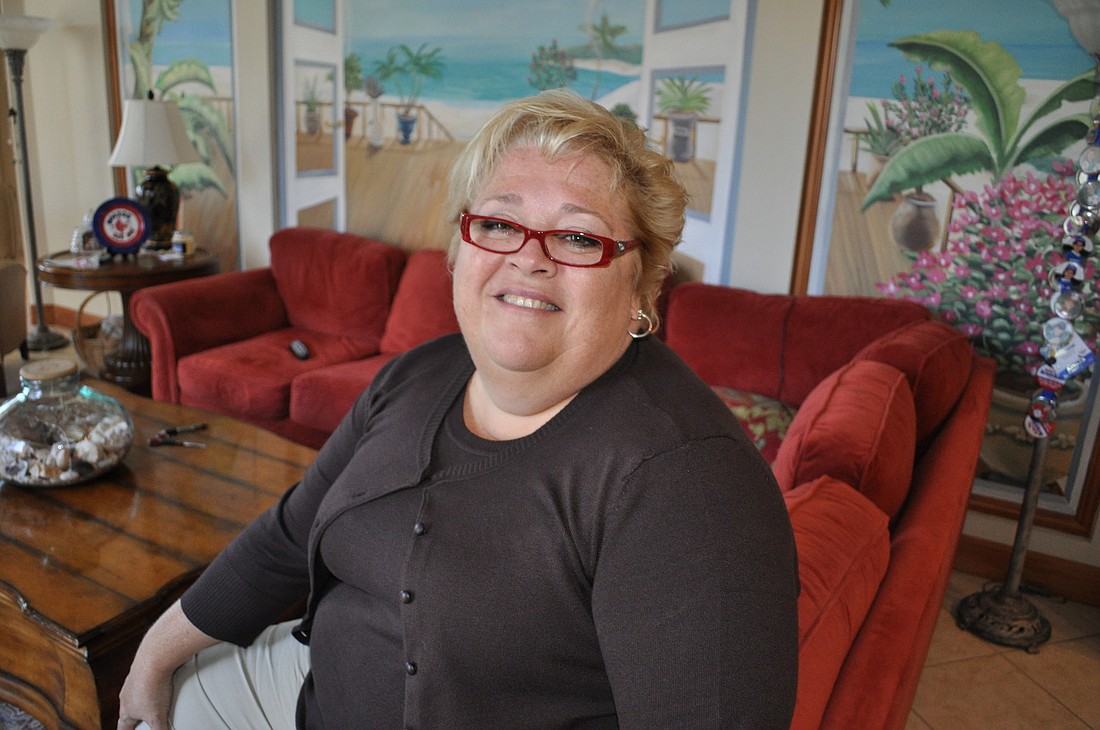
WHY SHE MATTERS
Lakewood Ranch resident Julie Aranibar has more than a decade of volunteer work with Manatee County Public Schools. Now, she’ll be using that experience to affect policy as a member of the Manatee County School Board. Aranibar says the district can trim the budget without compromising student education or cutting electives.
Julie Aranibar’s new seat on the Manatee County School Board won’t always be a comfortable one, but Aranibar, a longtime school volunteer and education advocate, isn’t one to shy away from hard decisions.
In fact, at just over 5 feet tall, Aranibar’s perch in the school board chambers is a blatant reminder of her yearlong campaign and the battles that are still to come.
“I have two pillows (underneath me) and can’t see and can’t reach the microphone,” Aranibar says with a chuckle. “It’s a reminder (that) as far as you think you’ve come, you’ve still got a long way to go.”
Aranibar beat out incumbent Jane Pfeilsticker in November’s general election for the District 3 Manatee County School Board seat with a 10,000-vote advantage.
Looking into the audience at her first meeting as a school board member in November, Aranibar was overwhelmed by the number of her supporters — most of whom had been with her campaign from the beginning — who attended as a show of support.
“It reminds me every day this seat isn’t my seat,” Aranibar says. “It’s the seat that belongs to the district and supports our teachers and our students.”
SUCCESS STORY
Growing up as a child on welfare in a poor neighborhood, Aranibar knows how important education can be.
She can pinpoint the exact moment when she decided to claw her way out of her surroundings. At 10, she was diagnosed with tuberculosis. The teacher who oversaw her education during her illness not only taught her reading, writing and arithmetic but also inspired her to create a better life for herself.
At 17 years old, Aranibar left home. Although she earned a scholarship to college, she needed parental consent to accept it because of her age. Neither her father nor mother would sign the paperwork.
“My father couldn’t read; my mother was on welfare,” Aranibar says. “They didn’t understand.
“When you live in poverty, you understand what it’s like not to have your basic needs met,” she says. “I just didn’t want what I saw.”
Aranibar forfeited her scholarship and worked her way through school over a 12-year period to become a researcher and molecular istologist.
Years later as a mother of two, Aranibar began volunteering in Manatee County schools in 1999 after she saw teachers exhibiting the same enthusiasm for education as her mentor had. She’s chaired parent-teacher organizations, served on advisory boards and committees, raised money for schools and helped raise awareness on educational issues and funding for the school district since.
ARANIBAR IN ACTION
Aranibar says her volunteering experiences over the last decade have put her a step ahead of the curve. When she walked in to her first meeting with the district’s department heads in November, she knew them all by name and new how each department functioned.
Heading into the new year, she and other board members already were busy tackling issues in executive sessions, primarily working on three contracts that govern how the district’s employees are paid, among other projects.
“It’s a great time of change,” Aranibar says. “We’ve done things a certain way for a long time.”
But moving forward, Aranibar says she remains focused on her top objective: better educating students while being financially responsible.
“My main concern was the four-year consistent downtrend in our FCAT scores,” Aranibar says. “I don’t believe there was one thing responsible for that.”
Based on her own concerns and those raised by parents and teachers, Aranibar plans initially to focus her attention on two scheduling issues: First on block scheduling at the high school level, and second on the early dismissal for students on Wednesdays.
Already, Aranibar has asked the teachers union representative for information about both those topics, she said.
“I want to go back to a conversation about those things and look at the data,” Aranibar says. “If our students can’t read in third grade, they are already behind for middle school.”
MONEY MATTERS
Similarly, Aranibar’s enthusiasm for addressing the district’s $644 million budget — and its $9 million shortfall — has never waivered.
She says tax dollars should be spent wisely and even lobbied against the district’s proposed critical-needs assessment millage increase, which failed a voter referendum in November. Superintendent Tim McGonegal said the increase, which would have generated about $6 million for the district, was necessary to keep elective and other programs available to students.
“Everyone is (struggling) with the fact (their income has shrunk),” Aranibar says, noting she sees several potential opportunities to trim the district’s spending. “There are some policies (from the private sector) we can implement that would really help the district financially.”
The Lakewood Ranch resident notes salaries and benefits account for 85% of the district’s operational budget. Additionally, the district’s roughly 6,000 employees have about 70,000 prescriptions filled annually, she says.
“Think about what that impact is,” Aranibar says. “You have to start looking at what benefits we can continue. No one will be happy. That’s why you need a lot of information.”
Other concepts from the private sector that may prove useful include reevaluating the district’s organizational structure and management policies as well as assigning specific dollar values to benefits and letting employees choose how to spend those dollars.
“Employees need to be educated on what these benefits are and what choices are available,” she says.
Aranibar already is dissecting the district’s last two budgets. Still, she says it’s critical the district’s budget committee begins meeting more frequently and much earlier in the budgeting process so feedback from its members can be incorporated into the budget, not just noted as an afterthought.
“You need to see it (earlier in the process),” she says. “It takes time to implement (what things can be done).”
BIG DREAMS
Aranibar also says she’d like to see the district look into creating a vocational high school. Many of the area’s high schools already have academies, but does the district really have the money to fund such a concept? Aranibar says she doesn’t know, and having one vocational school for the district may prove to be a better investment for the district’s dollars and for students.
Bayshore High School already has empty student stations, and with Manatee Technical Institute soon vacating its Bradenton campus (when it opens its State Road 70/Caruso Road campus), the district will have land available. The old MTI building is in disrepair, but the infrastructure and other materials still may prove useful, Aranibar says.
Aranibar, as an active member of the Lakewood Ranch Kiwanis Club, aims to visit every school in the district by the end of her first year to visit with Kiwanis student leadership clubs — Key Club, Builders Club and K Kids.
Contact Pam Eubanks at [email protected].