- April 10, 2026

-
-
Loading
Loading
A wise entrepreneur made the comment once: “There is nothing sexier and more exciting in business than making an acquisition.”
That might be a bit of an overstatement, but our guess is most entrepreneurs and business owners would agree acquisitions get your adrenaline going.
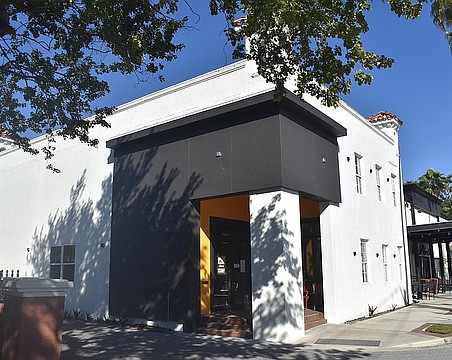
That came to mind with the news almost two weeks ago that Sara-sota County commissioners, in a 4-1 vote, didn’t hesitate to pay $18 million (plus an estimated $3 million more for renovations) for 2.04 acres of canal-front and boat docks, including the Boatyard Bar and Grill, on the southeast side of the Stickney Point Bridge to Siesta Key.
Not exactly sexy, but an exciting deal.
Uh, not so much.
For one, the total price was (choke) more than double what the seller paid in 2024 ($8.9 million). That is particularly difficult to reconcile and justify in the context of the Sarasota County Commission’s spending habits in recent years and current budget challenges.
For instance, Christine Robinson, executive director of the Argus Foundation, noted in the Observer last week that spending in this year’s county budget rose 9% and how the county is headed toward higher taxes or service cuts in the next fiscal year.
But this is different, the argument will go. The official justification for this deal will be that it aligns with Chapter 90 of the county’s Code of Ordinances, entitled “Neighborhood Parklands”: “The Parks and Recreation Master Plan’s recommendations include that Sarasota County should aggressively pursue parkland acquisition … and strive to increase access to coastal/beach and inland water resources for appropriate recreational opportunities …” This site also aligns with the county’s official criteria used to evaluate park acquisitions.
That gives commissioners good cover.
Add to that there is plenty of money for this acquisition. It will come from the county’s Environmentally Sensitive Land Protection Program and Neighborhood Parkland Acquisition Program — a property tax of 0.25 mils. That tax generates about $27.5 million a year, of which about $7.5 million goes toward debt payments and $20 million for operating expenses.
So from the “let’s buy it” perspective, that ESLPP tax money looks almost like free money to spend. It doesn’t affect day-to-day county services. What’s more, when county taxpayers approved the sensitive lands tax in 1999 and extended it in 2005 to 2029, that was a clear message the majority of taxpayers want to keep buying land for parks and preservation.
Those voters see the “seen,” but seldom do they think of the “unseen.”
Since 1999, the county has acquired 42,143 acres for preservation, conservation easements and urban park land. Total debt on those purchases: $28.8 million.
But buying land and creating parks bring maintenance costs in perpetuity — costs that the previous private-sector owners paid but are now borne by taxpayers.
And likewise, land acquisitions take that property off the tax rolls, in turn raising the property tax burden on everyone else. Consider: federal, state and local governments own 20% of Sarasota’s land mass — 69,000 untaxed acres.
Finally, as the county and taxpayers shrink the supply of private land, the cost of land for housing continues to rise.
Governments should not be in the land, boat and restaurant businesses.
By Ed Pinto

With luck and perhaps wisdom, the Florida Legislature is on the verge of a huge step toward alleviating Florida’s affordable housing crisis.
The Senate Community Affairs Committee and the House Intergovernmental Affairs Subcommittee each approved the Florida Starter Homes Act (SB 948/HB 1143). This act would provide a pathway for smaller lots, making affordable starter homes feasible again for Florida families.
But the outcome of these bills is uncertain going into the last two weeks of the session. Let’s hope the Sunshine State Housing Alliance, a grassroots coalition of 30 groups, can impress upon lawmakers the importance of these bills.
If adopted, Florida would join 17 other legislatures considering similar solutions to address the nation’s affordable housing crisis.
The Starter Home Act would do for single-family housing what the Live Local Act has done for multifamily housing.
Live Local, a signature achievement of Sen. Kathleen Passidomo, R-Naples, made it easier to build apartments near jobs.
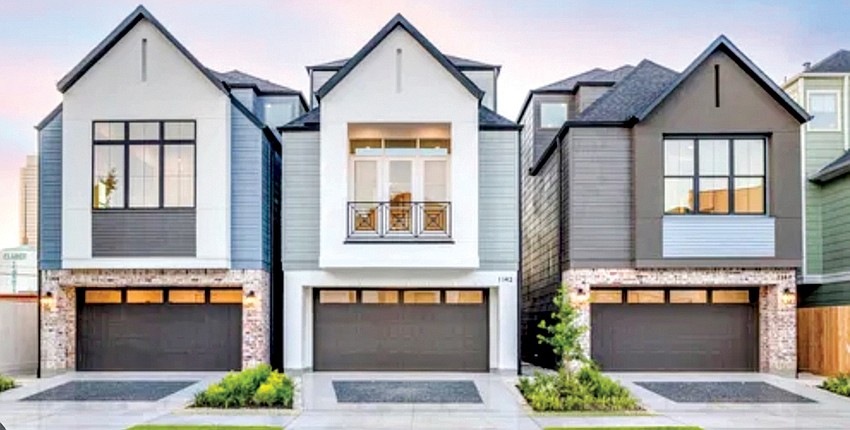
According to Passidomo, legalizing “building up” was necessary to help address Florida’s housing challenges. The Starter Homes Act would provide a second affordability booster by legalizing the building of starter homes on smaller lots.
The benefits are huge:
Smaller lots cost less, the homes are smaller but still family sized and townhomes cost even less.
This legislation, which is on track to pass in the Senate and House, would provide property owners with the flexibility to build starter homes. It would limit local governments’ ability to set minimum lot sizes, which effectively makes starter homes illegal. It is estimated to add 80,000 additional starter homes per year, an increase of about 65% over total single-family permitting in 2024.
With three to four bedrooms, these homes would be family sized, unlike large apartment buildings that average 1.6 bedrooms.
What’s more, single-family homes are more cost-effective and child-friendly than apartments. The rent for a three-bedroom single-family home in Florida costs only 28% more than for a one-bedroom apartment.
More than 80% of all Floridian children under 18 years (3.5 million out of 4.3 million) live in single-family homes. Rising costs are also contributing to younger generations’ hesitancy to have children. A supply shift to family sized starter homes will make it more affordable for couples to have children.
By focusing on smaller lots, the Starter Homes Act also provides Florida with the opportunity to expand housing supply without relying on sprawl or upending the important agricultural industry. On a statewide basis, our research finds that these additional single-family homes would sell for 15% to 20% less than those currently being built. Ninety percent would be owner occupied
Getting the right policies in place has extra importance for Florida. Today, Florida and Texas are two of the nation’s leaders when it comes to economic growth. However, Texas is ahead of Florida in affordability and ease of building and has recently taken legislative steps to keep its advantage.
Consider Houston and Austin. They have demonstrated that small-lot, starter-home reform is a simple fix for soaring housing costs. Today, Houston is the most affordable large growing metro in the nation, and the one with the lowest homelessness.
Unless the Florida legislature takes bold action, it will become less affordable and put its large service economy at great risk. The question for Florida’s seniors is no longer, “where will their children and grandchildren live”, but “will they have any grandchildren?”
This legislation is badly needed. The 477 jurisdictions in Florida with zoning and land-use authority are largely pursuing the same path, one that severely restricts the building of starter homes. Between 2000 and 2024 single-family detached homes built in new residential subdivisions had a median lot size of 7,700 square feet, with only 10% percent of newly built single-family homes being townhomes.
At the American Enterprise Institute Housing Center, we have done dozens of studies showing property owners and builders will build homes on smaller lots if it is legal.
It is time for Florida to take responsibility for assuring housing affordability for its citizens by setting reasonable boundaries for local jurisdictions with regard to lot size.
Passage of the Starter Homes Act would help assure Florida’s economic future.
Ed Pinto is a senior fellow and co-director of the American Enterprise Institute Housing Center. He also is a resident of St. Armands Key.