- April 4, 2026

-
-
Loading
Loading
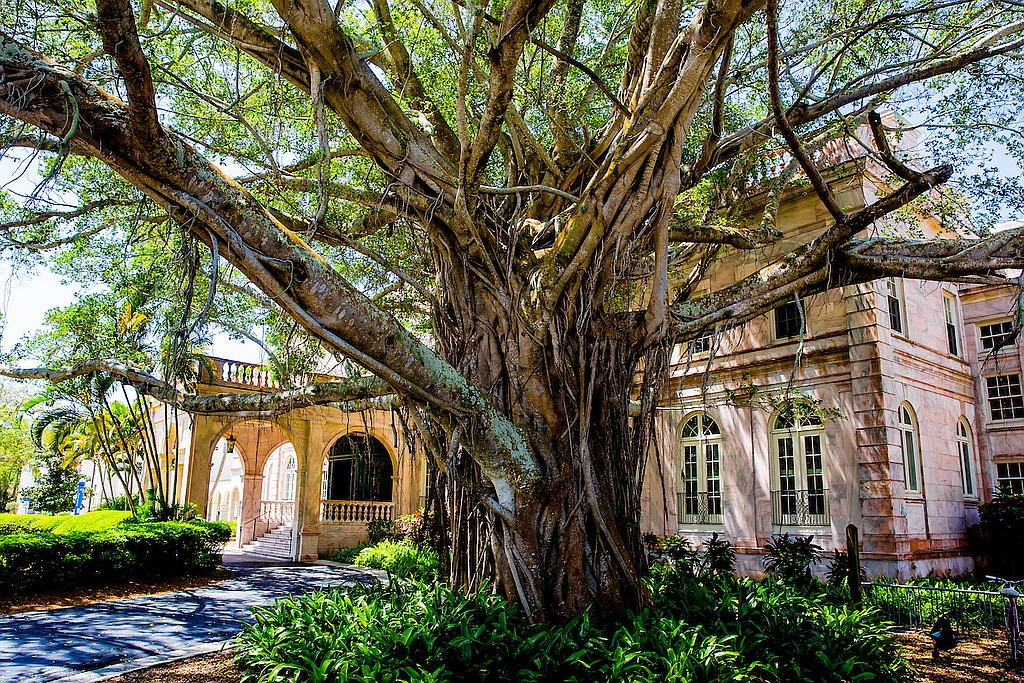
A pair of powerful political forces in Florida — the governor’s office and the House speaker — are attempting to orchestrate a significant shift in the Sarasota-Manatee higher education landscape.
Yet, like many things involving government and longstanding institutions, the situation is tenuous and complicated.
At stake: whether University of South Florida Sarasota-Manatee, which has had a presence in the area since 1975 and a campus near the Sarasota-Bradenton International Airport since 2006, remains part of the larger, Tampa-based USF system or is absorbed by its Tamiami Trail neighbor, New College of Florida.
The latter option, under a proposal from Gov. Ron DeSantis, would, by July 1, shift USFSM’s 32 acres, buildings and millions of dollars in debt to New College, which can be done, with approval from the Legislature, because both are public universities. If approved, current USFSM students would have up to four more years to earn a degree, with what the governor’s office called teach-out protections for USFSM students already enrolled. USFSM students could also go to USF campuses in Tampa or St. Petersburg.
But, according to a USFSM board member and former president of the local campus, being pulled from USF and becoming part of New College would negatively impact students, staff, faculty and employers — particularly employers in hospitality and health care, who rely on the school for a talent pipeline. USFSM has about 2,000 full- and part-time students, and about 150 faculty and staff.

“For the last 50 years, we’ve been a vital part of the community here,” said USFSM board member Dr. Anila Jain, a USF alum, physician and medical consultant. “And we want that to continue.”
USFSM students tend to be local, while New College students come from all over Florida, and the country, Jain said. Also, USFSM’s focus includes nursing and hotel management programs, while New College has a liberal arts mission. “We serve a lot of students New College will not serve,” Jain said.
Laurey Stryker, president of the USFSM campus from 2000 to 2007, is leading an opposition movement to the plan. She said since the schools serve those different student populations and have different academic missions, the plan — what she calls, in a text message, "sacrificing USFSM for New College’s dreams” — is a fail.
“It’s put our community in a position we’ve never been in,” Stryker said. “We’ve never been asked to choose between New College and USF.” (A proposal in DeSantis’ 2025-2026 budget to transfer both the USFSM campus and the nearby John & Mable Ringling Museum of Art, run by Florida State University, to New College never came to fruition.)
The latest move to move USFSM to the New College umbrella was on paper in three official places through Feb. 16: the governor’s 2026-2027 budget proposal, released Dec. 10; the House’s proposed budget, released Feb. 11 and approved by House Speaker Danny Perez, R-Miami; and a proposed committee bill in the House’s higher education budget subcommittee, released Feb. 12 and sponsored by the committee chair, Demi Busatta, R-Coral Gables. The subcommittee was scheduled to begin discussions on that bill, PCB HEB 26-01, Feb. 16.
Notably, at least through Feb. 16, the House education budget subcommittee bill doesn’t have a Senate companion, and the Senate’s budget proposal, released Feb. 13, doesn’t propose any new College/USFSM budget or facility transfers.
There are two paths to the transfer of USFSM to New College becoming reality. One is a companion Senate bill and reconciliation process, which would then go before DeSantis. Another is for it to be in the final governor's budget, like it is now, which both the House and Senate must negotiate on and pass before the end of session. The wording — and financial parts — of the transfer in that budget could change in the negotiation process.
The House budget states that contingent upon the passage of the education subcommittee bill, New College will receive $22.47 million in funds transferred from USF. That’s in addition to the budget allocating $36.98 million for New College from general appropriations; the proposed budget also has funds for the 11 other universities in the state system.
DeSantis’ plan, meanwhile, folds in debt considerations: New College would assume all the debt on USFSM’s buildings and facilities, which, budget documents show, comes to $166,617 per month. Those buildings include Atala Residence Hall. The six-story, 100,000-square-foot dorm and student center opened in 2024, a key part of USFSM’s strategy to become more of a destination campus, not mostly a commuter school. In a twist, New College, which had to close some of its dorms in 2023 because of maintenance issues, and has since seen more than a 50% spike in student enrollment, has paid USFSM to house dozens of students at Atala.
One element of the potential New College/USFSM transfer that has been missing, outside of the bureaucratese in the bill and budget: vocal public support for it. USFSM officials against the move add there also hasn’t been any public study or independent commission analyzing the risks and benefits.
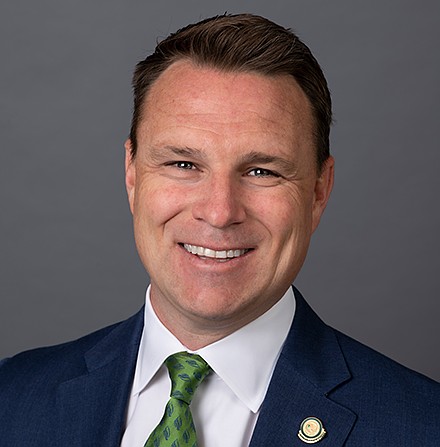
USF board chairman Will Weatherford declined to be interviewed for this story, deferring to comments he made at a board meeting last year after DeSantis' budget proposal was released. "It’s a policy matter," he said, in part. "It’s not something we dictate or control.”
Weatherford, in a tweet he posted the afternoon of Sunday Feb. 15, was more direct in opposing at least one financial aspect of the plan. In a response to a Feb. 13 story in the Tampa Bay Times under the headline "State could move $23M from USF to New College if campus is transferred," Weatherford, on X, wrote "with respect to the folks at the Tampa Bay Times, there is a zero percent chance that this will happen. Zero as in “0."
In a follow-up email to The Observer Feb. 16, Weatherford added his post "was about the money specifically. If there is a land/asset transfer it will not include those recurring resources."
Soon after that tweet, the chair of the Florida Board of Governors, health care executive Alan Levine, weighed in, saying "the transfer of this property is important to the state system and I’ve spoken with USF and NCF, and they agree on the deal for the transfer. There is a clear path forward and we support this."
New College, officially, has been neutral on the plan. "Public policy makers are determining the best utilization of public assets and debt,” New College spokesman Jaime Miller said. “It will be our job to implement what they direct."
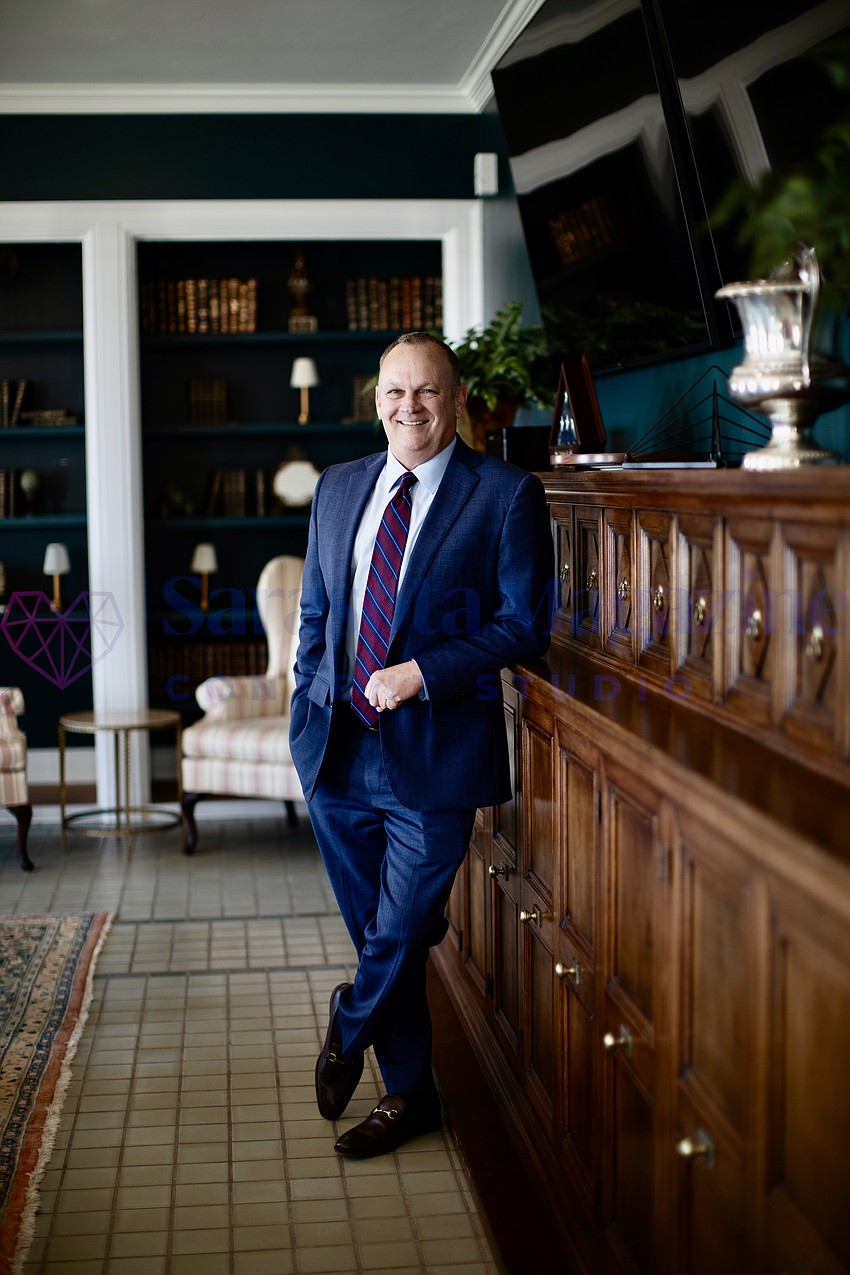
New College President Richard Corcoran, a former Florida Speaker when he was a Republican state representative from Pasco County, declined to add anything to the statement. (Weatherford, too, was once Florida House speaker.) A Florida education commissioner under DeSantis from 2019 to 2022, Corcoran is widely credited with leading a fast turnaround at New College since being named president in 2023. Prior to his arrival and a new board implemented by DeSantis, New College had declining enrollment and was losing money.
Officials from the offices of Perez, Busatta and DeSantis didn’t respond to emails requesting comment on the budget or bill proposals supporting the New College/USFSM transfer.
State Sen. Joe Gruters, R-Sarasota, in several media interviews with other publications last year, offered some support for New College in the Ringling Museum and USFSM takeover proposal. Gruters didn’t return multiple calls and texts from the Observer seeking comment on the 2026 iteration of the plan. Gruters’ wife is vice president of advancement and the executive director of the New College Foundation.
While detailed public support is next to nil, opposition is high, in addition to the group led by Stryker and Jain, saveusfsm.org.
On the elected official level, two members of the Sarasota-Manatee delegation, James Buchanan, R-Sarasota, and Will Robinson, R-Bradenton, both praised Corcoran for leading New College’s turnaround, while also rejecting the takeover proposal.
“USFSM has been a pillar here for decades, and I worked in the Legislature to protect regional campuses during consolidation,” Buchanan told the Observer. “Through ongoing community conversations, it’s clear how deeply residents value preserving that independence and mission. I fully support keeping these institutions separate and ensuring both thrive independently.”
Robinson said since the merger idea was floated a year ago, “there has disappointingly been no community engagement.”
“I have seen no public statement of support for this merger from both institutions,” he said. “My community has spoken loud and clear in opposition. The missions of both institutions are dramatically different, and major questions have yet to be answered like how this would impact existing students and what happens to the pipeline of talent moving forward. A big question I personally have is whether the Legislature should allow the merger to go forward if both institutions want it. I will wait to answer this question once public statements from both institutions have been made and the community has been better engaged.”