- April 1, 2026

-
-
Loading
Loading
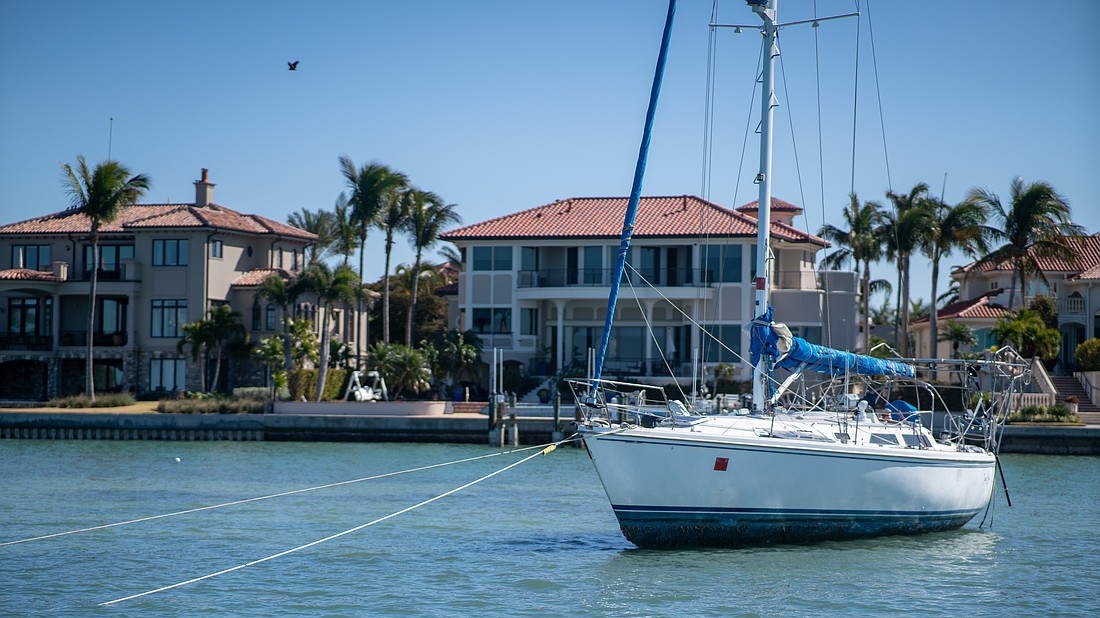
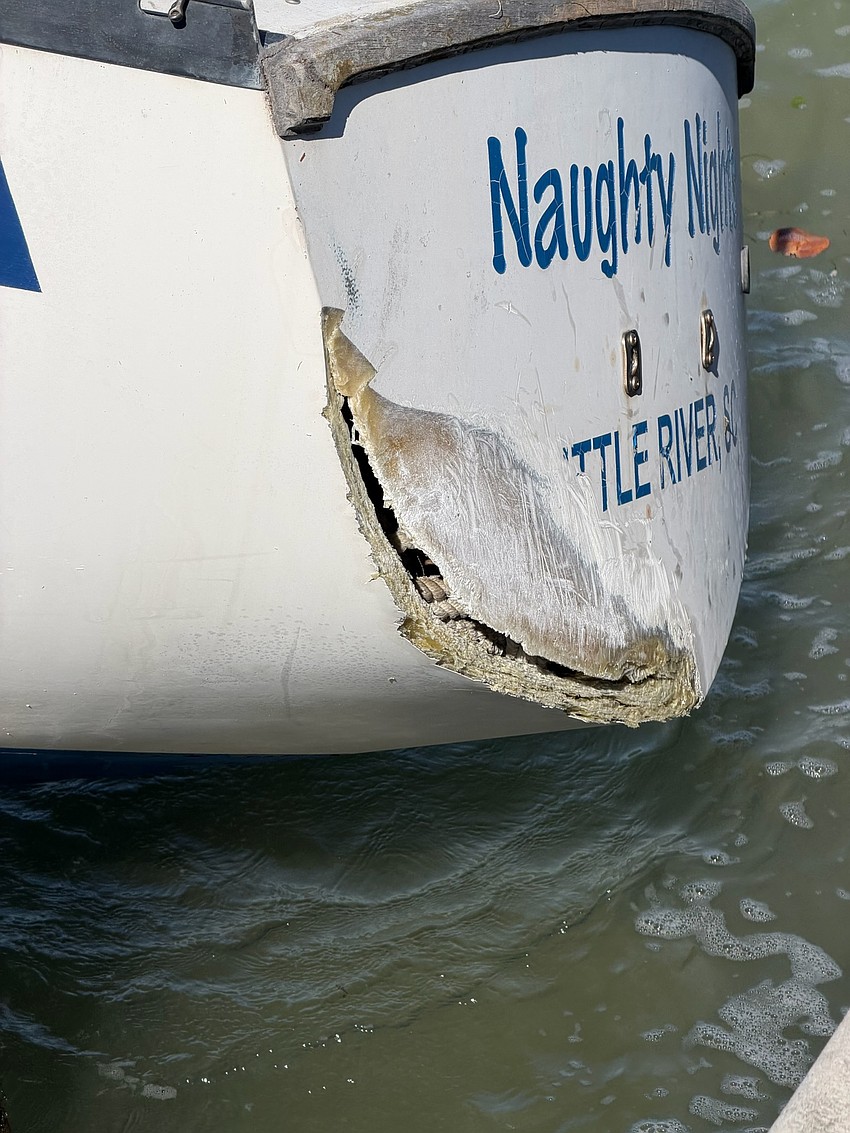
The Tipsea Gypsea lies beached on a sandbar, two anchor lines extending from the bow of the 45-foot sailboat.
On the hull, a bright orange sticker has been placed declaring the vessel must be removed. The 1989 Catalina sits just a few hundred feet from the Harbor Acres neighborhood on Sarasota Bay and on the outskirts of the Marina Jack mooring field where dozens of boats are anchored. And the boat has no steering wheel.
“You can anchor anywhere you want in state waters, but when it starts to threaten persons or property, that’s when it becomes an issue,” Sarasota Police Department Marine Patrol Officer Michael Skinner said.
Law enforcement agencies that have marine patrol units like Longboat Key and Sarasota keep a lookout for boats that look abandoned, beached or in risk of becoming derelict. There are several reasons why that’s important.
“It’s a navigational hazard. And then, obviously, the issue with environmental stuff,” Longboat Key Police Department Sgt. Adam Montfort said. “The oils, fuels, batteries, and just the garbage that floats around from them.”
If a derelict boat has sunk, other boats hulls could strike the underwater vessel, causing damage and potentially life-threatening situations. There’s also the possibility of storms causing the boat to smash against anchored boats or seawalls nearby.
The Florida Fish and Wildlife Commission removes hundreds of boats annually as part of a statewide derelict vessel program. According to Philip Horning, FWC’s derelict vessel program administrator, 467 vessels were removed in 2023. That increased to 651 in 2024. Last year, 552 were removed at a cost of $11.3 million.
On Longboat Key, derelict vessels are not a common problem, Montfort said. But after the intense storm surge caused by Hurricane Helene in 2024, it was a different story.
“We had some sailboats break free and strike the bridge. It was a mess,” Montfort said. “There were boats everywhere.”
Longboat Key police on marine duty do a lot of “community policing” as it’s described by officers. They make contact with boaters and have a spreadsheet of commonly seen vessels around the island and contact numbers for the owners. That comes in handy.
“We try to stay on top of it and in contact with the owners of the boats throughout the season in our normal patrols; that way we have a good rapport with them,” LKPD Officer Mike Mathis said. “That way when something like this does happen, we can contact them immediately.”
Right now, there are 11 boats identified by FWC as derelict on Manatee River, Palma Sola Bay and Sarasota Bay.
While Longboat works with the Florida Fish and Wildlife Commission to remove derelict vessels on the rare occasion they need a boat removed, the Sarasota Police Department established a derelict vessel program of its own in 2020, using FWC’s existing program as a model.
“In 2020, the lightbulb clicked on in my coconut and I said, 'You know, FWC has a statewide practice on their derelict investigations,'” Skinner said. “We enforce the same laws as FWC does, why don’t we adopt their policies and procedures?”
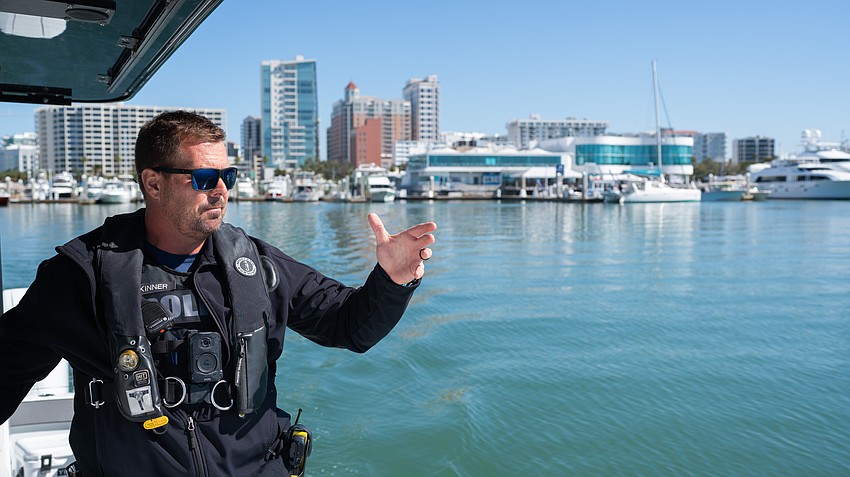
When a boat is declared derelict by a law enforcement officer, there are three options for the boat owner.
One is to request a magistrate hearing. In that case, the owner can make his case as to why the vessel is not derelict based on the facts of the situation.
The second option is an informal magistrate hearing. This is often used to extend the deadline (24 hours after a 21-day notification period) on when the owner may remove the vessel.
The third scenario is for the vessel to be removed by SPD or FWC. SPD uses grant money from the West Coast Inland Navigation District to fund the removal of the boat to land. The boat owner is then responsible for paying for the removal and destruction of the vessel.
“Public Works will come out, crush up the vessel, weigh it and charge us a disposal fee. It is literally less than one fifth of what a salvage company would do,” Skinner said. “So it saves a ton of money for the taxpayers. The person is held liable, being charged with a misdemeanor in the state of Florida, and whatever the cost of the removal is, the owner is liable.”
That payment for the removal and destruction of the vessel is sent to WCIND.
If FWC were to remove the vessel, that cost would be higher, and the wait would be longer. Horning said the average cost for vessel removal, taking into account FWC’s Vessel Turn-in Program, ranges from $14,000 to $23,000 per boat.
With SPD, that cost is a fraction, Skinner said. The last SPD derelict vessel removal of a small sailboat had an $880 bill. Typically, the cost is about $2,500 and depends on whether the boat has sunk and how large the vessel is.
Until the registered owner of the vessel pays for the removal, a status hold is placed on the owner’s Florida driver’s and boater’s licenses, preventing them from registering new vehicles or vessels.
The most common reason a boat becomes derelict is money, Skinner said.
“Everyone has that dream,” he said. “I mean, hey, I do too. I’m ready for a glass of champagne down on Key West and watch the sunset, but when people really get down to that nitty gritty standard of care for boats, they sometimes bite off more than they can chew.”
Officer Skinner said he doesn’t want to resort to enforcement if it can be avoided. The first step after identifying a potential derelict vessel is to get in contact with the owner and see if the boat can be removed without SPD involvement and the associated fines. Sometimes establishing that contact is easier said than done.
“It’s a case-by-case scenario. There may be extenuating circumstances. We had another boat out here, Tequila Sunrise was the name of the boat,” Skinner said. “I found the owner on Facebook and he was in Hungary. I had to buy a calling card at 7-Eleven and call this guy. … We ended up destroying that vessel.”