- April 1, 2026

-
-
Loading
Loading
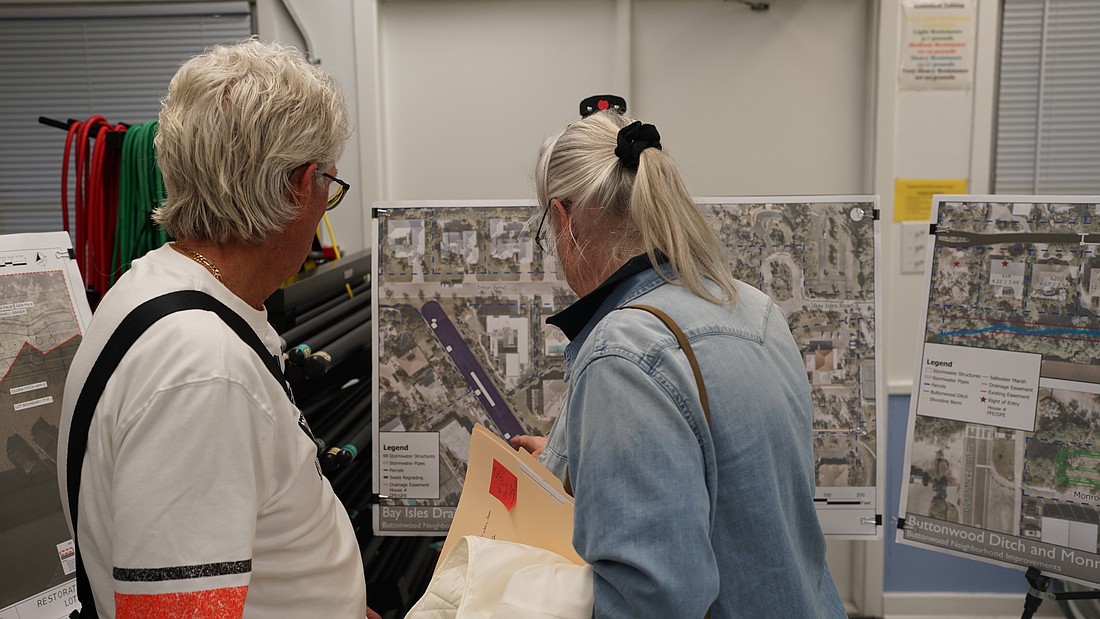
Fifteen more stormwater inlets. A raised road. A cleared and regraded drainage ditch.
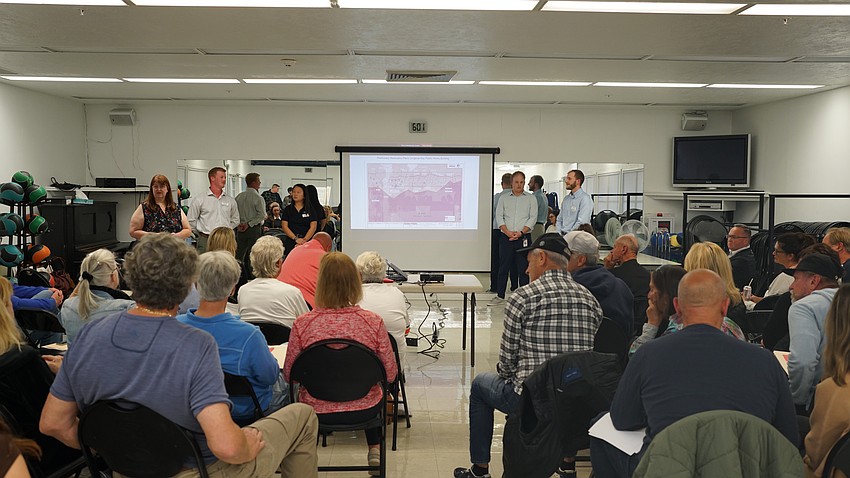
All of the above are part of the plans to upgrade stormwater drainage in the Buttonwood Harbour neighborhood on Longboat Key. On the evening of Feb. 5, residents were presented preliminary (60%) plans by engineering firm Kimley-Horn and Associates at a community meeting.
“The drainage system along Buttonwood is going to be new, and currently there are nine inlets. There are going to be 24,” said Kimley-Horn’s Molly Williams, one of the project managers. “The system is going to connect everything so there is more than one outfall so that the system can equalize, and it reduces the flood stage for the whole area.”
Residents not in the project area but nearby should not be worried about water being rerouted to their property, Williams said. Extensive modeling has been done, and the project would not pass Southwest Florida Water Management District permitting if it would negatively impact neighboring systems.
“We’ve taken into account all of the areas that drain to all of the drainage system, and we have an existing conditions model and we compare it to our proposed conditions,” Williams said. “We’re not having rises, and we’re reducing the time the water is standing, so it’s a net benefit.”
Buttonwood residents are well aware of the issues the neighborhood faces. Jeanette Ray lives in the house her grandparents built on Buttonwood Drive in 1967 with her husband, Gregory. The two said Hurricane Helene caused mass devastation like it did for many on Longboat, but even regular rain storms before would cause road flooding.
“The king tides, especially when the moon and the high tide meet, the water comes up far and then it floods the whole entire road,” Jeanette Ray said. “Then the neighbors at the bottom of the road toward Bay Isles, they have to park in our driveway because they can’t get down to their houses.”
The stormwater improvement project will raise roads in the neighborhood. According to Kimley-Horn’s presentation, the maximum roadway elevation change will be 1.3 feet. Longview Drive, which is lined by houses on the south side only, will be sloped to flow water away from the houses. The other roads will have a typical crown design.
Roadway designer Scott Zyra explained a “sawtooth profile” the roads will be sculpted into with alternating high points and low points where drainage grates will collect stormwater. The slopes will be subtle enough to be unrecognizable, but will greatly reduce standing water on the roads.
The underground system will also be fitted with new, larger pipes, and the outlets going into Cranes Bayou and Sarasota Bay will have tide check valves that will prevent water from seeping into the system during high tides.
Landscaping will also be redone as part of the project. A saltwater marsh will be regraded and replanted with saltwater tolerant plants near Monroe Street. Those improvements will be easier on the eyes, will provide habitat for wildlife and will provide protection from erosion and storm damage, according to Kimley-Horn’s presentation.
With construction work necessary on portions of residents’ lots, private plantings will be impacted. Each resident was given an “existing conditions landscape plan” that was made from a detailed inventory of properties in October. The stormwater improvement plan will cause impacts to many residents’ properties during the construction phase, but properties will be returned to their previous state following the improvements.
“Trees, shrubs, groundcover and grass, rocks, driveways, pavers, everything that was in your yard is documented, and the full expectation is that it would be replaced after the project is over,” said Kimley-Horn landscape architect Jake Hess.
When that will be remains uncertain. The project is split into two parts: the Neighborhood Drainage Improvements, or NDI, is dependent on grant funding. That phase is expected to begin in the 2027 fiscal year, but only if the town secures grant funding for the project. The Flood Mitigation and Resiliency, or FMR, portion of the project is expected to begin in the 2028 fiscal year.
In the meantime, a second public meeting is scheduled for March 26 before plans are 100% finalized by April 7.