- April 1, 2026

-
-
Loading
Loading

The town of Longboat Key is switching up how fees for new development are issued and what the money will be used for.
At the Feb. 2 Town Commission meeting, commissioners passed an ordinance on first reading that would replace land acquisition fees with a parks and recreation impact fee. Agenda documents explain that there is ample park and recreation space on Longboat Key already, and using fees to enhance those areas rather than expand them are a better use of development fees.
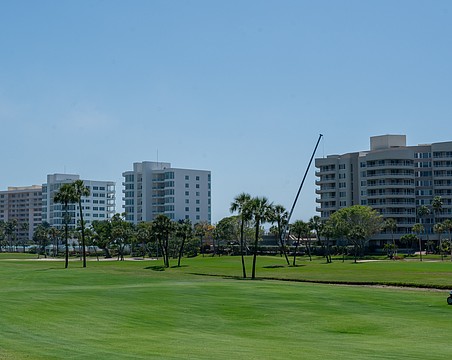
“The Plan identifies 659.4 acres of open space and recreational land, which equates to approximately 35 acres per 1,000 residents, nearly three times the adopted standard of 12 acres per 1,000 residents,” a memo from Town Manager Howard Tipton reads. “This indicates that the town has a substantial surplus of open space and is well-positioned to continue meeting acreage-based service standards in the future.”
Currently, any new development that would add dwelling units were required to either dedicate five acres of open space per 1,000 new residents or pay market value for that amount of land. Planning and Zoning Director Allen Parsons said that is no longer needed.
“This is a fee that gets assessed on new development: properties that have never had any residential development on them previously. There are very few of those remaining in the town that have never had a single-family house or a condominium developed on them,” Parsons said. “It served its purpose of being a funding source for providing a certain amount of open space for the population of the town. Right now, that amount of open space that we have is well in excess of what that goal was for the town, so a good time to change.”
If approved on second reading, developers would instead be charged a population-based parks and recreation impact fee. Parsons said the parks and recreation impact fee would be less than the current land acquisition fee.
The new fee would be $3,711 per dwelling unit, replacing a fee calculated by a formula that takes the number of new units, multiplies it by the product of the current market value of the land and 435.6. That number is then divided by the square footage of the land.
“Ultimately what this study that was presented to the commission showed is that the fee to support meeting these level of service requirements would be less than the fee that is currently assessed for the land acquisition fee,” Parsons said.
The change requires the town to adopt a “level of service” goal into its Comprehensive Plan. This breaks down existing park and recreation facilities and compares that to a benchmark level of service the town would like to provide.
Tallahassee may have a say on whether this change is made, though.
Because the ordinance would change the town’s Comprehensive Plan, the Florida Department of Commerce will now review and comment on the ordinance before Town Commission votes to pass it on second reading. Town Commissioner BJ Bishop also noted that there is pending legislation (House Bill 1139 and Senate Bill 548) that could impact how municipalities may issue impact fees.
“If this bill passes, because it goes specifically at impact fees, it could have a dramatic effect on what you’re recommending here,” she said. “Right now, there’s several compartments of this language you’re putting forward that would not apply anymore courtesy of the people in Tallahassee who think we’re incapable of home rule.”