- March 20, 2026

-
-
Loading
Loading
In the mid-20th century, Sarasota had already established itself as a small city with a big cultural scene. High culture, mostly — theater, classical music, architecture, visual arts, performing arts.
Then, on Oct. 30, 1957, a group formed with another type of culture in mind. They called themselves Ski-A-Rees and planned to promote water-skiing and present show-skiing events. The city of Sarasota embraced the amateur, all-volunteer group and allowed it access to facilities for practices and performances. The ski shows launched in 1958. These aquatic extravaganzas drew crowds of tourists and locals and even lured highfalutin residents out of museums and into the sunlight.
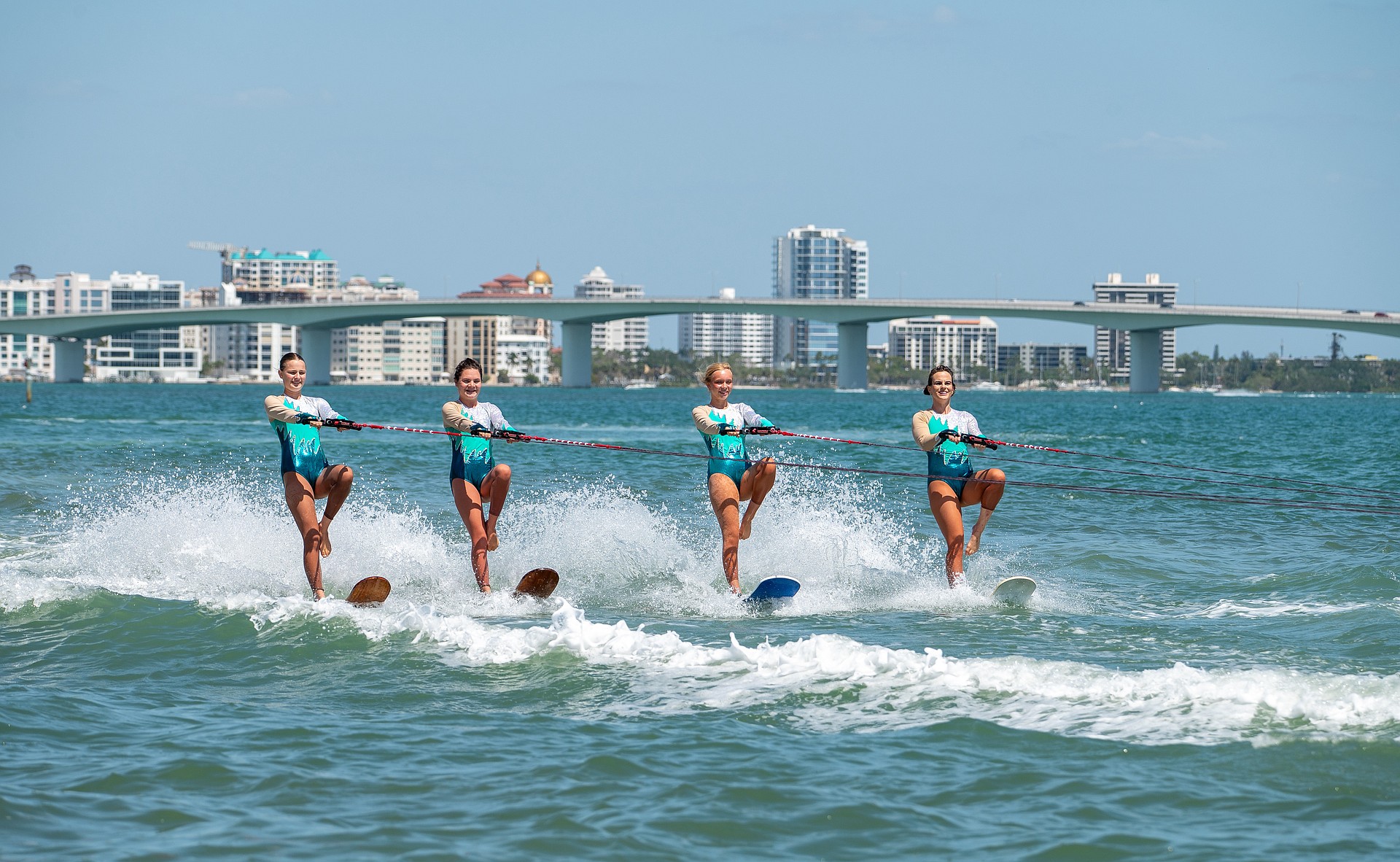
Ski-A-Rees is still very much afloat in its 69th year. The troupe presents water-ski shows on Sunday afternoons in spring and autumn in a sweet spot of Sarasota Bay that’s tucked in among Lido Shores, City Island and St. Armands. Their choreographed routines include synchronized ballet skiing, ramp jumps and flips, barefoot skiing, all manner of dazzling stunts and, of course, the ever-enduring ski pyramid.
Amid an increasingly complex world, with an endless menu of diversions and distractions, there’s something to be said for heading to the waterside to take in some good, old-fashioned family fun — that’s free.
The Ski-A-Rees shows, which last about 45 minutes, generally draw between 600 and 1,000 people during springtime, a little less in autumn. Onlookers sit in bleachers set up for the event or line the shoreline with beach chairs and blankets. During performances, a few members go through the crowd with buckets, requesting donations (they have a QR code for Venmo or PayPal), which is the organization’s primary source of income. Another is dues collected from its all-volunteer membership.
Ski-A-Rees operates on a budget of about $50,000, says Brad Satterlee, 41, the group’s president and show director. The money goes toward paying rent to the city, maintaining and fueling two boats and buying equipment like tight-fitting vests, special skis, ropes and more.
Ski-A-Rees has had its ups and downs over the years. In 2017, a robust group won the Show Ski National Championships in Illinois with a themed program called “Star Wars: The Skiquel.” The team is currently enduring something of a down cycle, with membership at a lower-than-normal ebb. Satterlee estimates that 15 to 20 skiers perform on any given Sunday. They’re joined by a roughly equal number of support personnel.
The hurricanes of 2024 wreaked havoc on the Ski-A-Rees infrastructure, requiring a long phase of repair and replacement. Still, the shows went on.
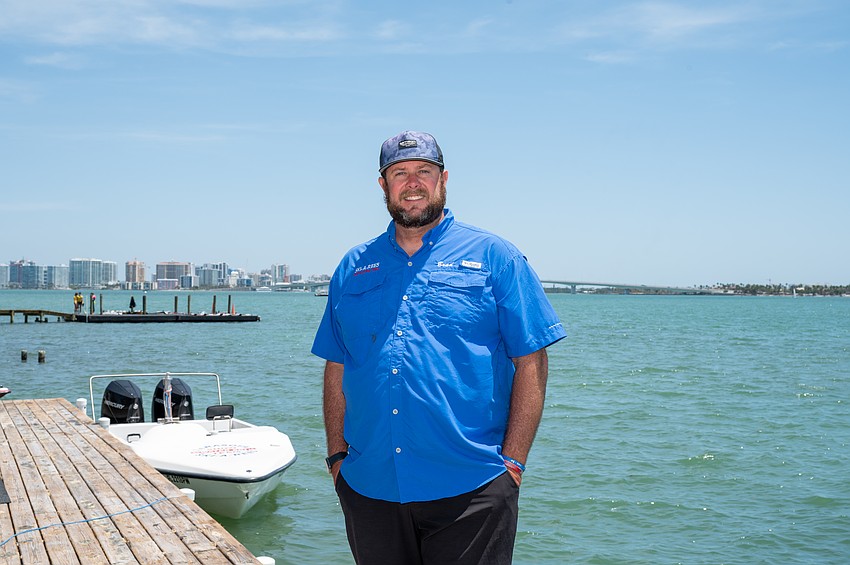
Growing the membership is now top of mind. “Our team’s pretty small right now, so we are working to bring in new members so we can pass this along for generations to come,” Satterlee says. He emphasizes that Ski-A-Rees is in no danger of extinction, but the fact remains that to put on a ski show, you need skiers.
All you recreational water-skiers, take special note: Ski-A-Rees is open to anyone. You do not have to be an accomplished skier to join. The veterans will teach you the skills, stunts and routines. You can aim high — like jumping off a 6-foot-high ramp and doing a gainer; or skiing with one foot in the handle while facing backward; or being part of a quintet that jets a full circle around a moving boat. Or you could opt for something more basic. And no one will give you the side-eye if you mess up.
No matter what their role, Ski-A-Rees performers get to bathe in the applause emanating from the shoreline. And who doesn’t like that? Come to think of it, who among us even gets to hear cheers from a crowd? “Yeah, it’s nice,” says Debbie Brannon, 17, who joined Ski-A-Rees at age 12. “It makes it so much fun to ski because everyone just loves to watch you.”
Satterlee reckons that Ski-A-Rees members range in age from 5 to 70+. For some, it’s a family tradition, passed down through generations. Lance Robbins — who’s been a performing member for most of his 40 years — gets to see his mother, Sandy Robbins, her two daughters-in-law and one granddaughter perform together. Three generations water-dancing in the ballet line.
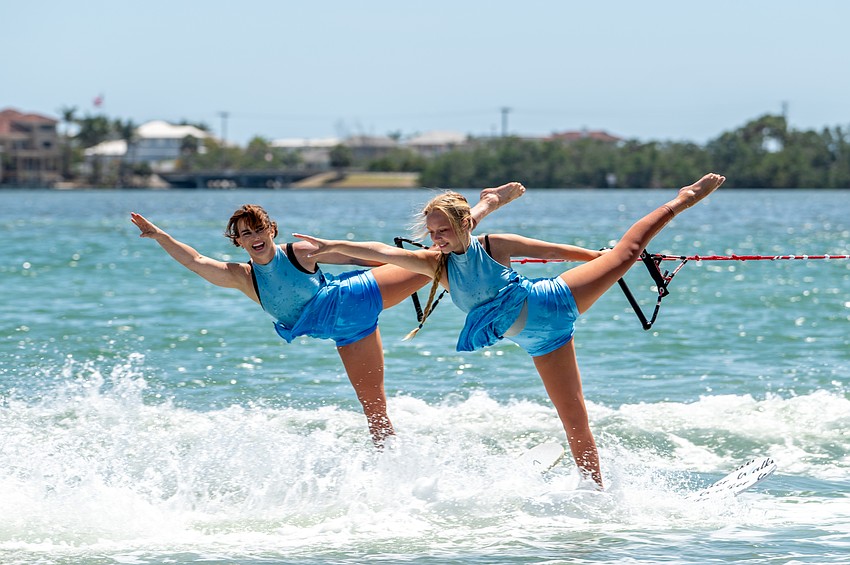
Ski-A-Rees is more than a team, it’s a community — actually more like an extended family. They practice on Saturdays and perform on Sundays, get together for the occasional cookout and some of them socialize away from the team. The group makeup engenders real friendships between people of vastly different ages, which is rare. “I’ll be friends with a girl who’s my age, but then I’m also friends with her mom at, like, the same level,” says Debbie Brannon. “It’s a little bit weird, but overall, it’s nice.”
Ski-A-Rees benefits are boundless — vigorous physical activity and skill development, enhanced focus and diligence, team building, an expanded social circle, a regular escape from the humdrum, a sense of purpose beyond paid employment or school. And happiness. Lots and lots of happiness.
“I have, like, zero ability to imagine my life without Ski-A-Rees,” Robbins says.
Sisters Debbie and Natalie Brannon learned to ski at a young age under the tutelage of their father, Matt Brannon. The family lives in Venice and hadn’t heard of the Ski-A-Rees until learning about it from a guy who sold them a boat.
Intrigued, they checked it out. “I was a little nervous because there was a bunch of highly skilled skiers,” Debbie recalls. “One girl, her name was Jac (Lyman, now in her early 40s), was really good, and it was a little intimidating. But she was really nice and encouraged me to join up.”
Debbie, who was 12 at the time, signed on. Natalie, a year younger, played soccer and held off. She joined a year later.
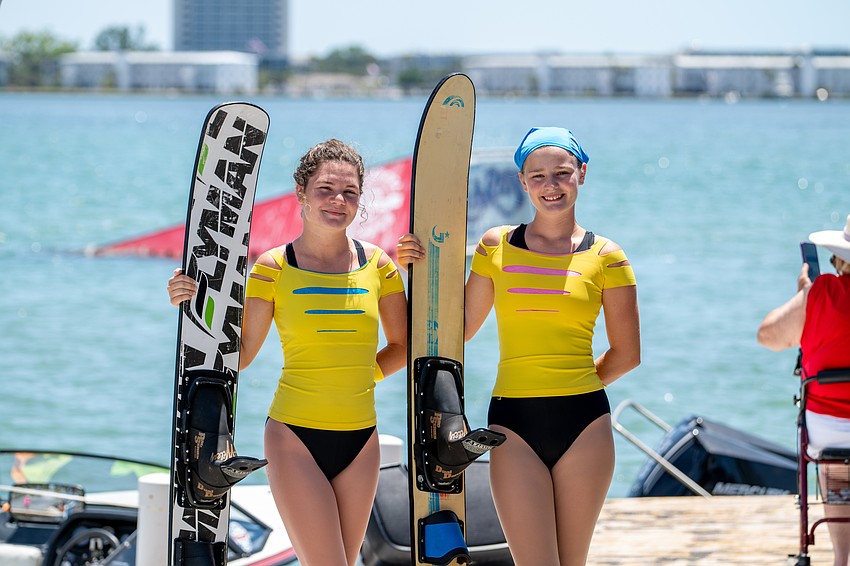
At Debbie’s first practice, team members evaluated her abilities and liked what they saw. She had only dabbled in slalom skiing, and as it turned out she was using the wrong foot. To be in sync with the other Ski-A-Rees performers, she had to switch from her left to her right foot, which took her about three months to master.
Then came learning to start off of docks — first sitting, then standing. Then using a ski that swiveled. Then Debbie’s first real trick, skiing with the rope between her legs and her hands free. Things got harder with the toe hold, skiing with one foot in the handle. After that, a major hurdle — the toe turn, where the skier executes a half-turn with one foot in the handle to a position facing away from the boat.
“It took me and my sister about one year to master,” Debbie says. They practiced the maneuver repeatedly, 10 to 20 times per session. “There were times when I thought, ‘I kinda wanna give up.’” Debbie recalls. “It got discouraging. But my sister and I learning it at the same time really helped. We just kept at it, encouraging each other, and we finally got it.”
While the girls were learning the toe turn, Debbie started training to be part of the pyramid, which required first building the human triangle on land — for safety’s sake — then gradually taking it into the water. At 5-foot-4, she’s usually in one of the middle sections of four tiers. The sisters also perform in the water ballet segments.
Debbie and Natalie take Ski-A-Rees seriously. With five- to six-hour practices on Saturdays and shows on Sundays, the endeavor eats up their weekends. (Debbie says she’s not one for parties, anyway.) During the off-season, she goes to the gym about three times a week to strengthen her legs, arms and core and also does a lot of skiing during the down periods. Dad and mom, Jenny, are members — Matt skis, Jenny is the costume director and a safety rider in a boat. It’s a Ski-A-Rees family affair.
Lance Robbins has been a member of the Ski-A-Rees for 40 years. He’s 40 years old. In other words, he was born into it. Robbins can’t remember his first performances because he was too young. “My specific memories come probably when I was more like 10 and learning to do tricks,” he says.
Robbins is one of the team’s linchpins. He skied professionally for about seven years — at SeaWorld, at Cypress Gardens and at Universal Studios in Singapore, which was his last stop in 2019. (He’s now a physician’s assistant.)
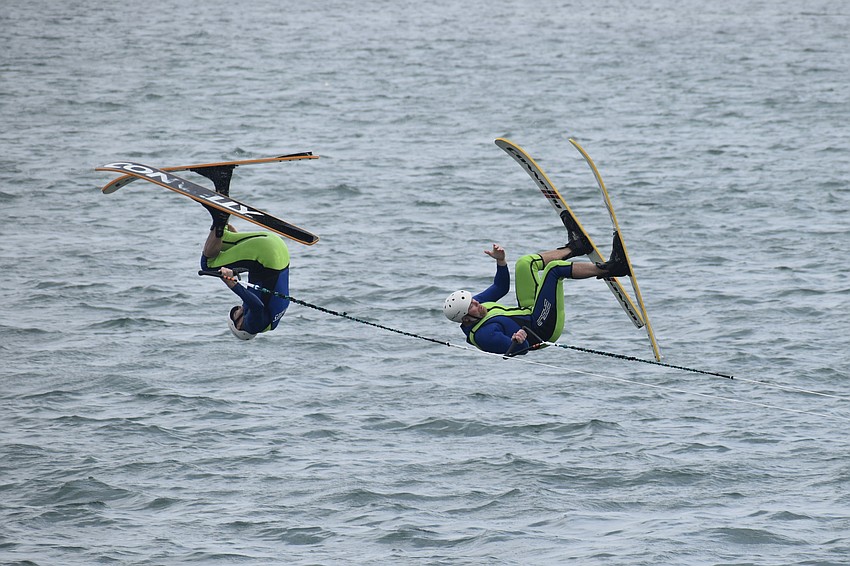
During the shows, Robbins executes the show-stopping 360 around a moving boat, often with his brother Brian at his side. He performs doubles routines with women, showing off moves similar to figure skating. He vaults off a ramp and does front flips, gainers and helicopter spins.
Talk about a family affair. His mother, Sandy, still skis, and his father, Russell, helps out with other duties such as driving the boats and running the sound system. “Every single weekend growing up I spent with my parents,” he says. “Who does that?”
There’s more. “I met my wife on the team,” he says of Jennifer, who still performs. “My brother met his wife on the team. I have three nieces who joined the ski show as little kids. My children (daughters, ages 2 and 3) aren’t there yet — but they will be.”