- March 23, 2026

-
-
Loading
Loading
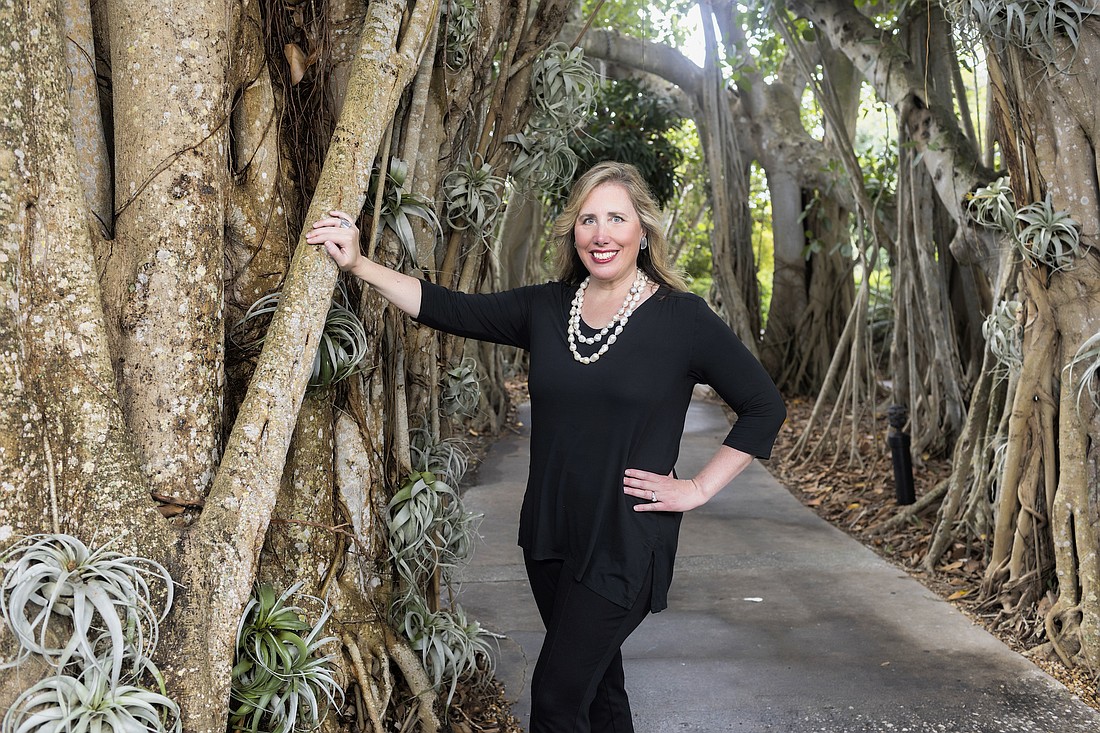
In the decade since Jennifer Rominiecki has served as president and CEO of Marie Selby Botanical Gardens, the master plan reimagining of the institution has dominated her entire tenure.
And it’s wholly her own fault.
Upon her first visit here in 2015 as a candidate for the job, Rominiecki said all she saw was potential. Sure Selby Gardens was uniquely situated in a rapidly redeveloping downtown on 15 acres of prime property along Sarasota Bay. And, yes, it was famous for its world’s largest scientifically documented collection of orchids and bromeliads.
But when it came to visitors, it was a one-and-done.
Having made a career out of leading “living museum” concepts in New York City, her interview here focused in part on not only modernizing Selby Gardens, but transitioning into such an experience here — implementing a constant state of evolution and revolving exhibitions that bring visitors back for more.
“It’s part of why I was recruited for the job,” Rominiecki said. “It was definitely discussed during my interview process, as far as the need for the proper infrastructure.”
That’s a subject Rominiecki knew more than a little bit about.
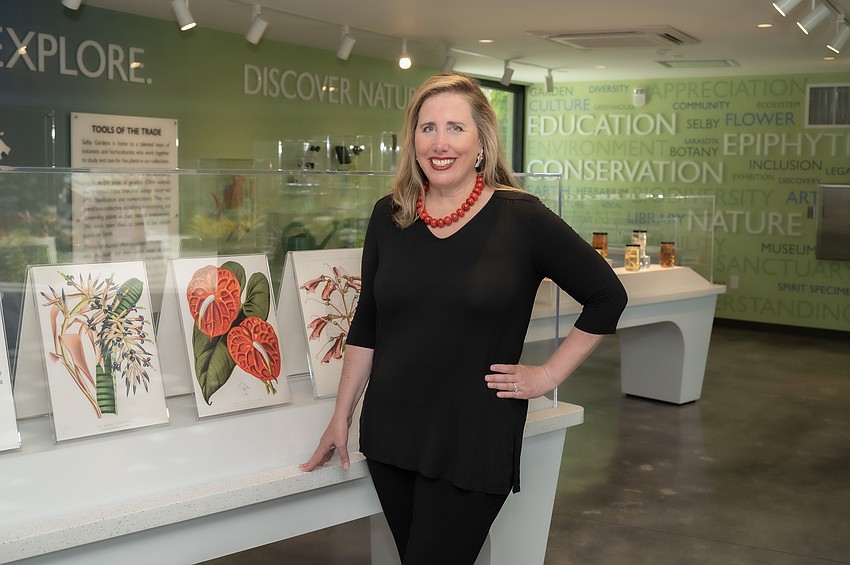
Her career began in New York City in visual art at the Guggenheim Museum, transitioning to performing art at the Metropolitan Opera. Immediately prior to coming to Selby Gardens, she specialized in living art at the New York Botanical Garden, where she spent 15 years, rising to vice president for institutional advancement and special assistant to the president.
Moving out of New York was never a consideration.
“Then I was approached about this opportunity to be the president and CEO of Marie Selby Botanical Gardens,” she said. “I was at the tier of leadership — second to the president and CEO — and I just thought, ‘This is an opportunity to really be the leader. I might as well check it out.’ I just think I was approached at the right moment in my career where I was ready to think about the next step.”
When she arrived, she found herself at the intersection of opportunity and potential.
“All I really saw was the opportunity. I just saw the potential of what this place could be,” Rominiecki said. “It had the most magnificent living collections. The location was incredible right on Sarasota Bay, and I knew that the talent was here. There were really two big things missing. One was a sustainable operation model to generate sustainable revenues for the institution, and two was the proper infrastructure necessary to safeguard the scientific collections.
“During the interview process, I really, I spoke to the board at that time about the need to address both of these concerns.”
That was enough to convince Selby Gardens leadership that she was the right fit to take the institution to the next level.
“Jennifer’s exemplary leadership has been instrumental in transforming Selby Gardens,” said Board Chair Katherine Martucci. “Through strategic vision, disciplined stewardship and an unwavering commitment to excellence, she elevated the institution’s impact, ensuring its long-term vitality and relevance for generations to come.”
In January 2024, Rominiecki joined the Selby Board of Trustees to cut the ribbon on downtown campus Master Plan Phase 1, the $57 million phase that brought a new welcome center, plant-covered parking deck topped by a 50,000-square-foot solar array, Green Orchid restaurant and Steinwachs Family Plant Research Center, the latter providing safe haven for Selby’s world-renowned living collections during the hurricane season later that year.
It was 2017’s Hurricane Irma, Rominiecki said, that accelerated the transformation from planning to action.
“It was that storm that really took us out of being in a planning mode to an action mode, because all of a sudden I felt I was responsible for stewarding these priceless collections that are necessary for biodiversity research,” Rominiecki said. “I can honestly say that if we hadn't moved ahead when we did amidst the storms last year, all of our preserved collections might have been completely destroyed if we hadn't been able to safeguard them in our new Plant Research Center.
“Now we're turning our focus toward finishing what we started with Phase 2.”
Finishing involves capital — $120 million for Phases 1 and 2 combined — the capital campaign for the latter at $60.9 million. During the Phase 2 groundbreaking on Dec. 2, 2025, it was announced that $56.3 million had been raised toward that goal, totaling $113.3 million, all of it via private philanthropy.
The prospect of being unknown, selling the idea of a complete revamp of the beloved Selby Gardens and raising the capital required was not intimidating.
“I had a lot of experience in fundraising. My prior position at the New York Botanical Garden involved overseeing their campaign to raise $479 million, so I wasn't afraid of what needed to be done. I think laying the groundwork of the living museum model was critical in building the confidence of the community of what Selby Gardens was going to be undertaking.”
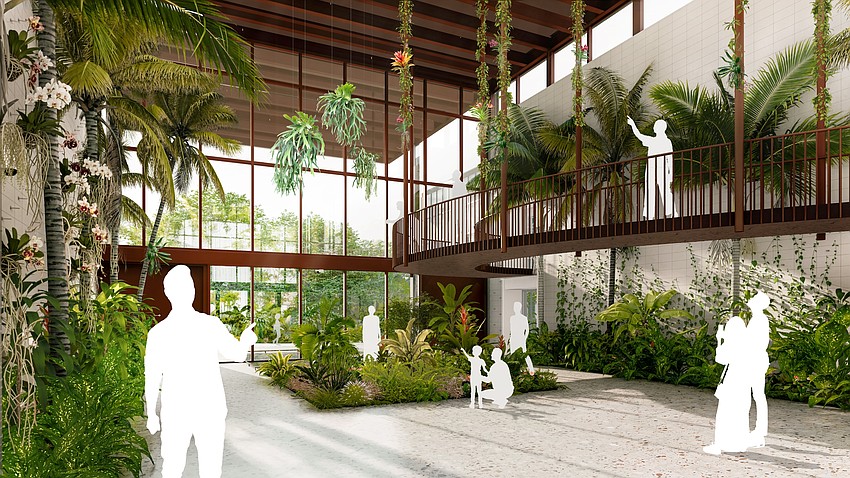
Standing before the crowd of supporters at the Phase 2 groundbreaking, Rominiecki could look toward the improvements brought by Phase 1 while, behind her, preliminary Phase 2 work was concealed by barricades covered with renderings of what is to come.
“It was just so exhilarating,” she said. “My face was beaming with joy because a moment like that is very validating for the work that was put into it. It was a chance to look back on things, and the big thing I said to myself is, 'It was all worth it.'”