- March 19, 2026

-
-
Loading
Loading
Christ Church of Longboat Key will soon have 58 more parking spots.
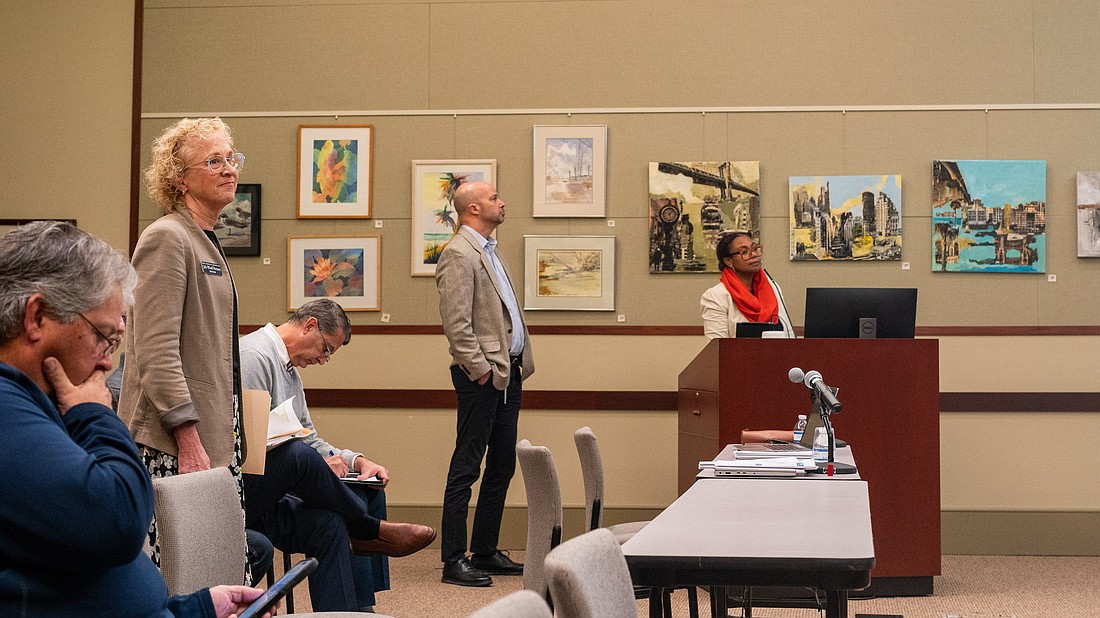
In a quasi-judicial hearing Jan. 27, the Longboat Key Planning and Zoning Board gave unanimous approval to the church to convert the vacant land across the street from it into a parking lot. Planning and Zoning Director Allen Parsons said that was the last step needed before the project could commence.
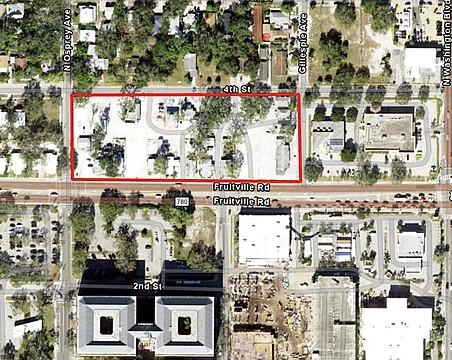
The 1.3-acre plot at 6350 Gulf of Mexico Drive used to be home to Reed Medical Group, Secur-All Insurance and other small businesses before the damage brought by the 2024 hurricanes. That building was demolished, leaving an empty lot.
The property was bought by the church with the goal of expanding parking inventory, with churchgoers already using the lot for parking on Sundays, according to pastor Julia Piermont.
“During season, we use those spaces every Sunday beginning in December,” Piermont said. “It’s really critical that we use these additional spaces.”
Both the church and town staff made clear the parameters for the lot's use: It’s not a parking lot for beachgoers.
Town Planning Manager Elma Glisson said the lot will “serve the adjacent church property only,” something reiterated by Piermont. No parking, tow-away zone signs have been installed by the church, and unauthorized vehicles in the lot has not been an issue.
Conditions for approval of the site development plan state that the property may not be used as a commercial parking lot for any off-site parking uses involving monetary compensation. That condition leaves open the possible use of the parking lot if there was no charge to use the space, which prompted discussion about whether to change that condition to be more specific.
Town Attorney Maggie Mooney said any changes to conditions in a quasi-judicial hearing need to be “supported by competent, substantial evidence in the record. Competent, substantial evidence means evidence presented in these proceedings that is based upon facts that can be reasonably inferred from the testimony and evidence before you.”
Glisson explained to the board the reason staff chose that verbiage.
“Monetary compensation for parking is paid parking, and that use is a commercial use that is not allowed. However, the code does not also codify general parking. So, there is nothing that disallows a parking lot to be used for parking. You are allowed to have a parking lot. It cannot be a paid parking lot,” Glisson said. “The town cannot enforce a parking lot, whether that’s beach parking or parking for an event for your property. Because there is nothing in the code that we can lean on that says that the code discourages or disallows this use, the only thing that we can lean on in the code is that it cannot be commercial, paid parking.”
Mooney further explained that quasi-judicial hearings have specific requirements for how decisions are made and why. She said one of the three requirements is that the board is following “the essential requirements of law, meaning that which is codified on the books.”
“Not what we want the law to be, but what the law actually says. So as a friendly reminder to the board, we are bound to comply with that criteria whenever we are evaluating quasi-judicial decisions,” Mooney said.
In short, adding conditions not based on town code is not something that could readily be done at the meeting, and the board was satisfied with the church enforcing the use of its own parking lot.
The board voted unanimously to approve the redevelopment of the lot into a 58-space parking lot.
With the change, the amount of impervious surface coverage on the lot will decrease, which could lead to better drainage.
“With the reduction of impervious surface, the existing drainage will be improved,” Public Works Director Charlie Mopps said, and town engineer Jennifer Fehrs said she has no issues with the drainage plan.
On the parcel already are two stormwater retention ponds that will remain and which the property owner will maintain.