- March 19, 2026

-
-
Loading
Loading
When we talk about efficiency in county government, the conversation too often narrows to purely financial considerations — minimizing expenditures, trimming budgets, or finding ways to do more with less. While fiscal prudence is important, true efficiency also dictates meeting the needs of the people that government serves. Projects and programs that fail to address citizens’ needs — even at low cost — are, by definition, inefficient.
A case in point is Manatee County’s recently unveiled plan to redevelop Country Club East Park into a $6.4 million youth baseball complex designed to host competitive play among teams within and beyond county limits.
As currently configured, the park has successfully met the needs of both local residents and the families of students attending Willis Elementary School for more than a decade. It is an unassuming little park, with a recently refurbished playground, a pavilion providing shade for several picnic tables, a barbecue grill, and an open field for soccer or other sports.
In contrast to its current unadorned character, the county’s vision for the park’s redevelopment includes three state-of-the-art competitive youth baseball diamonds replete with dugouts, batting cages, bullpens, a concession stand, bleachers, LED lighting for nighttime play and an extended parking area to accommodate the fans of competing teams.
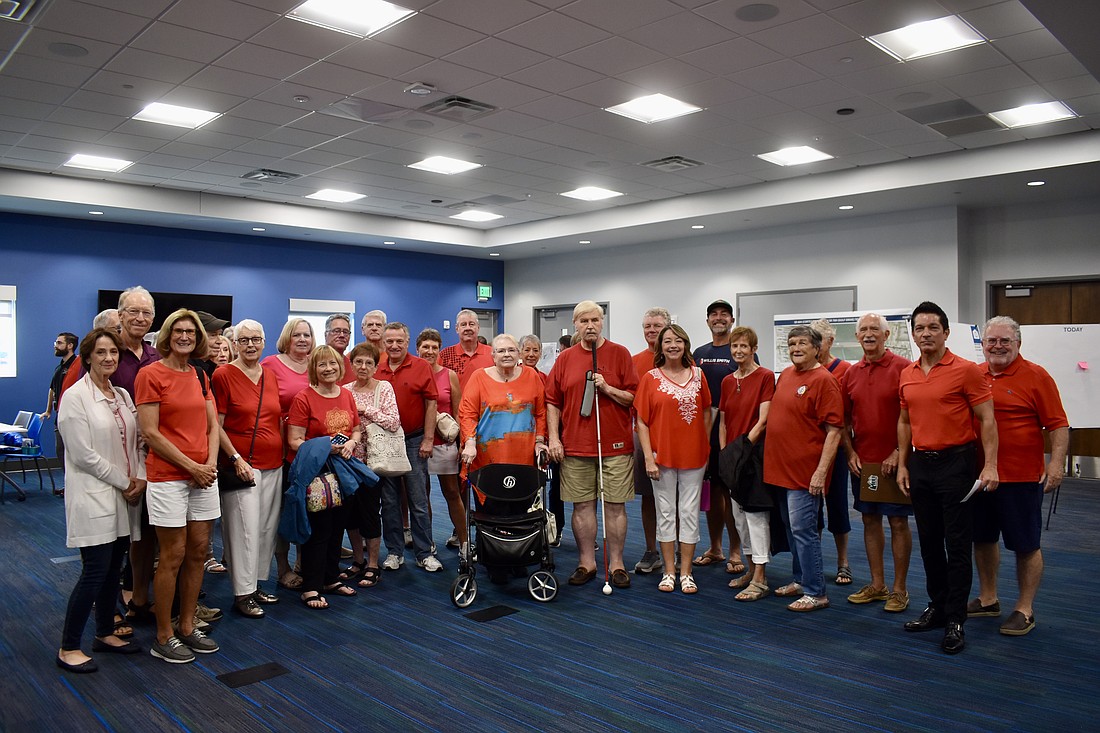
This plan was developed without the input of local stakeholders, and, not surprisingly, its recent rollout by county staff was met with a tsunami of resistance (“Is Ballfield Plan Bat Crazy,” East County Observer, 8/28/2025).
It's time to take a closer look before any further action is taken. The park’s proposed redevelopment deserves the careful scrutiny of Manatee County staff and the Board of County Commissioners, as well as the Florida DOGE audit team and the county’s newly formed Government Efficiency Liaison Committee.
The proposed plan is, quite simply, inappropriate for Country Club East Park.
Aside from preserves, Manatee County’s parks are categorized into one of four principal types: local, district, regional and special (e.g., boat ramps, etc.). Country Club East Park is designated as one of the county’s 24 “local” parks. What distinguishes these smaller parks from the others is their size, purpose and the population they serve.
According to the county’s master plan, local parks typically share certain identifying characteristics. They are generally located along streets people can walk or bicycle to, they tend to be small in both size and facility investment, and they provide open space or play areas for local residents within a radius of 1.5 miles. Ideally, they are located contiguous to a public school and feature recreation facilities that complement those of the school. Most importantly, these parks are designed to meet the “particular recreation needs of each neighborhood,” and incorporate compatible elements that “reflect the character of the neighborhood.”
Obviously, the competitive youth baseball complex that the county envisions for Country Club East Park does not match the characteristics of a local park, at least not as set forth in the county’s own master plan. Most critically, the proposed ballpark complex would not serve the needs of surrounding neighborhoods within a 1.5-mile radius, which are largely populated by retirees. Indeed, the proposed expansion of on-site parking is specifically designed to accommodate the needs of those residing beyond walking or cycling distance. Finally, the county’s vision would almost certainly not complement the recreational needs of the adjacent school, since parents were never asked for their input.
Instead, the proposed ballparks would transform Country Club East Park into a dedicated venue for competition among youth baseball teams at both the district and regional levels. Regional competition, spurred on by the advent of so-called “travel teams,” is currently surging across the nation, and, according to the master plan, approximately 40 to 50% of the participants in Manatee County travel teams live outside of the county. This clearly contradicts the county’s policy “to give priority to the needs of recreational and school athletic programs,” and, only “if capacity is available,” to accommodate travel programs.
If the county’s vision is realized, this policy will be turned on its head and the needs of local taxpayers will be pushed aside to accommodate families who don’t even reside in our community. Competitive programming of this type, involving a preponderance of external actors, belongs in a district-level setting, like Lakewood Ranch Park, that is large enough to provide a buffer between the noise, traffic and light pollution of athletic programs and local residents’ quality of life.
In developing its master plan, staff sought input from residents countywide, but more granular information is required to assess the particular needs and preferences of residents within the smaller geographic areas served by local parks. Not so long ago, Alexandria, Virginia faced a similar challenge, which it met by administering not one generalized survey—as was done in Manatee County—but separate surveys targeting the catchment areas for each of its 17 local parks. This approach enabled the City of Alexandria to develop a distinct vision for each of its neighborhood parks that reflected the specific preferences of local residents.
Going forward, Manatee County would do well to emulate that approach, administering locally based surveys to ensure that its vision fulfills citizens’ priorities and preferences. In the absence of such targeted data, authorities are forced to rely on the reactive responses of those impacted by ill-conceived—albeit, well-intentioned—policy initiatives, often in the form of protests, petitions, emails to decision makers, and the like. In the present case, all of these strategies have been invoked. Most notably, all but a handful of residents in the Country Club East neighborhoods adjacent to the park have signed petitions in opposition to the proposed redevelopment, and hundreds of Willis Elementary School parents have done the same. Manatee County clearly needs to move to a more proactive approach to policy and program development, ensuring greater citizen input at the beginning, rather than the end, of the process.
Ultimately, efficiency is about maximizing value to citizens per dollar spent. But that value is not only financial; it’s measured in healthier communities, safer neighborhoods and preserved quality of life. County authorities must recognize that efficiency cannot exist without citizen engagement and acknowledge the importance of ensuring that projects like this park’s redevelopment reflect both fiscal prudence and the will of the people.
–Darrel Drury, Country Club East