- March 19, 2026

-
-
Loading
Loading
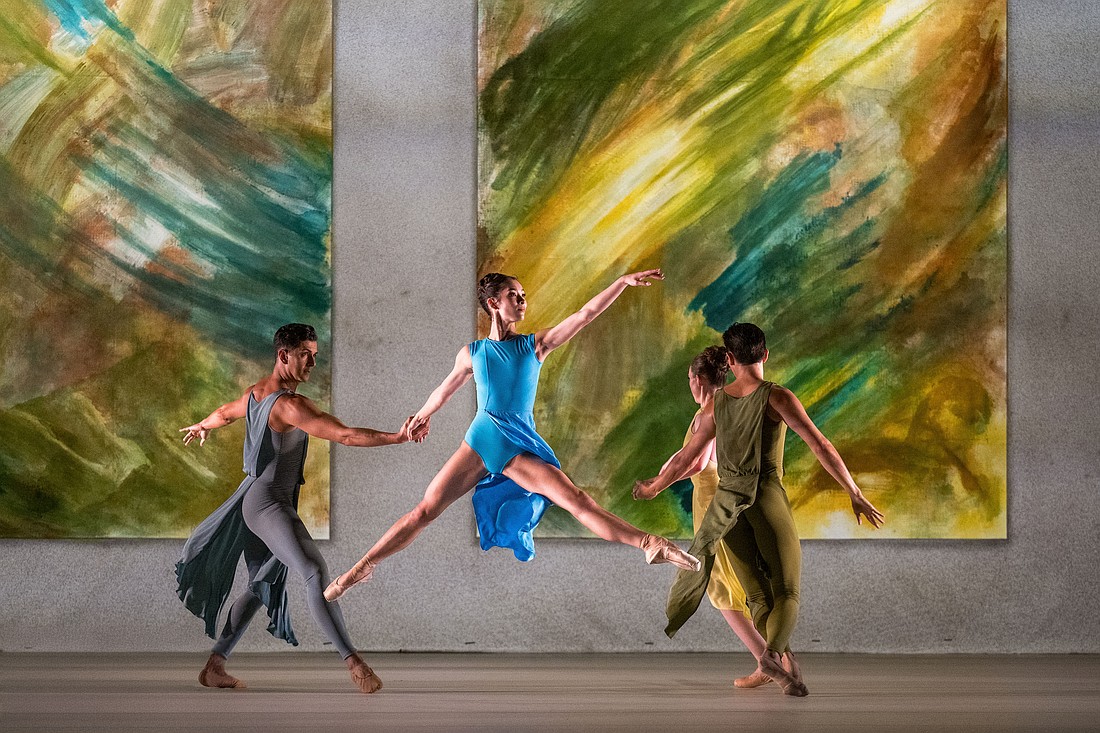
For Sarasota’s arts organizations, summer is supposed to be the slow season. But it doesn’t always turn out that way. Just ask Iain Webb, director of the Sarasota Ballet. Several of his principal dancers moved onto other companies or retired at the end of the 2024-25 season.
Then just two weeks after Webb took his world-renowned company to Jacob’s Pillow in July, a fatal workplace accident shut down the storied dance festival in the Massachusetts Berkshires for the rest of its summer season.
Sarasota Ballet wasn’t affected directly, but the tragedy was a reminder both of how fragile life is and how the unexpected can upend even a well-established cultural institution. Founded in 1933 by Ted Shawn for his modern men’s dance troupe, Jacob’s Pillow has since become a global dance center.
But through it all, Webb has never taken his eyes off the prize — planning a stellar season to prove that his jewel of a ballet company on Florida’s Gulf Coast shines as brightly as ever.
Webb says he was sorry to see the Sarasota Ballet dancers go, but that for him and his team, “it’s all about the company.” Following the departure of female principals Jennifer Hackbarth and Macarena Gimenez, Webb and his wife, Assistant Director Margaret Barbieri hired Misa Kuranaga as a principal guest dancer.
A former principal with the San Francisco Ballet who spent 16 years with the Boston Ballet, Kuranaga made her debut with Sarasota Ballet at Jacob’s Pillow. The company performed Jessica Lang’s world premiere, “The Lorenz Butterfly,” and two classics by Sir Frederick Ashton, the British choreographer whose works Webb and Barbieri have championed.
Kuranaga will play a leading role at Sarasota Ballet during its latest season, which kicks off Oct. 24-26 at FSU Center for the Performing Arts. Program One, titled “Intrinsic,” includes “Lorenz Butterfly,” Michel Fokine’s “Les Sylphides” and “Changing Light,” Will Tuckett’s ballet inspired by Sarasota’s (mostly) paradisiacal weather.
The departure of Gimenez and Hackbarth gives more room in the spotlight for principal dancer Jessica Assef, who joined Sarasota Ballet in 2023 from the Atlanta Ballet, as well as fellow principal Marijana Dominis and junior principal Sierra Abelardo.
Among male principals, the end of the season saw the departure of Maximiliano Gimenez, who left when his wife took a job as principal dancer with the Miami City Ballet, and Daniel Pratt, who retired.
Longtime Sarasota Ballet male principal and choreographer Ricardo Graziano is in fine form this season (leg surgery in 2023 sidelined him for more than a year), Webb says. Other male principals returning to the Sarasota stage are Ricardo Rhodes and Luke Schaufuss. Character principal Rick Bertoni will be back playing villains, often in heavy makeup.
As he sat down for an interview in the well-appointed corner office of Sarasota Ballet Executive Director Joseph Volpe, the retired general manager of New York’s Metropolitan Opera, Webb laid to rest any speculation about possible changes in the ballet’s executive offices.
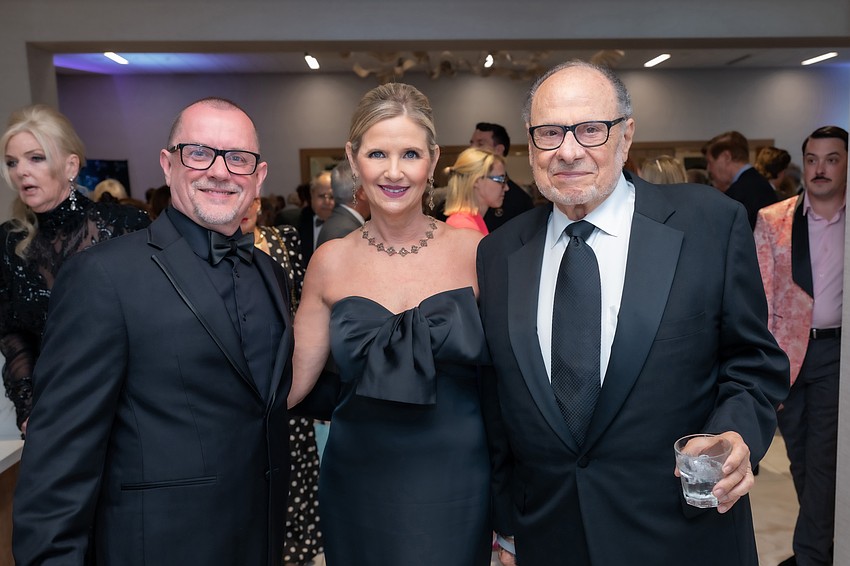
The Ballet recently promoted Michelle Butler to deputy executive director, a new position, from senior director of philanthropy. This promotion would appear to leave her well-positioned to succeed Volpe, but Webb says, “Joe’s not going anywhere.”
After ostensibly retiring to Sarasota, Volpe joined the Sarasota Ballet’s board in 2014 and was named executive director in 2016.
Like many would-be retirees who arrive in Sarasota, Volpe got pulled back into the professional world. His contacts and skills honed over four decades at the Metropolitan Opera have helped Webb and Barbieri, both veterans of London’s Royal Ballet.
The troika has led the Sarasota Ballet to the heights of the global dance world, culminating in a June 2024 residency at the Royal Opera House in London’s Convent Garden as part of an “Ashton Celebrated” program.
In addition to returning home with rave reviews from London dance critics, Webb brought back the 2024 British National Dance Award for Outstanding Achievement, named for Dame Nanette De Valois, founder of the Royal Ballet.
So what is the secret to Webb’s success? Although ballet is traditionally associated with full-length productions such as “Swan Lake,” “Giselle” and the holiday-themed “Nutcracker,” Webb says he leans toward programs with three short dances and one or two intermissions. This approach plays well into the shorter attention spans of modern audiences who can’t bear to stay off their mobile devices.
Season after season, Webb has created a dazzling, variegated mix of programs demonstrating his creative virtuosity. Besides carrying the torch for Ashton, whose wide-ranging repertoire ranges from full-length ballets to short, whimsical divertissements, Sarasota Ballet has made a name for itself by commissioning exciting new works from leading choreographers such as Jessica Lang, Ashley Page and Gemma Bond.
The Ballet has also looked in-house and cultivated the choreography talents of principal dancer Graziano, who was the company’s resident choreographer for a decade.
In January 2024, Graziano was honored for his 10-year service with a tribute program. It included a world premiere he developed during COVID-19, “Schubert Variations,” as well as his widely acclaimed “In a State of Weightlessness,” which premiered at the company’s first appearance at Jacob’s Pillow in 2015.
So it’s not just Ashton’s golden oldies that have elevated the Sarasota Ballet’s international reputation. Relying on his vast network of contacts and friends like Sir David Bintley, former artistic director of the Birmingham Royal Ballet of England and a prolific choreographer, Webb takes an opportunistic approach to programming. He picks up the rights to ballets and buys costumes and sets when they are available at an attractive price, storing them for future seasons until the time is right.
“Putting together a season is like piecing together a puzzle,” Webb says, finding an apt metaphor for his job.
The perfectionist in Webb keeps him searching for the right combination, even after preliminary marketing materials go to press. Webb originally planned to lead Program Two, “Written Motion,” on Nov. 21-22, with a world premiere by Ashley Page. Instead, he is closing with it.
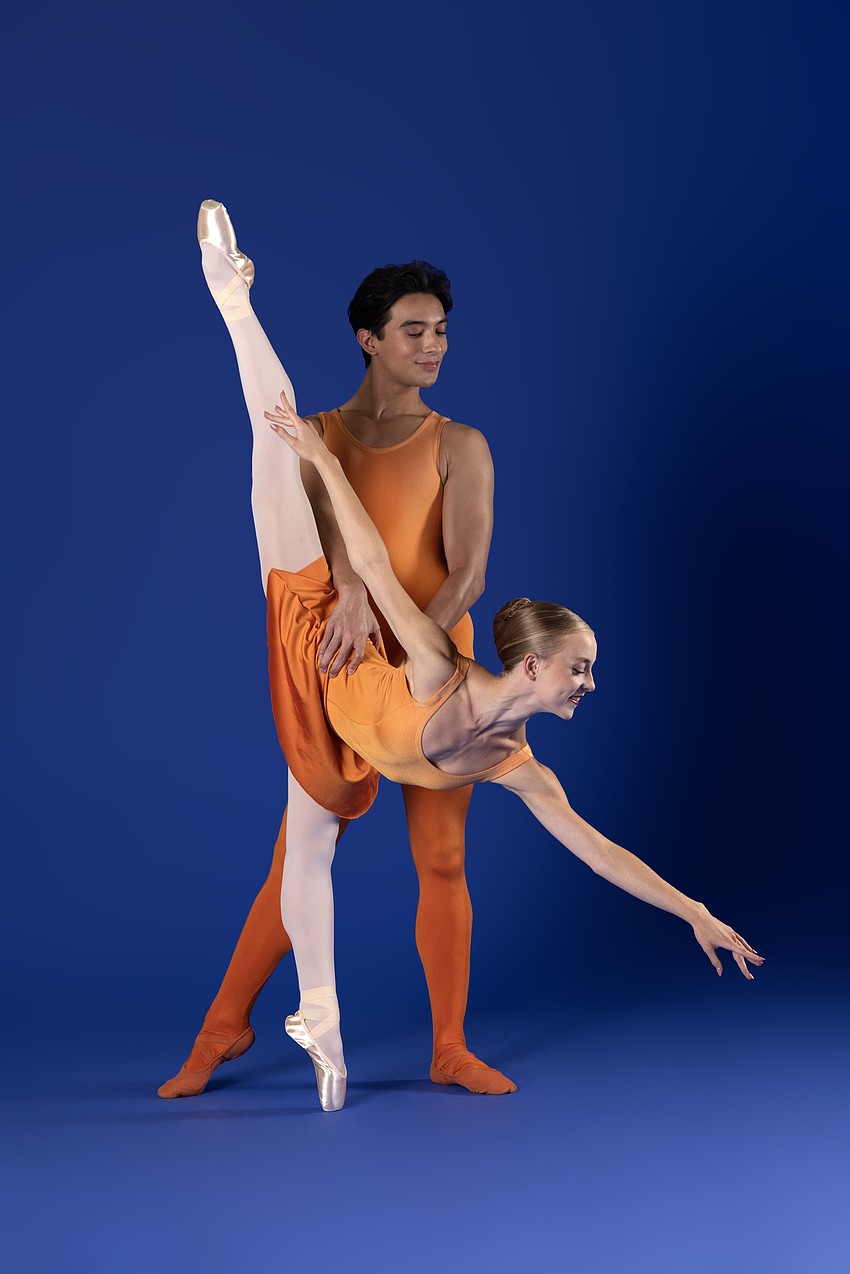
Program Two’s opener is now Ashton’s “Valses nobles et sentimentales,” which replaced Ashton’s “Illuminations.” Mark Morris’ “The Letter V,” which was to be the closer, will now be the middle dance of the program.
Webb says his first consideration in creating a season of seven programs (there are “extras” featuring visiting companies with boldface names like Martha Graham, Paul Taylor and Mark Morris and student dancers), is the availability of stages.
“Since we dance on three different stages — the Sarasota Opera House, FSU (Center for the Performing Arts) and Van Wezel (Performing Arts Hall), I first look to see which are available and what the dates are,” Webb says.
The Van Wezel has both the largest stage and the most seats (a little over 1,700), so it is where Sarasota Ballet stages full-length ballets such as last year’s triumphant production of Ashton’s “Romeo and Juliet,” delayed for five years by COVID. Such full-length ballets call for the largest sets and the greatest number of performers. Including apprentices, there are about 45 dancers in the Sarasota Ballet.
For the 2025-26 season, only two ballet will be at the Van Wezel. Program Six, “Life and Liberty,” will be held at the “Purple Palace” on March 27-28, 2026. In honor of America’s 250th birthday, the program features George Balanchine’s “Stars and Stripes” with patriotic music by John Philip Sousa. Also on the bill is Sir David Bintley’s zebra-infused “Still Life at the Penguin Café” with music by Simon Jeffes.
The Sarasota Orchestra will play live during Program Six, as it does at most performances. Live music is a luxury unknown to patrons of many other regional ballet companies.
Anniversaries like America’s 250th and birthdays of choreographers often figure into Webb’s puzzle as he schedules a season.
Since joining Sarasota Ballet in 2007 and 2012, respectively, Webb and Barbieri have leaned heavily into the works of Ashton, considered the father of the English ballet style. Ballet companies around the world are celebrating Ashton’s legacy from 2024-28, which is what prompted Sarasota Ballet’s London residency.
At Sarasota Ballet, Ashton’s works are staged by Barbieri. She learned at the hand (and foot) of “Sir Fred,” as he is fondly called, when she was a principal dancer for Royal Ballet.
When a choreographer creates a ballet, they handle a dancer the way an artist molds clay, twisting limbs to achieve his steps. The moves that sum up a ballet were first recorded with a notation system.
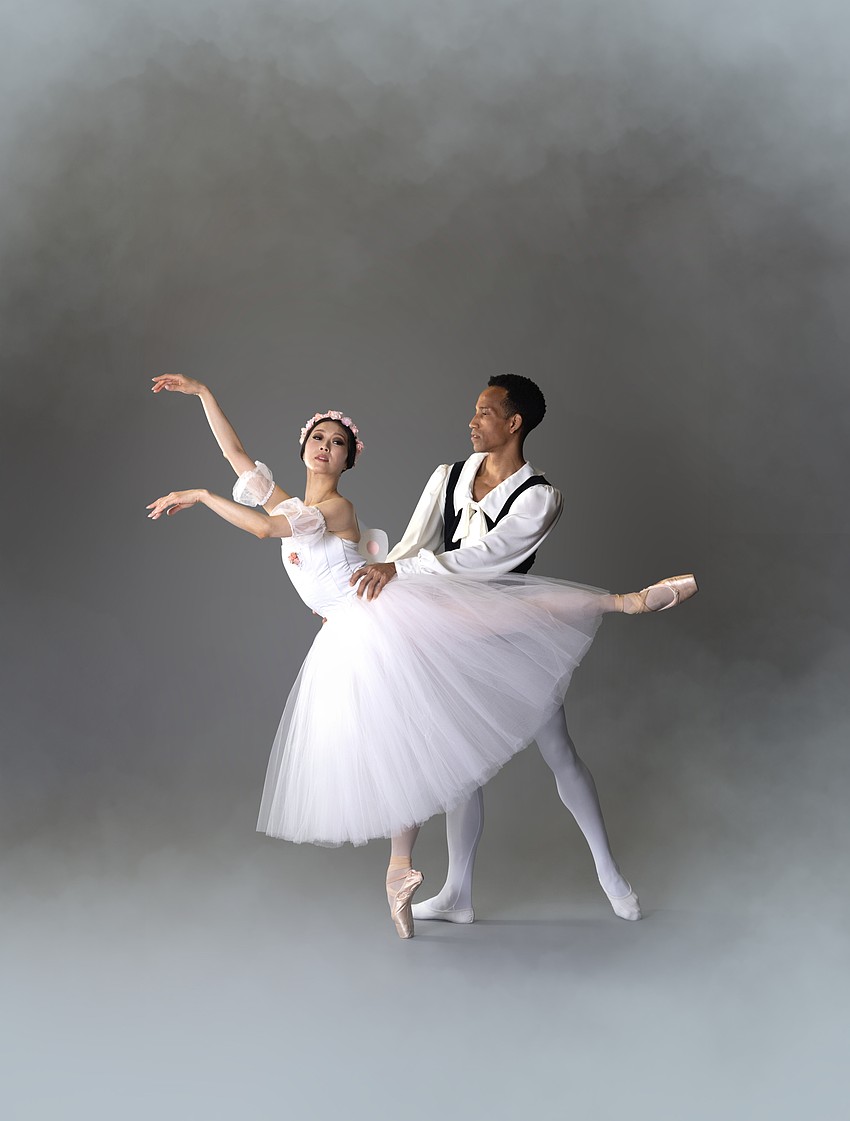
In modern times, choreography has been preserved through video and digital recordings. But the repertoire of choreographers like Ashton and Balanchine is still transmitted directly to the next generation of dancers by specialists known as répétiteurs.
When Sarasota Ballet performs an Ashton ballet, it is Barbieri who plays this role. When it stages ballets by Balanchine, whose athletic, commanding repertoire still dominates American ballet, ithe company uses répétiteurs authorized by the George Balanchine Trust such as Sandra Jennings and Philip Neal.
To prepare for Program One’s “Les Sylphides,” Barbieri will pass down the knowledge she acquired from prima ballerina Alicia Markova, who coached her when she performed the romantic reverie. Markova was coached by choreographer Fokine himself when she danced the role.
In an article for Sarasota Ballet’s 2025-26 season playbill, noted dance critic and performing arts historian Alistair Macaulay writes that Barbieri is “passing on the details of arms, of line, of footwork of eyes. These are details that transform academic ballet into expressive style and into artistry.”
Few outside the ballet world understand the demands placed on répétiteurs, who are too often unsung heroes. At Sarasota Ballet, much of Barbieri's work takes place behind the scenes. It is the dancers who shine in the spotlight.