- March 19, 2026

-
-
Loading
Loading
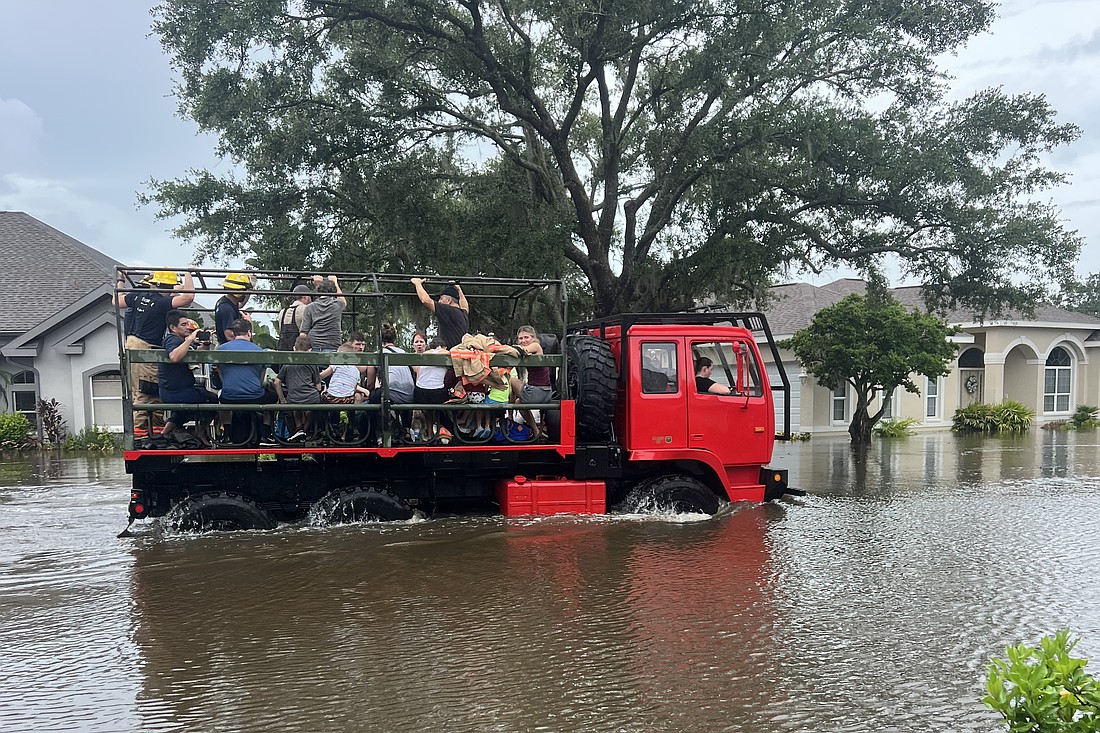
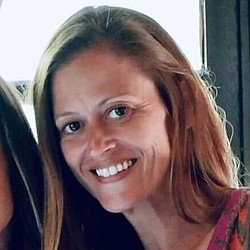
It’s been over a year since flooding from Hurricane Debby destroyed much of Jill Sauchinitz’s home in Summerfield Bluffs.
Her home has been restored, but her faith in Manatee County’s stormwater operations is not quite there yet.
Sauchinitz said she felt “deflated” after watching commissioners discuss a possible stormwater program during a special work session Oct. 8.
“No one was on the same page,” she said. “It just didn’t give me any hope.”
Commissioner Carol Felts was against charging citizens a fee for the program. Commissioner Tal Siddique was concerned about the effects of too much dredging on his coastal district, and Sauchinitz's district commissioner, Bob McCann, couldn't attend.
While not present at the meeting, McCann has been in touch with Sauchinitz to inform her of smaller things the county is doing to protect her Summerfield community in the meantime.
Another lift station is being installed in her neighborhood, and the county is replacing a gauge on the Braden River that was removed by the U.S. Geological Survey because of funding cuts.
In regards to an overall stormwater program, McCann told the East County Observer that he doesn't like the idea of putting another tax on residents when the county is already holding so much money in reserves.
While Sauchinitz wants to see county stormwater operations taken over by a stormwater management district, the county's staff is proposing a countywide stormwater program instead.
The work session focused on how to fund such a program.
Director of Public Works Chad Butzow gave the presentation to commissioners with the caveat that he was “gun shy” from “battle scars” left in 2019 when a prior attempt to implement a stormwater fee was shot down by residents.
When Felts was running for her District 1 seat in June 2024, she told the East County Observer that defeating that stormwater fee made her realize citizens could “make a difference.”
At the time, she and some of her Myakka City neighbors felt the calculation of the fee was unfair to rural residents. She didn’t want the county to charge a fee then, and her stance has not changed now that she is on the other side of the dais.
“I’m not comfortable going to my constituents and asking them to fund something that we could find the money for somewhere else,” Felts said.
Felts suggested increasing development fees near environmentally sensitive lands or funding “one less pickleball court, which is an impervious surface.”
In general, she said it’s time to cut “some frivolous stuff.” She posed a suggestion to all county departments to cut back on something and posed a question to residents: What are you willing to give up so that your streets and houses don’t flood?
“They’re going to want to give something up,” Felts said.
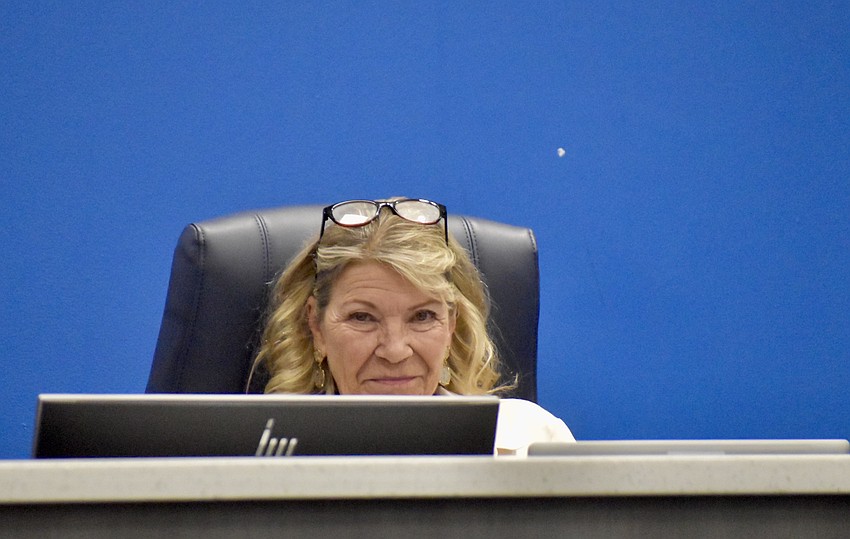
Sauchinitz said she’s lost enough already.
“Why should anyone have to give up anything?” she questioned. “I’m looking for the support of the county to come together and say something needs to change.”
After $140,000 in damages, Sauchinitz will gladly pay a stormwater fee. She pulled up the calculator on her phone — $500 a year from each property owner would be $41 a month. And the county is proposing less than half that amount.
Anthony Sciullo spent $300,000 making repairs to his small farm in Parrish after Hurricane Debby flooded it. Luckily, his home stayed dry.
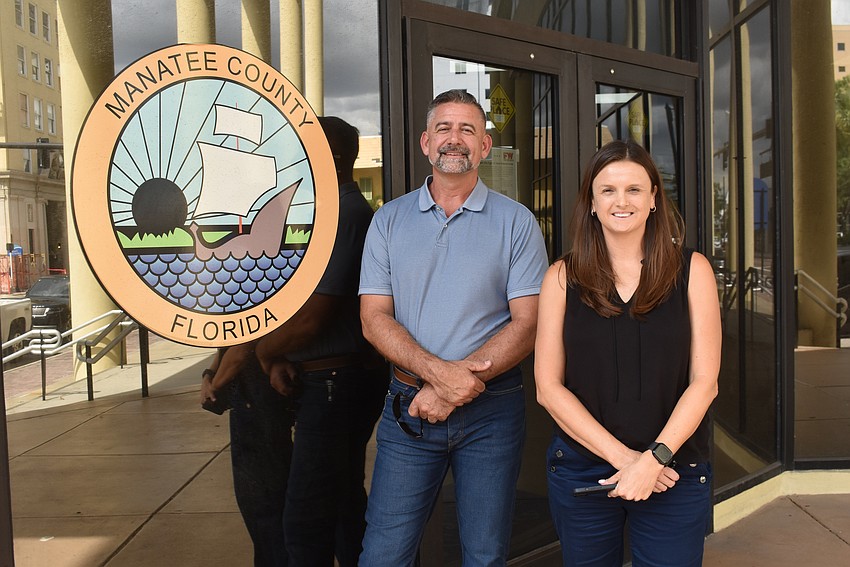
He’s not opposed to paying a stormwater fee either because “we’re all in this together,” but he said the county should evaluate where its current utility revenue is being apportioned before seeking additional funds.
Commission Chair George Kruse took issue with Felts suggesting that the staff could find the funding within the county’s current budget. Potential annual funding needs are estimated at $41.4 million, which is a $20 million increase over the county’s current budget.
“There is no money in our back pocket,” Kruse said. “We are now in a new fiscal year. That budget is now done, so that is not the option on the table until the next fiscal year.”
The county doesn’t have a set plan in place, but an additional $20 million could pay for more frequent maintenance of the 545 canals and 334 ponds the county maintains now and add even more to the list.
The additional funds could expand the current staff of 63 workers and purchase additional equipment. It could also cover outside contractors as needed.
The timeline right now is for staff to bring back a stormwater program that would be “close to something that could be voted on for adoption and implementation” next summer, Butzow said.
In the meantime, a series of work sessions and community meetings will be held to keep the public informed.
Butzow stressed the importance of letting the public know that this program is something that will “affect their pocketbooks.”
Staff laid out two options of how citizens could cover a $41.4 million stormwater program — either dedicate .58 mills to stormwater or charge each homeowner an Equivalent Residential Unit fee of $15.60 a month or $187 a year.
An additional .58 mills on a $400,000 home works out to $232 a year.
But the major point Butzow made during the presentation was that the plan has to be guided by policy. He laid out six decisions that will have to be made prior to the creation of a stormwater program:
Each topic will go before the commission separately for discussion starting in January 2026. The topics will be presented to the public about a month prior through one in-person meeting and one virtual meeting.