- March 19, 2026

-
-
Loading
Loading
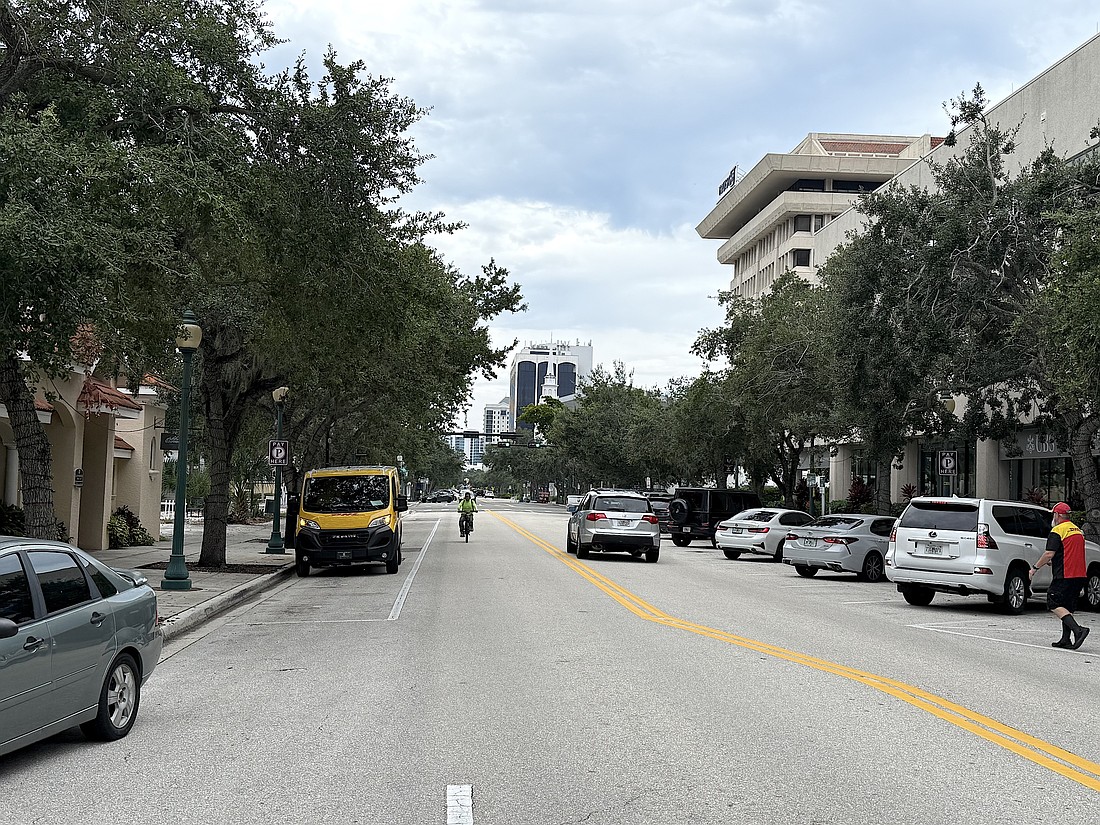
Visioning for a reimagined Main Street is now complete, and thanks to a 4-1 vote of the Sarasota City Commission on Sept. 2, design and engineering can begin.
Citing concerns expressed by downtown merchants over sacrificing perhaps upwards of 100 angle parking spaces in order to enhance the downtown pedestrian experience, Commissioner Jen Ahearn-Koch was the lone dissenting vote to send the community vision for Main Street to the planning and design phase with land use firm Kimley-Horn.
The presentation of the visioning phase for the 1.2-mile project between U.S. 41 and School Avenue was the culmination of a year of public engagement to gather feedback via the project website, door-to-door canvassing of businesses, mapping, surveys, social media, tables at public events, workshops, open houses, stakeholder meetings and two surveys.
Distilling that data into the vision for the future of Main Street took another year for Chief Transportation Planner Alvimarie Corales and Senior Transportation Planner Corinne Arriaga to produce the 442-page document providing the canvas for the planning and design phase, which can take another two years to complete.

“The purpose of the Main Street Complete Street vision plan was to establish design elements and concepts that continue to support downtown Sarasota,” Corales told commissioners. “The goals were to engage residents, businesses and visitors to develop a cohesive vision, identify opportunities to enhance safety, accessibility and mobility, and investigate opportunities for the public realm, streetscape and right of way improvements.”
Envisioned is a variety of treatments for the diverse nature of five segments that comprise the length of the project, each occupying a number of city blocks. The common thread, though, is to enhance walkability with wider sidewalks, providing more shade with street trees and provide opportunities for a temporary pedestrian mall by closing streets with embedded bollards — think Lincoln Road in Miami Beach, for example.
To accomplish all this, though, requires converting angled parking spaces to parallel spaces in a number of locations, an idea that sets the stage for debate between the dueling concepts of perceived convenience vs. walkability related to which is best for retail business.
Many downtown merchants, Ahearn-Koch said, insist that losing parking spaces directly outside or near their shops will be detrimental. No representatives of the business community spoke at the hearing. Ahearn-Koch was alone in her assessment among the commission, though, as her colleagues maintained creating a more vibrant, walkable environment generates greater foot traffic vital to retail activity.
And besides, said Mayor Liz Alpert, the odds of a customer finding an open parking space just outside their destination is a rarity.
“Businesses thrive on foot traffic,” Arriaga said while addressing Ahearn-Koch’s concern. “Where they park doesn't necessarily have to be in front of their business. That doesn't have any economic benefit. It's more about the people walking by their shop seeing what's in there and wanting to go in and explore.”
Downtown also suffers from a lack of destination chain retail, Commissioner Kyle Battie said, in part because — while the collection of one-off restaurants and independent retail is appealing — Main Street doesn’t present a true pedestrian-friendly environment.
“You look at places like the mall. You park in the parking lot and where you're going shopping is damn near a mile away,” Battie said. “If you go park at St. Armands Circle, you're walking everywhere. Very rarely are you going to be able to park right in front of where you're going to be.”
Downtown, however, isn't a mall and retail customers who go there are often targeting a specific merchant rather than perusing a wide swath of retailers. And pushing them toward parking garages, said long-time Downtown Improvement District board member Eileen Hampshire, won't work.
"Women won't go into garages and ride in the elevator with strange men and all that," Hampshire, owner of luxury rug store Art To Walk On, told the Observer. Her store is near the intersection of Palm Avenue and Main Street.
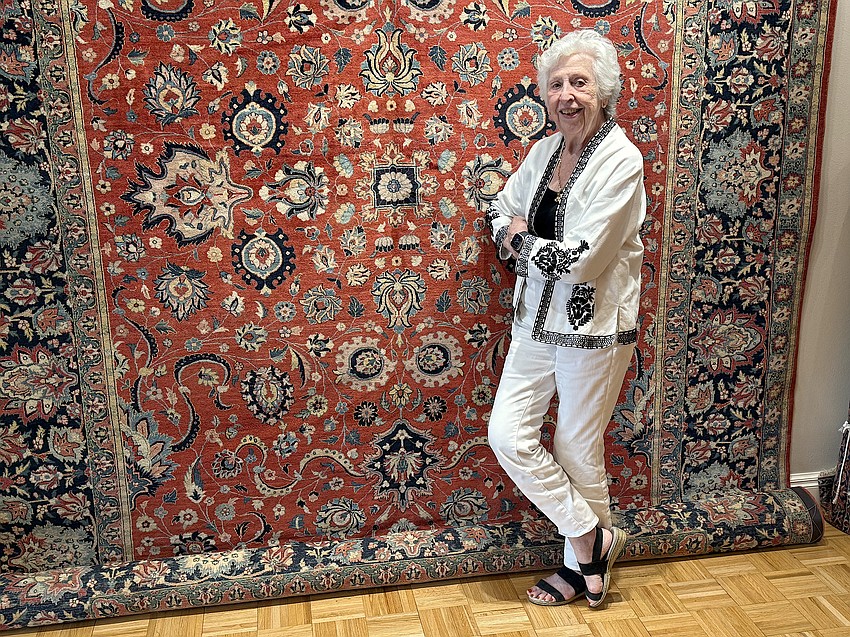
Making customers walk several blocks, she said, is also an unrealistic expectation.
"You can say, 'oh people should walk.' Well, maybe they should, but they don't," Hampshire said. "I've got seven parking places behind my store, but for the other people on the street, we've lost a lot of them. They just couldn't make it without parking. So if you want shopping downtown, you have to have good parking. We're certainly not a city of walkers."
As the No. 8 priority in the 2020 Sarasota in Motion plan, the Main Street concept including converting all angle parking to parallel, widening sidewalks, landscaping enhancements, consideration of a pedestrian mall at certain locations and safety improvements. It identified the project limits between U.S. 41 to U.S. 301, since expanded east to School Avenue.
Two decades earlier, Main Street was identified in the Downtown Master Plan, which is currently under update review by a commission-appointed committee, as a walkable environment. In 2018, it was identified by the Sarasota-Manatee Metropolitan Planning Organization as a high-crash location, having more than 250 angle parking-related crashes within a five-year period.
That was followed by the two-year visioning process beginning in 2023.
“With all of this information, we created the vision for Main Street, and that was a walkable, inclusive Main Street that supports local businesses and preserves historic character while balancing current and future community needs,” Corales said. “This vision has these key features — wider sidewalks, improved landscaping, integrated street amenities, accessible parking and adaptable design solutions.
“What we did was strike a balance. We looked at what the community wanted, what the businesses wanted, what the merchants wanted.”
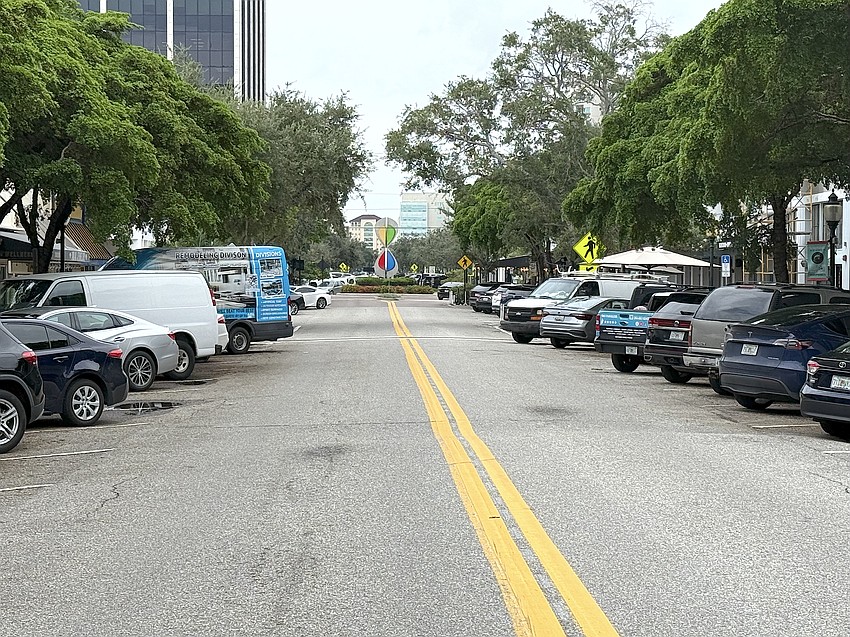
What the merchants want, Ahearn-Koch insisted, is a convenience for their customers to park in front of their shops, particularly along “lower Main” between Orange Avenue and U.S. 41. That section on the concept maps shows a mix of parallel and angle parking on each block between Gulfstream and Pineapple avenues, which will remain the same as it is today with the 34 existing spaces. Improvements there will be limited to utility work and lighting.
Any parking changes on lower Main will occur only between Pineapple and Orange avenues, consistent with most blocks the remaining length of the project.
“Parking is a big, big, big issue for the merchants,” Ahearn-Koch said. “They have major concerns about how that's going to impact their businesses and I really have to heed that.”
Sarasota in Motion, Corales reminded commissioners, recommended converting all parking along Main Street to be converted to parallel spaces. The vision plan, she said, represents a compromise between the public preferences and the merchants’ needs.
“In listening to the businesses and the merchants, we needed to strike that balance, so we created different concepts,” Corales said. “Some sections you will see a combination. Some sections you will see all parallel.”
In addition to creating a more pedestrian-friendly environment, Battie said a reduction in street-side spaces will push parking into city-owned parking garages, specifically the State Street Garage at mid-Main and the Palm Avenue Garage at lower Main, each about one-half block from Main Street.
Both are under-utilized, he said, bolstered by the data supplied by Corales. Parking analyses conducted during season in November and March during weekdays and weekends, she said, ranged from 45% to 55% capacity, depending on the day. In all, the city controls approximately 2,000 parking spaces in the downtown area. Some 1,300 of those spread among the State Street and Palm Avenue garages and the private garage across from Whole Foods between First and Second streets, of which two floors are leased by the city for public parking.
“That means that if you take the bigger number, 45% were unoccupied,” Corales said of the parking study. “That was in our peak times, and that was during our season.”
Harmoni Krusing, DID board member and owner of women's clothing boutique Lotus at 1464 Main St., said the parking analysis was not conducted during peak season, and that parking in the Whole Foods deck and State Street Garage are regularly full by midday. As for the Palm Avenue Garage, "Forget it," she said. "Nobody is walking here from there.
"We can't afford to lose one parking space. We don't have enough parking as it stands. Could our street use a renovation? Yes, but removing 100 spots is crazy to me. The locals do not want to park in garages. They want to park on the street during the summer because it's close."
As the design and engineering work moves forward and, as Vice Mayor Debbie Trice pointed out, more public input is involved. Design work will take another two years before any construction may begin, presuming funding is available.
“They're going to get a lot of more input from the public and I've got confidence that they will incorporate the parking issues,” Trice said.