- March 19, 2026

-
-
Loading
Loading
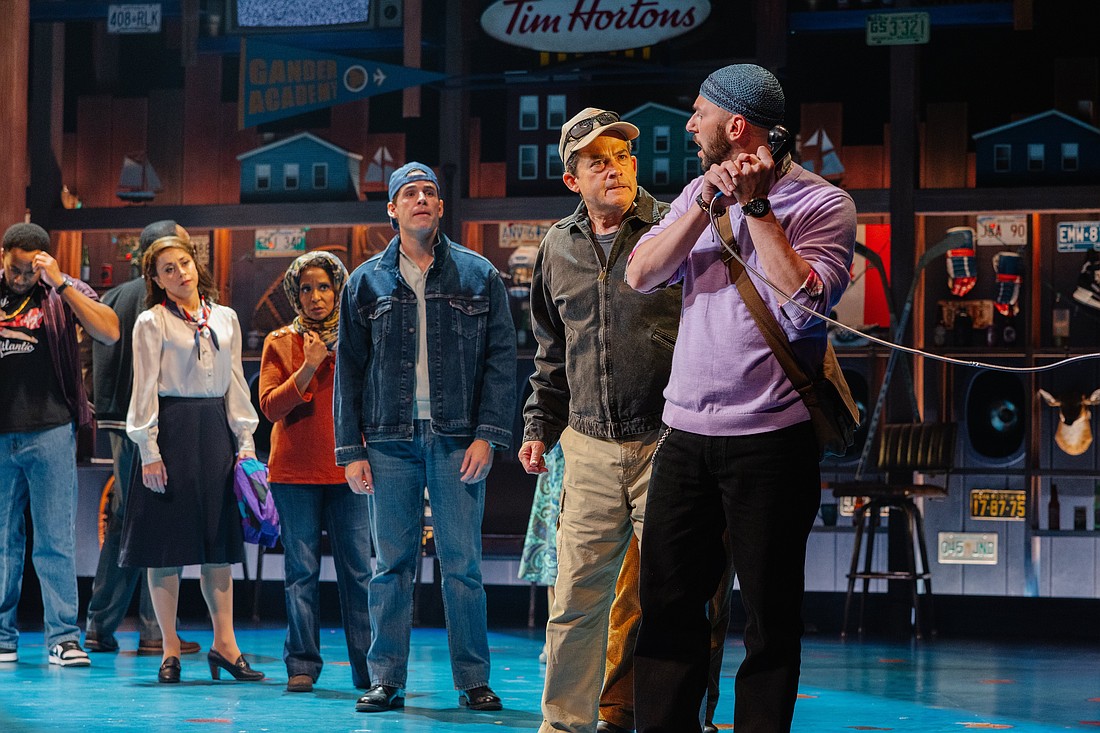
The attacks of Sept. 11, 2001, changed everything — including flight plans. Thirty-eight American-bound planes were diverted to the tiny town of Gander, Newfoundland. The passengers got off the plane — without any luggage. (Authorities feared explosive devices.)
When 7,000 uninvited guests arrived, the Gander locals could’ve resented them. But they welcomed the strangers — feeding, housing and comforting them. This act of “radical hospitality” was a ray of light in very dark times. It inspired Irene Sankoff and David Hein’s hit Broadway musical, “Come From Away” (2015). The tale has arrived on the Asolo Repertory Theatre stage, under the direction of Peter Rothstein, Asolo Rep producing artistic director. In our recent talk, he shared why the kind people of Gander still inspire us all.
Yes. I read an early version about five years before it reached Broadway and was immediately taken with it. It was quite a different show — with two acts and an unusual structure — but I knew it was special. It’s been on my bucket list ever since. When the rights became available, I wanted to be first in line.
Because I’m drawn to documentary musicals with such uplifting stories. That’s why it’s so exciting that we’re running “All Is Calm” and “Come From Away” in repertory now. They both shine a light on the best of humanity in the worst of times.
The musical does that for me. That’s the magic of “Come From Away.” It’s a tragic story. It’s a joyful story. Sankoff and Hein don’t try to resolve that contradiction. They just tell the story.
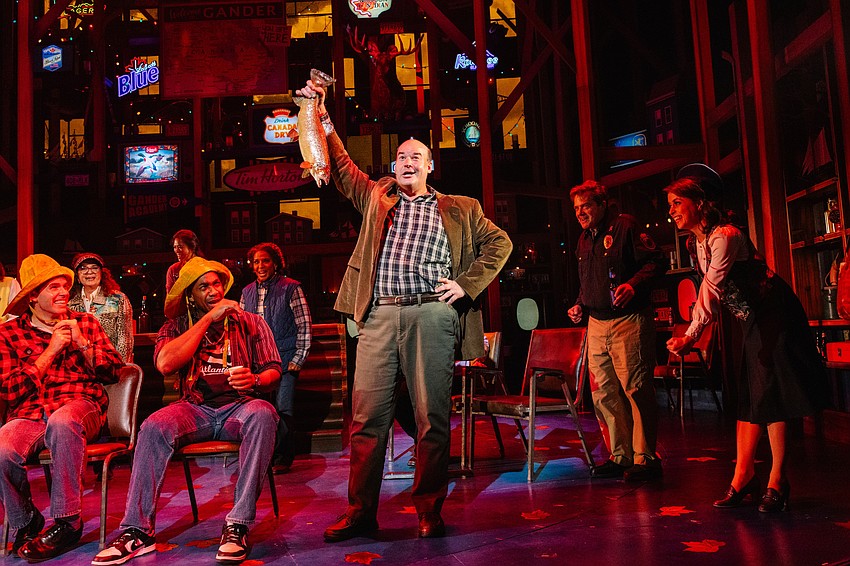
We’ve incorporated live-feed news video of 9/11 — including a clip of Sarasota’s own connection, when President Bush was at Booker Elementary and his chief of staff whispered in his ear. That historical footage underscores the gravity of this attack. It creates a documentary feel. But this musical is also incredibly funny — because joy was part of that week, too. I don’t remember laughing so hard in rehearsals; there’s so much joy and humor, but also deep emotion. When audiences laugh with our characters, the tragedy lands even harder. Laughter builds empathy. Once you feel you know these people, their pain becomes your own.
I think they’ll really hit home. Most of our patrons remember exactly where they were on 9/11. And Sarasota has its own connection. The cast met local people who were there — airport staff who serviced Air Force One; journalists like Linda Carson; and the educators at Booker Elementary. So, the story is deeply personal in Sarasota. And the timing is beautiful. Whether you celebrate Christmas, Hanukkah, or Kwanzaa, the musical’s themes — radical hospitality, welcoming the stranger, and seeing the goodness in everyone — fit the season perfectly. It’s not a holiday show, but it speaks to the spirit of every holiday. At its heart, “Come From Away” celebrates ordinary people doing extraordinary things. That’s timeless.
It’s been an intense process. Each actor has multiple roles and accents — British, Texan, and, of course, Newfoundland, which is a language all its own. Last month, I went to Gander. I understood about half of what the people were saying, I even bought an 800-page Newfoundland dictionary. The characters are all based on real people. To honor that, we spent weeks finding authenticity and subtle distinctions. We make sure each voice, gesture and costume shift reveals a new person without turning them into a cartoon.
Patricia McGregor, our dialect coach, is amazing. She provided real-world sources and helped us navigate the bit of dialogue where the writers took artistic license. Some characters are composites of several real Newfoundlanders. That gave us the freedom to make creative choices while still honoring the truth of those characters. We filled in the blanks and built contrasts that felt human, not artificial.
I envisioned the entire production inside a rural Canadian sports bar. I grew up in northern Minnesota — hockey country — so that felt natural to me. A bar is the perfect symbol of unpretentious hospitality. But we backed that up with research. And a field trip.

Well, we visited Gander’s real hangouts, especially the Moosehead Lounge. Knotty-pine walls, a moose head above the bar, dartboards, pool tables — that became our visual vocabulary. We filled the set with hundreds of authentic objects: postcards, photos, souvenirs. Someone joked we should add a “find-the-object” list in the program! The original Broadway staging used 12 chairs and two tables. We’ve added much more specificity — physical items from the world of Gander that root the story in a real place while creating our own distinct production.
Very much so. But that’s what we do! Theater is built for reinvention. No one’s dared to remake “The Wizard of Oz” as a film, but onstage reinvention is the rule. Our production honors the original text and score but brings new staging and design. In the spirit of hospitality, the entire front of the stage is an actual bar. The band plays live for 30 minutes before curtain while the audience can walk onstage, order a Canadian beer or whiskey, and mingle in Gander’s warmth before the story even begins.
It flows like life, from one scene into another. Ian Eisendrath, who was the original music director and orchestrator, is a friend. And his arrangements are just brilliant. Most of “Come From Away” is underscored — there are only two applause breaks. The sound is uniquely Newfoundland — Celtic rock fused with Broadway drive. You’ll hear bodhráns, Irish whistles and the rhythmic pulse of folk tradition. That blend of Irish roots, contemporary rock and musical-theater craft is the show’s heartbeat.
Because it’s more poignant than ever. Our country feels so divided now — but this story transcends politics. No matter your ideology, you can’t poke holes in the humanity of a town that doubled its population in three hours to care for 7,000 strangers. When the world feels dark, this show reminds us of the light we can create. “All Is Calm” depicts extraordinary heroism in war. “Come From Away” celebrates everyday heroism — acts of kindness like volunteering, feeding the hungry, and welcoming the stranger. That’s within everyone’s reach.