- March 19, 2026

-
-
Loading
Loading
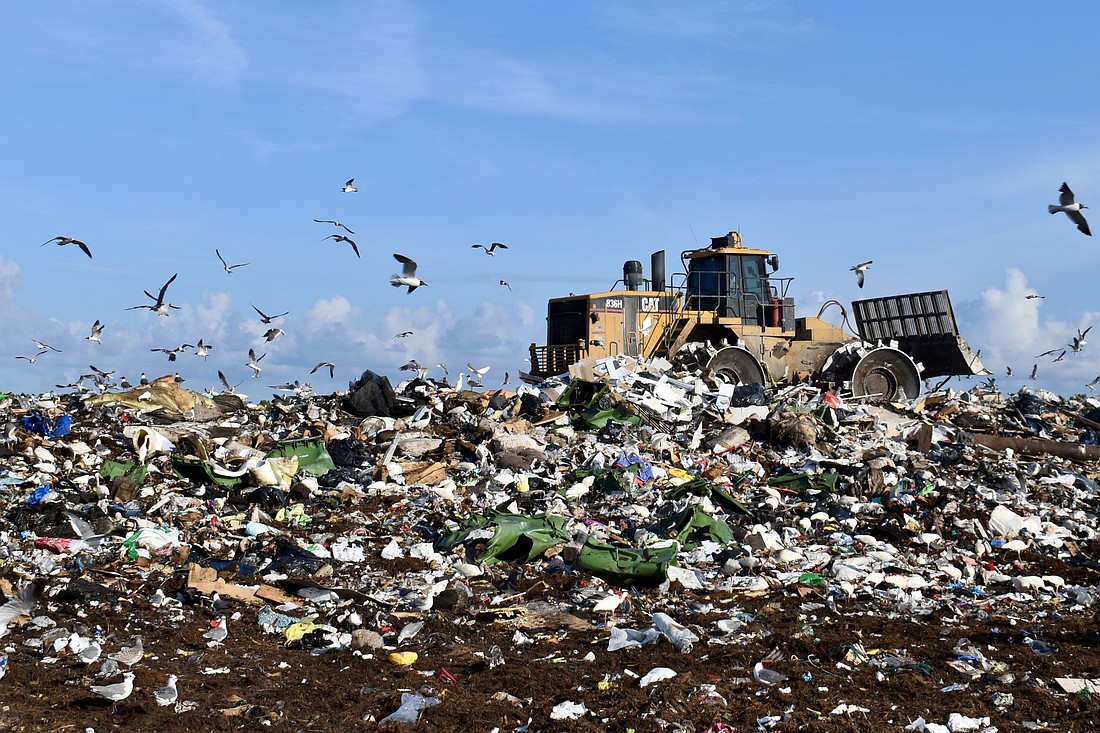
When Anthony Detweiler, Manatee County's superintendent at the Lena Road Landfill, started working at the landfill 22 years ago, the piles of garbage were measured using basic equipment — a measuring tape and a level.
“We’d take a big PVC pipe and put marks on it,” Detweiler said. “That’s where we’d fill our lifts (a 10-foot layer of waste) to. We didn’t know any different back then.”
Now, the process of compacting garbage barely requires human input. Instead of the drivers eyeballing massive piles of waste to try to achieve the perfect compaction and slope, the bulldozers are equipped with technology that guides the drivers' every move.
Detweiler said the skill of the operators doesn’t matter much anymore. The system is programmed to know exactly where the bulldozers need to place each shovel of garbage for the most efficient compaction, which can impact both the longevity of the landfill and its budget.
Fill dirt is expensive. The county has about $2.5 million worth of it between the two closed landfill cells. Cells are the areas where the waste is contained. The Lena Road Landfill has three cells, but only one is in operation.
An operator can’t waste fill dirt now if the system is programmed correctly. It knows that exactly 18 inches of dirt needs to top off the final slope of a cell. Elevation and density readings let the system know when the 18 inches have been added and if the pile is at its maximum compaction.
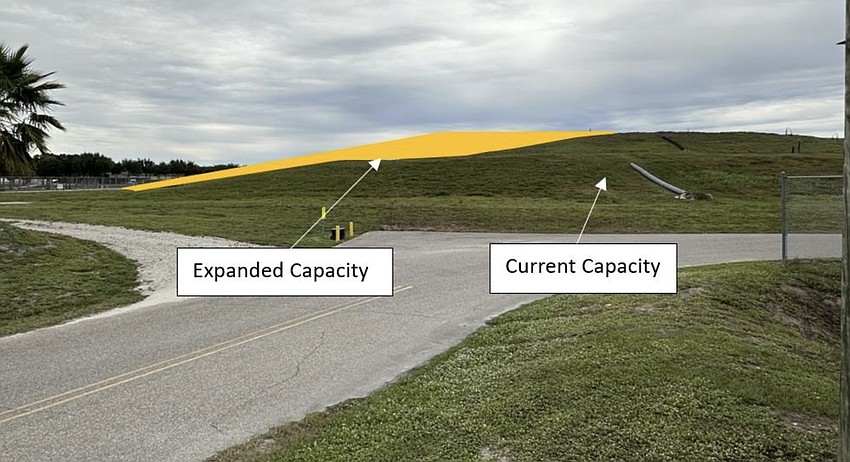
Slopes are an important measurement in a landfill because they dictate how the airspace is used. Adjusting the cells from a 4:1 slope (every four units you move horizontally, you rise one unit vertically) to a 3:1 slope will extend the life of the Lena Road Landfill through 2057.
The slope modification was approved by the Florida Department of Environmental Protection in May, and the landfill is now anticipated to remain open until mid-2057.
In 2023, the landfill only had about 15 years of life remaining.
In order to extend the landfill’s life, the two cells that were closed will be reopened and reconfigured with the new 3:1 slope. The fill dirt will be removed and set aside for future use.
Deputy Director of Utilities Chris Collins said he can’t say for sure how soon the latest cell will fill up, but he anticipates planning will start over the next five years to decide how to best handle reopening the first two cells.
The overall county property, where the landfill and the wastewater plant sit, is about 1,200 acres. The cells take up 316 acres.
When the landfill first opened in 1972, it was less than half that size with just 132 acres of dumping ground.
Collins said the way the cells are filled and sloped will change, but the actual footprint of the cells will remain the same.
Extending the lifespan does not require using any additional acreage or building up the height.
Within the closed cells are unused areas called "terraces," which are flat sections built into the landfill’s structure.
Communication Coordinator Tina Moutoux Saldaña likened a cell to a massive, layer cake with wide steps.
"Some of those steps had gaps that weren’t being used," she said. "By carefully reshaping how the trash is placed—without increasing the landfill’s height or footprint—they’re able to fit more waste into the same space."
While the county owns an additional 161 acres adjacent to the landfill, there are no current plans to expand the landfill or build a transfer station, as was discussed when the adjacent property was purchased in 2020.
On average, the landfill takes in 2,000 tons of waste per day. An engineer designs a “fill sequence” that dictates how the trash is distributed within the cell. The machines are programmed accordingly.
Detweiler couldn’t say in tons how much the waste has increased over his 22 years at the landfill. Instead, he measured it in time.
“Back in those days, we used to stay in an area for two or three weeks, just building up,” he said. “Now, we move so fast (because so much more trash comes in).”
While looking down at the bulldozers and garbage trucks at the bottom of the open cell July 22, Collins said people need to recognize one thing about solid waste collection: There’s only so much space in a landfill.
Recycling is essential to the operation. The first goal in managing any landfill is to keep as much waste as possible out of it.
“We have about 33 years of life left,” Collins said. “That’s at the moment. That could go down based on development — more people coming in, more trash.”
On the other hand, if residents made a joint effort to recycle more waste, that would extend the life of the landfill.
Hurricanes are another factor. Detweiler said he’s never seen so many massive trees come into the landfill. The typical yard waste used to be trimmings. He figures people aren’t just cleaning up, they’re also getting prepared because they’ve seen what kind of damage big trees can do.
After scanning the massive pile of trash, garbage bins stood out as something people are disposing of right now. The county is converting to 96-gallon, standardized bins that will be picked up with trucks that use automated arms.
Instead of a worker hopping on and off the back of a truck, the driver will operate the arm from inside the truck.
However, the old bins can be recycled into yard waste bins. They’re especially handy because yard waste can no longer be disposed of using plastic bags.
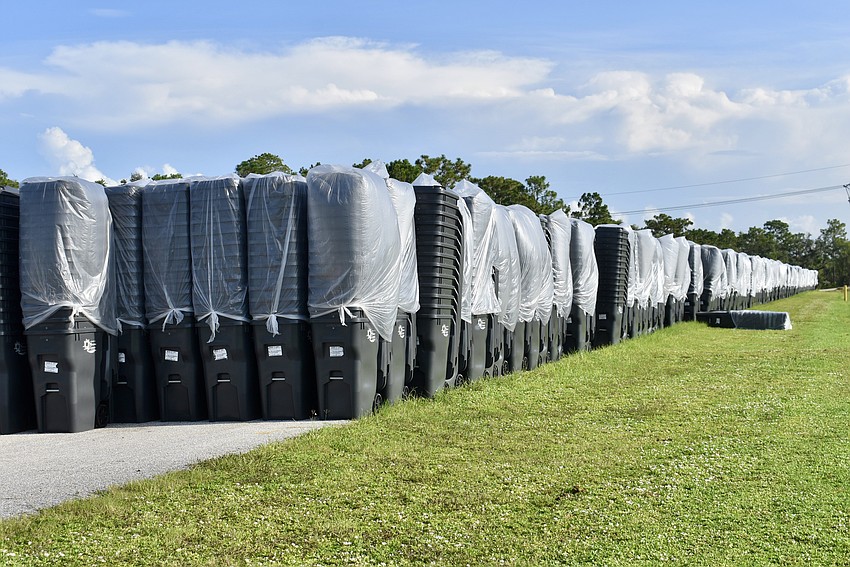
While the old bins are starting to come to the landfill, 23,000 of the new bins are stacked neatly in a row, waiting to be distributed to residents. The new collection service begins Oct. 6.
Because of the automated collection, residents will only be able to dispose of trash that fits inside the bins. Anything larger will require an additional pickup.
The fee for an additional pickup is $59 per bulk item or $45 per cubic yard of piled waste. In anticipation that residents might want to avoid that fee, a new resident area was set up at the landfill.
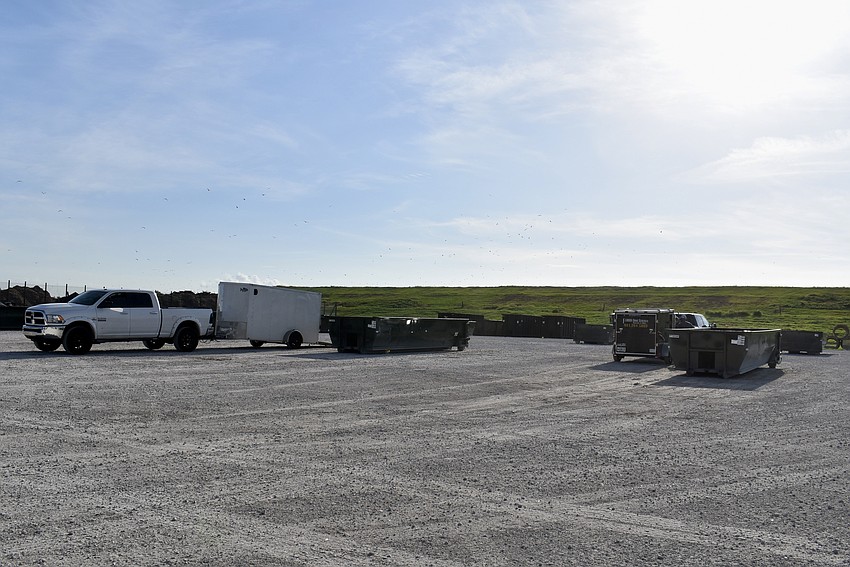
The area is a parking lot filled with widely-spaced dumpsters, so cars and trucks can easily pull up and unload garbage. It costs $5 per car to dump trash yourself.
Some residents have complained about the new garbage collection system because they view the change as half the service for the same price. Collection days are being reduced from two days a week to one.
Collins noted that Solid Waste is an enterprise fund, meaning it pays for itself using the money collected from residents for services rendered.
He discussed some of the costs that come with running a landfill that residents might not have considered. The equipment alone costs tens of millions of dollars.
When a bulldozer needed to be replaced last year, staff chose to rebuild the frame for $850,000 because getting a second life out of the machine was a major cost savings over purchasing the same machine new for $1.5 million.
On the low end, a water truck costs around $500,000.
Just fueling the heavy equipment on site costs up to $40,000 a month. Detweiler said the compactors burn the most fuel out of all the equipment. In June, one compactor burned through 3,000 gallons of diesel fuel.