- March 19, 2026

-
-
Loading
Loading
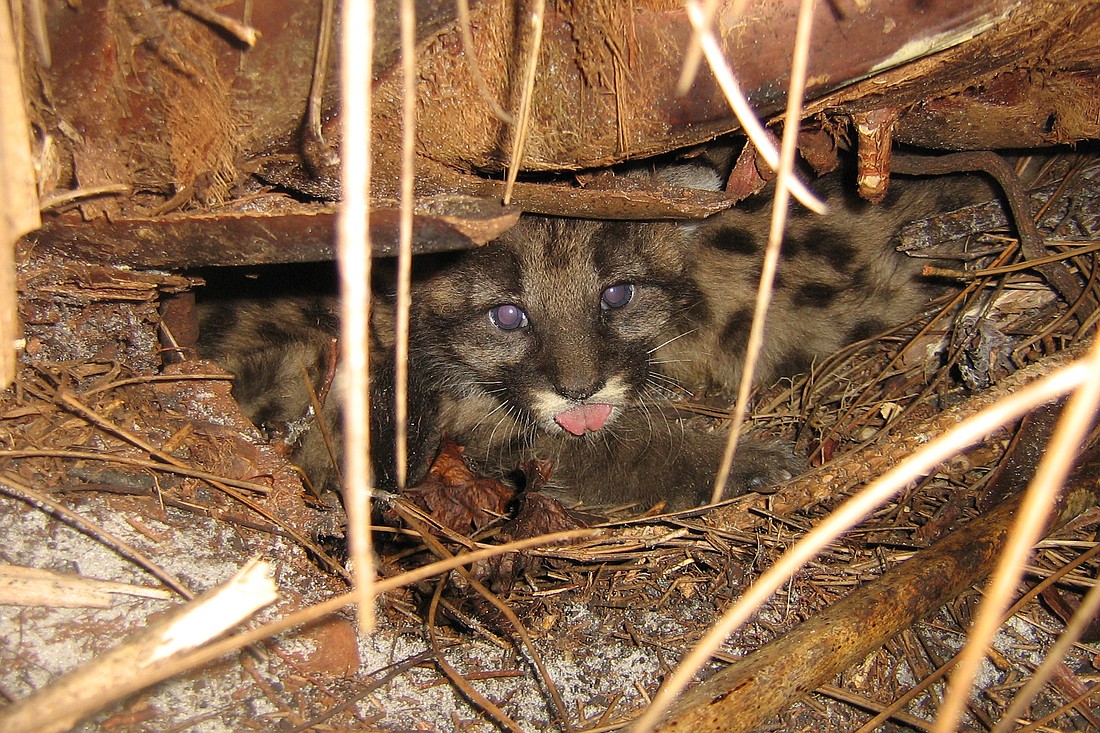
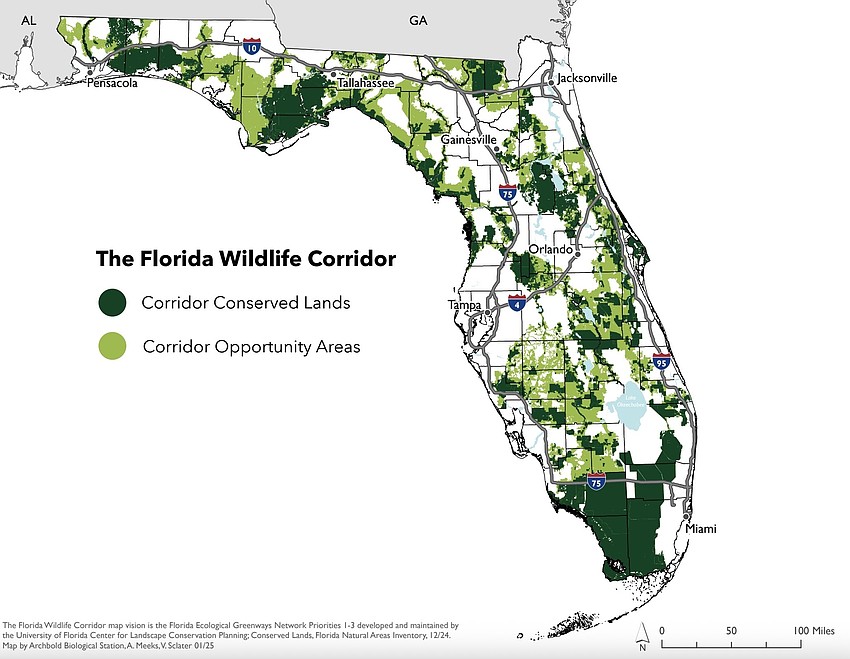
The Florida Wildlife Corridor Act identified more than 18 million acres that, if conserved, can provide an uninterrupted path across the state for wildlife to traverse.
The Florida Legislature has budgeted more than $2 billion to the corridor since the act went into effect in 2021, but about 8 million acres of the corridor remain unprotected.
The public and private sectors have joined forces to accomplish the goal.
In Manatee County, the Environmental Lands Management and Acquisition Committee is on the government or public side working toward conservation, and the Big Waters Land Trust is on the private side.
The county partnered with Big Waters, when it was known as the Conservation Foundation of the Gulf Coast, in February 2024 to purchase Crooked River Ranch, the first property acquired by the county using tax dollars from the 2020 Conservation and Parks Projects Referendum Fund.
Manatee County voters passed the referendum to tax themselves an additional 0.15 mill, or about $28 a year per homeowner, with 71% of the vote. The funds pay to conserve land and agriculture lands within the county.
Both the county and Big Waters often seek grants from the state to mitigate costs.
Gov. Ron DeSantis vetoed $200 million dedicated to the wildlife corridor June 30. However, those funds were reallocated to two major projects, the Ocala to Osceola Wildlife Corridor and the Caloosahatchee Big Cypress Land Acquisition Project.
The funds for those projects will be transferred to the Florida Forever program.
Florida Forever covered most of the cost to purchase land that will expand Emerson Point Preserve in Palmetto. Commissioners agreed to pay $15.5 million for 97 acres in March 2024, and Florida Forever agreed to pay the county $11.9 million for 83 acres of the property in April of this year.
Florida’s Fiscal Year 2024-25 budget allocated $229 million to Florida Forever. The budget for FY 2025-26 allocates $18 million. With $200 million earmarked for other projects, ELMAC and Big Waters will have to adjust.
“This will impact our whole strategy,” said Brooke Langston, director of land protection for Big Waters. “We will have to go more to private foundations and look for individual donors who are interested in doing this kind of work, but we won’t get the dollar amounts that we would get by working with the state.”
Big Waters unveiled its 2030 Conservation Plan in April. It’s the first strategic plan for the nonprofit, and it lays out 247,000 acres of conservation opportunities from Terra Ceia in Manatee County down to Corkscrew Swamp in Collier County.
The estimate to conserve all that land is $2.4 billion.
Florida Forever is listed as a potential partner on five properties that ELMAC is considering for acquisition.
Debra Woithe, Manatee County’s Environmental Lands program manager, said conserving land requires prioritization and creativity.
State funding cuts might require some tough decisions. Beyond the four criteria ELMAC looks for — ecological quality, rarity of species or habitat, importance to water resources and connectivity to other conservation lands — development is another factor.
If it comes down to two purchases, and development is considering a purchase, then that property would most likely be prioritized.
The county can’t buy every square inch of the corridor, but Woithe noted that research shows that it’s not necessary. If 60% of an area is natural, wildlife can move through it.
While Woithe said she wouldn’t bet on it, she is optimistic that the wildlife corridor through Manatee County could be entirely connected in 10 years.
However, it won’t be entirely native habitat. It will include some agricultural land and low-density residences. Woithe used one home on 20 acres in Myakka City as an example of low-density.
Langston agreed that 10 years is a feasible timeline.
“If there’s a will, it’s not insurmountable in Manatee County. We just have to have leadership that values land and is as excited about it as Debra (Woithe) and I are.”
The wildlife corridor is intended to protect 131 imperiled species. However, Langston said there’s a duty to taxpayers, too, to provide clean air and water, sustainable agriculture, carbon sequestration and access for all.