- March 19, 2026

-
-
Loading
Loading
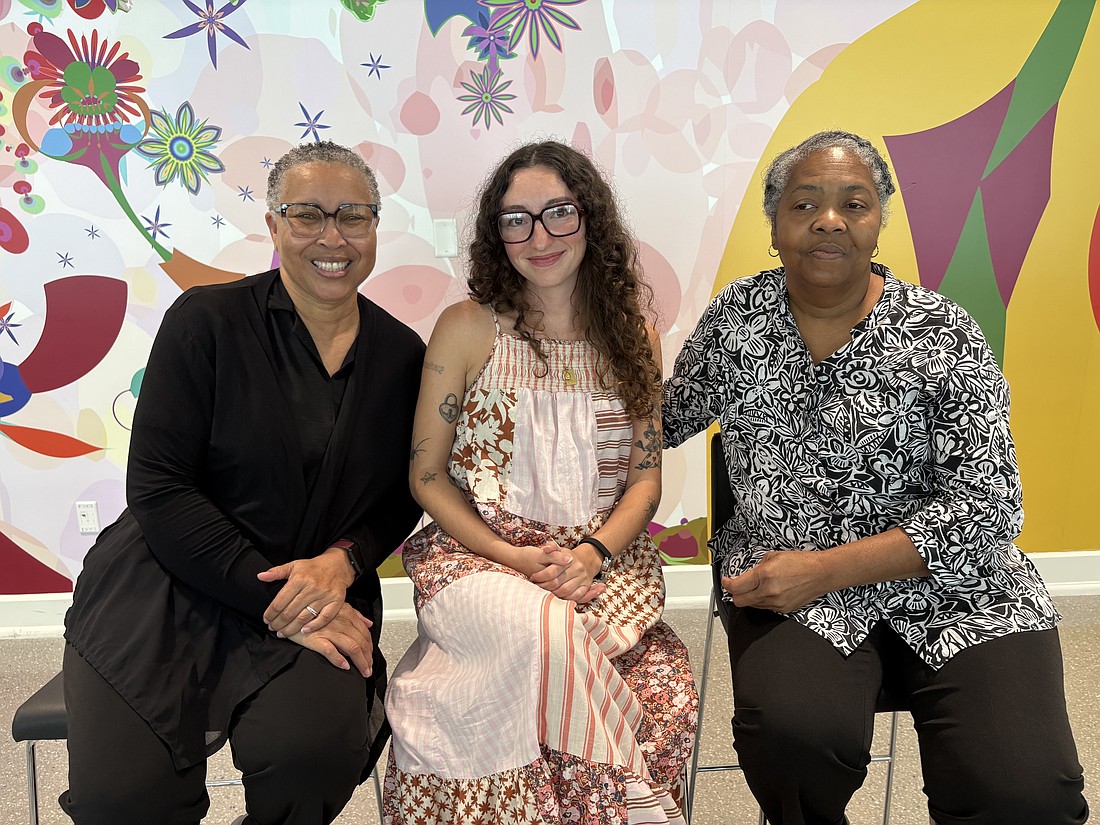
Today, Gee’s Bend quilter Loretta Pettway Bennett has enough money to buy new fabric for her creations, but it just wouldn’t feel right. That would be against the tradition of the isolated Alabama hamlet whose quilts have become world famous.
Adds her fellow quilter Louisana Bendolph, “When we were growing up, we didn’t know what recycling was. We just knew how to make something out of nothing.”
Bennett and Bendolph came to the Sarasota Art Museum on Aug. 2 for an artists talk moderated by SAM Associate Curator Lacie Barbour that was attended by about 200 people.
Bennett and Bendolph’s works are part of SAM’s exhibition, “Personal to Political: Celebrating the African American Artists of Paulson Fontaine Press,” which runs through Aug. 10. The traveling exhibition was organized by Bedford Gallery of Walnut Creek, California, and was curated by Carrie Lederer.
A selection of Gee’s Bend quilts, including some made by Bendolph’s mother-in-law, Mary Lee Bendolph, are part of the wide-ranging exhibition that also includes fine-art prints, magazine covers, four mixed-media sculptures and a basketball pyramid installation.
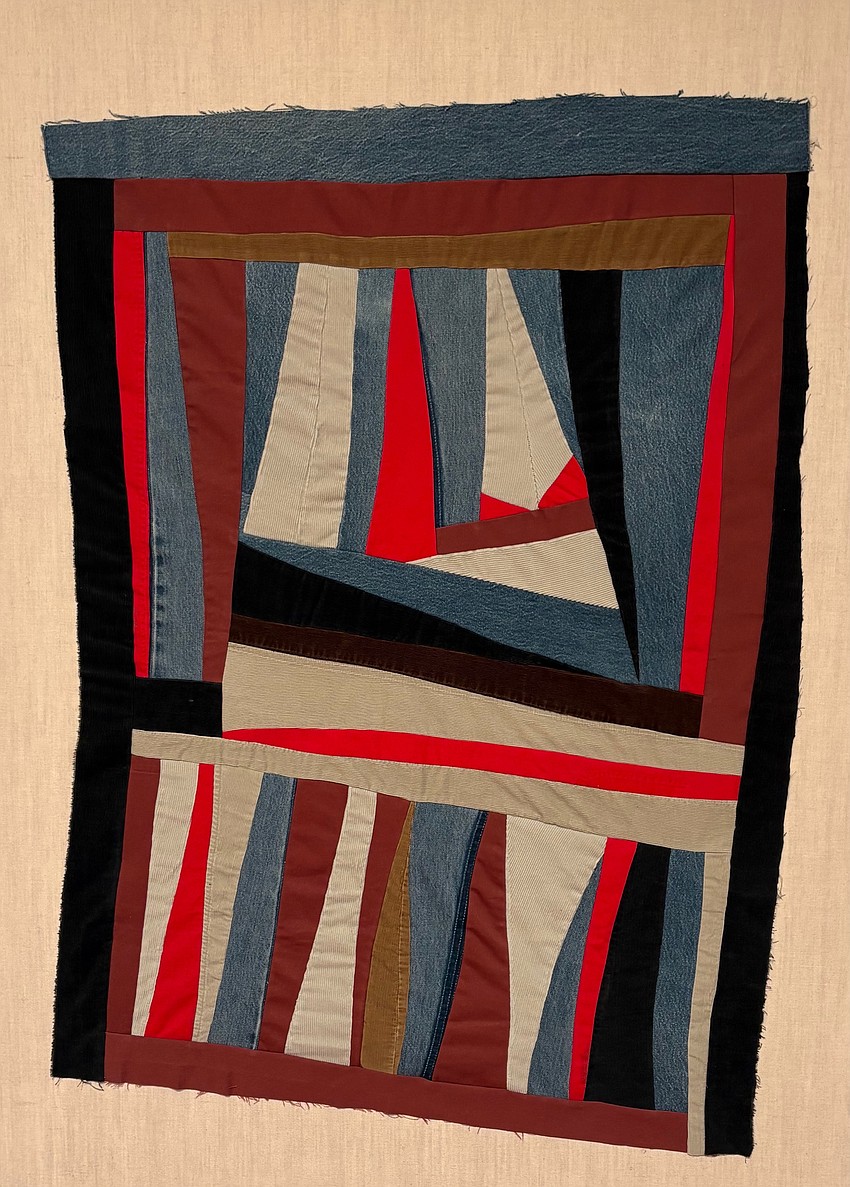
The Bendolphs and Bennett were invited to the Paulson Bott Press in Berkeley in the early 2000s, where their creations were transformed into graphic prints. This required considerable adjustment on the part of the quilters.
Instead of assembling quilts, often with the help of friends and neighbors, over a long period of time, they were required to produce small-scale works called “maquettes” relatively quickly. But they made it work.
Quilts have been made by Black women in Gee’s Bend since before the Civil War, but they burst onto the art scene in 2002, when the Museum of Fine Arts, Houston, organized a traveling exhibit that made its way to the Whitney Museum in New York later that year.
In 2006, the U.S. Postal Service issued 10 commemorative stamps featuring quilts made from 1940 to 2001 by African-American women from Gee’s Bend, including Mary Lee Bendolph.
Although the Gee’s Bend quilts sometimes incorporate patterns used in traditional quilts such as “housetop” and “log cabin,” they typically have asymmetrical designs that have been improvised, making them closer to art than handicrafts.
Even after slavery ended, most of the inhabitants of Gee’s Bend grew up picking cotton under the hot sun, a job that began in childhood. “Everyone had to work on the farm,” says Bennett. “No one was excluded. When I was little and I couldn’t pick cotton or chop cotton, I had to carry water to the one who wanted to drink.”
Sewing quilts from worn-out clothes and remnants left over from sewing homemade clothes was a matter of necessity, Bennett told the SAM audience, because the homes weren’t heated.
“Even though I hated picking cotton, now I can open a book and look at a museum wall and see that same cotton I hated to pick,” Bendolph said.
“I should have been grateful for my homemade dress but I wanted one from the store,” she continued. “I didn’t like patches, but now people go to the store and buy jeans with holes in them,” evoking laughter from the audience. “Everything that was hard then was getting us ready for today, to appreciate what a rag can do.”
Although they were designed by one person, the quilts would be sewn by an assortment of girls and women, who would move from house to house for quilting bees over the course of the blanket’s construction.
The pieces used in the quilts were cut out during the harvest, which the quilters called the “lay-by season.” They were put aside until the quilts were assembled during the winter, when women would bring their children to the quilting bees if they weren’t old enough for school.
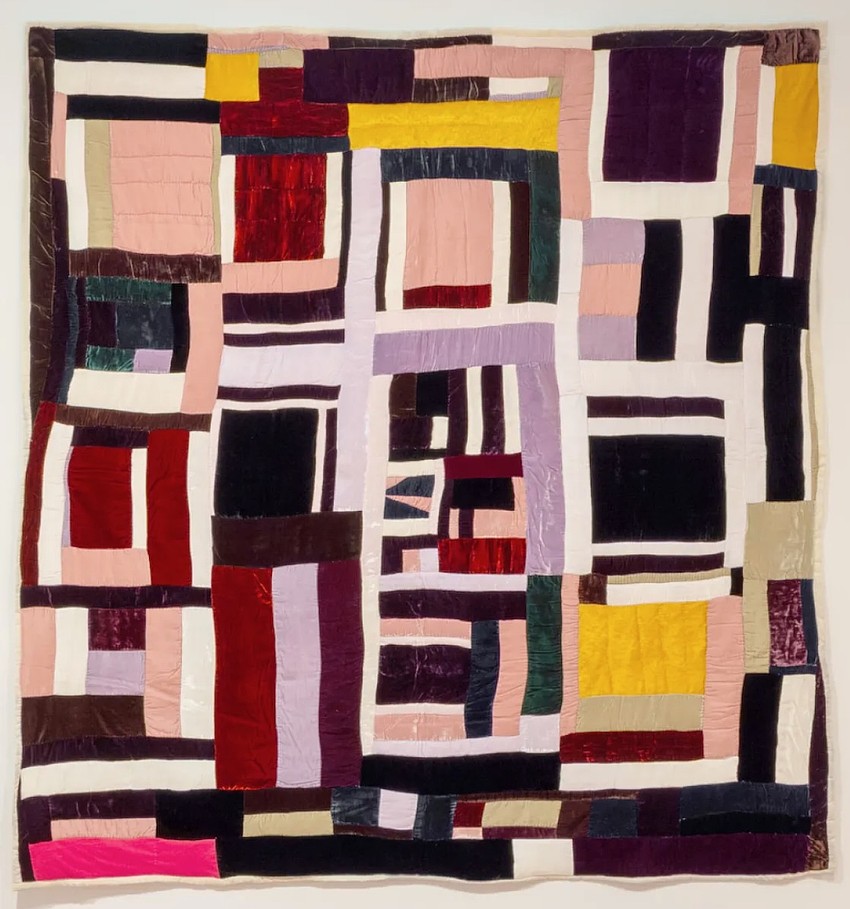
Quiltmaking was a form of socializing and the end results were often bestowed as gifts before there was a brisk commercial market for the Gee’s Bend quilts, which today can each sell for thousands of dollars.
Despite their busy lives with family and touring, both women say they continue to stitch their quilts by hand. When they teach younger members of their families to quilt, even crooked stitches are left in. Perfection isn’t the goal; preserving family and community legacy is.
Although they appeared relaxed in front of an audience, both Bennett and Bendolph both described themselves as reluctant speakers and travelers. “I’d rather be at the gynecologist than where I’m sitting right now,” quipped Bennett, drawing a big laugh from the mostly female attendees of the SAM talk.
Bendolph said her aversion to travel had to do with “marrying a military man,” leading to the family being uprooted or being separated from her husband while he was overseas.
But Bennett and Bendolph say they owe it to the artisans who came before them to make public appearances, sign books and answer questions about Gee’s Bend quilts.
“Who am I to say I don’t want to go?” Bendolph asked rhetorically.
Bendolph described a childhood cut off from the outside world and having little awareness of what was going on around her. “We didn’t know who Dr. King was when he came to Gee’s Bend,” she says.
Born in 1960, Bendolph was just a child when Martin Luther King took the ferry across the Alabama River to speak at the Pleasant Grove Baptist Church in February 1965. He encouraged members of the congregation to travel to the Wilcox County seat and register to vote.
After a flurry of Black voter registrations, local authorities suspended ferry service to Gee’s Bend, whose official name is Boykin. It was not reinstated until 2006.
Bendolph says years of having to forage for materials for her quilts has made her “a bit of a hoarder.” Her home in Gee’s Bend is packed with fabric scraps, discarded clothes and old sheets, which are used for the backing of the colorful quilts.
She also collects old sewing machines, most of which don’t work. Bendolph leaves them outside on tree stumps, she said, creating an art installation of sorts in the town, which today has less than 300 residents.
Despite the collectors devoted to Gee’s Bend quilts, the younger generation isn’t as interested in painstakingly piecing together scraps of fabric as their elders were. There are too many high-tech distractions. But Bennett believes they will return to the tradition of quiltmaking.
“It’s in our blood,” she says. “We’ve got to pass it on. We must share it.”