- March 27, 2026

-
-
Loading
Loading
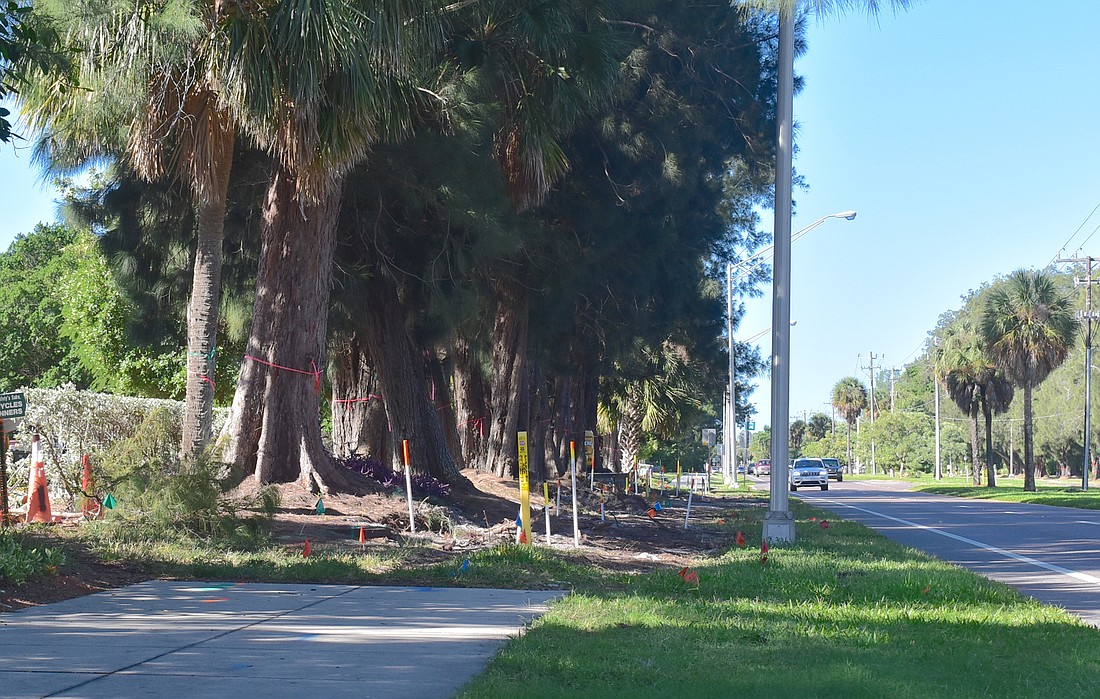
The Australian pine remains public enemy No. 1 in terms of non-native trees on Longboat Key, and the town recently refilled its fund to help residents do away with them.
Town commissioners this month approved another $60,000 to pay for bounties on the wobbly trees.
“The existing funding is exhausted. We did not replenish it going into fiscal year ’20,” Town Manager Tom Harmer said during the April 6 town commission meeting. “We just continued to use the original funding that was established. We wanted to gauge the amount of demand, but now as we’re here in the middle of fiscal year ’20, we have requests that exceed the amount of funding we have.”
Before the commission approved the reinstatement of the program, Harmer said the town had nearly $20,000 worth of unfunded requests for the Australian Pine Removal Program. Australian pines are an invasive tree species with shallow roots, which tend to cause the trees to topple from heavy winds.
Longboat Key Public Works Director Isaac Brownman said the town initially reinstated the program in the aftermath of Hurricane Irma in 2017.
“On Longboat Key, a lot of the power outages were due to Australian pines that had toppled over or come down, not exclusively, but a fair-enough amount,” Brownman said. “It was already known in Longboat Key that Australian pines are vulnerable to wind action here in Florida. That was a known entity because back in the 2004-2005 hurricane season, that’s about when the town first instituted this program.”
The town decided to replenish the fund ahead of the 2020 Atlantic hurricane season, which runs from June 1 through Nov. 30.
Longboat Key Public Works office manager Alexandra Lowe-Mains said 23 people have received reimbursements from the town to remove 64 Australian pines after Hurricane Irma.
“If a tree can impact Gulf of Mexico Drive, there’s an incentive of up to $1,800 per tree for removal,” Brownman said. “If it does not have the potential to impact Gulf of Mexico Drive but it could other roads, structures or buildings or underground utilities, there’s an incentive of $1,250 per tree.”
A single applicant can apply to remove up to five trees each year if they have that many on their property.
“As long as the funding is available, and they meet these criteria, and the Public Works team goes and inspects and makes sure the trees qualify, they can get the work done once we approve their request,” Brownman said. “They get the work done, they turn in an invoice to us, and we provide them the incentive based on what they are approved for.”
Tree services can charge more than $2,000 for the removal of a tree, depending on how tall it is and if access is an issue. Australian pines can grow up to 150 feet tall.
“It greatly varies on the size of the tree and where it’s located on the property as to whether or not the tree trimmer can get certain equipment to it,” Brownman said. “If it’s in somebody’s backyard without any good access, they have to do more manual work, it’s much more expensive. If it's right by the roadway and they could pull up a large piece of equipment and cut it down, it’s going to be cheaper.”
John Ringling planted the trees along what is now Gulf of Mexico Drive in the early 1900s, according to Ralph B. Hunter’s book “From Calusas to Condominiums: A Pictorial History of Longboat Key.” The invasive trees species were brought to Florida in the late 19th century.
It is illegal in Florida to possess Australian pines with intent to sell or to plant them.