- March 25, 2026

-
-
Loading
Loading
And, the Oscar goes to . . .
No, Longboat Key or Sarasota Bay aren’t the settings for a ground-breaking rom com or historical drama. But the island, its surrounding waters and a local environmental effort do figure into the wider plans of a Tallahassee-based filmmaker and her team.
With production underway on her company's documentary on the once-thriving oyster industry and the benefits of the shellfish’s preservation, executive producer Chucha Barber of Chucha Barber Productions aims high.
“We have aspirations to win an Academy Award,’’ the six-time Emmy-award winning producer said.
Paying a visit to Manatee County and Longboat Key’s Mar Vista Dockside last weekend, Barber explained her project —titled Unfiltered: The Truth about Oysters — and how it relates to local people and their work. And how to get in line for one of those golden statuettes.
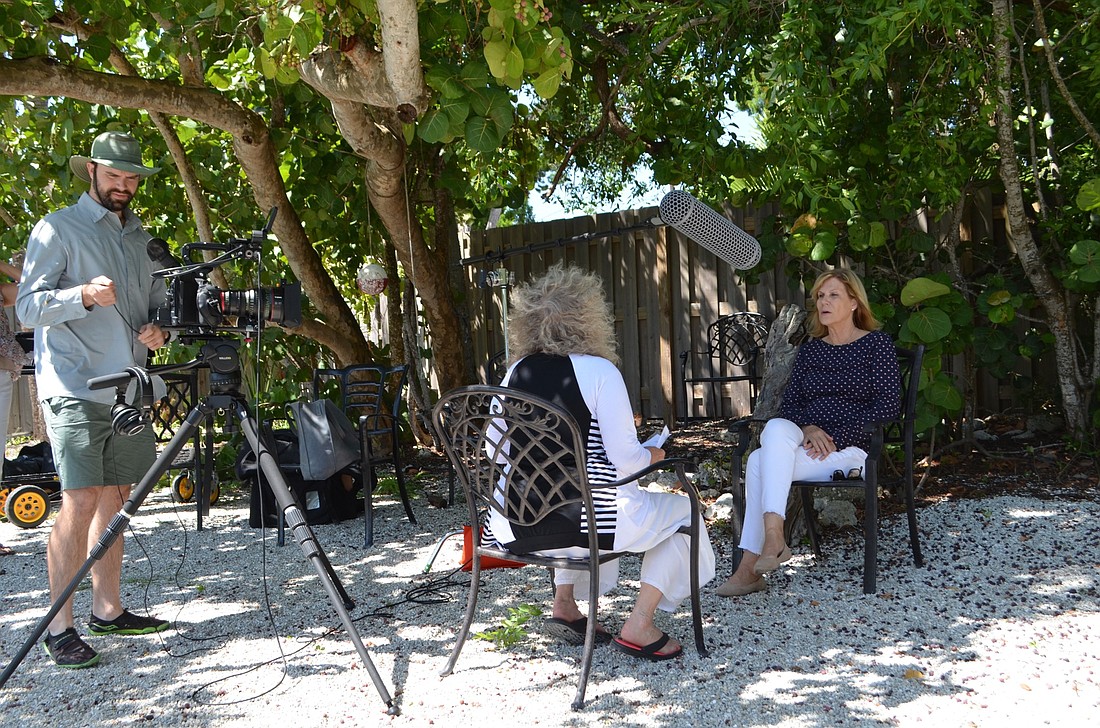
Between on-camera interviews on Saturday with such people as Manatee County Commissioner Carol Whitmore, Manatee parks and natural resources chief Charlie Hunsicker and Sandy Gilbert, CEO of Longboat-based Solutions to Avoid Red Tide, Barber explained that she hopes the film’s broad focus will shed a light on the travails of the oyster, the people who depend on it, and possible solutions to both their woes.
For maximum exposure, and to quality for nomination to the film industry’s biggest award, Barber said she plans to book her company’s film into a New York theater for at least a 10-day run in the fall of 2020.
From there, she hopes the film speaks for itself, with viewers and movie-industry insiders.
Barber said the genesis of the film came in February, when she heard Florida State University had been awarded an $8 million grant to help facilitate recovery of the oyster industry in Apalachicola Bay following damage done by the 2010 Deepwater Horizon oil spill.
From there, she said, she learned of a similar project underway in Cedar Key, paid for by a grant to the University of Florida. Auburn University, Louisiana State University and other schools were also doing their own research along those same lines.
It sounded like a project in which Barber could convert scholarly findings into a documentary. So she met with FSU representatives to ascertain if a project was possible. She was happy with the outcome. “They were very receptive to a project that would translate their research into a film,’’ she said. “Wild oyster harvesting is not what it used to be.’’
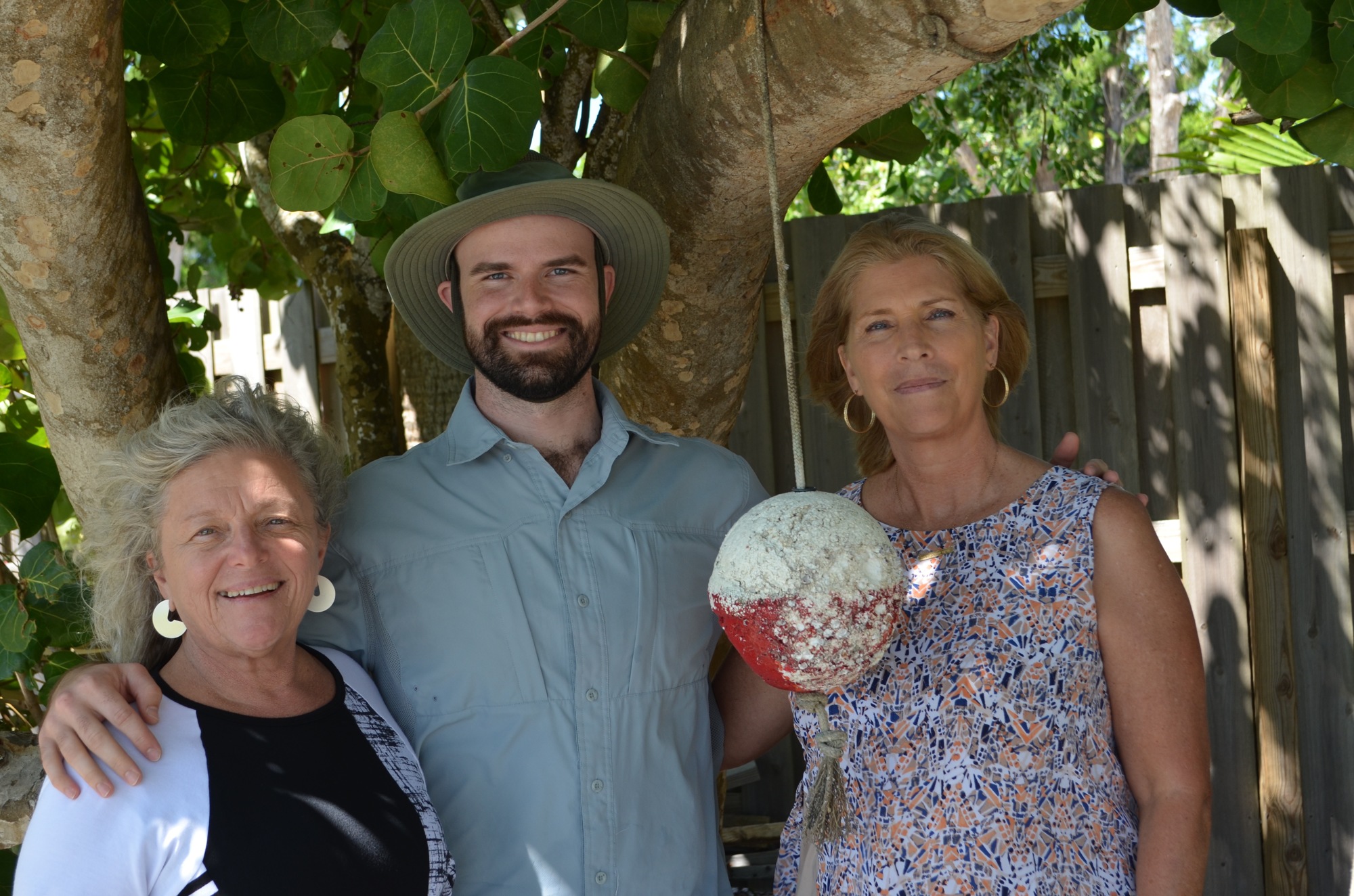
Along with Barber, cinematographer Josh McLawhron and associate producer Hope Childree, film locations have ranged from Florida, New York's East River, Chesapeake Bay and elsewhere.
The film captures two storylines with an overarching thread of explaining what the university researchers are learning: the plight of the traditional wild oyster harvester and the water quality benefits of oysters in the wild. “Oysters are unique in that when you remove an oyster, you take its habitat with it,’’ Barber said. “When you take a grouper or yellowtail, you leave behind its habitat.’’
“It is its own habitat,’’ McLawhron said of an oyster and its shell, also acknowledging the creature's ability to filter water of manmade impurities.
It was a local/family connection that brought the film crew to the Sarasota-Manatee area. McLawhron found out about restaurant entrepreneur Ed Chiles and his commitment to sustainability through the filmmakers' mother, who was familiar with Chiles' work.
“She said, 'you have to talk to Ed Chiles,' ’’ McLawhron said.
Chiles, who founded the Chiles Restaurant Group and the Gulf Shellfish Institute, has found success in linking restaurants, Manatee County and Waste Pro USA in collecting and recycling oyster shells from restaurants and returning them to local waters. That, in turn, fuels the regeneration of the species, and multiplying the species' water cleansing effects.
Gilbert this summer received a phone call from Waste Pro officials who had learned about the film project. Gilbert's START group has been working for years on facilitating a wide range of solutions to improve water quality in the area.
"They ought to be talking with you guys,'' Gilbert said, relaying for a reporter the conversation he had with Waste Pro.
So, over the last month or so, Gilbert spoke to the filmmakers and local authorities and facilitated a time, day and place for the on-camera interviews.
In addition to the filmed interviews, the film crew was up early Saturday morning, gathering footage of an effort in Perico Bayou, in which about 100 volunteers were helping restore an oyster reef with about 30 tons of recycled shell.
Whitmore, interviewed on camera for about 20 minutes, told Barber she is deeply concerned about the topic and told Barber about an initiative Manatee officials are working on to solicit about $1 million of state money to help propel the Chiles' idea and broaden it statewide.
"I so hope this a project that shines,'' she said. "I'm glad, I'm happy to be part of it. A lot of people realize we have to do something.''
Barber said her company continues to raise private donations to finance the film (they're at about 40% now) while production rolls on. Filming began around three months ago, and the documentary is expected to be wrapped up in time for a premiere in late 2020.
It’s one thing to have the film attract audiences in New York, but unless Sarasota and Manatee area people want to travel north for that theatrical experience, there isn’t much of a connection to local people, Gilbert said.
Gilbert said he’s been chatting with Barber about what it would take for a local screening. When that day gets closer, Gilbert said he will work with the executive producer to figure out the logistics and the cost of a screening a little closer to home.
Otherwise, Sarasota and Manatee area residents and stakeholders might not get the full effect of the message.
“If the only concern you’ve ever had about oysters is what kind of beer is best to wash them down, this film is going to rock what you think you know about oysters,” Barber said.