
- April 4, 2026

-
-
Loading
Loading
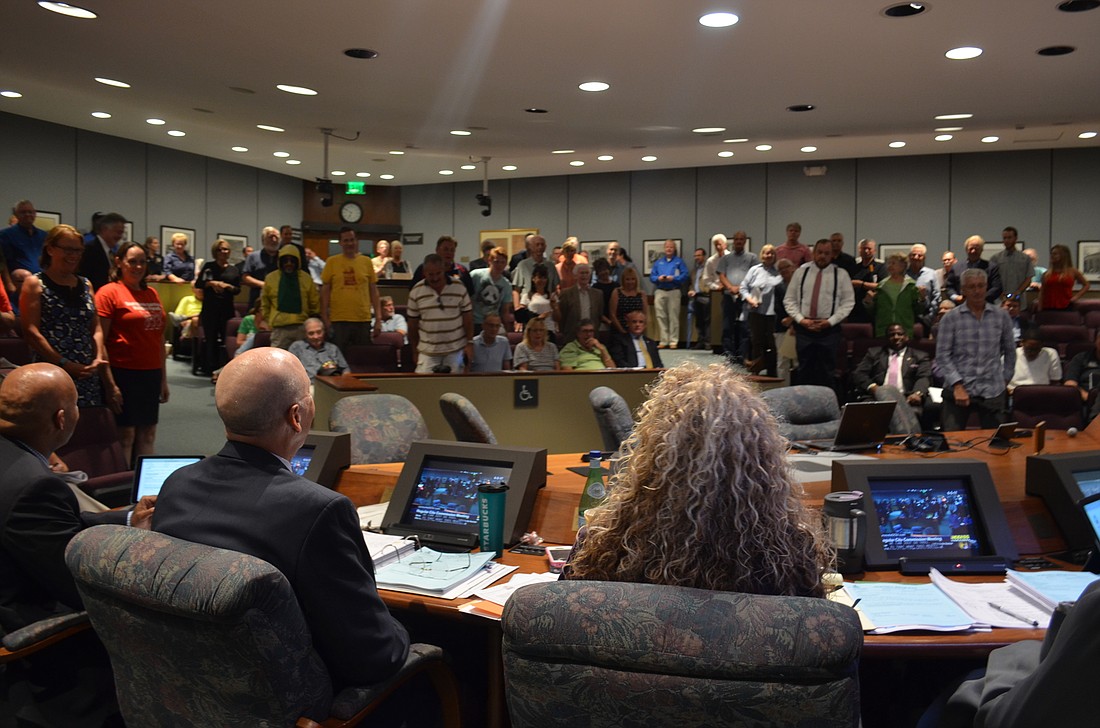
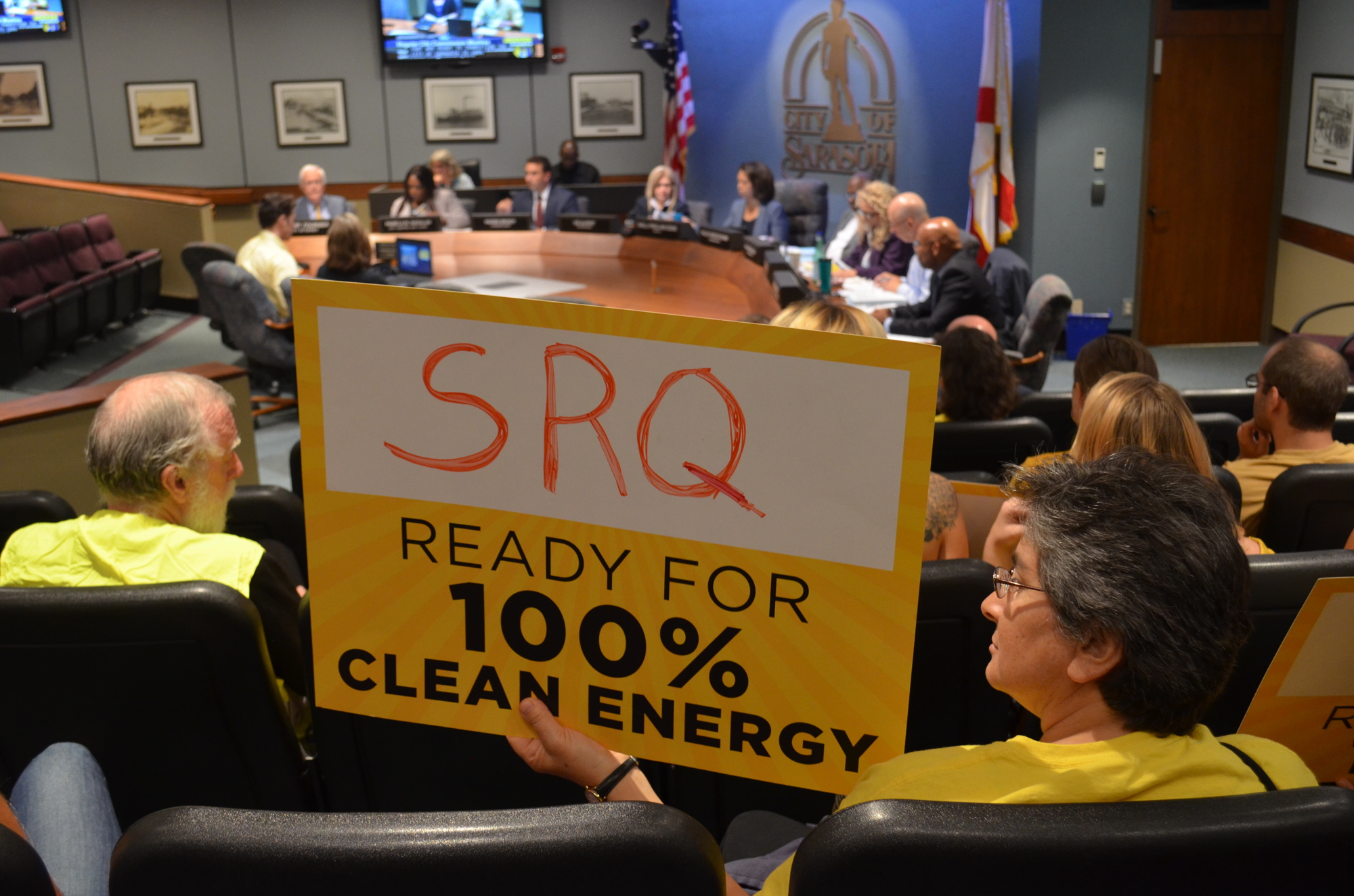
The maximum capacity of the commission chambers at City Hall is 225 people.
If supporters or opponents of a single issue filled the room, they would represent 0.4% of the city’s population.
Although that’s a small cross-section of Sarasota residents, commissioners say they take public input at commission meetings seriously.
At a Jan. 9 meeting, the board discussed possibly moving its meetings from the evening to earlier in the day. Some members expressed concern that shifting agenda items to regular business hours could reduce the amount of public comment on those topics.
Vice Mayor Liz Alpert, who supported the idea of moving the meetings, said interested residents have other means of contacting elected officials. But Commissioner Jen Ahearn-Koch suggested there was a particular significance to the input offered in-person at the commission table.
“I don’t think emails or phone calls have the same impact as showing up at a public hearing, getting your three minutes, speaking your mind,” Ahearn-Koch said.
So, as commissioners consider contentious issues, what role does — and should — public input during meetings play in their decision-making process?
Later in the Jan. 9 meeting, Ahearn-Koch clarified her comments, and said she also valued comments shared outside of the context of commission meetings.
Ahearn-Koch said public input is a piece of what she uses to make decisions — an important piece, but ultimately just one piece. She attends neighborhood and advisory board meetings in an effort to better gauge the pulse of the public, a key guiding force for her as a commissioner.
Still, she ascribes credit to those who specifically take the time to speak out at meetings. On issues such as land-use changes, it’s another opportunity to hear from those who have first-hand knowledge of how a street or neighborhood functions.
And to her, it means something when residents feel so affected by an issue that they make it a priority to share their thoughts with the commission in person.
“It’s not like, ‘I’ve got nothing else to do with my day, and this is what I’m going to do,’” Ahearn-Koch said. “It’s a sacrifice, and thank goodness they’re doing it.”
“I don’t think emails or phone calls have the same impact as showing up at a public hearing.” — Jen Ahearn-Koch
Kate Lowman, a steering committee member of the resident activist group STOP and former president of the Laurel Park Neighborhood Association, is a strong believer in the value of public hearings.
She said it’s easy for people to feel disaffected about their ability to influence elected officials, and she’s glad local government tends to be particularly responsive.
“I think public hearings are a unique part of that,” Lowman said. “I believe it’s a very important part of the process.”
Commissioner Hagen Brody said he values public input, but was cautious about making a distinction regarding the form. He was wary of elevating in-person input at commission meetings, worried those who had the time and means to attend weren’t representative of the city as a whole.
“I want interaction and I want engagement, but I think it’s important that we remember that the vast majority of the city does not have the opportunity to come down to the commission chambers and sit there on a Monday evening,” Brody said.
Alpert also saw the nature of the public input at commission meetings as limiting. Commission procedure restricts any interaction between speakers and board members. Alpert prefers emails and phone calls because they allow for back-and-forth.
“(I can say) ’Maybe you don’t know this information — here’s why I think we should do X, Y or Z,’” Alpert said. “That way, we can kind of have a dialogue. I can see where they’re coming from, and they can see where I’m coming from.”
County Commissioner Paul Caragiulo, who served on the City Commission from 2011 to 2014, said the city body tends to ascribe more value to meeting input than its county counterpart.
Although he agrees it’s an essential part of public meetings, he called the city’s emphasis on that feedback archaic.
“The idea we have to go petition the government — you can write an email,” Caragiulo said. “This whole idea of showing up is not the end-all, be-all.”
Caragiulo has criticized of the perceived insularity of city government. He said people who regularly showed up at meetings wielded more influence because a limited amount of people participate in city government.
“Those are the folks who get people elected to the City Commission,” Caragiulo said.
Ahearn-Koch acknowledged there were some City Hall regulars whose input commissioners valued highly. She didn’t see that as problematic.
She knows there are barriers to entry for participation at commission meetings. Neighborhood leaders are speaking on behalf of people who can’t make it or aren’t as adept at navigating city government. She noted that you also tend to see the same development representatives at commission meetings, and that the phenomenon was easily understandable.
“Yes, you are going to see those people again and again — because they know how it works, and they know how to get the city commissioners to listen,” she said.
Lowman took issue with anyone who tried to dismiss the significance of neighborhood leaders who routinely spoke out on city issues. With STOP, she’s gotten appreciative comments from residents who supported the cause but didn’t have the time to appear at meetings themselves.
“It’s frankly kind of dismissive toward some citizens who have put a lot of time and effort in trying to contribute to the community,” Lowman said.
“The vast majority of the city does not have the opportunity to come down to the commission chambers and sit there on a Monday evening.” — Hagen Brody
Brody and Alpert raised another line of concern: For some issues, they said, there are asymmetrical incentives to participate. If residents think a proposed project will radically reshape their neighborhood, they’re more motivated to speak out than someone who more passively supports the idea.
Ahearn-Koch disagreed, pointing out that some neighborhood leaders have appeared at meetings to offer support for proposals, including new development.
“I think that is a very weak argument for someone to say people only come out when they’re against something and they want you to say no,” Ahearn-Koch said. “I see no evidence of that at all.”
Alpert encouraged the public to share their thoughts with her through any platform. Ultimately, though, she sets out to determine what’s best for the whole community — not just those who have taken the time to get engaged.
“You’re elected to be a representative,” Alpert said. “They want you to go there and do what’s best for the community. You’re supposed to be the one studying the issues and the information and digesting it all, so they don’t have to.”