
- April 4, 2026

-
-
Loading
Loading
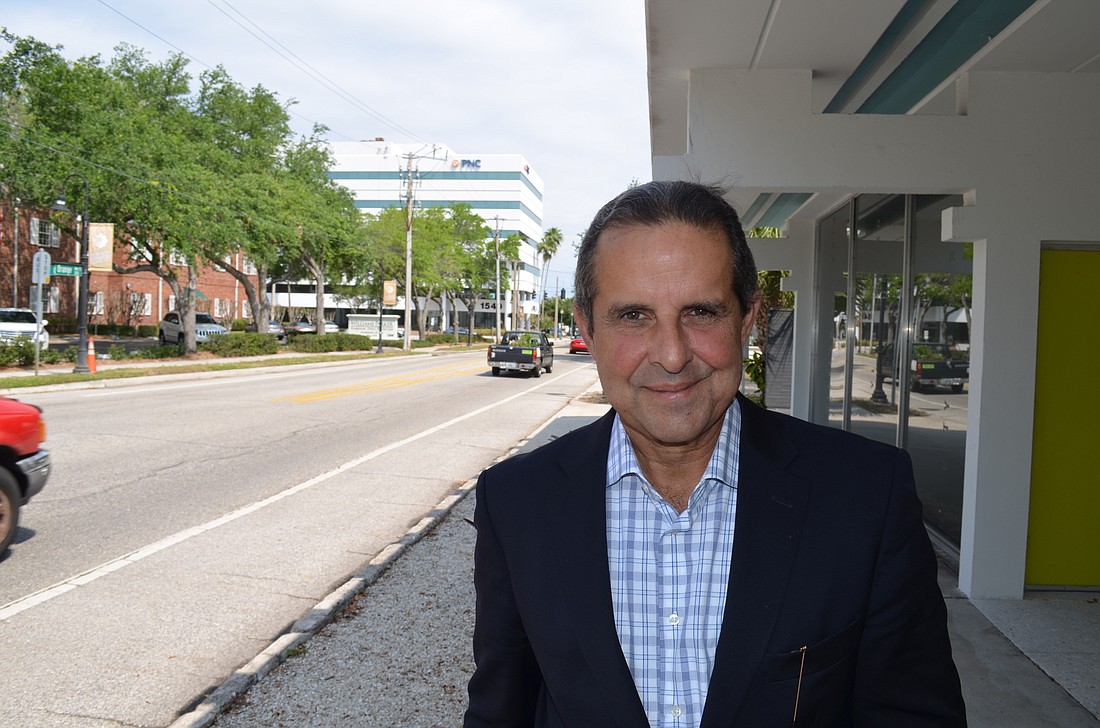
As mayor of Miami, Manny Diaz — among other achievements — helped the city replace its zoning regulations with a new form-based code that draws on the principles of New Urbanism.
Sound familiar? With Sarasota undertaking a similar effort to rewrite its zoning code, the Center for Architecture Sarasota thought locals could learn a thing or two from Diaz’s experience. On April 6, Diaz came to town to give a lecture on urban innovation.
Before the event, we sat down with Diaz to discuss his takeaways from his two terms as mayor, his impressions of Sarasota and his criticisms of our form of government, among other topics.
For a lot of people in Sarasota, Miami is a cautionary tale — something they don’t want the city to turn into. Can smaller cities learn from what’s happened in Miami?
There’s no doubt, there are some fundamentals that are true in every city. I like to tell people: We all face the same issues; we all face the same problems. Some cities have more zeroes at the end of them.
But to your other point, I think there’s a balance — I think Sarasota should not want to be Miami. I would tell people, Miami, we’re not New York. We shouldn’t try to be Manhattan.
The key, to me, is to find what you want to be known as, what you want your brand to be. What is it that’s going to attract people to your city? What do you offer to those people? It’s not enough to be anti-, contrarian. You need to positively identify what the vision for the city is and move forward in that regard — on a positive note, not just, “We don’t want to be like so and so.” I don’t think that bodes well for the future growth of the city.
How do you create a comfort level for both residents and developers within the city?
Part of the way we did that is to throw out our old code and adopt a citywide code, which is structured around smart growth and form-based.
It took me four to five years to get it adopted. We had 500 public meetings. When I first got elected, City Hall, every month, we had a couple of zoning meetings. It was fighting between the developers and neighborhood groups. I wanted to go through this process, first of all, because our code didn’t work. Number two, because I wanted everyone to be a part of visioning what they wanted their city to look like.
For the developers, at the end, that was a good thing, because they knew what the rules of the game were. Developers will follow the rules as long as they know what the rules are. They just don’t like it when the rules change, and I don’t blame them. We created a sense of certainty that — this is what we’ve designed. If you build this box, then you’re fine. No public hearings, nothing. (By) right, you can build this building.
To the neighborhood associations, it also provided them with a degree of certainty, because they knew what the city was going to look like. They knew what they could expect in their neighborhood. They knew, in particular, that single-family neighborhoods were protected from encroachments of tall buildings.
It was a process. We actually adopted it during my last commission meeting. It was the first time a city had adopted a form-based code on a citywide basis. It’s worked out fine. It’s now been almost eight years since we passed it.
Look, there was a lot of back and forth. There was a lot of fighting. Some people didn’t want it. Even some of the architectural community thought it would create too much of a cookie-cutter and infringe on their creative juices. The proof is in the pudding. The buildings that have gone up in the past eight years — there’s no cookie cutter.
Sarasota is developing its own form-based code, and there are questions about whether there needs to be public hearings for new projects. Was there a challenge getting people to let go of that in Miami?
Yeah, sure. It’s a very, very difficult thing to throw out an entire code and institute a whole new code. But there comes a point where you have to approve something. It’s not going to be perfect. Perfect is the enemy of good, right?
Yes, throughout the years, there may be a tweak here and there that needs to be done. But don’t throw the whole thing out. The solution is not to throw the whole thing out, because we all agree that what we have now is better than what we used to have. If that’s the case, let’s just improve upon this as opposed to just throwing it out. You throw it out, and then what? Do we go back to the code that we used to have, where all you guys were in City Hall twice a month fighting and throwing rocks? Is that what you want to go back to? No.
If people have issues about certain things, then they should look at it in terms of code amendments. But I wouldn’t throw out the whole thing, if it generally works. And from what I saw, from the tour I took of Sarasota — I like the designs of buildings. I like what you’ve done with setbacks and some of the wider sidewalks and the lining of parking structures, which are some challenges we all have. It looks good. They’re nice buildings.
How did you, as an elected official, work with the private sector to produce projects that were beneficial for the city as a whole?
Part of it is, through time, keeping your word and them knowing they can count on you. And also, by the way, appealing to their selfish interest. To have a city that works, that’s nicely designed, that has all the attributes we know makes a great city — it’s beneficial to them. That makes their property more valuable and more marketable.
It takes time. You have to work with them, have them understand it — not impose it. I don’t like imposing things. I like to at least give people the opportunity to buy in, based on the facts. If you and I, at the end, still disagree on the facts, I have to make a decision about what I’m going to do. But if you and I have the same facts, and I can’t convince you on the merits, then there’s a problem with me. I was able to convince them on the merits that it was the right thing to do.
Some people complain that local government gets bogged down by a handful of regulars at City Hall. How do you elevate the discourse and get things done?
My basic philosophy is that you’re chosen by people to lead, not to follow. After my best effort to educate myself and learn all about the issue, if I come down on this side of the issue, I’m going to stick to my principles. I’m not just going to move from that position — not because 100 or 500 people show up to complain. I explain to people how I get to where I get. It’s not a whim. It’s not because that developer’s a good friend of mine. Here are the merits of why I think it’s good for the city, and I was elected to do good for the city. That’s the way I am.
Number two, you also realize on a practical level, that it’s the same 15 people who show up to every meeting. They walk up and say, “We represent the ACME neighborhood association. We have 15,000 members.” The politicians sitting up there feel intimidated. They don’t represent 15,000 people. If they did, I always tell them — why don’t you run for mayor? If you have 15,000 votes in your pocket and you’re walking into City Hall, why don’t you run for mayor? You can beat me; you can beat anybody.
It gets to a point where, in my opinion anyway, they lose their credibility. If I put on the agenda for next week that we’re flush with cash and we’re going to give everybody their money back, you’re probably going to find a reason to come in and complain, too.
How important is it for there to be a point person in government setting the vision and agenda on a given issue?
The structure needs to be changed. I’m a supporter of a strong mayor system, because I want to be accountable. In a manager system, what happens is, the elected official is who people want to hold accountable, because they elected them. But it’s the manager that’s making decisions. Under my charter, I cannot direct any employee of the city of Miami to do anything. I can’t say, “Walk across the street.” That’s a violation of the charter. Only the manager can do it.
The system you have is even worse than that, because you don’t even have an elected mayor. You have a rotating mayor. This thing about, once a year I serve as mayor — to me, is absolutely ridiculous. What are you going to accomplish in a year?
It’s mostly a ceremonial thing.
Right. Not because that mayor had an agenda and a vision, got elected on the basis of that and then has to keep those kinds of promises. That system, to me, is very antiquated.
What were your other takeaways from your visit so far?
I like it. I hadn’t been here in a long time. I was very impressed with what’s already here. I think it’s a function of building on what you have, and creating a brand that, when people think of Sarasota, they’ll say, “Oh, I like it because…”
It should be a couple of sentence answer. I’m not sure that you have that answer. But the infrastructure — I love all these little shops and little restaurants and the streets and everything that’s developed around the urban core. The focus on the arts you have, the philanthropy — that’s a huge part of the way to get there, and you already have it. I think there’s potential there to really carve out your identity, your niche in the world. With the post-secondary institutions you have, do you envision yourself more as an Austin? What are the kinds of models that you like?
Just keep working on the foundation that’s been laid here by lots of people and a lot of hard work, and build on it.
This interview has been edited and condensed.